Spring Foraging

Outside of this strange world that we call the internet, I don’t know many people who would say that an ideal day is one spent in the woods learning about wild edible foods. But for me, a day spent meandering through the woods is in itself the indication of a day well spent, and to combine that with learning about and connecting with plants comes close to absolute perfection. Maybe other people just haven’t yet tried…

Behold the knowledge

Disclaimer: I have not tried eating all of the plants shown below and I am not suggesting that you do so without adequate preparation! My method generally goes something like this:

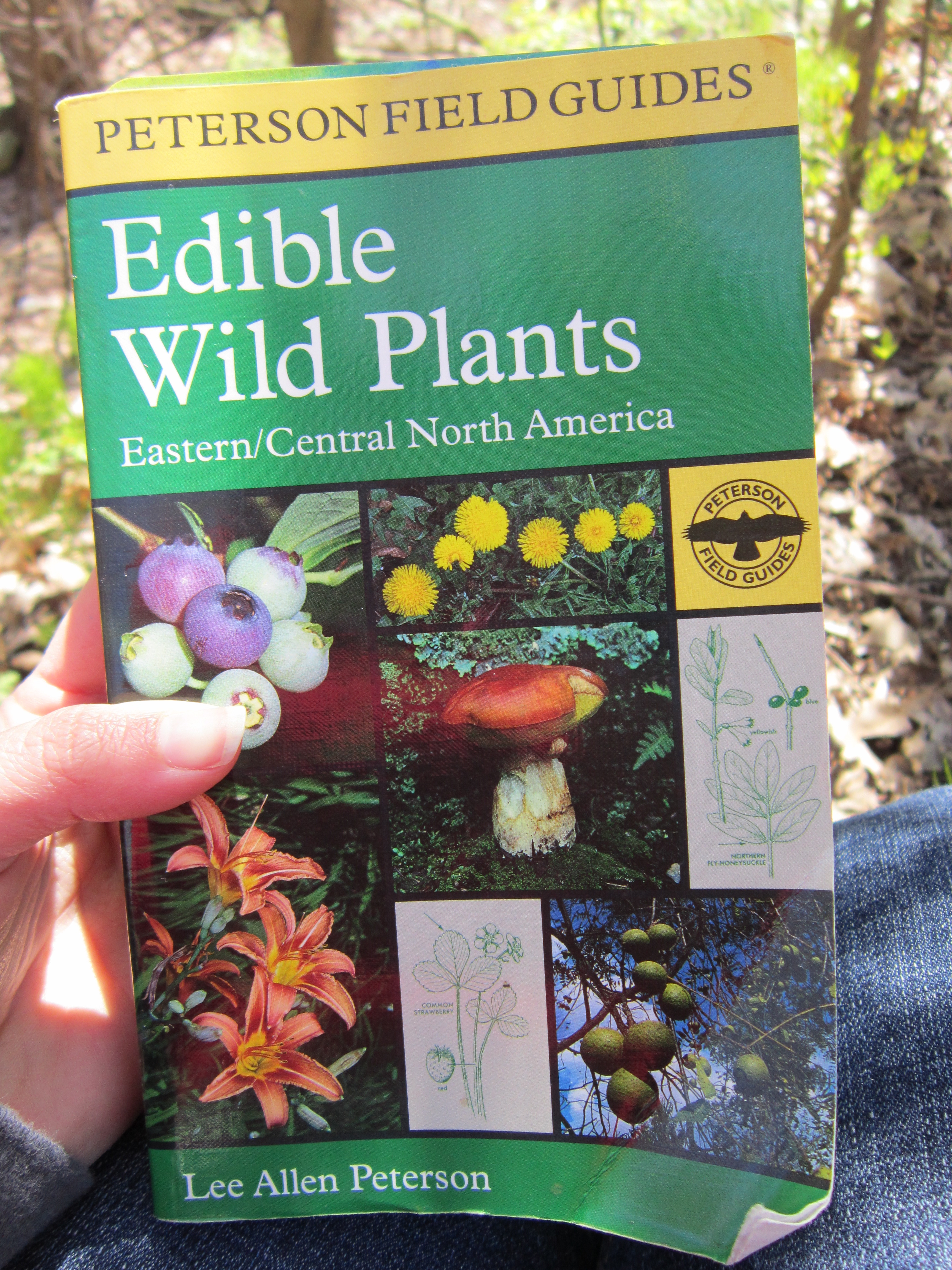
1) Find a plant and ID it in my field guide or learn about a plant and aim to find it and identify it.

2) Identify it on at least a few other ocassions.

3) Read about the plant and possible dangerous look-alikes.

4) Try a small amount to make sure it agrees with my body.

5) Eat more.

Let’s begin…

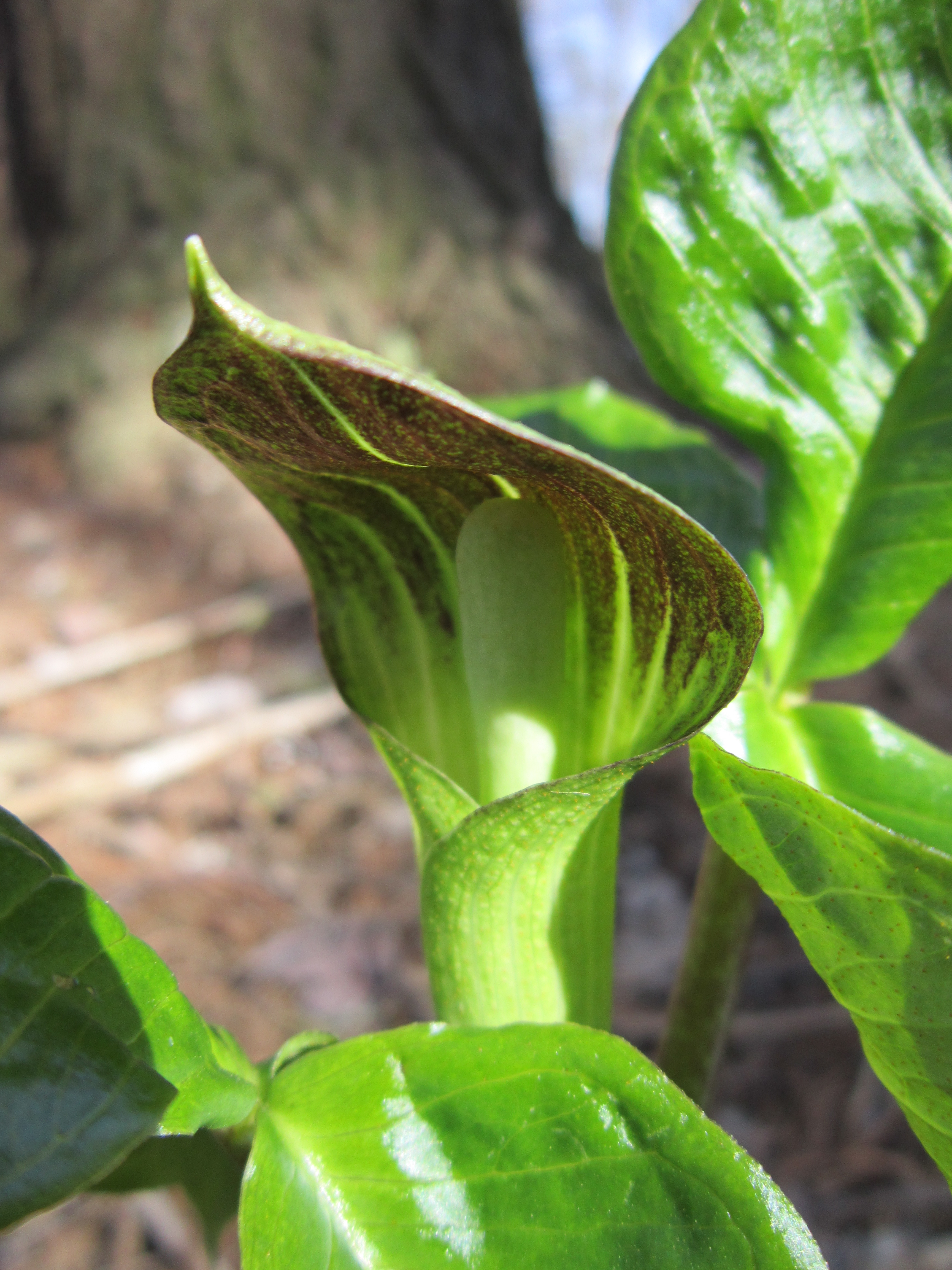
The dried corms (Wikipedia: a short, vertical, swollen underground plant stem that serves as a storage organ) of jack-in-the pulpits can be sliced and eaten like potato chips!

Jack in the pulpit

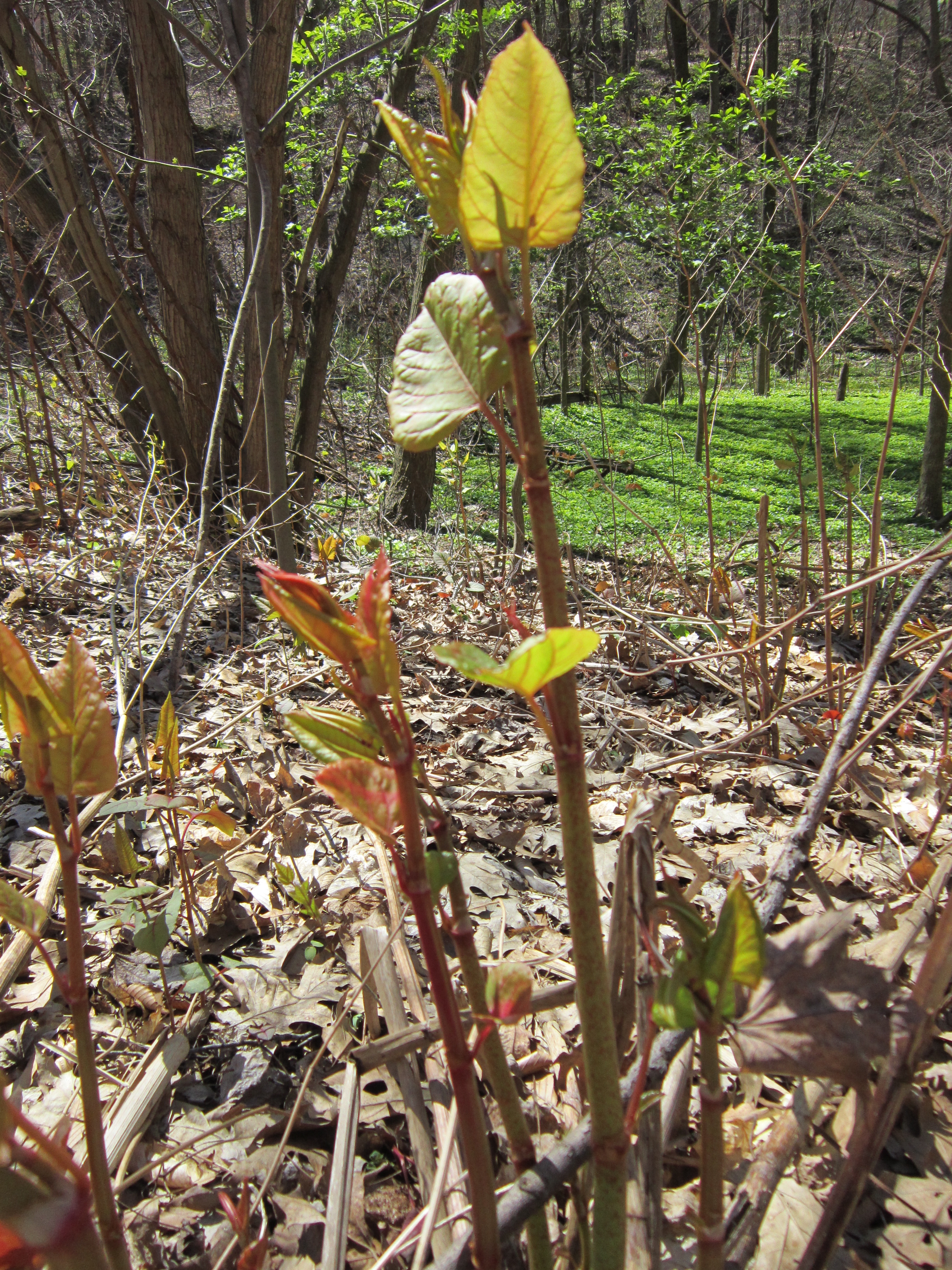
Japanese knotwood can be eaten like asparagus…and I encourage this one due to its invasive nature!

Japanese knotwood

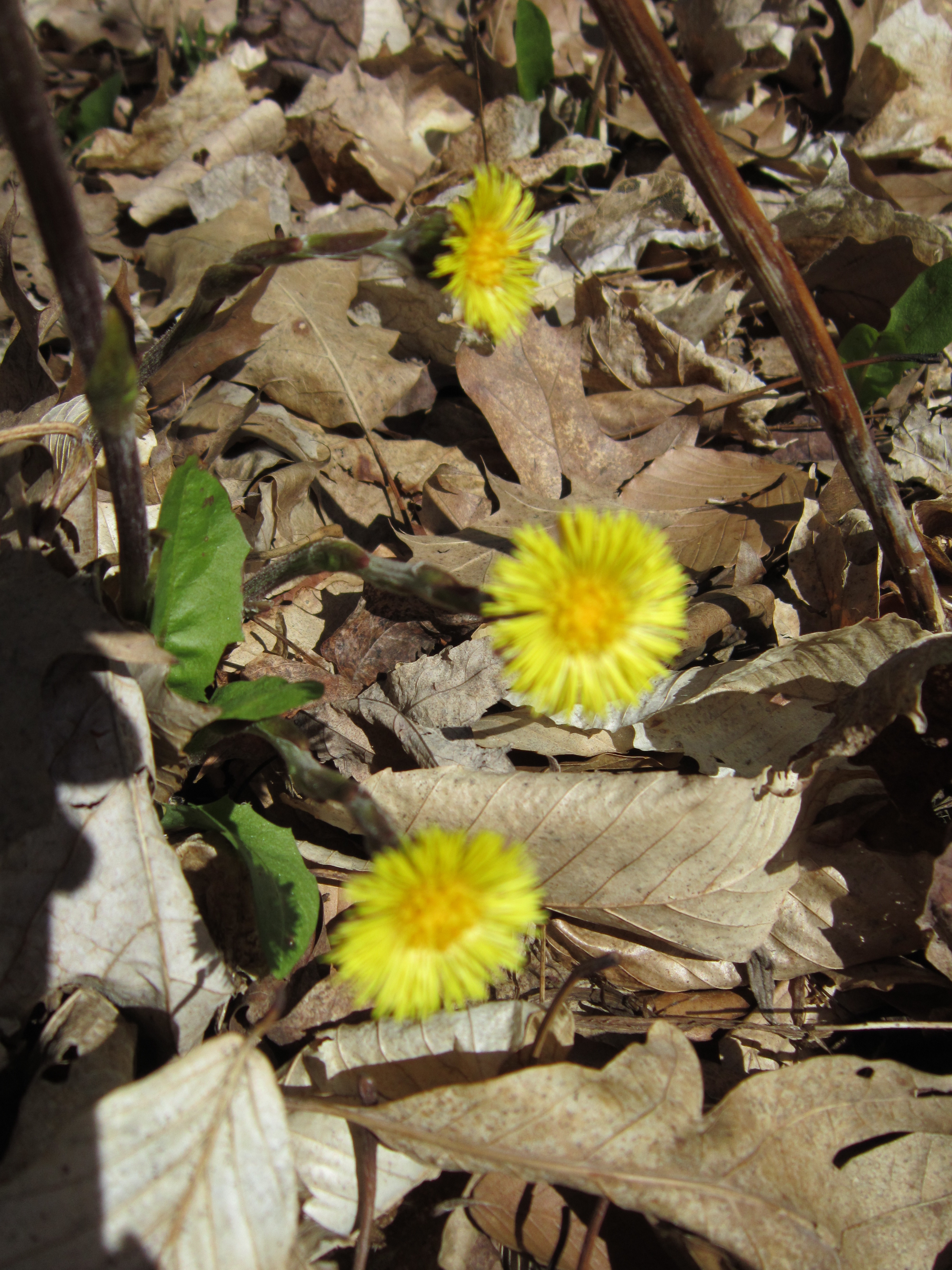
Coltsfoot can be candied and I’m still looking to find a patch big enough so that I can infuse the flowers into honey as a cough remedy!

Coltsfoot

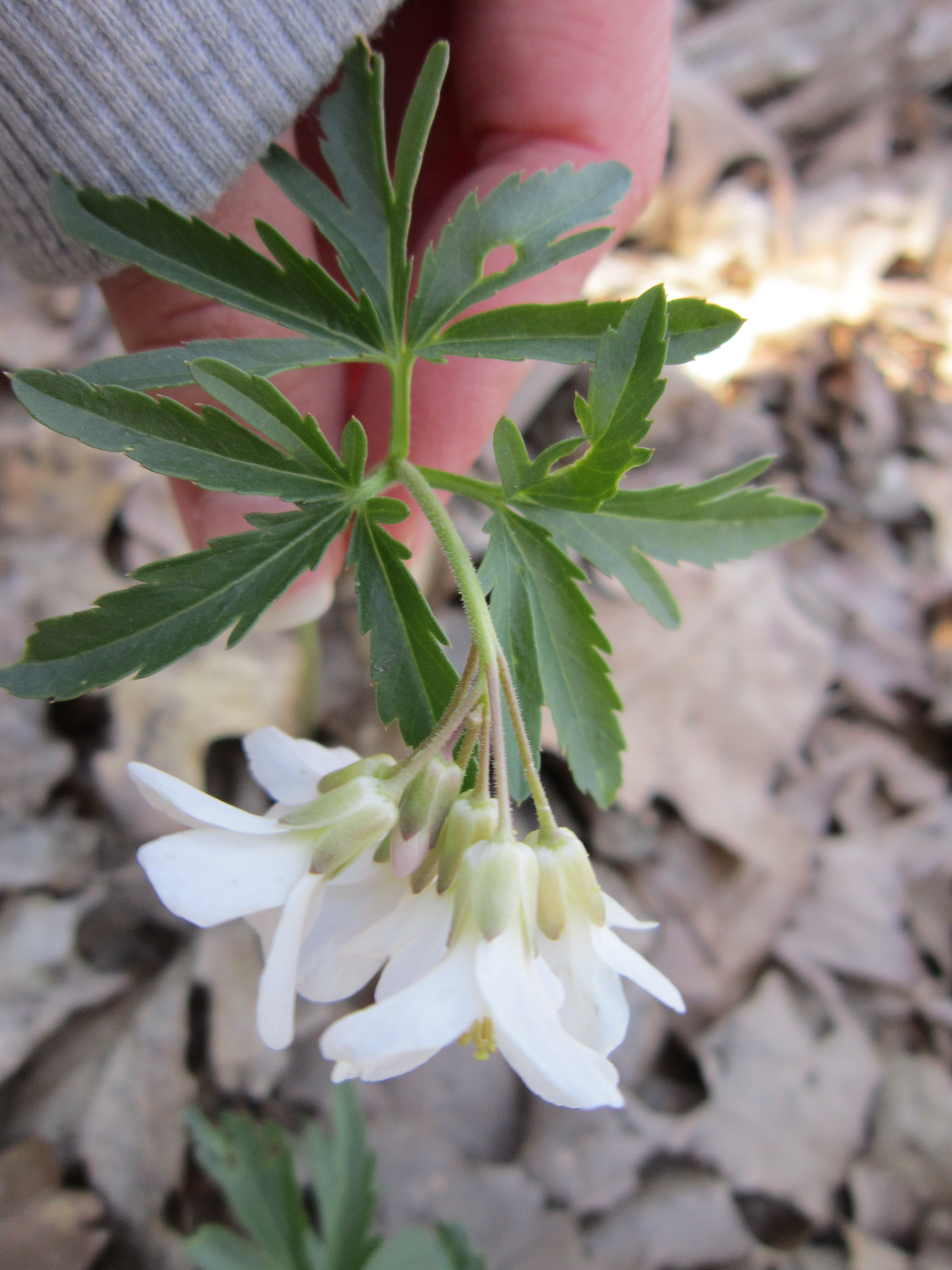
Chopped toothwort root can be substituted for horseradish.

Toothwort

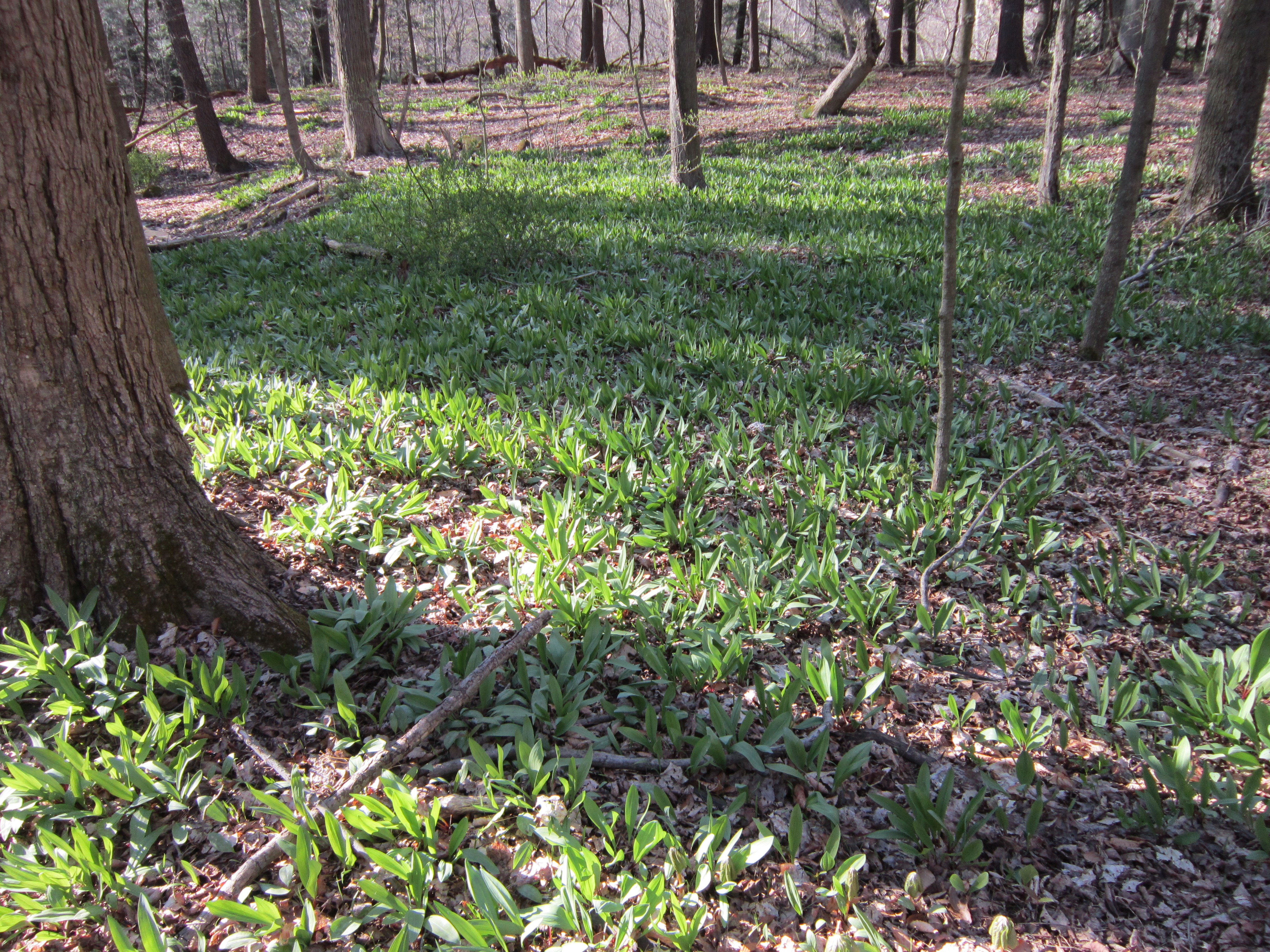
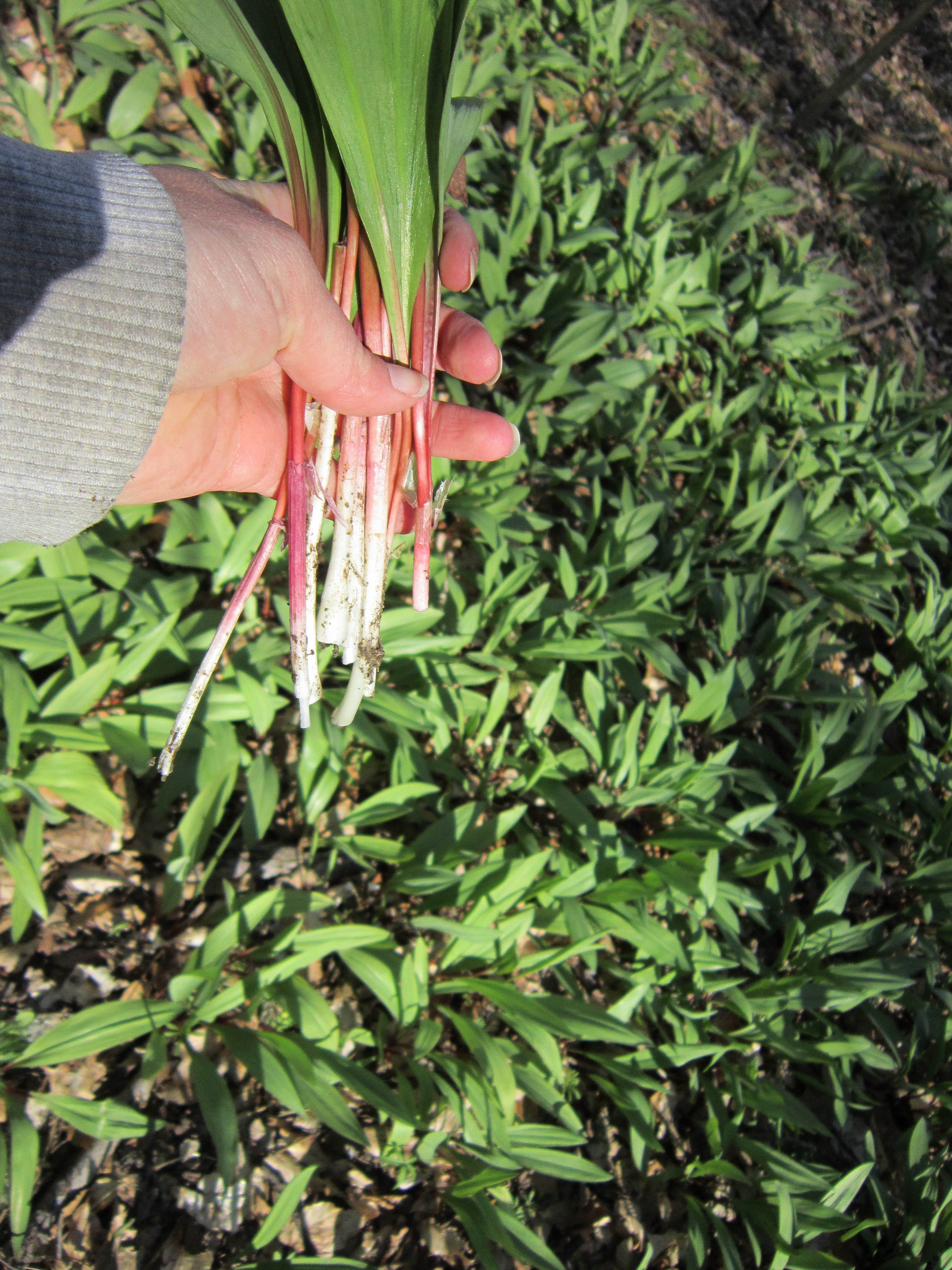
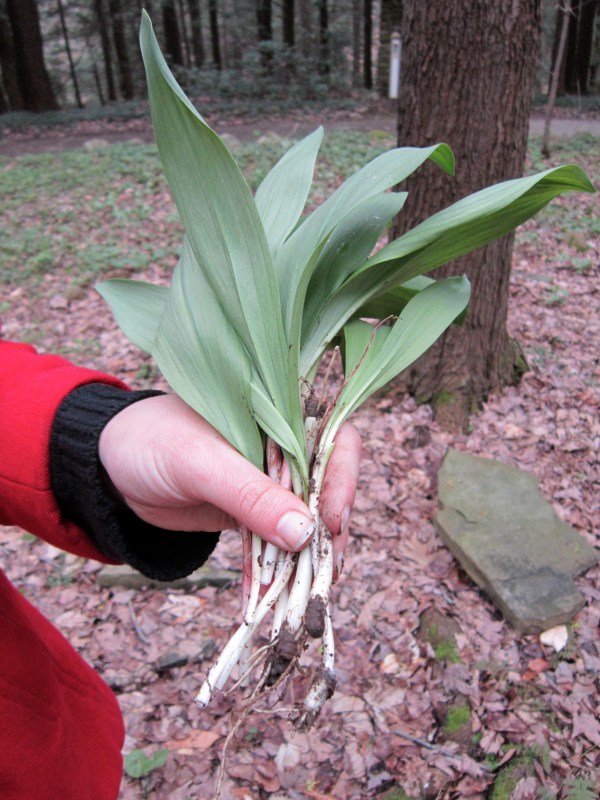
I also hit a ramp jackpot! They were everywhere!

Ramp overload!

Dinner!

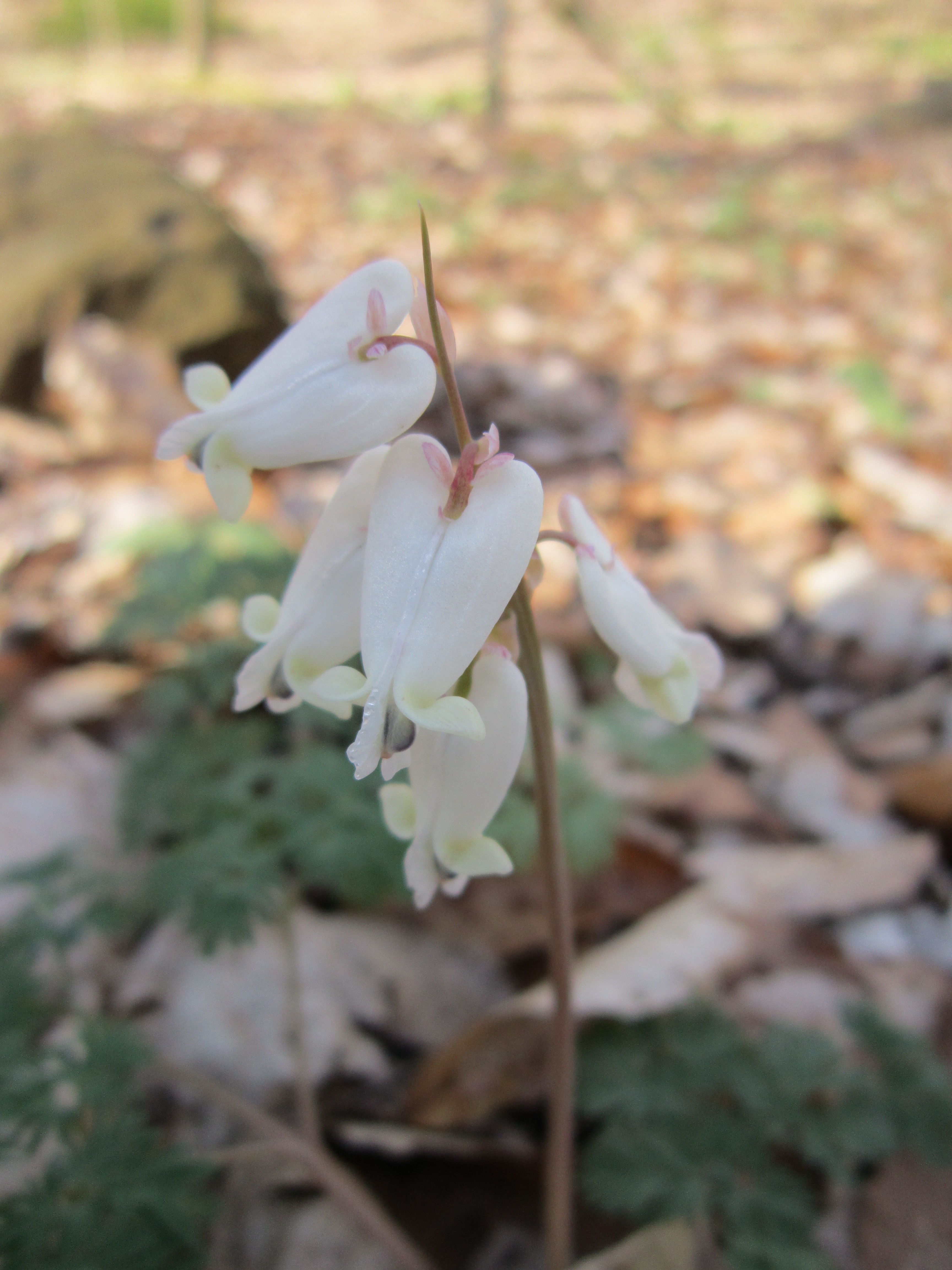
Wandering around this way also leads to other beautiful finds like Squirrel corn (I don’t have any idea about its edibility, don’t try!)…

Squirrel corn. Hehe - such a funny name.

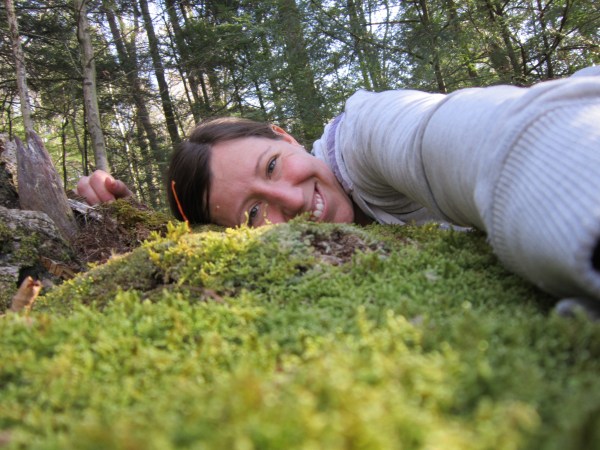
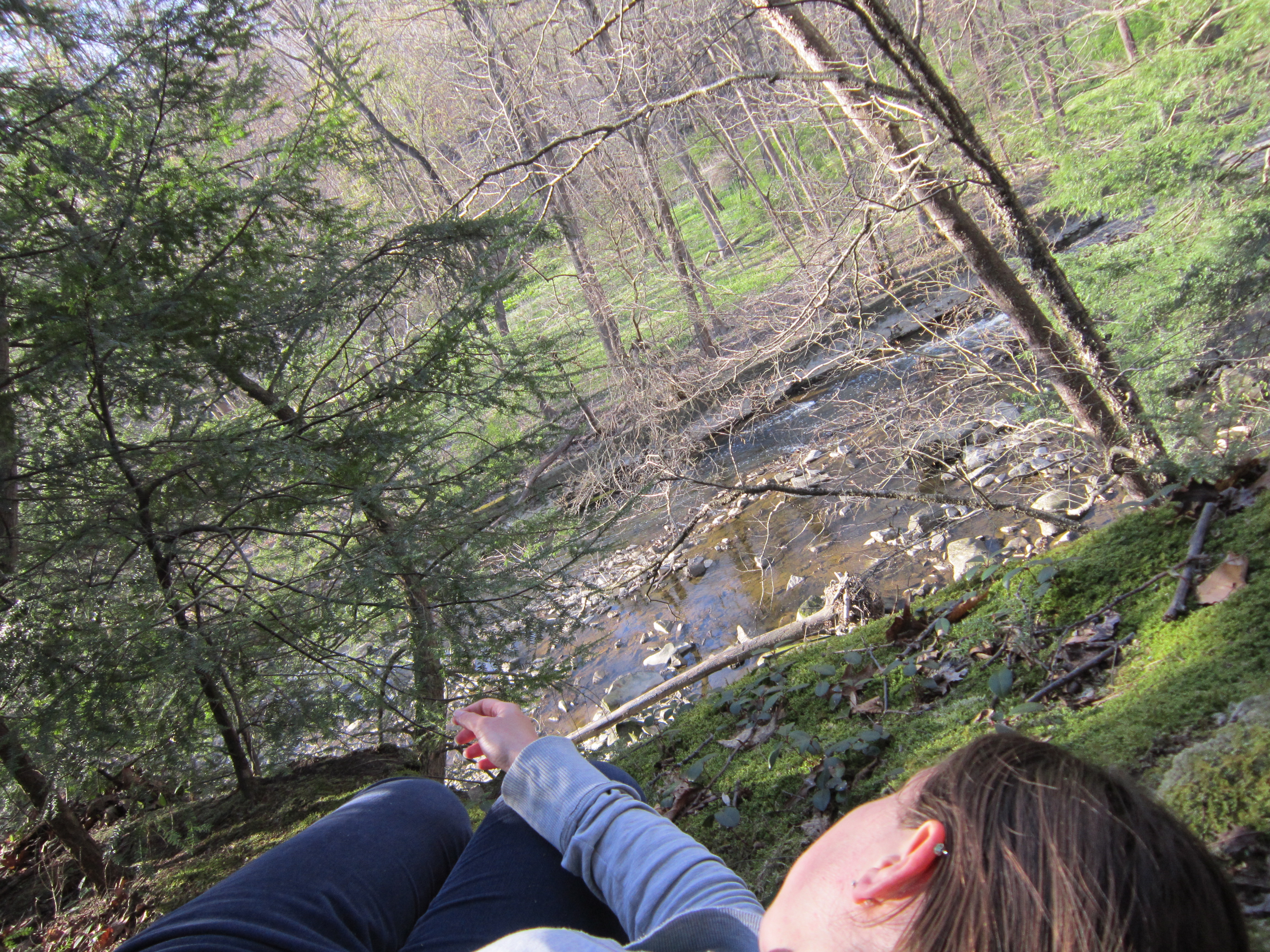
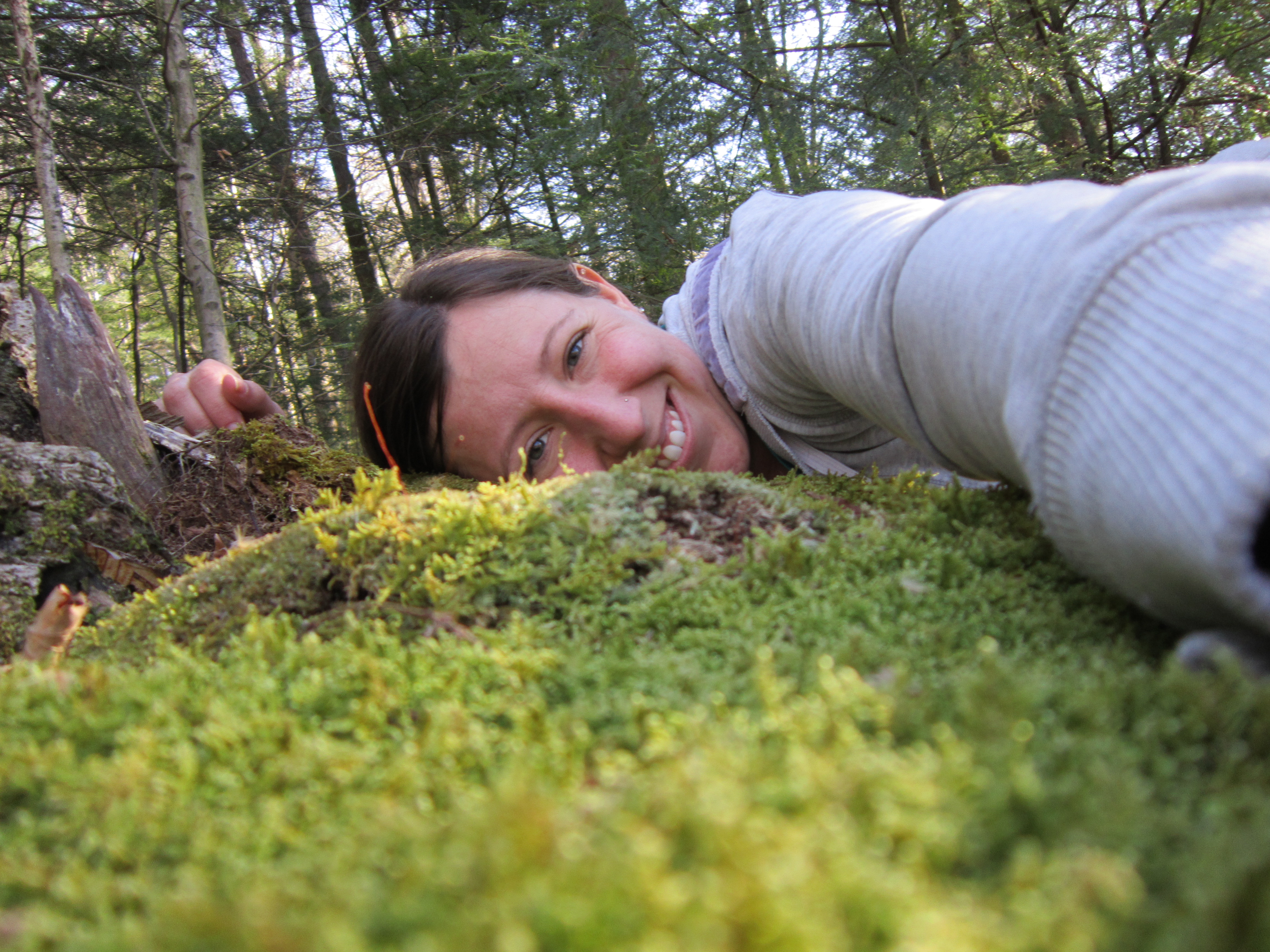
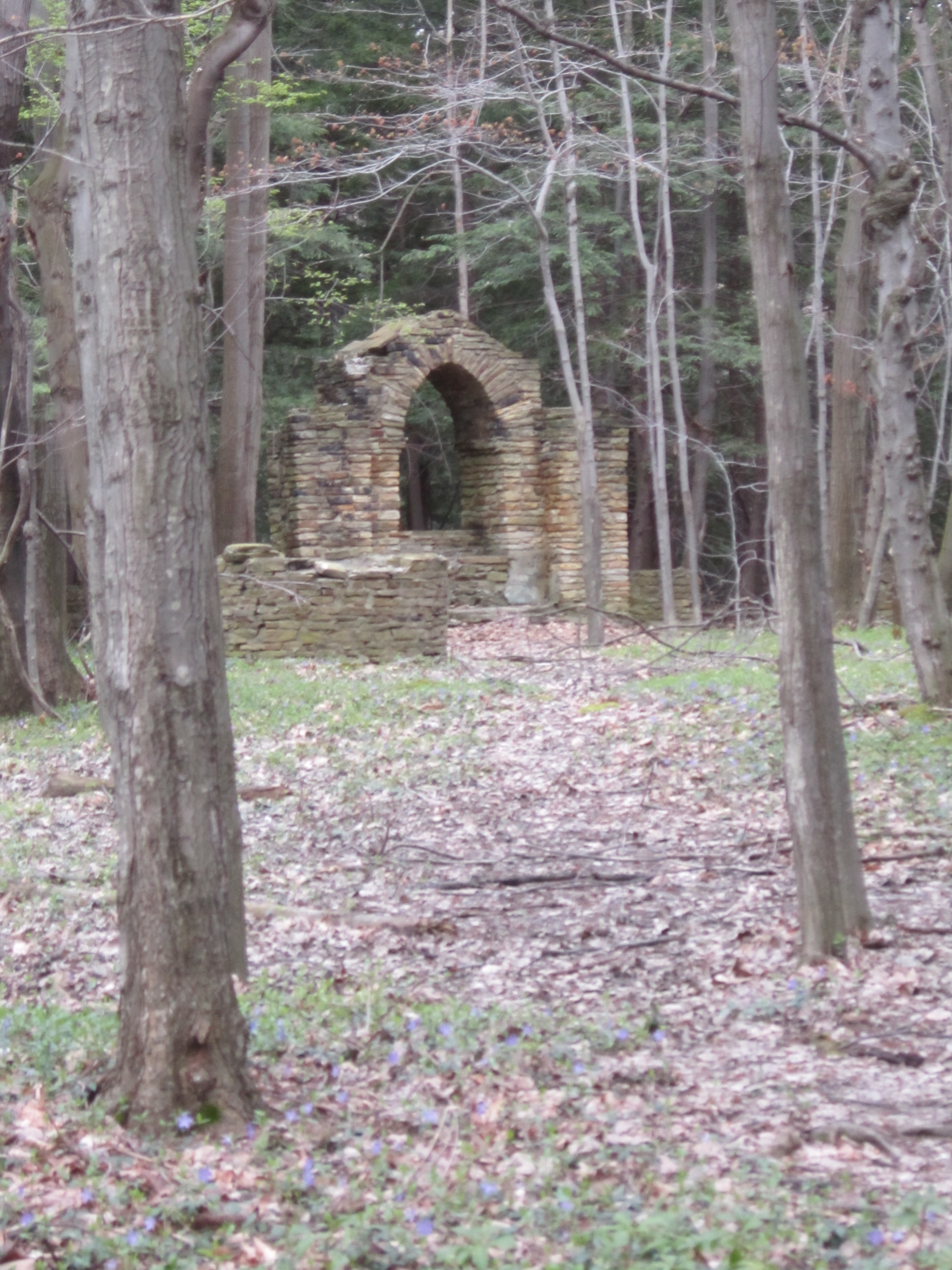
And you also might come across extremely cozy patches of moss at the edge of a ravine.  This is my version of ultimate renewal and peace. I once read that some Native Americans believe that excess energy accumulates in places like this (i.e., cliffs, edges). I think they are right – it feels so wonderful! Why don’t I do this every day?

I’m happy to provide more information to anyone who’s interested!

Go be in nature! Give in to your animal instincts and go foraging!

Enhanced by Zemanta

Remember to Take Your Pine Needles for Good Health!

Did you know that pine needles can provide you with more vitamin C than orange juice? And that they can help to heal your body from respiratory ailments, colds, and the flu?

Some say that the Native Americans taught the early settlers about drinking pine needle tea to help prevent death from scurvy!

Pine needle tea is easy to make, but what are some other things that can be done with pine needles?

They can be infused into a variety of menstrums (liquids used to extract the nutritional or medicinal properties of plants) other than water.  For example, tonight I got a nice dose of vitamin C by using vinegar infused with pine needles in my salad dressing.  White pine needle vinegar (the type I made) tastes similar to balsamic vinegar.

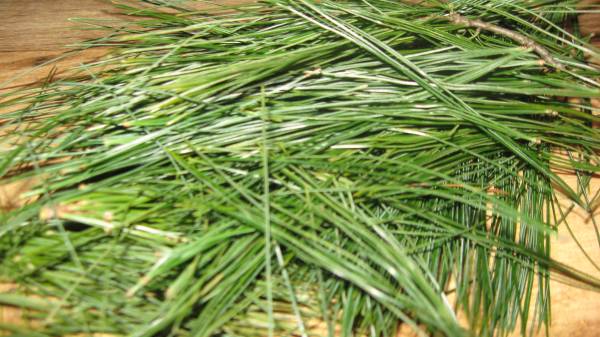
First, you’ll need to gather some needles. I collected a bunch from a white pine.

White pine needles

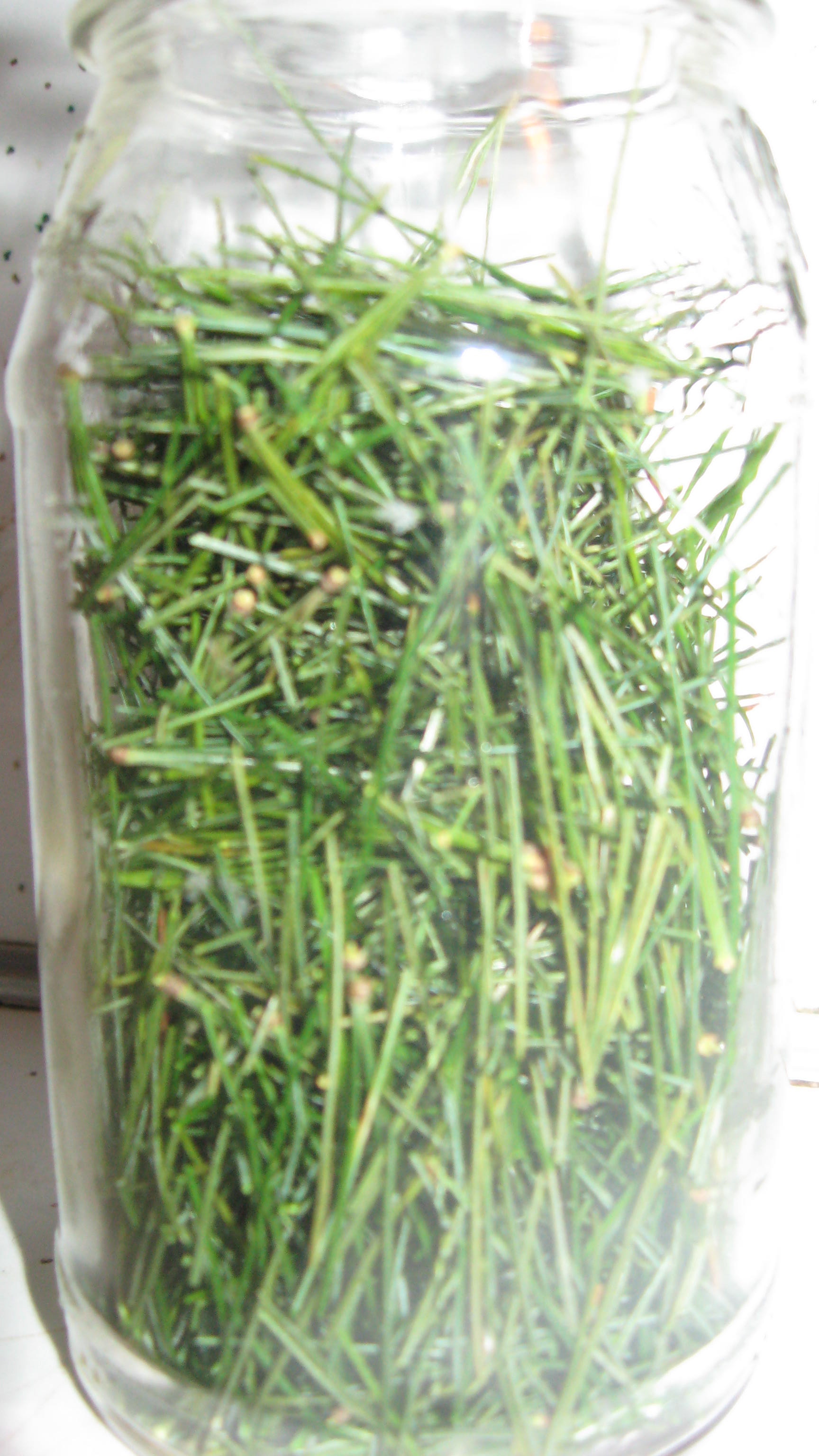
Pick through them to ensure the best ones are being added to glass jars. I also tore these up as I was adding them.

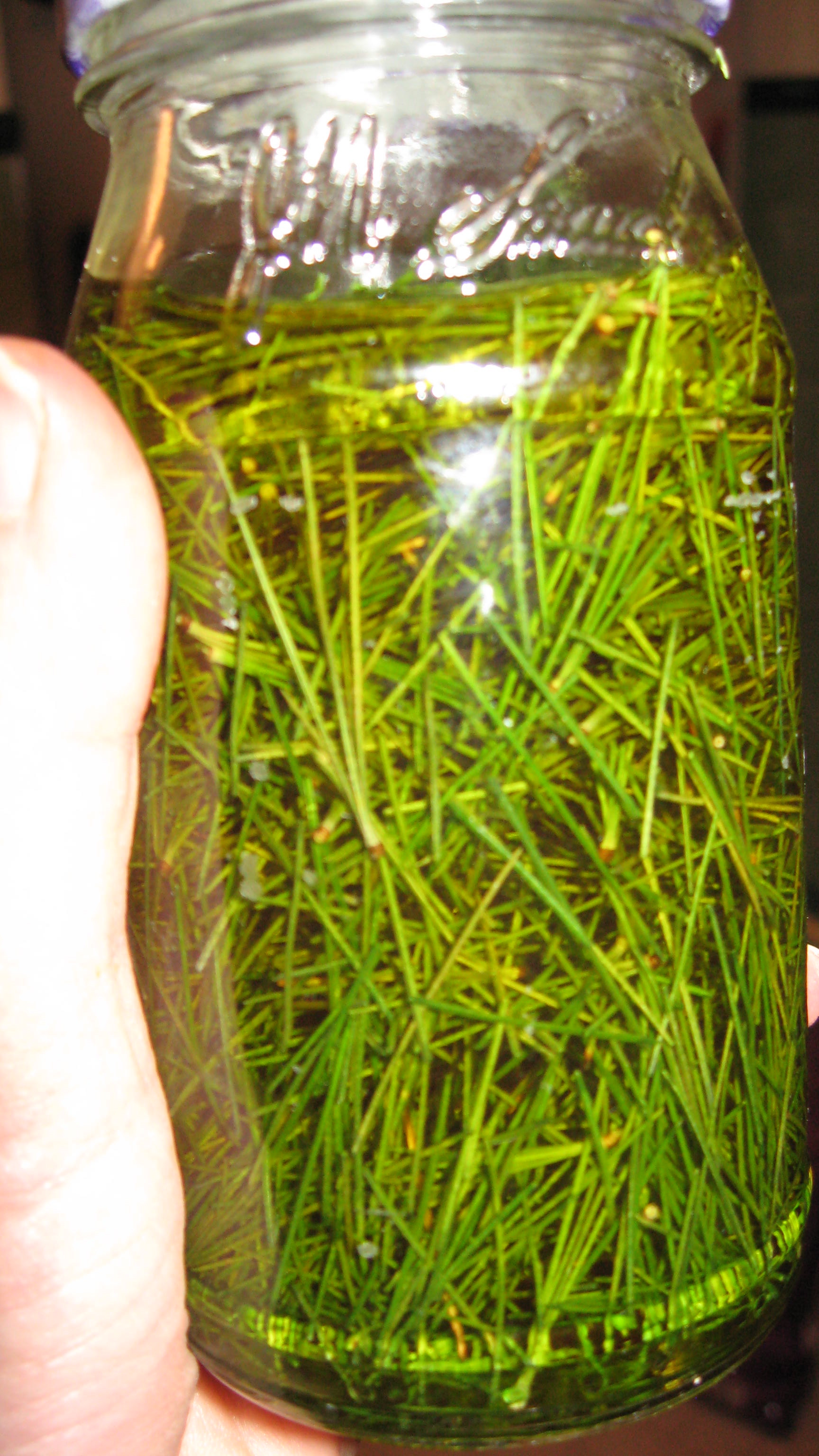
Fill the jar!

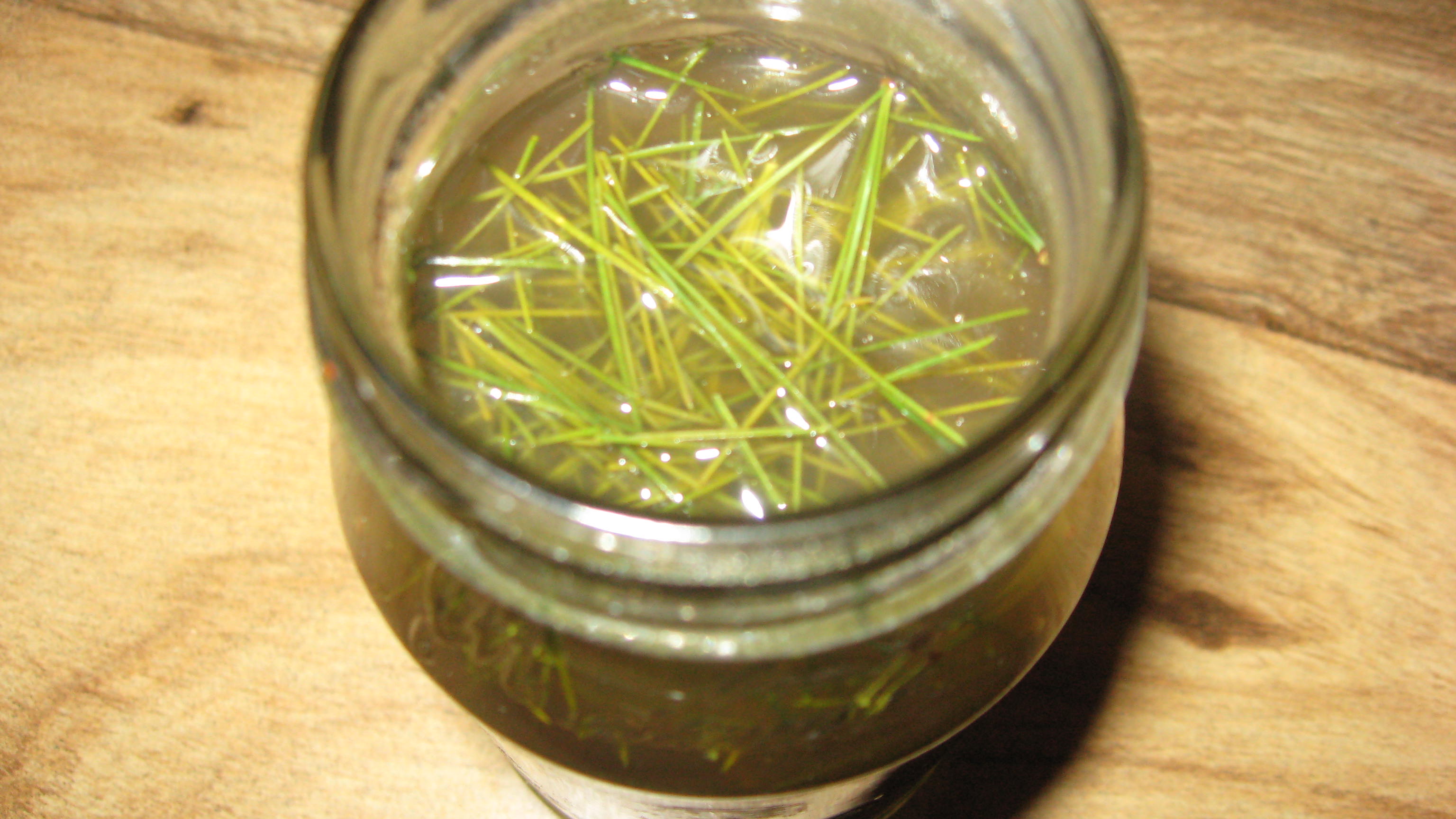
And then cover with the menstrum. In this case, it’s apple cider vinegar.  I get large jugs of the raw kind so I boiled some first to ‘pasteurize’ it before making this vinegar (and I was able to boil enough extra for future use). Make sure to completely cover the needles — poke them down so that they’re an inch below the liquid line.

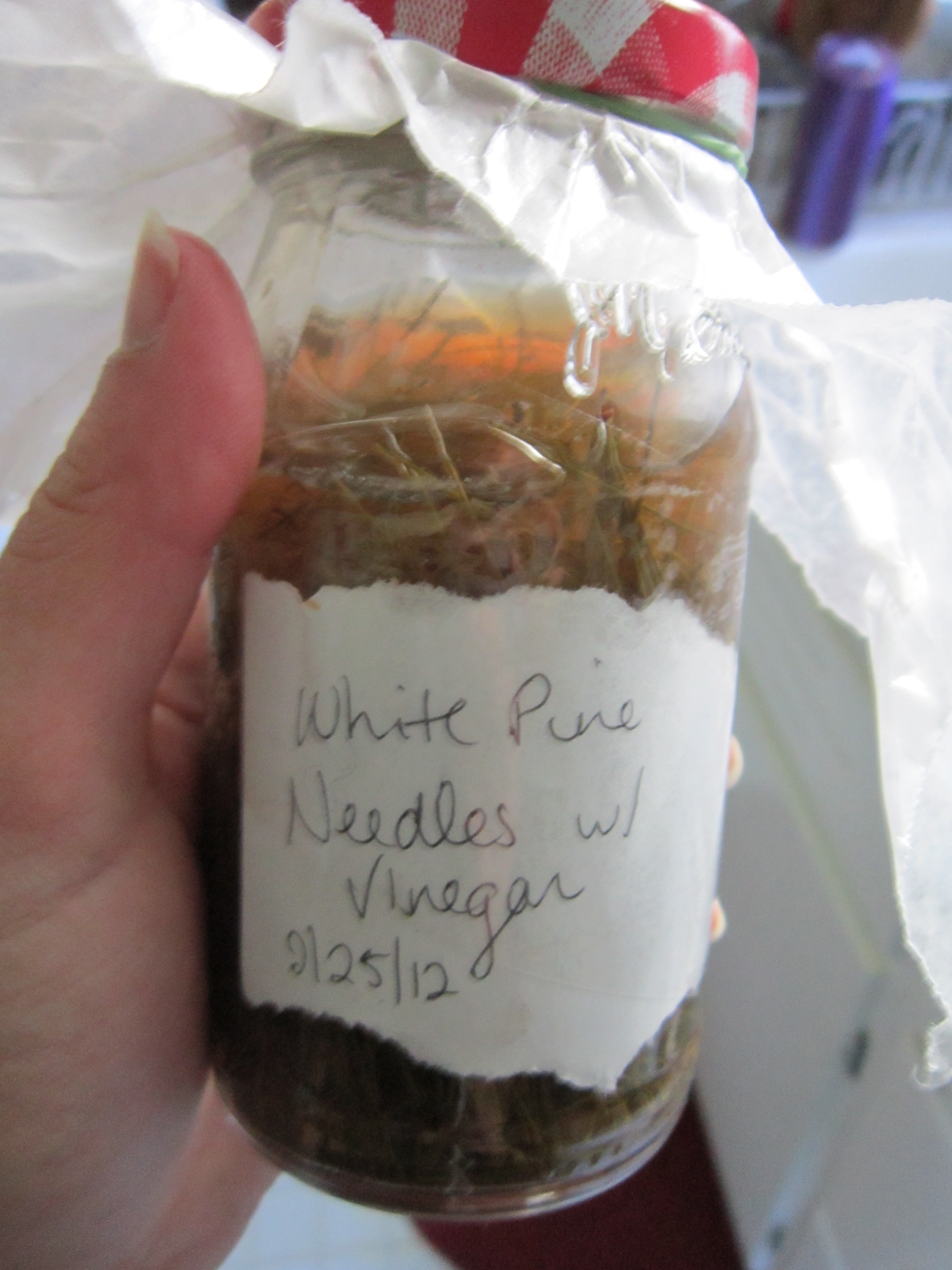
Let the finished product sit for 4-6 weeks before using.  Also, use a plastic lid or put a piece of wax paper on top because vinegar will eat away at the lid.

White Pine Vinegar ready to be strained!

What’s another use for the pine needles?  Infuse them in olive oil!  The oil can then be used as a relaxing massage oil or as a chest rub to help with respiratory issues.

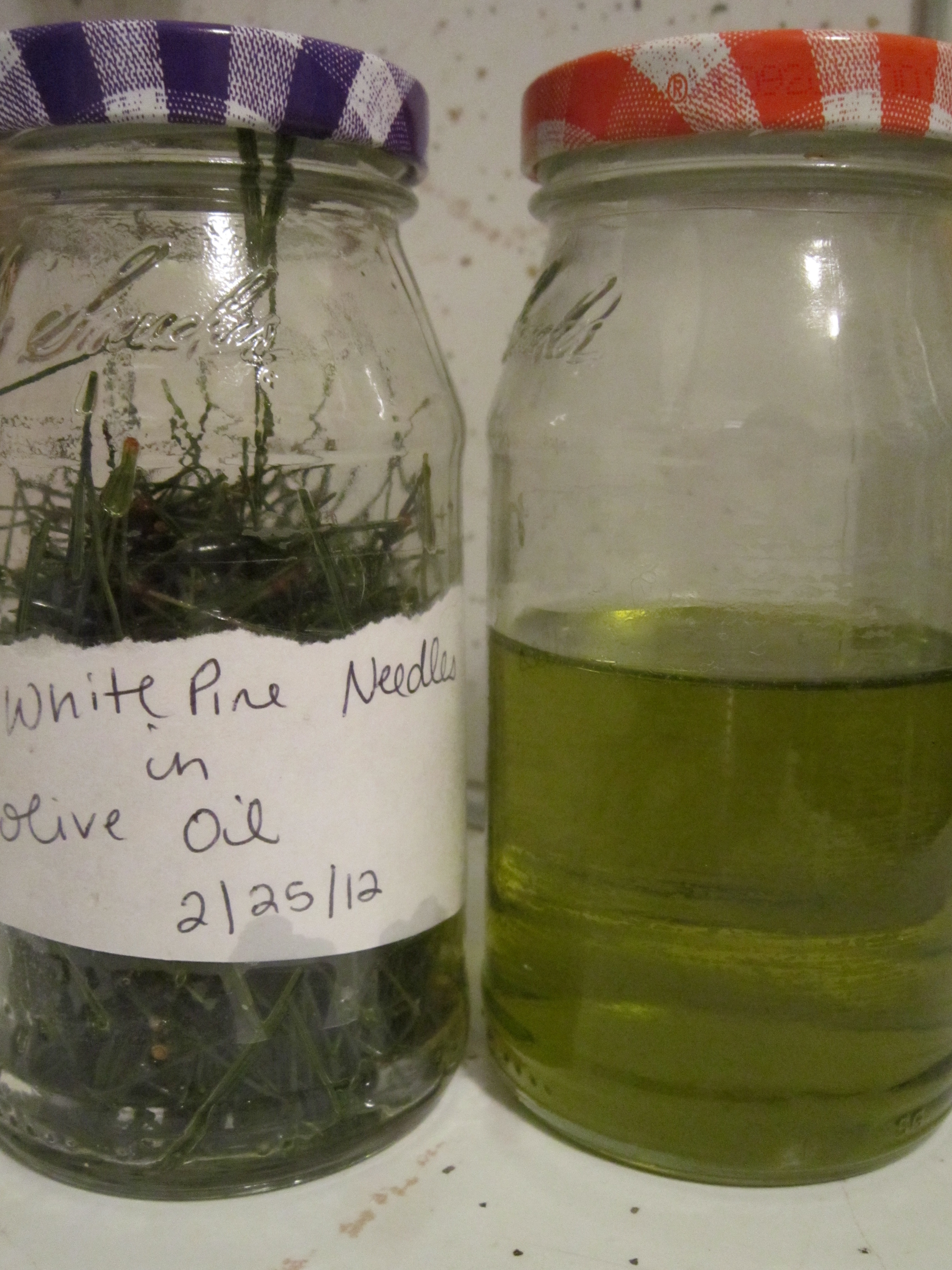
Cover a jar full of pine needles with the oil and let sit for 4-6 weeks.

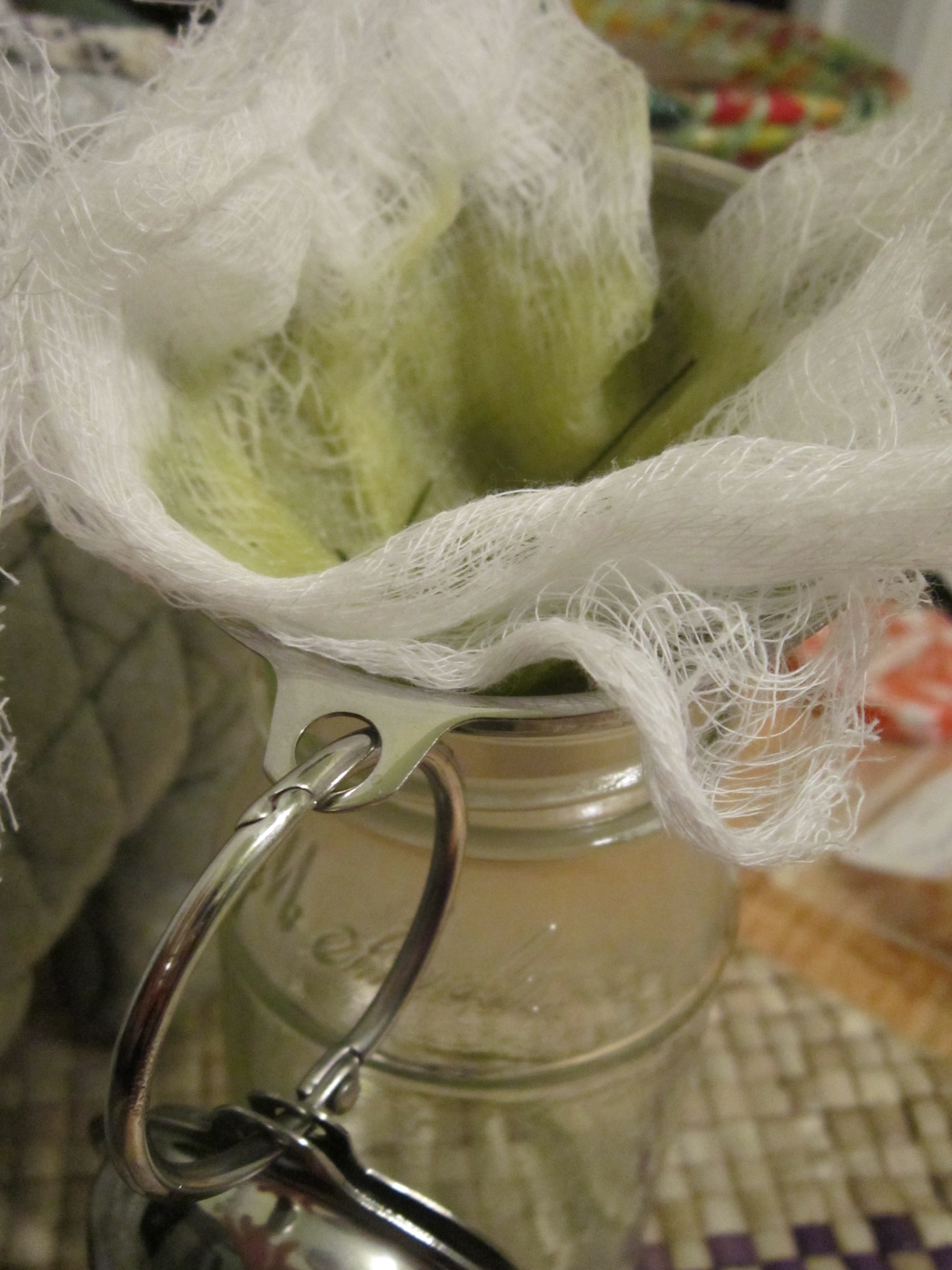
When you’re ready to use the oil, strain the needles out.

And you’re left with pine needle infused olive oil!

The oil can also be turned into a salve that can help to remove splinters (although it seems that the actual sap of a pine tree might be best at this!), or it can be put on small wounds to help them heal.  I’ve also been having a fun time using it as a lip balm!

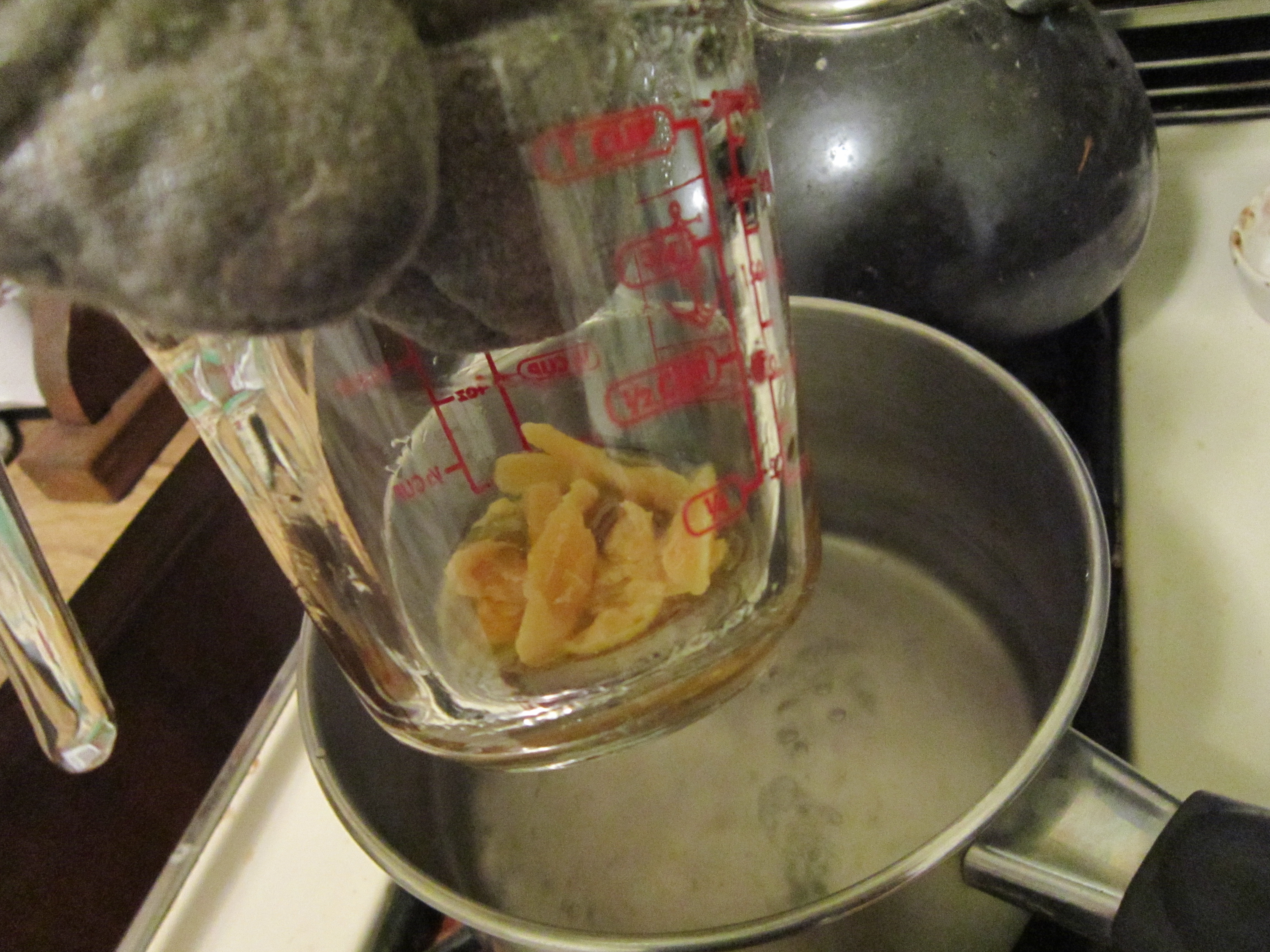
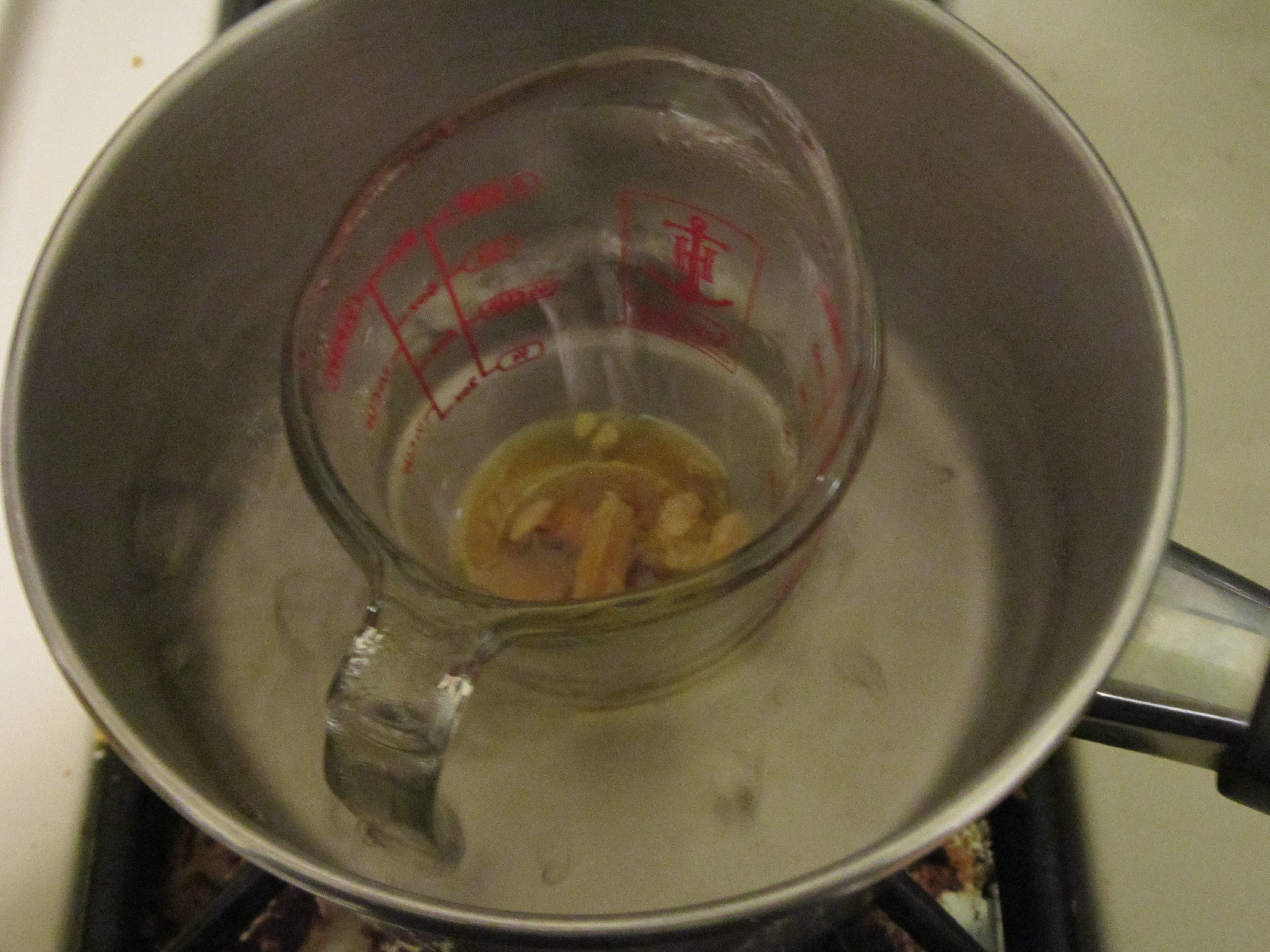
To make a salve, create an easy double boiler by putting a measuring cup into a pot of boiling water.

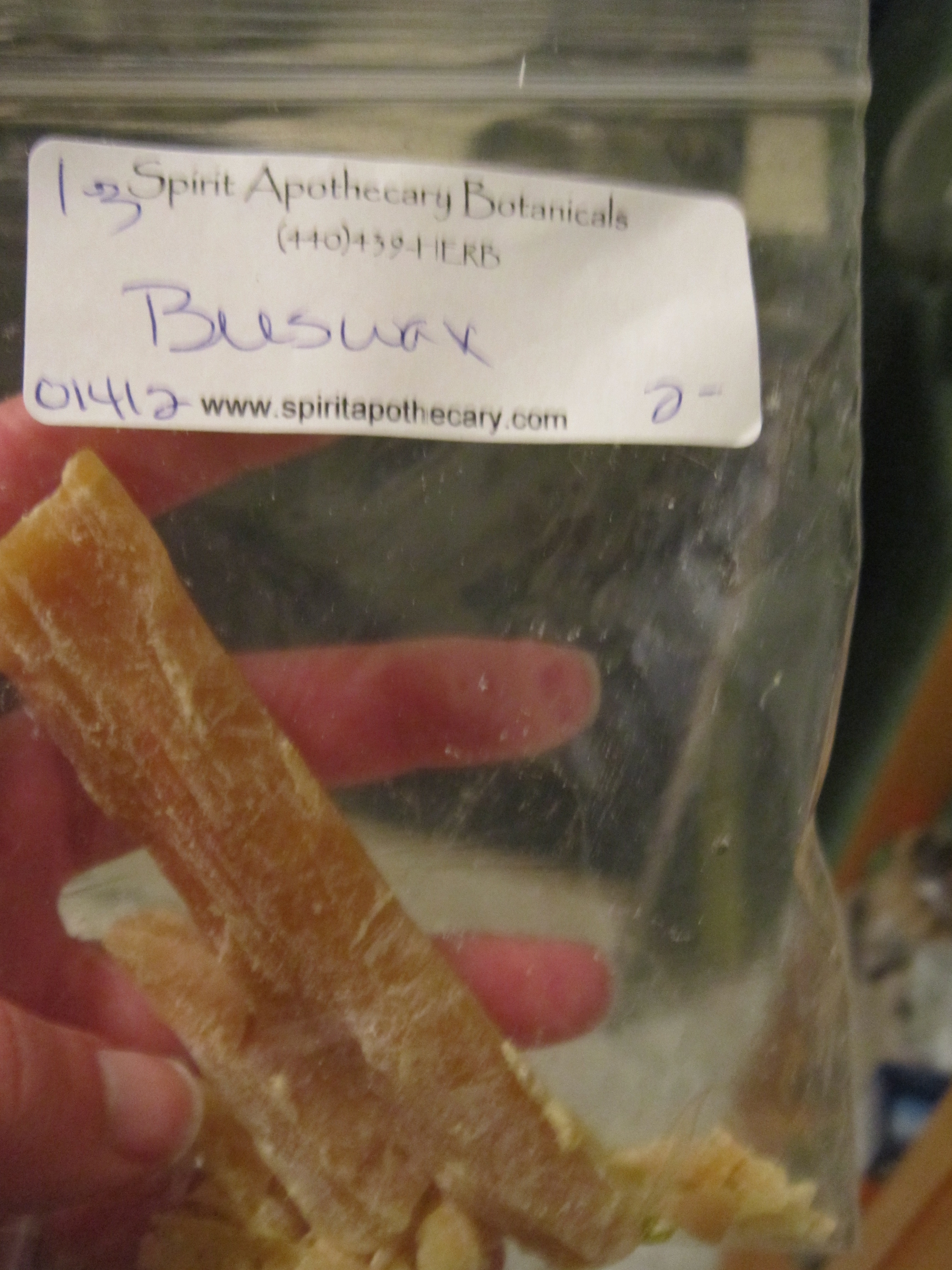
Add 2 Tablespoons of beeswax (I just guessed at the amount when I made this…) to the measuring cup and let melt.

After it has melted, add 2 ounces (1/4 cup) of the oil infused with pine.  Stir with a chopstick until you reach an even consistency.  Test to see if you’re done by putting a drop on your counter. It will allow you to quickly see if the salve is firm enough or too runny.  Too runny? Add more beeswax. Too firm? Add more oil.

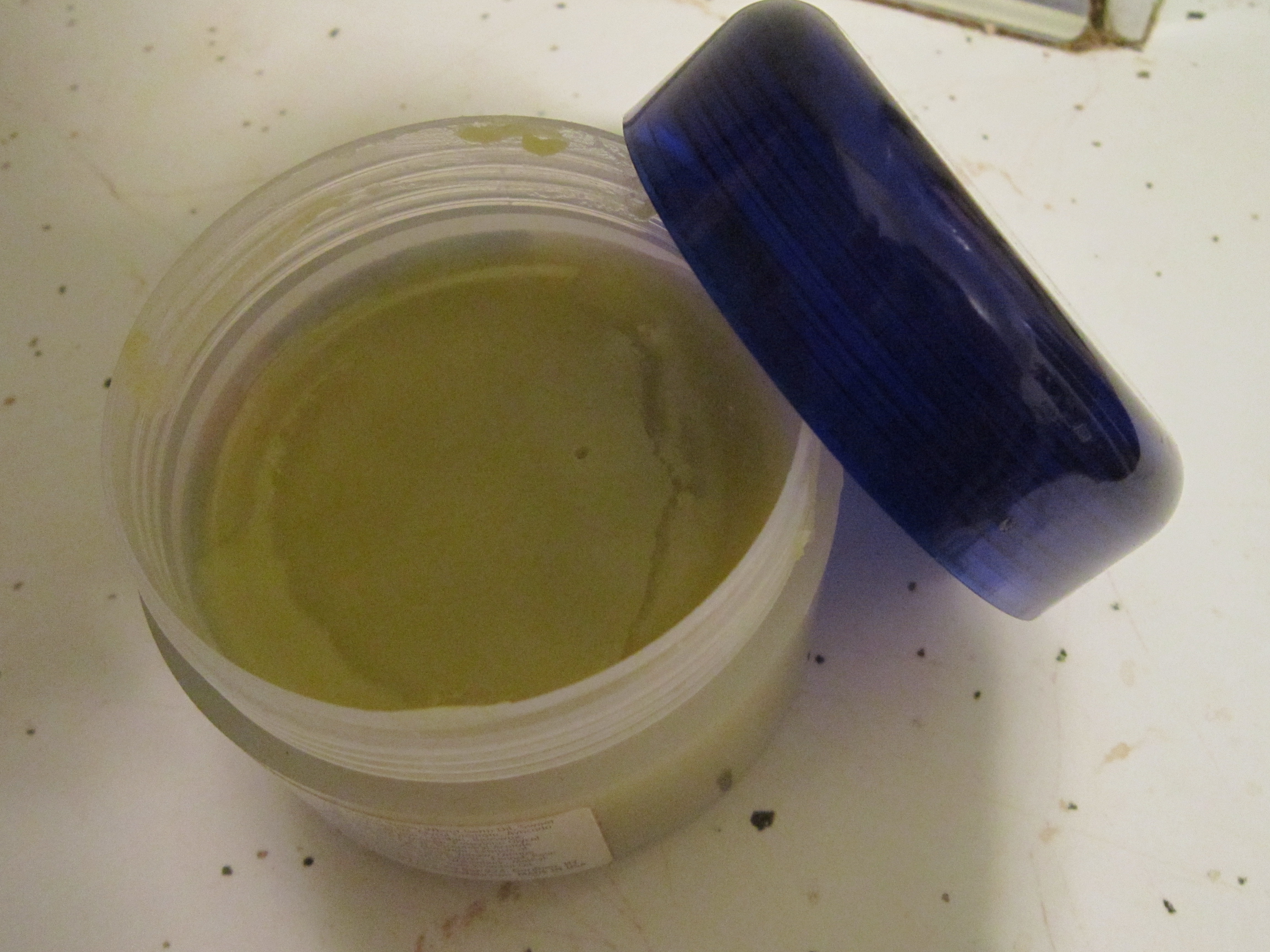
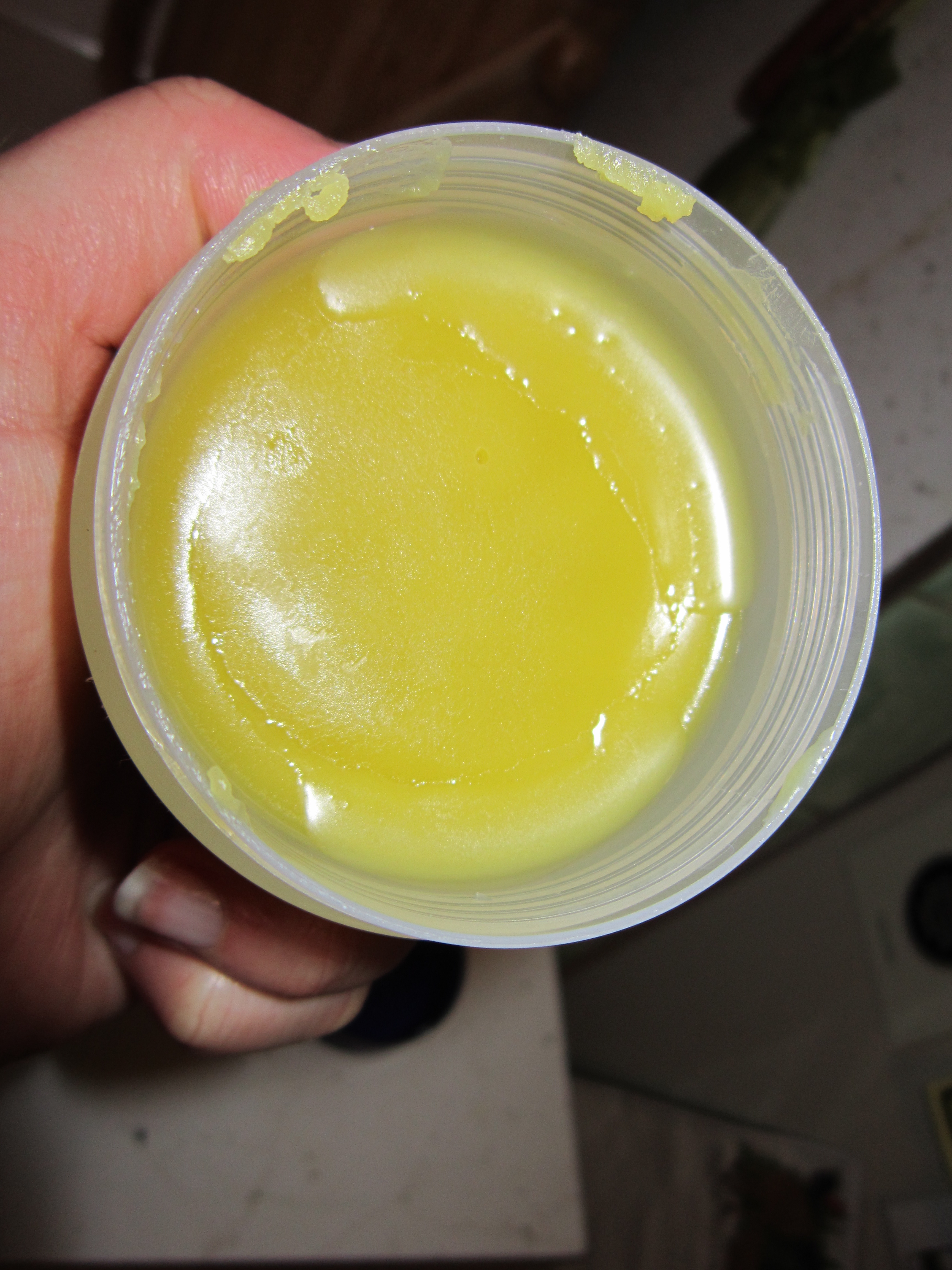
When the mixture is consistent, pour it into a reused container and let sit to become a salve!  Use and enjoy knowing exactly what went into your product!


Enhanced by Zemanta

Wandering on the Last Day of March: Impermanence & Wild Ramps

Yesterday, a hike through one of my favorite places to be in nature revealed several gifts.

First, was a reminder of impermanence. Everything is always changing and it is best not to become attached to any objects, people, or situations.  Strive to find happiness in each moment.

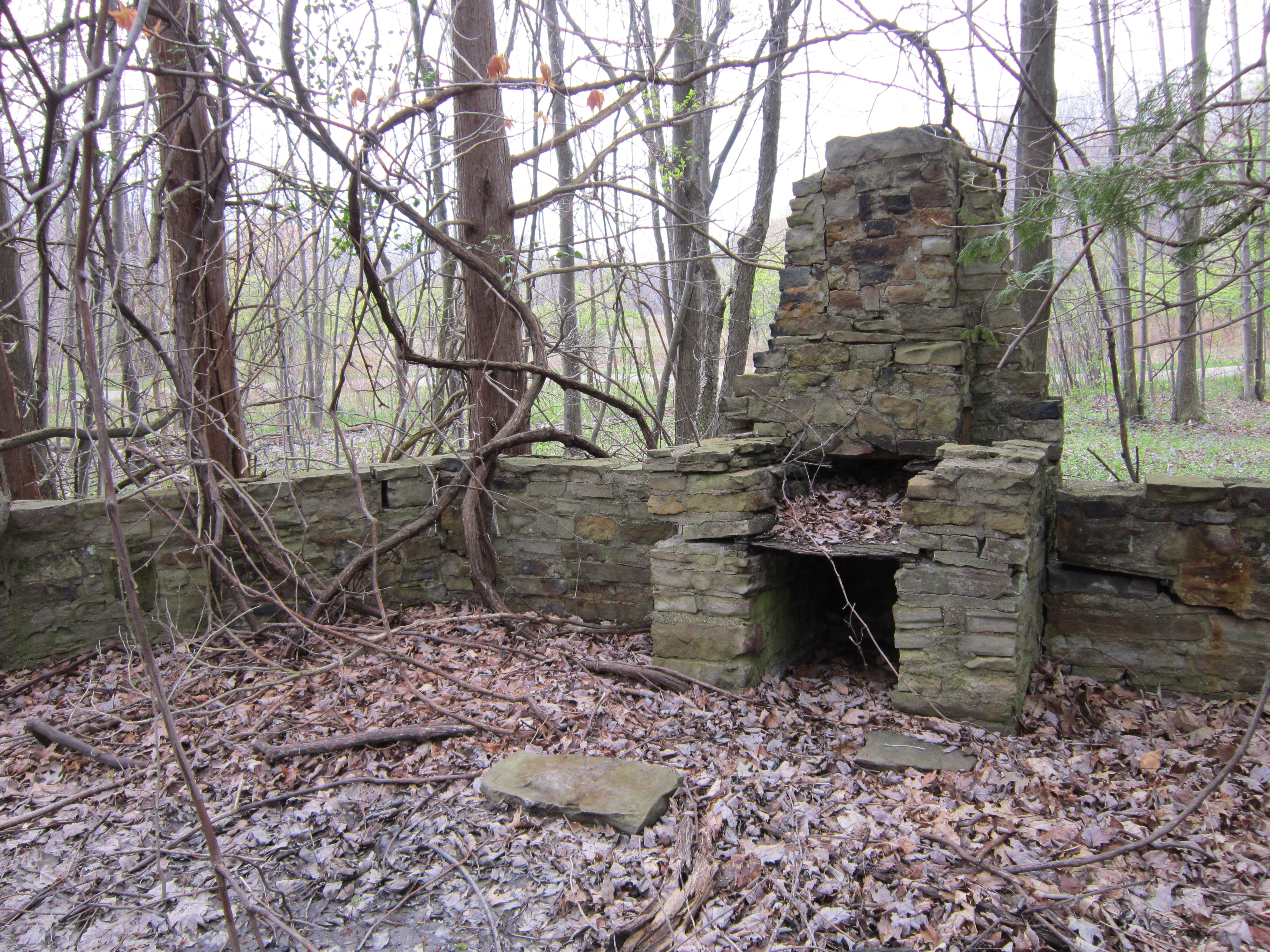
Everything will return to the Earth in time.

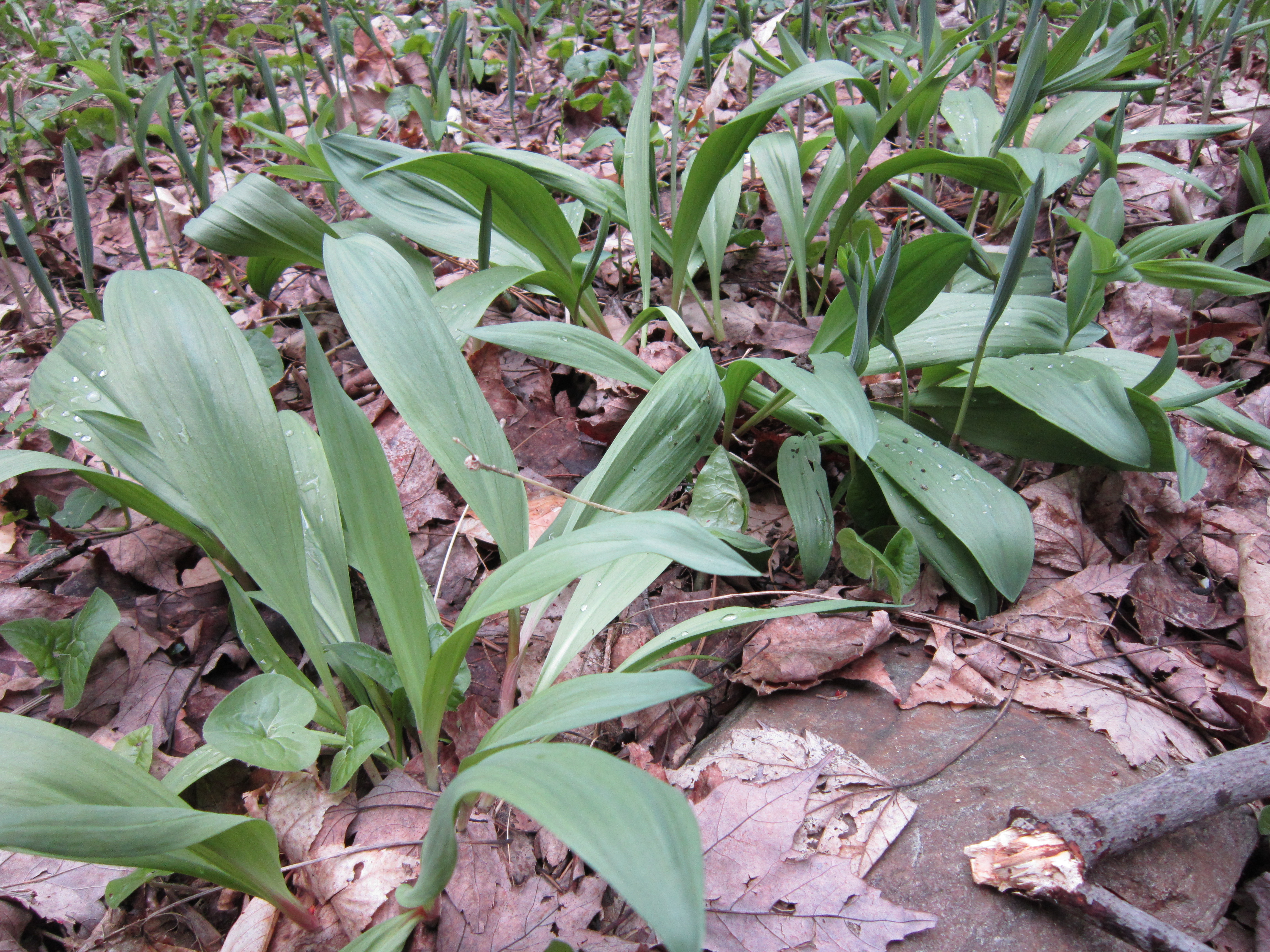
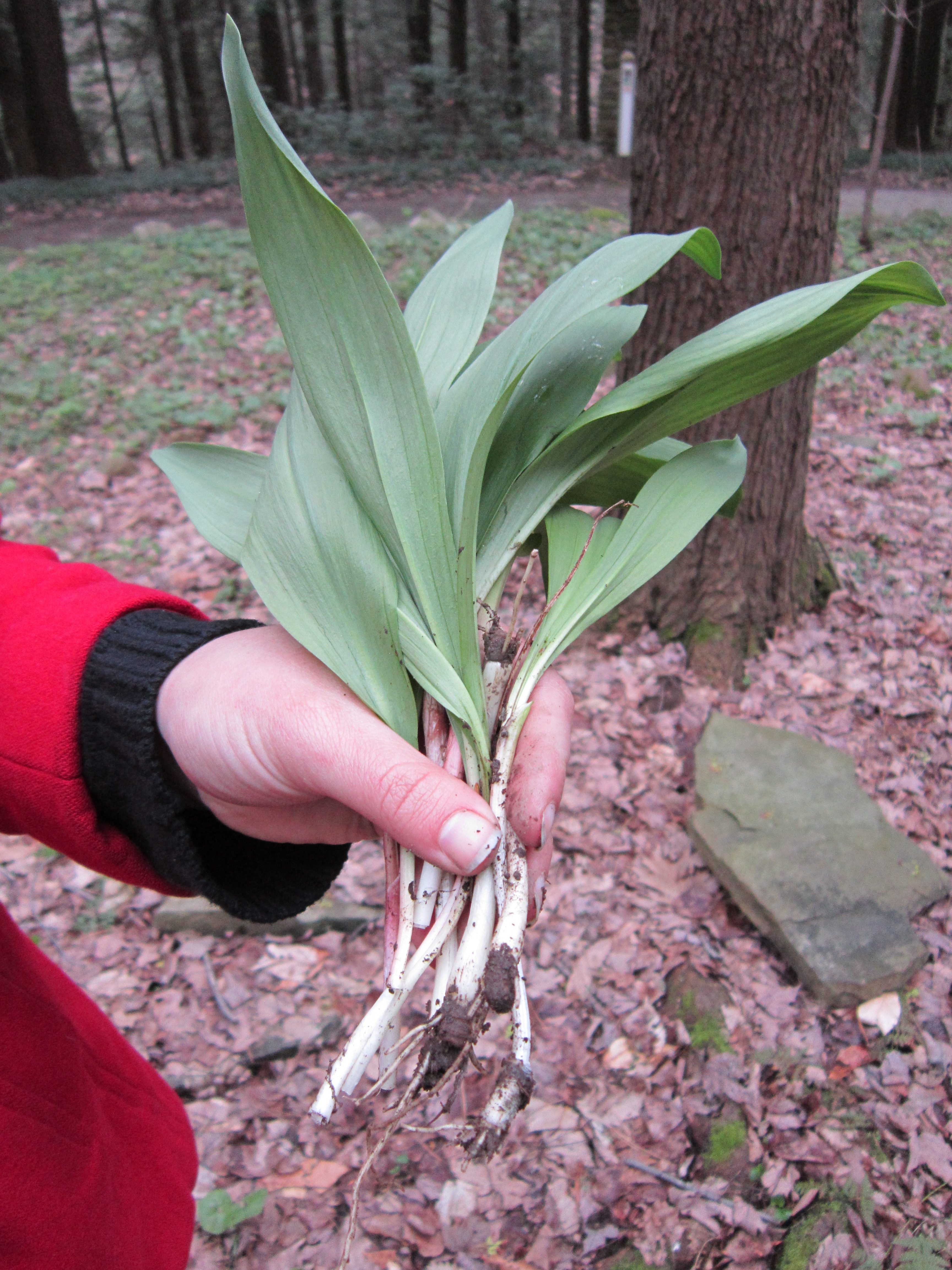
Second was a gift of free nourishment!  We found wild ramps (Allium tricoccum), a perennial wild onion.

Patch of ramps

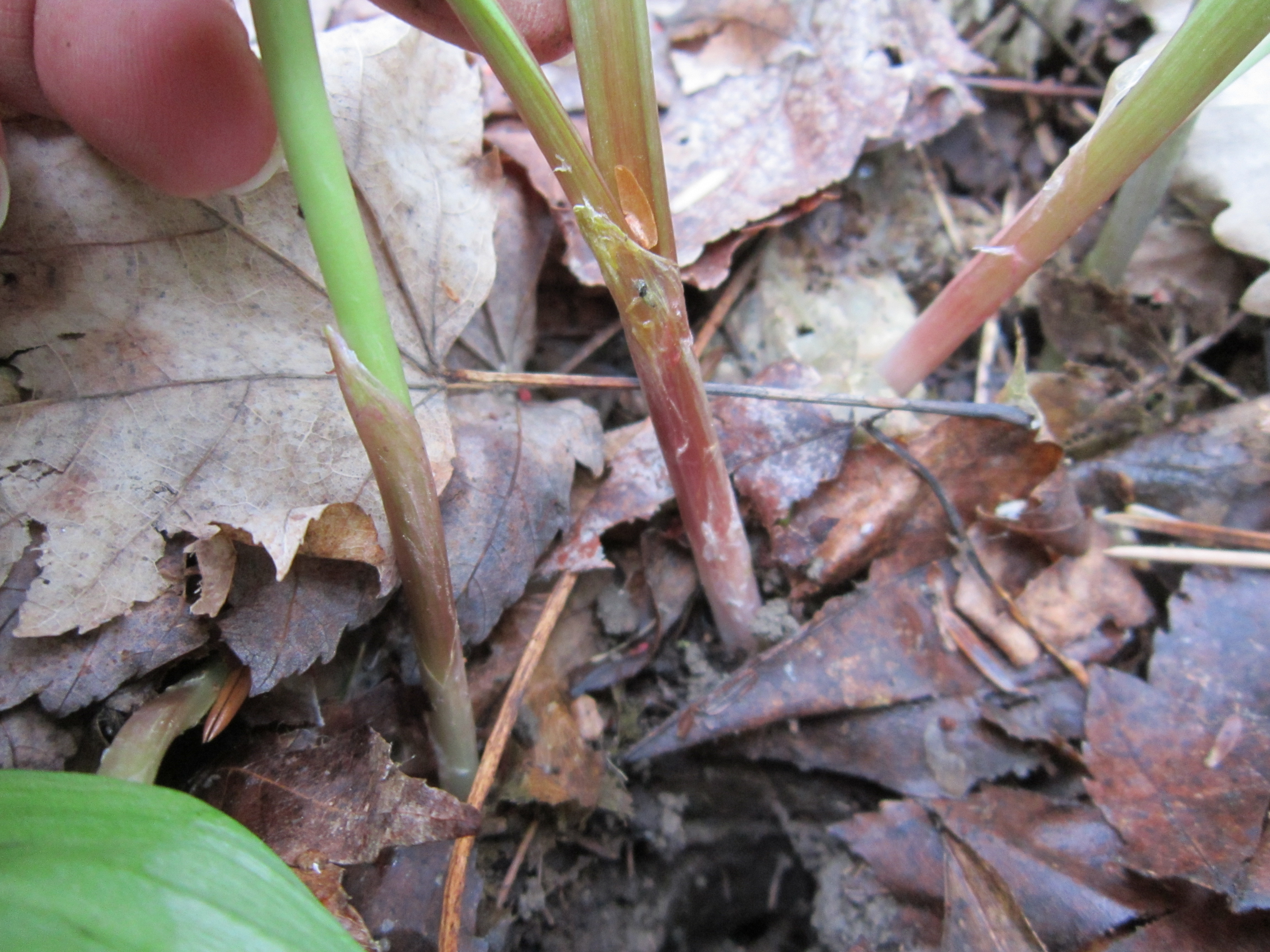
When you get closer, you can tell they’re ramps by the slight reddish-purple color where they meet the ground. And when you pull them, you’ll know they’re ramps by their characteristically onion smell.

Reddish-purple: yup, ramps!

I harvested several.  It’s important that we’re not greedy when wild harvesting things so that we (and other creatures who depend on them) will have these foods in the future. Always leave many more plants than were harvested (some suggest harvesting every 4th ramp).  Another idea is to just pull the ramp up from where it meets the ground — you’ll still get some of the onion, but the bulb will be left to grow again.  Or even consider being regenerative with the onions and if you take some bulbs, use a few to start a new patch elsewhere.

Ramps for me; ramps for free

Ramps have sulfur compounds that are detoxifying for your body — try some today!

Also, did anyone else participate in this year’s Earth Hour?

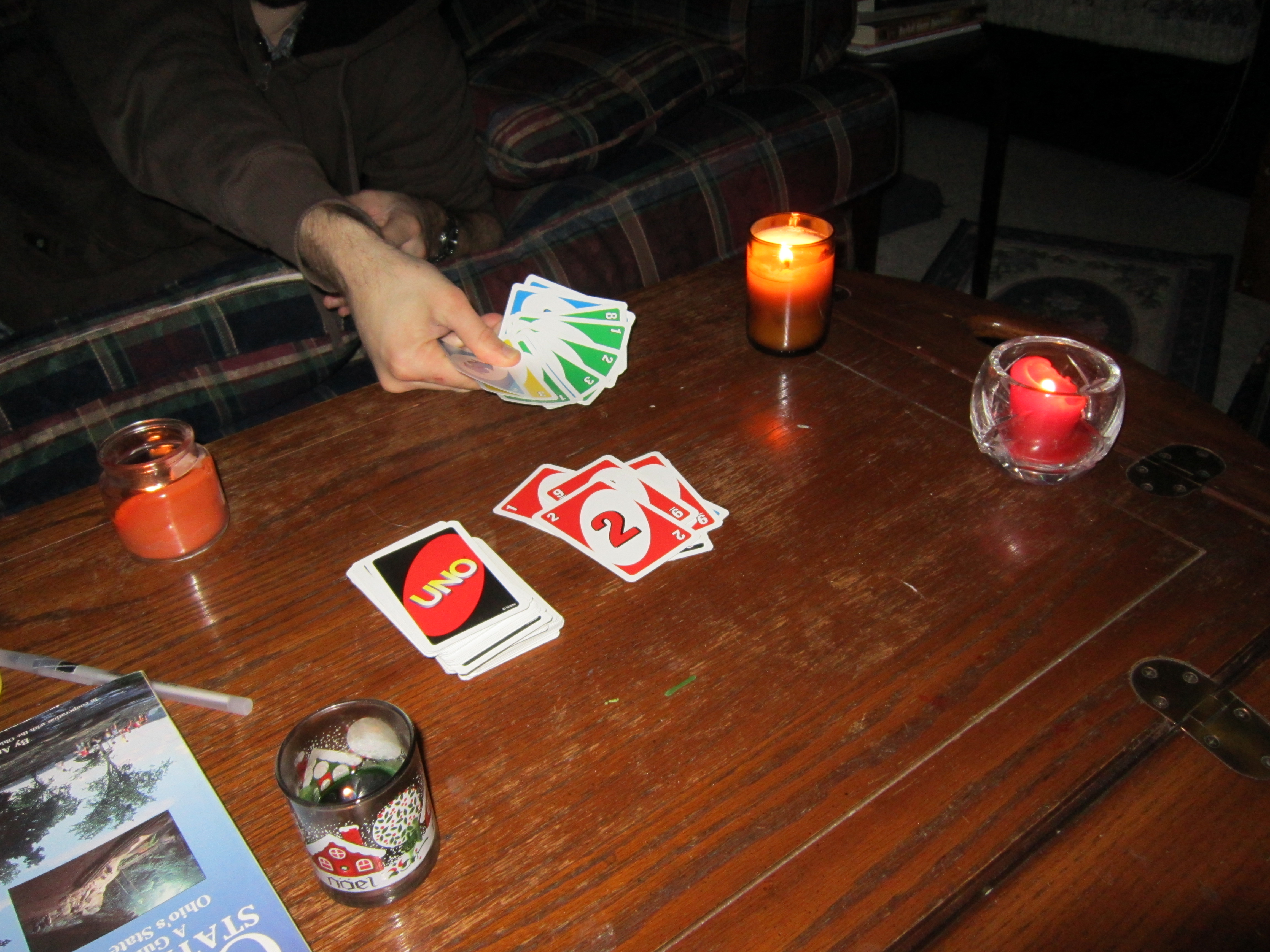
It’s a fun way to show support for the Earth, be reminded of how much we depend on electricity, and to unplug for awhile! The camera-flash makes it look bright, but we had fun with candles as our only light for over an hour.  I’d like to do this more often!

Candlelight night!

Enhanced by Zemanta

Happy Ostara! Celebrate Spring!

Regardless of what you like to call it, today is the Spring Equinox in the Northern hemisphere and we have again returned to a time where day and night are equal.  This time, daylight will win and we will continue to experience more light until the summer solstice returns.

Following the wheel of the year and the turn of the seasons is one of the best ways to connect with nature and to feel a greater sense of being a part of the all that is.  I find it especially whimsical and meaningful to think of my ancestors and other nature-based cultures of the past who would have felt this day on an extremely intimate level.  This balance between night and day means that winter is officially over and that soon food will be plentiful again — this is literally a time to be thankful that life can continue on. I think we still feel a part of this as we open our windows, spend more time outdoors noticing flowers, and feel a sense of renewed energy in our lives. The return of the Spring season still represents a time of renewal, rebirth, and fertility.

Luckily, even the idea of taking time to celebrate a day like Ostara isn’t all that foreign to most of us — the concept of rebirth and fertility as symbolized by eggs and rabbits appears in other holidays around this time of year (hello, Easter!).

Whether you celebrate it now, or in a few weeks at Easter, take a few moments to think of how and why these holidays began and how intimately humans have always depended on the Earth for our survival.

Usually, Ostara is a time where I’m just starting to feel like Spring might come again. This year has been a little different and Spring is in full force.  Here are some Spring-things that I’ve noticed over the past few days…

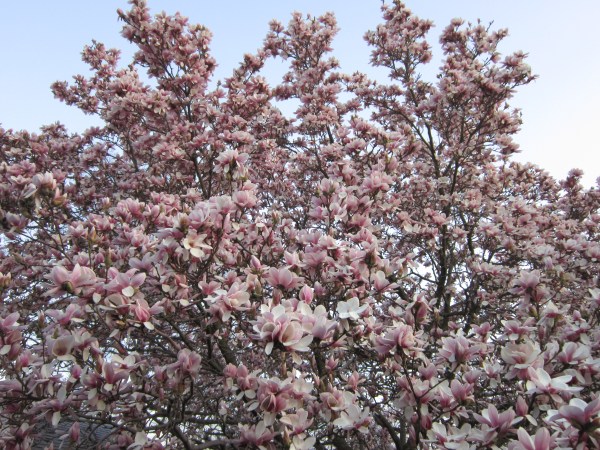
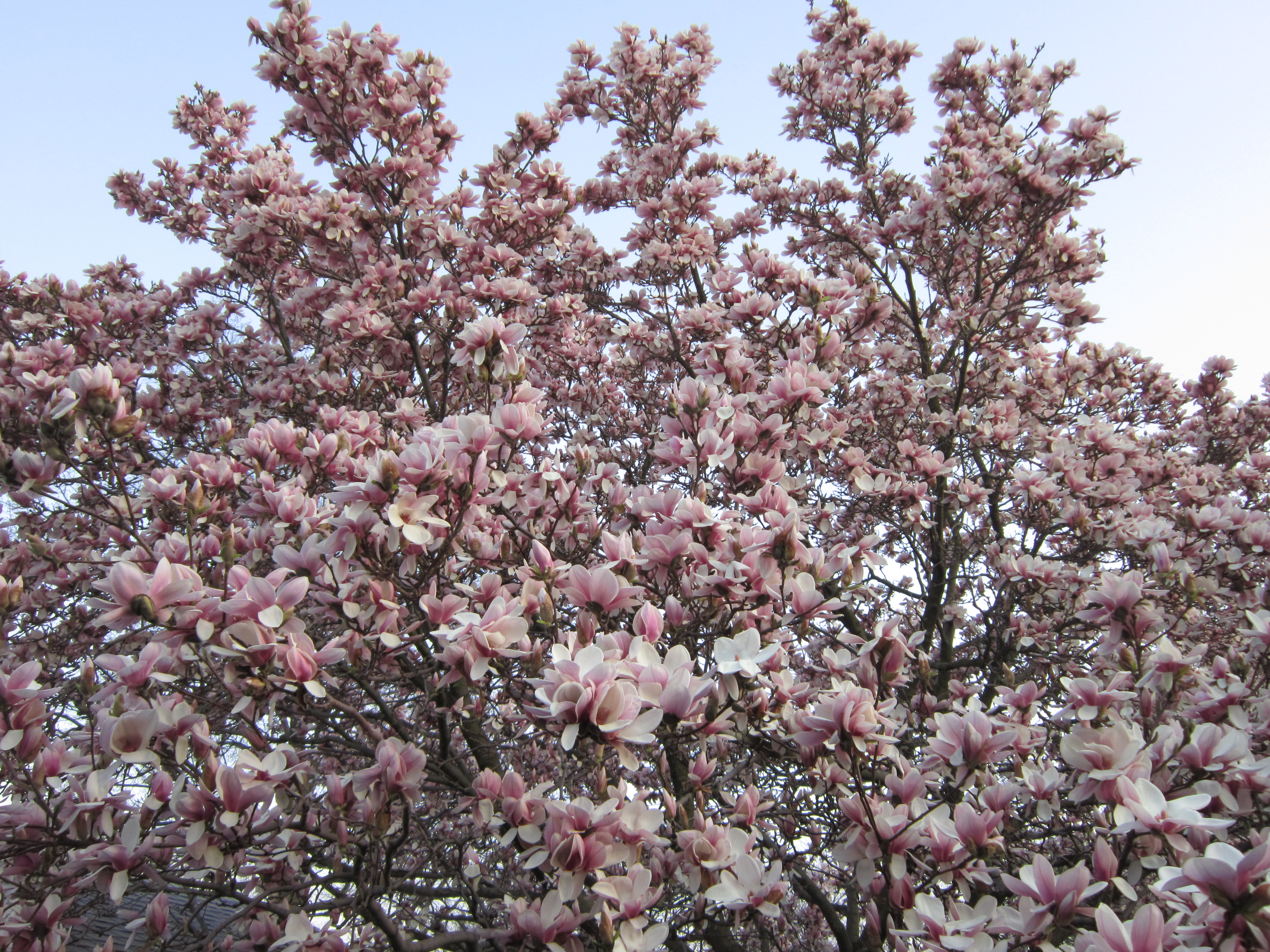
The magnolia tree is back! I feel like I should just spend all of my time underneath this tree appreciating it while it’s in bloom. It comes and goes so quickly!

Magnolia tree 2012

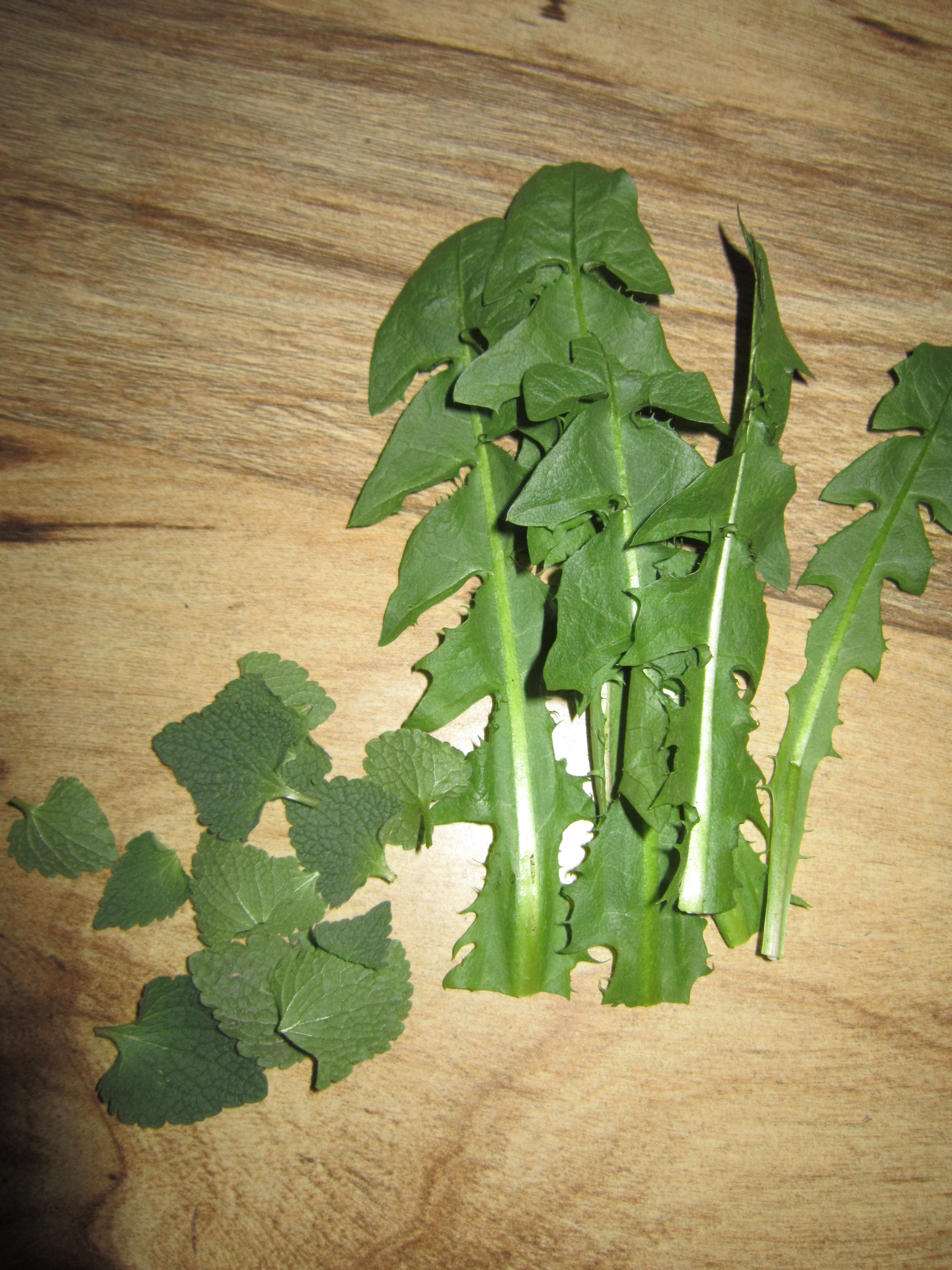
Adding Spring “weeds” to my salads!

Purple dead nettle and dandelion

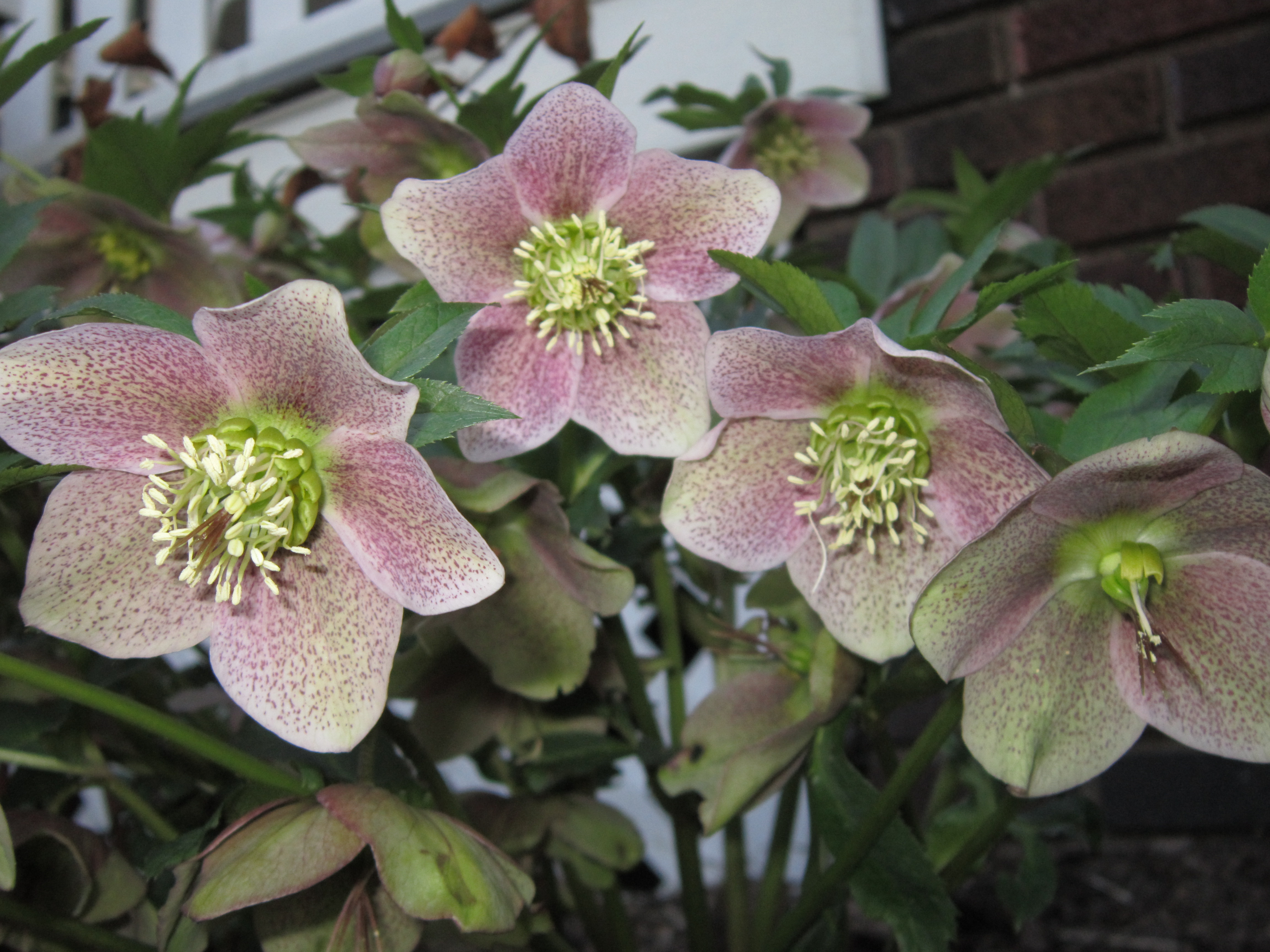
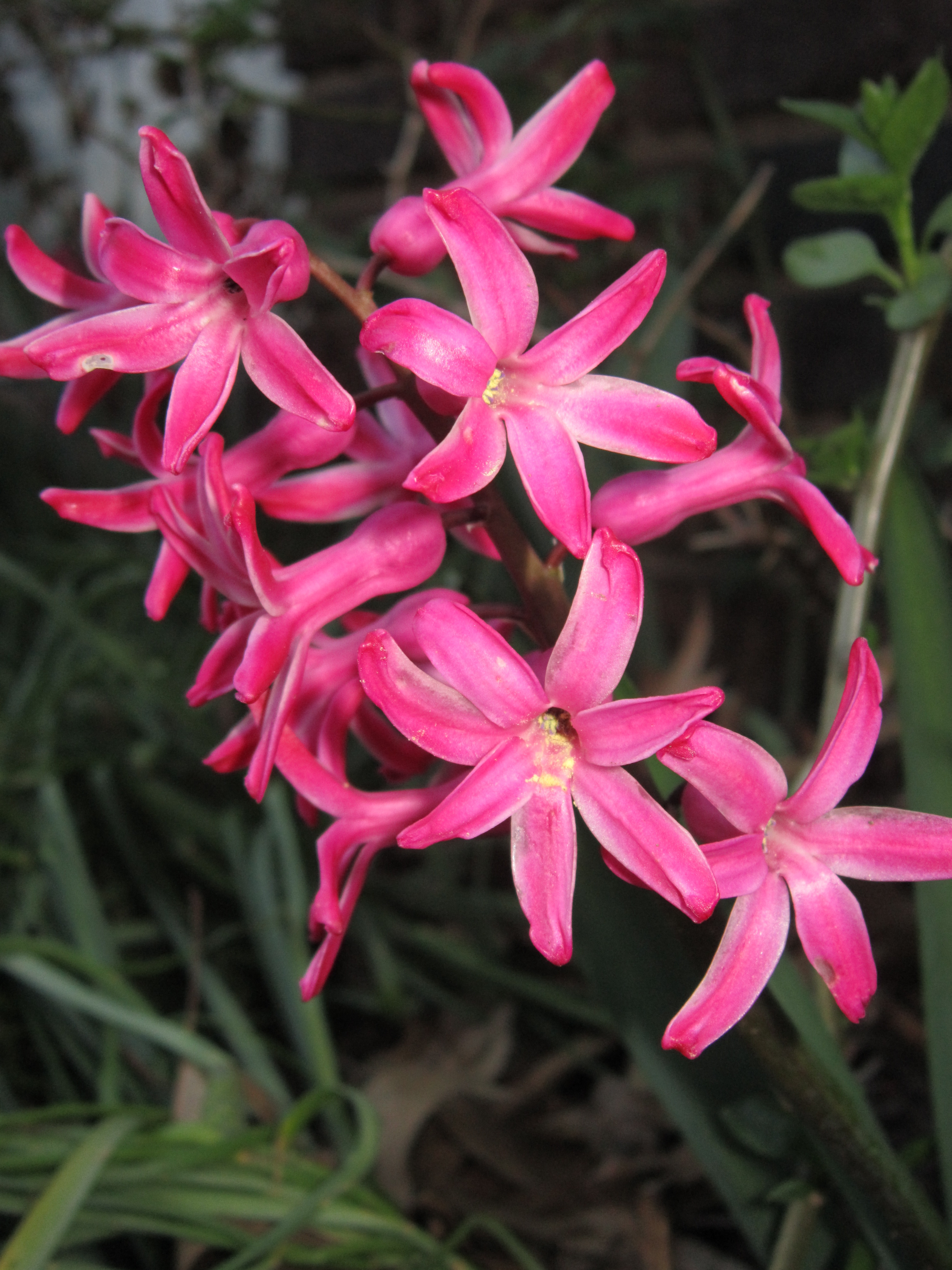
Blooming flowers in the yard…

Windows open and Spring cleaning!

How are you celebrating Spring?

Enhanced by ZemantaShared on:

Happy St. Patrick’s Day! Plant some peas. Start a community garden.

Today is full of the color green in more ways than one. I’ve seen a lot of people sporting green shirts and I’m more than happy that I’ve spent the better part of the day engaged in some “green” activities — pea planting and helping with the foundation for a new urban permaculture garden.

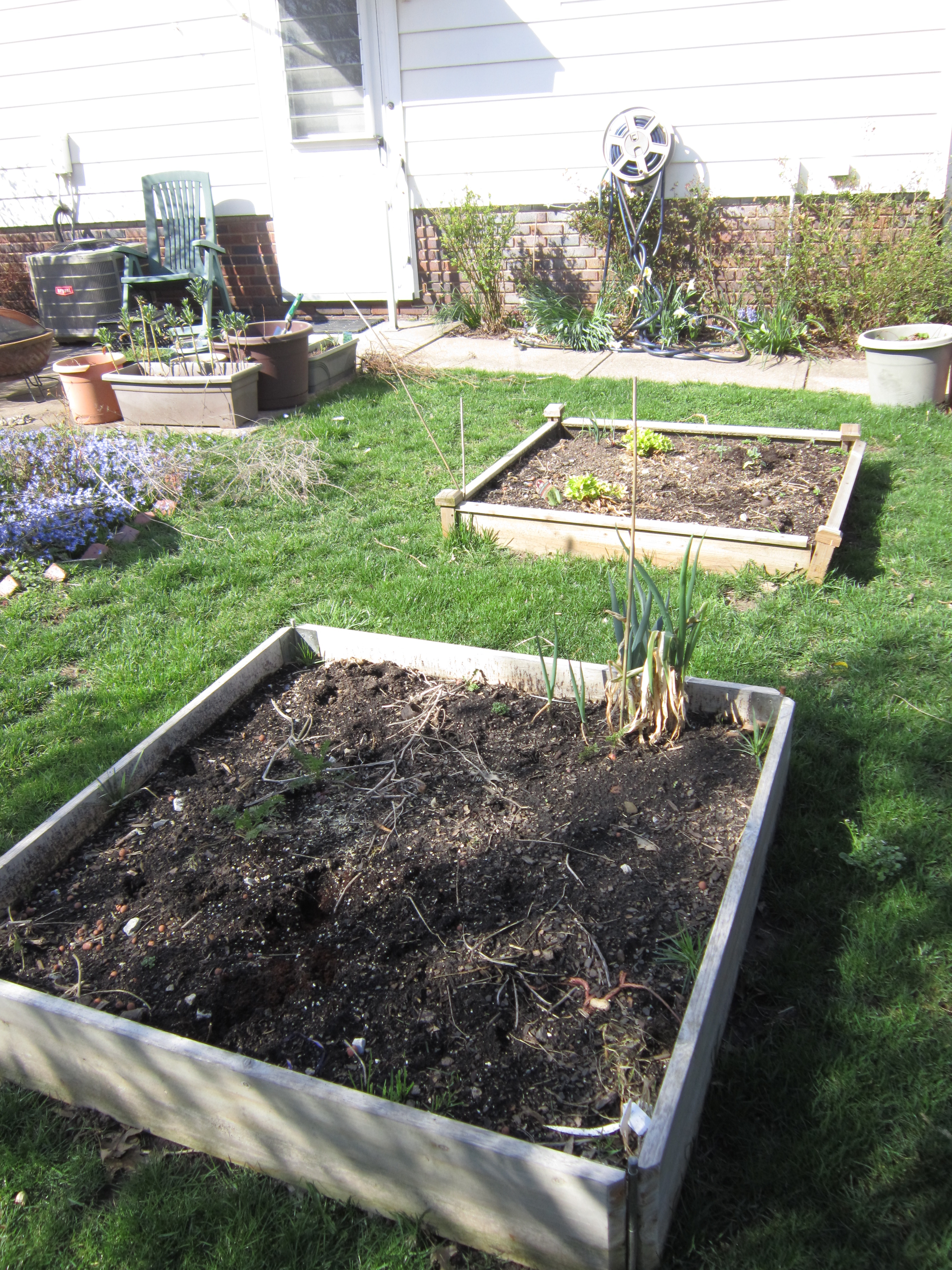
I’ve been doing some garden clean-up activities this week, but today was the first day I really have dirt under my fingernails and that feels totally refreshing. There are so many possibilities for this year’s garden….it’s still very bare (with a few exceptions — some winter survivors, garlic, and weeds)!

The before picture…

Grandma has always said that peas should be planted near St. Patrick’s Day. As one of 12 kids on a farm, I’d say she must be well aware of the best time to plant peas.  So, what better day than the actual St. Patrick’s Day?

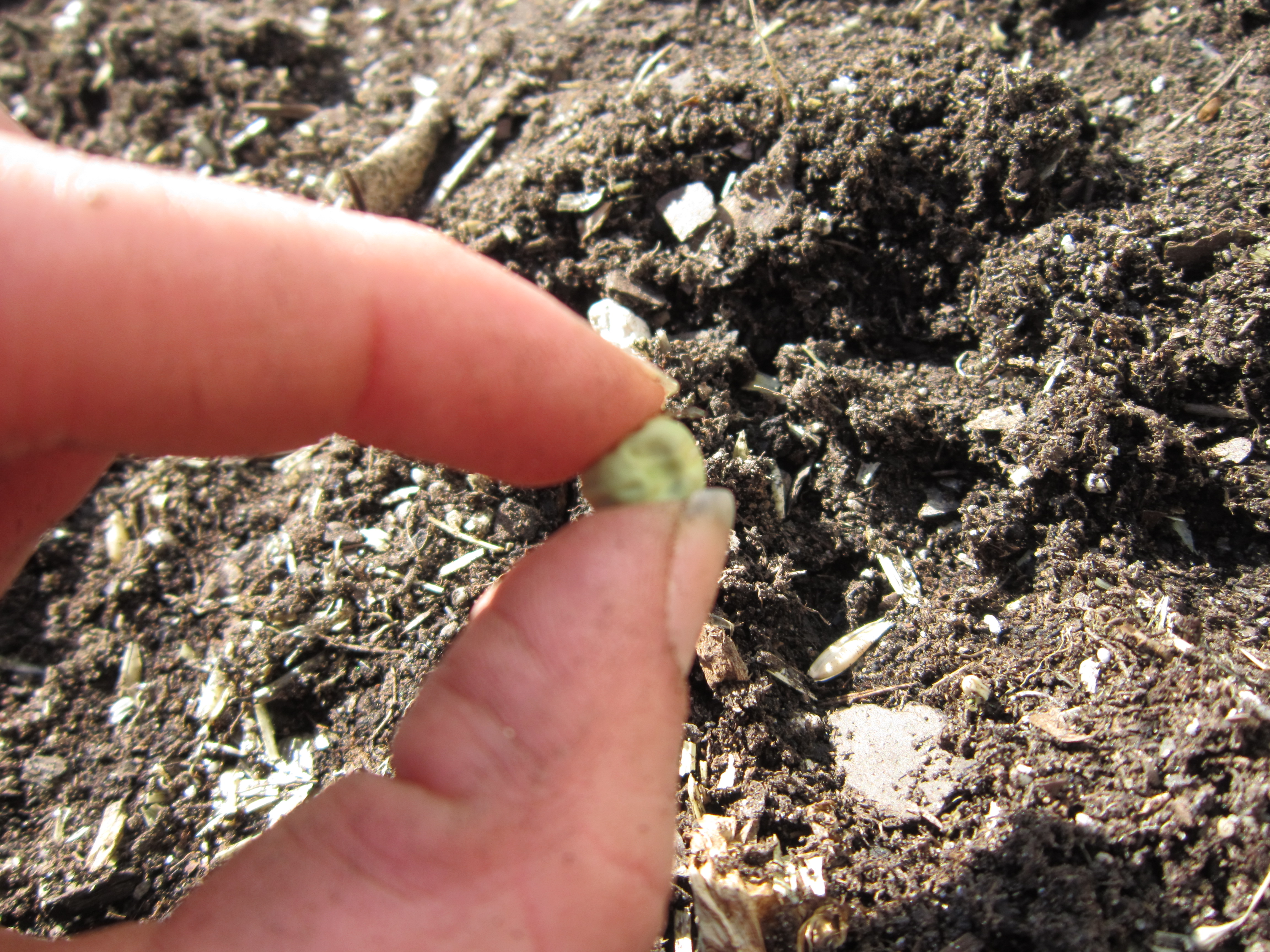
Let’s plant peas!

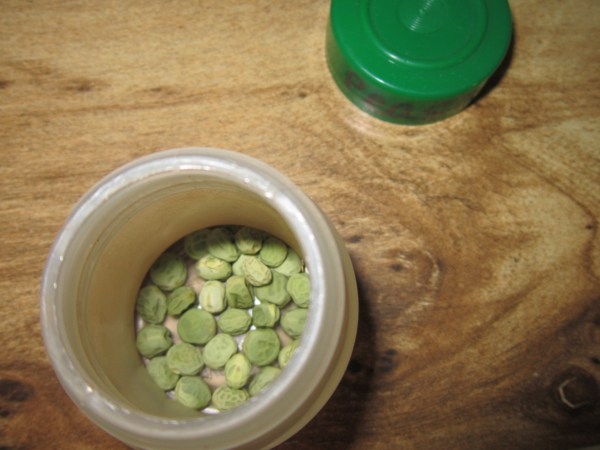
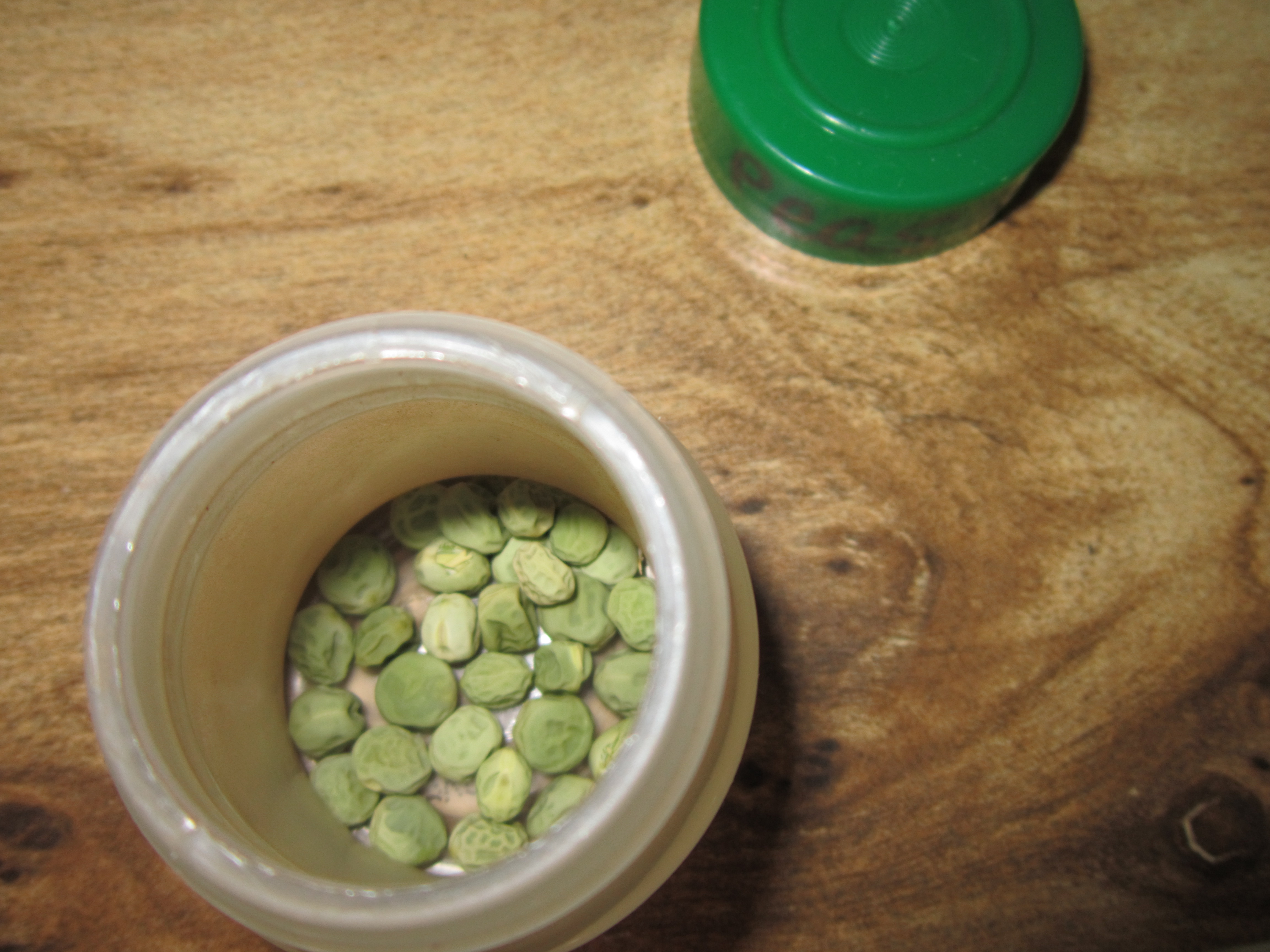
Lucky for me, I didn’t even have to buy peas as I saved some from last year.  This was one of my first tries at seed saving so I’ll keep my fingers crossed that this will work.

Not many but these will do!

I planted about 10 today — 2″ deep and I’m experimenting with them in a circle rather than a row to see if I can trellis them better this way.  I will plant another batch in a week or two. Hopefully that will allow for a bit larger/longer of a harvest than last year.  Last year’s peas were yum-tastic, but they only lasted a couple of meals (and I’m referring to seed peas — the snap peas seem to be around a lot longer).

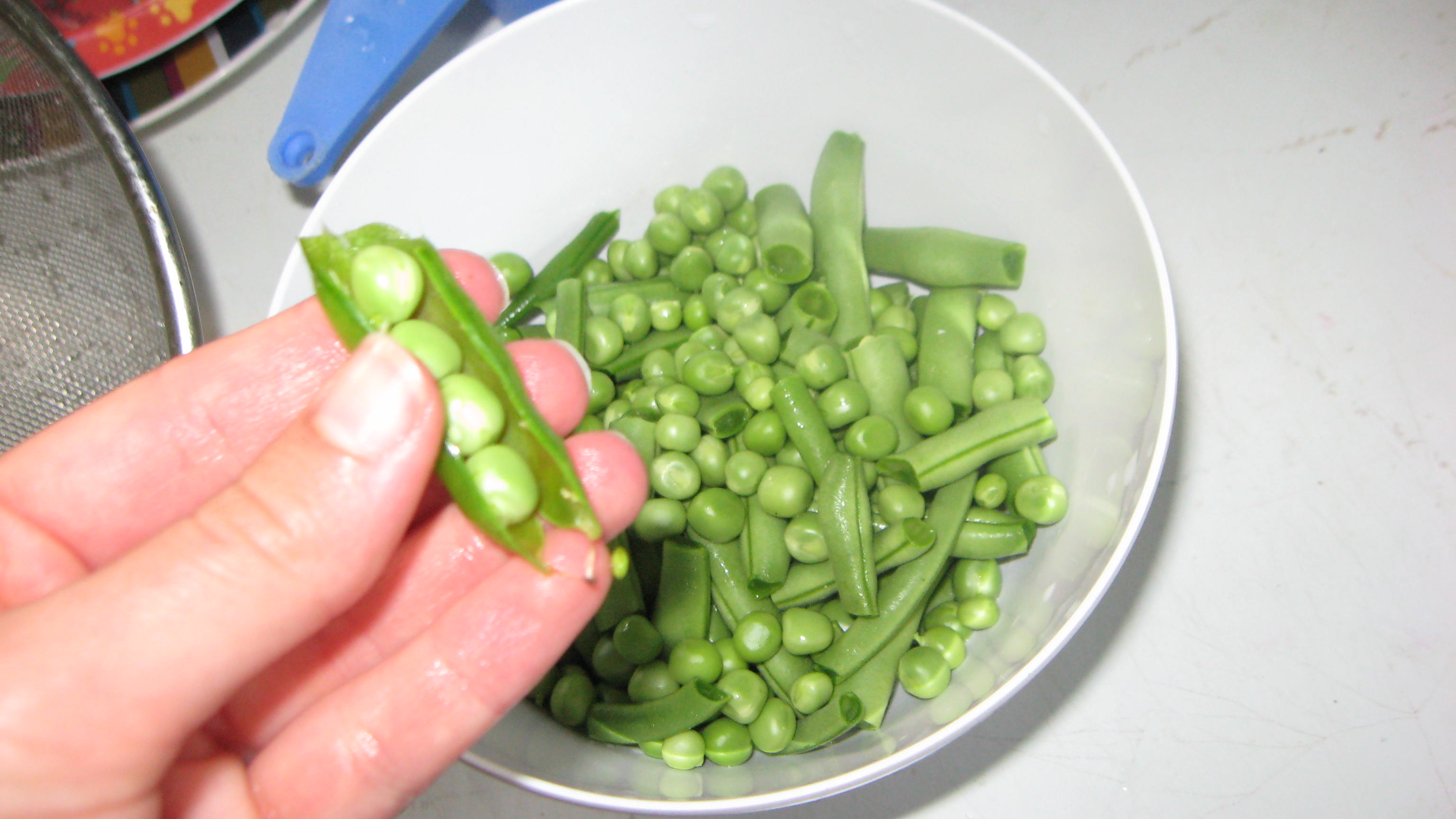
Last year’s peas. THEY ARE SO CUTE! (and some green beans..)

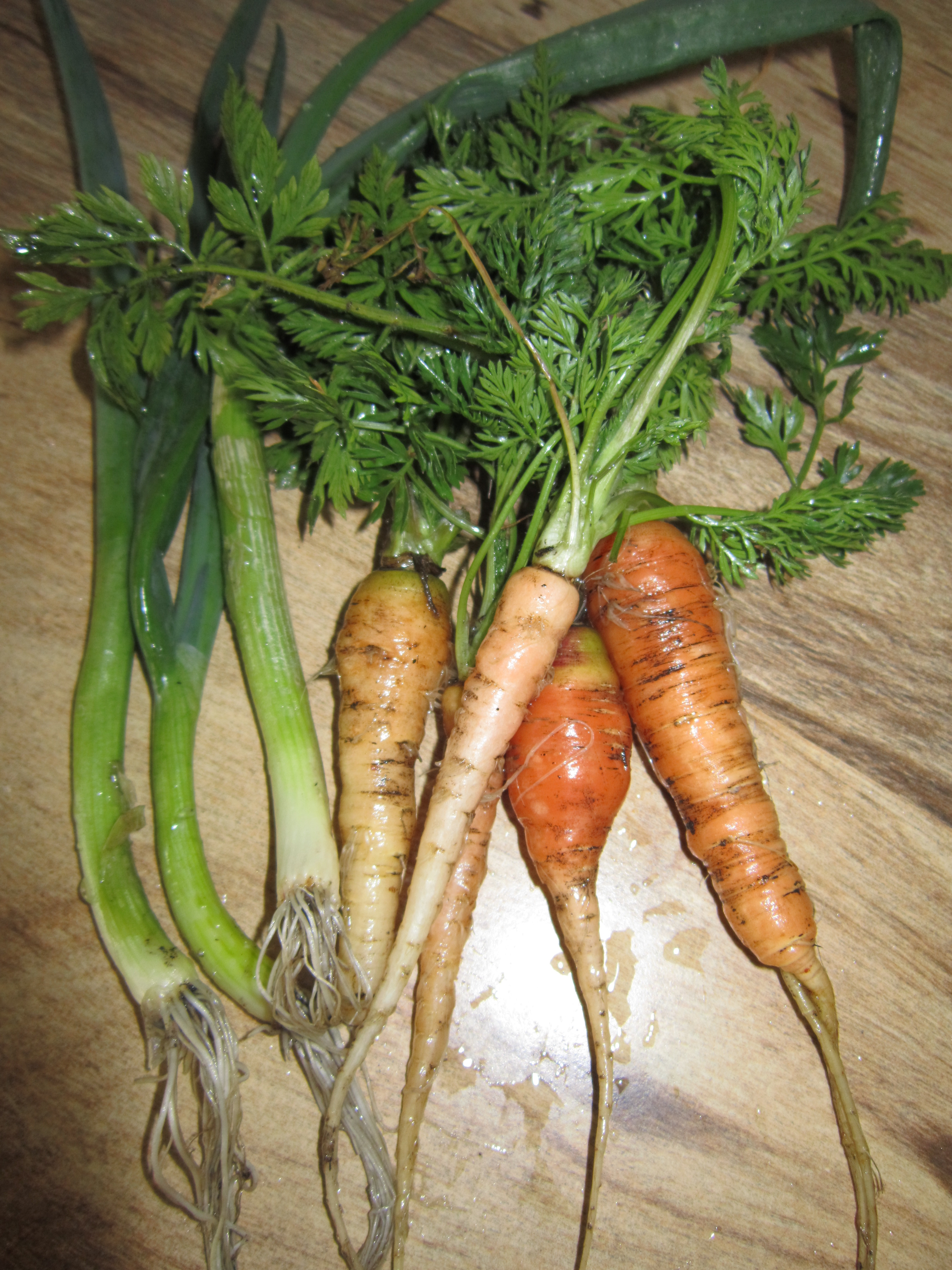
I also found some stragglers that survived the winter to harvest today. That’s fun!

Carrot and green onion winter survivors.

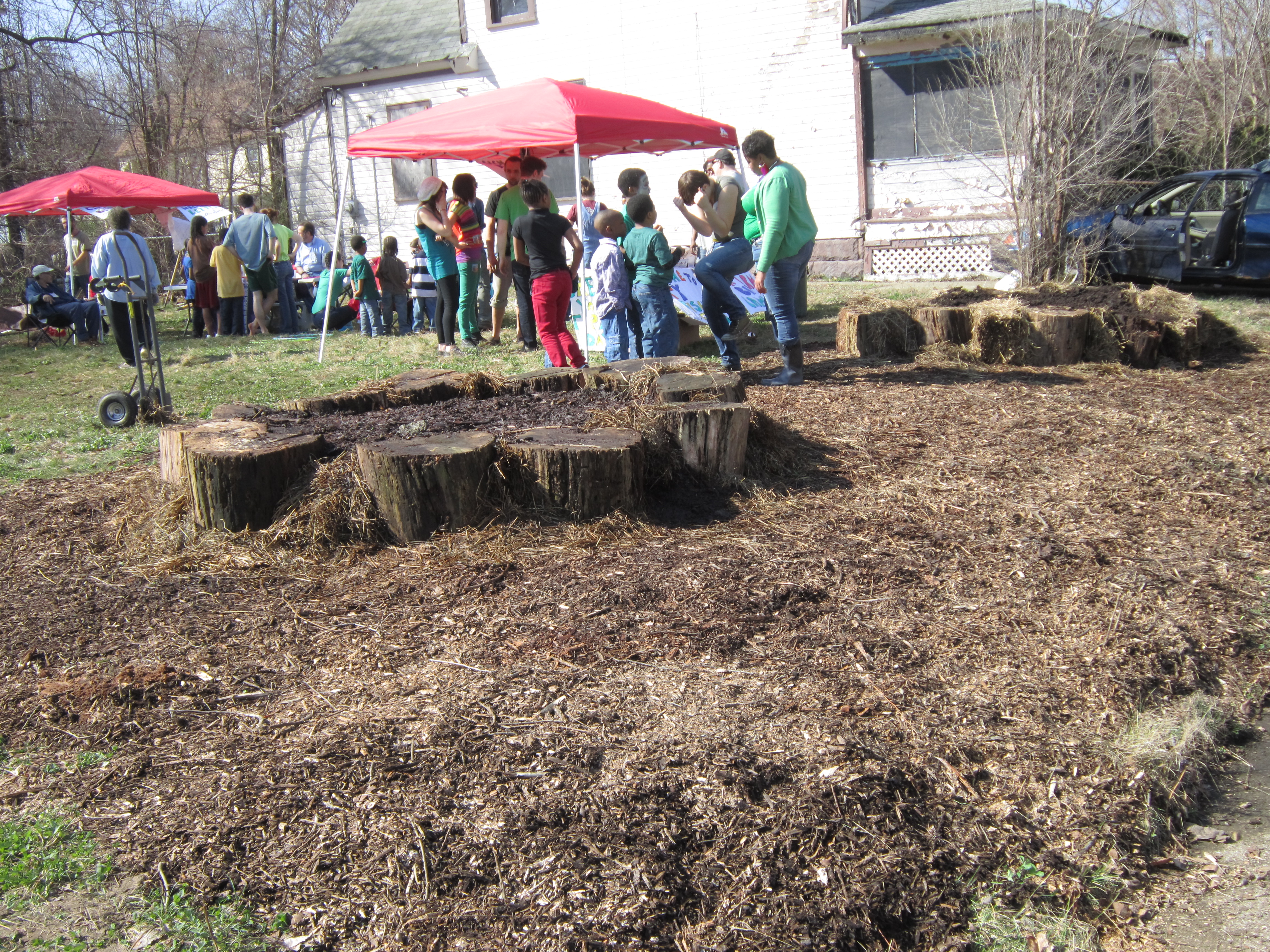
Earlier in the day, I went to a neighborhood on the East side to help expand City Rising Farm into a new vacant lot across the street from the garden that they’ve established previously.

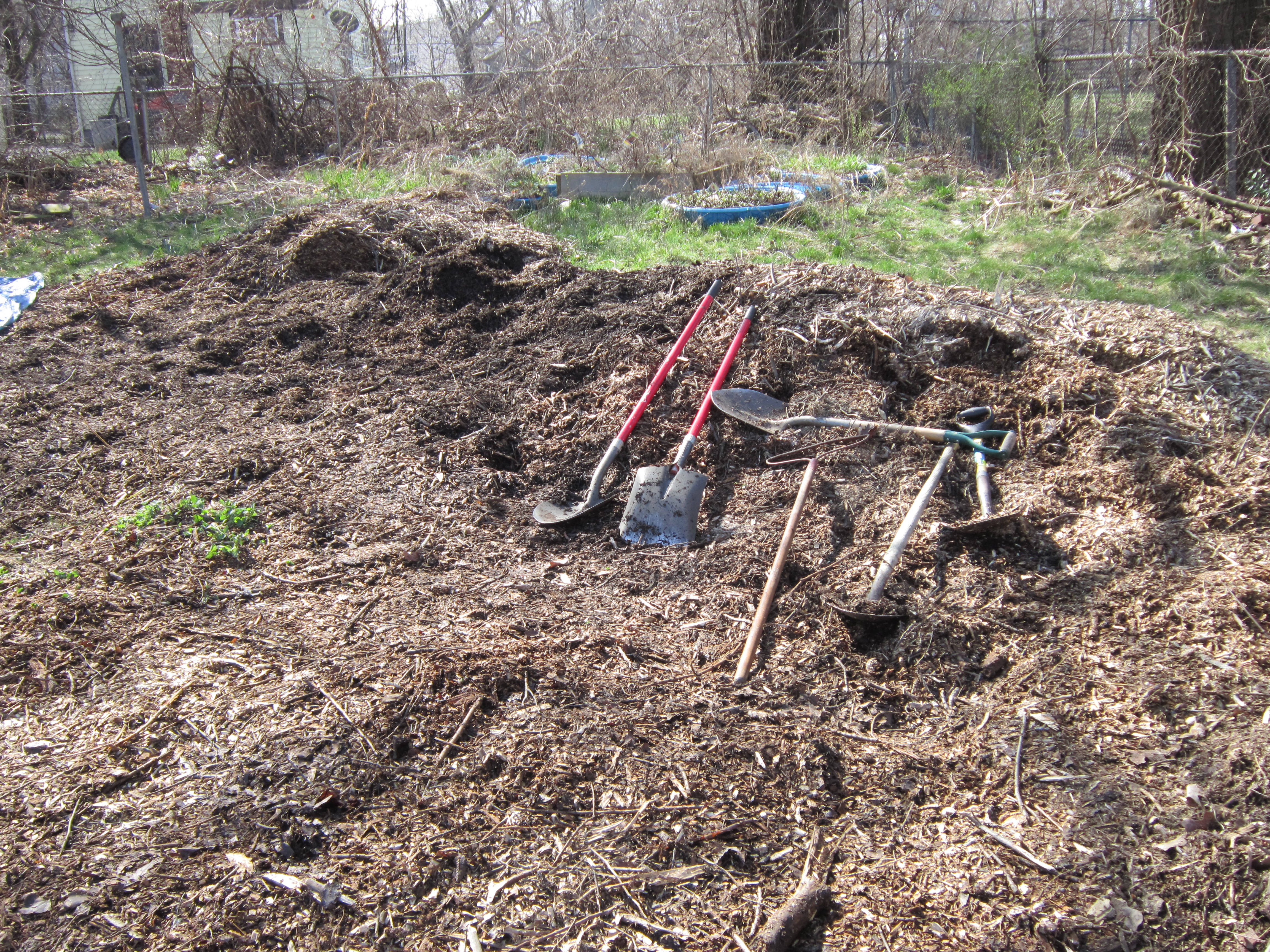
Mostly the day involved moving wood chips to the front of the lot to start sheet mulching. Many wheelbarrows and tarps full of woodchips were transported from the back of the lot to the front.

Depleted piles of wood chips

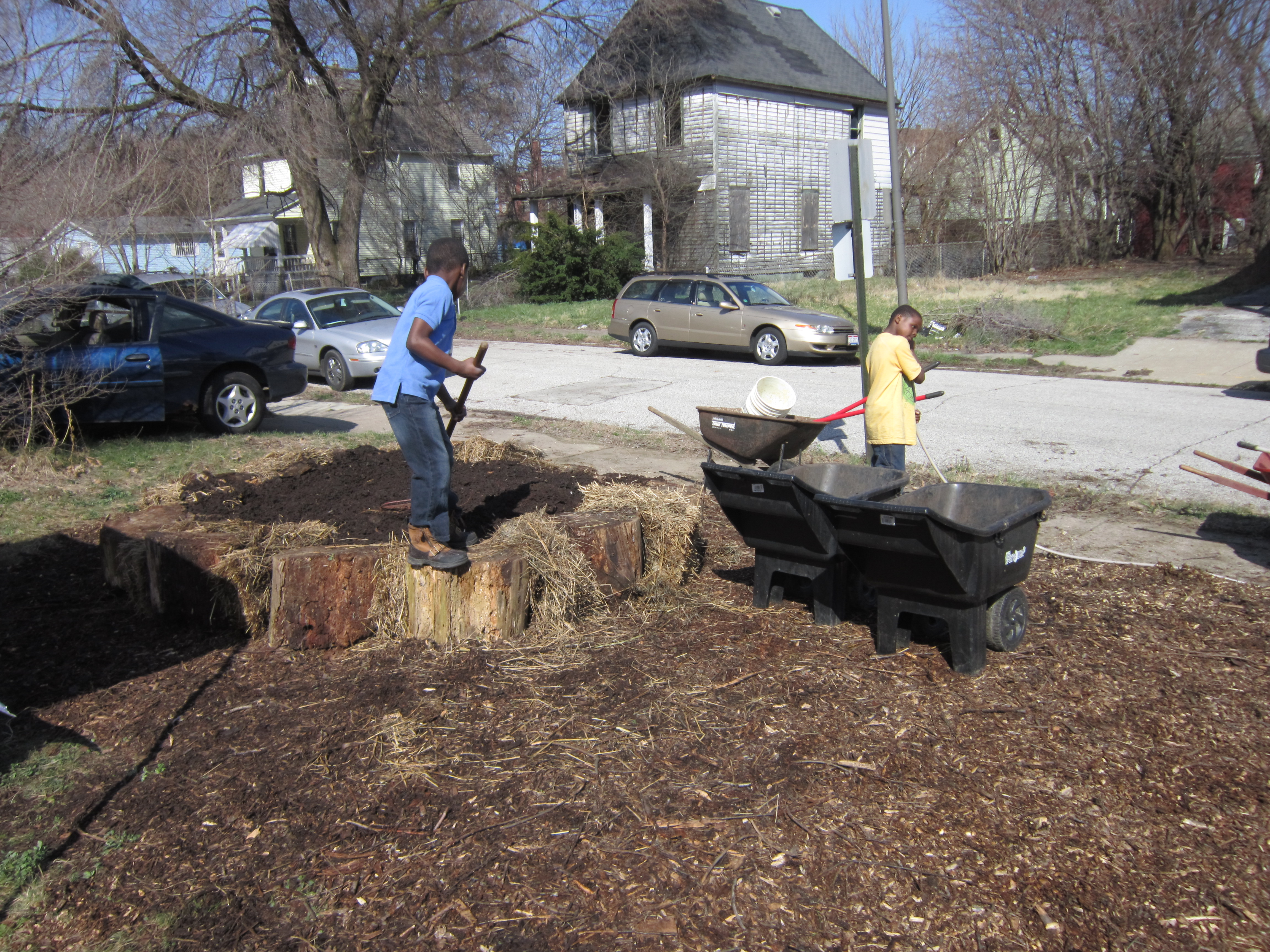
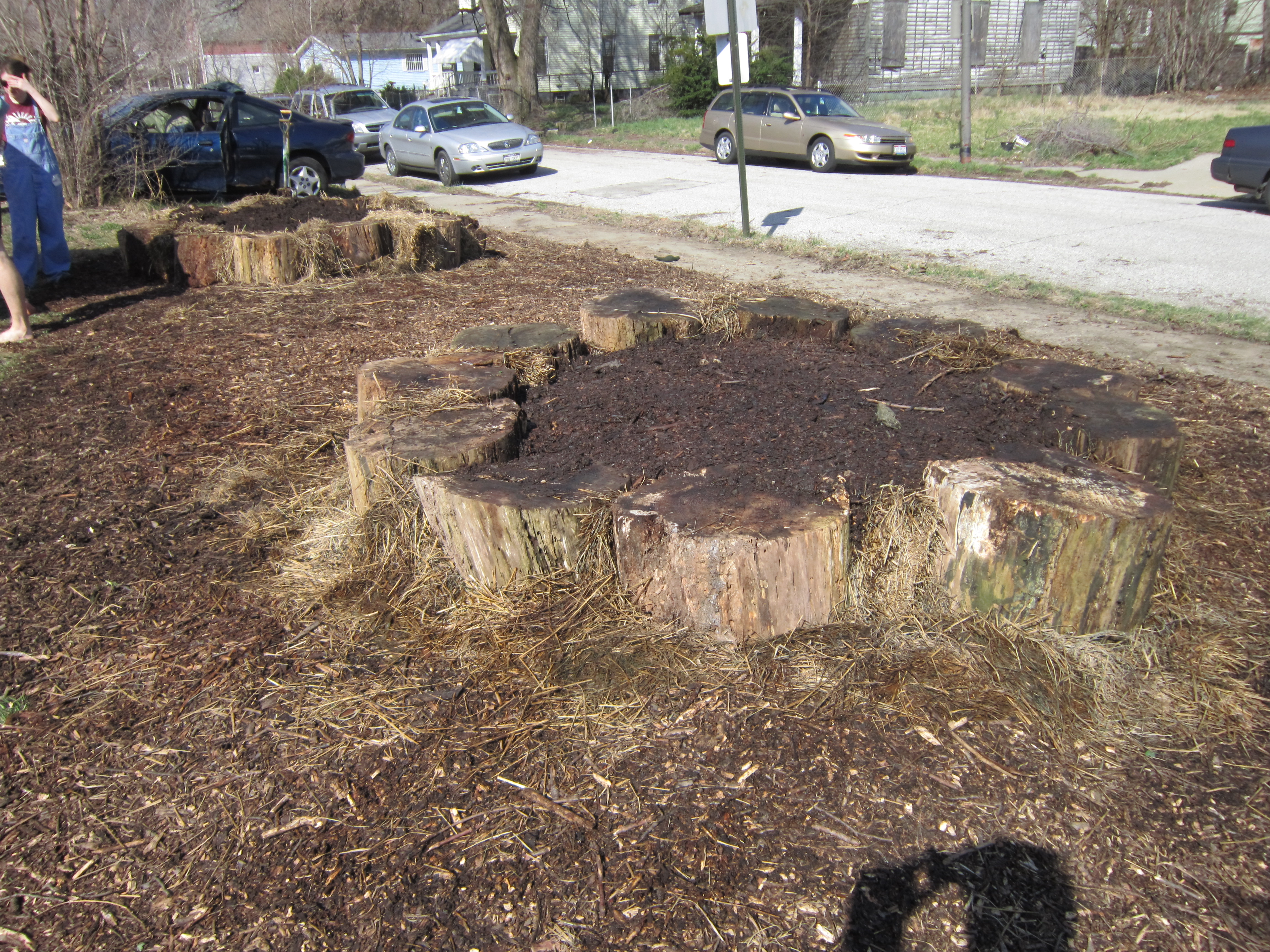
After getting a thick layer of woodchips down, two raised-beds were made from rings of old tree stumps.

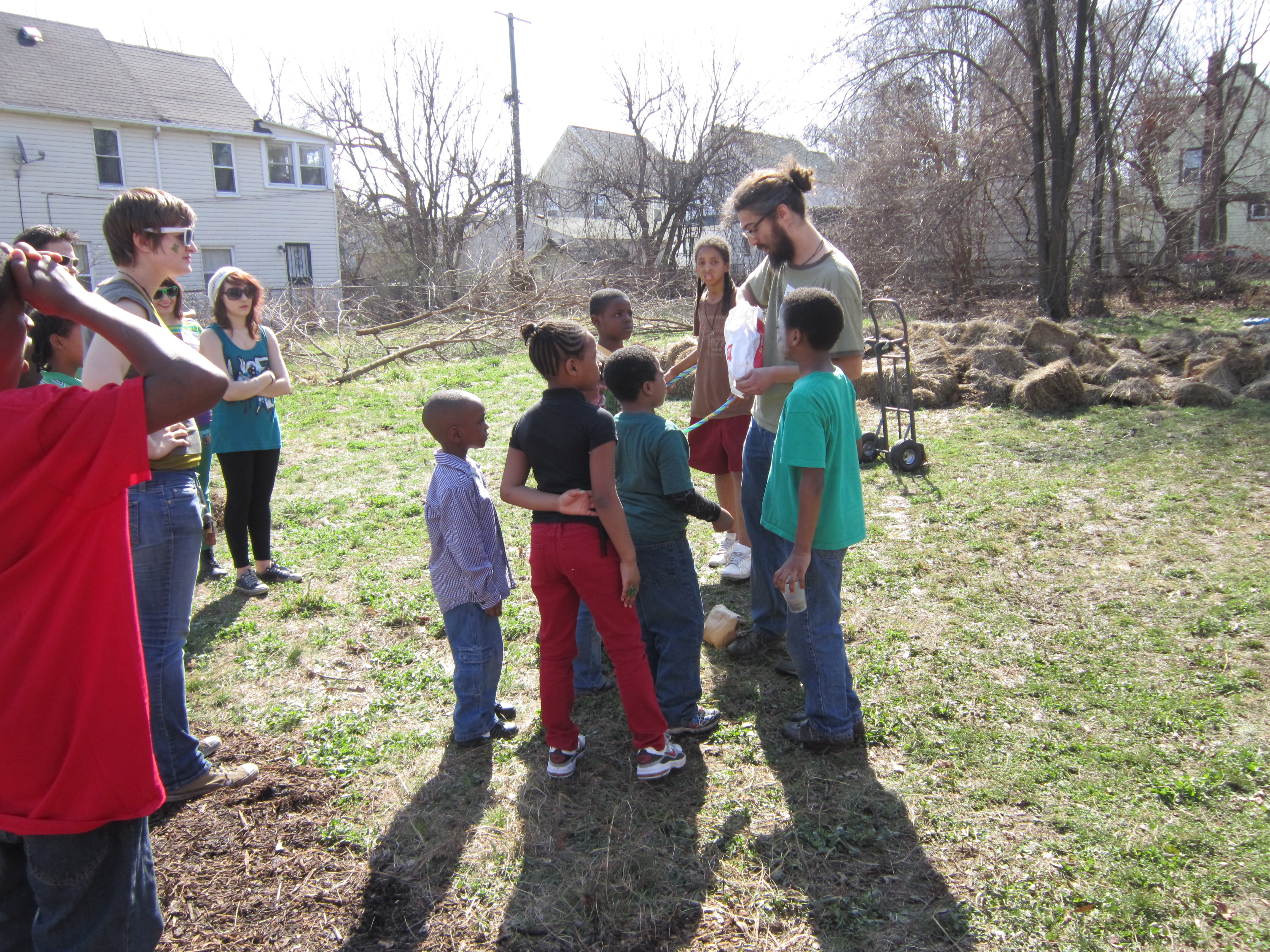
Young urban farmers

Raised beds bordered with tree stumps

There was also a lesson on beneficial insects that can keep pests down — in this case, there were praying mantis eggs.

Praying mantis lesson

Overall, it was a really inspiring day — it’s great to see people of all ages working together on a project to improve a neighborhood and that will also bring fresh food into an area that wouldn’t necessarily have easy access to it.

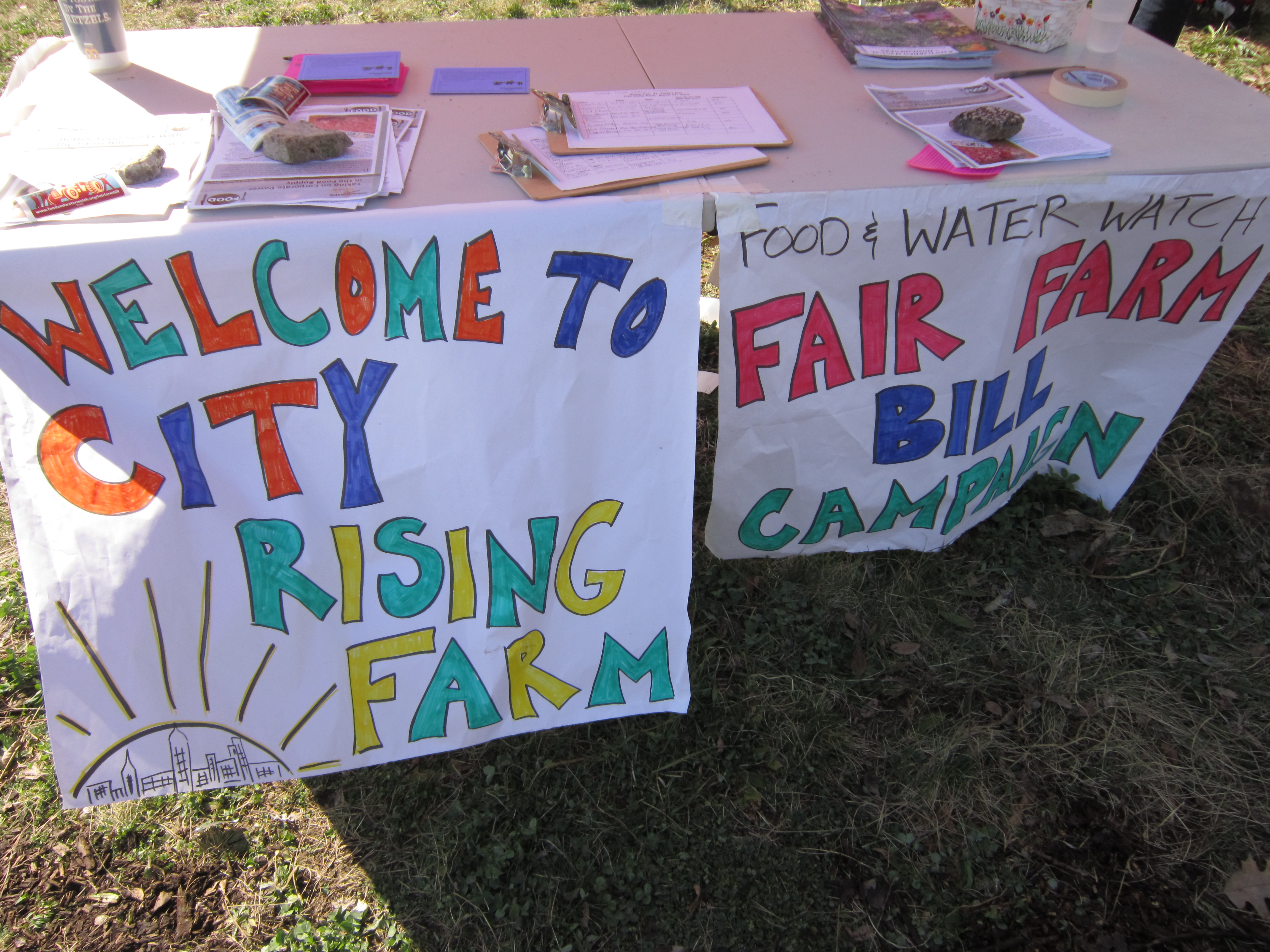
There was also a booth set up to write letters to Senator Brown to ensure that he continues his support for small farms on the 2012 Farm Bill.  We can’t let big agribusinesses control our food supply! It’s not sustainable for communities, the environment, or our health!  Take action at the Food and Water Watch website, and also, take action by supporting your local farmers. Find them near you!

Happy St. Patrick’s Day!

Would reducing work hours help to create a better world? It just might!

I was happy to find this video on the multitude of benefits that could come from a reduced hour work week…

A change toward a reduced hour work week is likely to be necessary as we move into a future that understands our relationship with the planet and into a time of dwindling carbon resources.  Not only would this change be beneficial so that we could improve our lives by having more time for friends, family, personal development, exercise, and creativity (in addition to other reasons mentioned in the video…), but this change may also be necessary as oil becomes less readily available and as we make more sustainable lifestyle choices that lesson our contribution to issues like global warming, pollution, or human exploitation (who really makes all of your products and what is their quality of life?).

Being less dependent on oil and living with the good of all beings in mind means that we can’t outsource all of our needs to other people and ship our products/food hundreds of miles around the world — we will need to depend on our own ingenuity and local communities to provide most of what we consume.  I feel that many of us will need more time to do this (more than than is available after a 40+ hour work week, anyway).  This is especially true if we’re talking about a future where we’re not just sustainable from a resource perspective, but where we’re also sustainably healthy — both physically and psychologically. We need to spend time doing things that give us meaning, and we need to feel some sense of balance (however elusive that may be!).

It is exciting to think there could be a future ahead where people have more time to pursue things that increase their well-being and to step more lightly upon the Earth.

For some other ideas related to this, check out the Center for a New American Dream. Their mission:

We seek to cultivate a new American dream—one that emphasizes community, ecological sustainability, and a celebration of non-material values.

Sounds good to me!

Introduction to Nourishing Herbal Infusions – Nettle

Many people have jumped on the green juice bandwagon, and for good reason — these juices are a welcome addition of vitamins, minerals, and other nourishment to our diets.  They work well at helping people to feel more energized and healthy. Unfortunately, many green juice recipes call for produce that is not always, if ever, in season in my region.

Are there other ways to get a local, sustainable, and easy punch of chlorophyll, vitamins, and minerals?

Why yes there is.  Hello lady nettle.
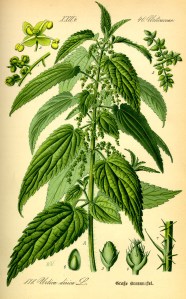
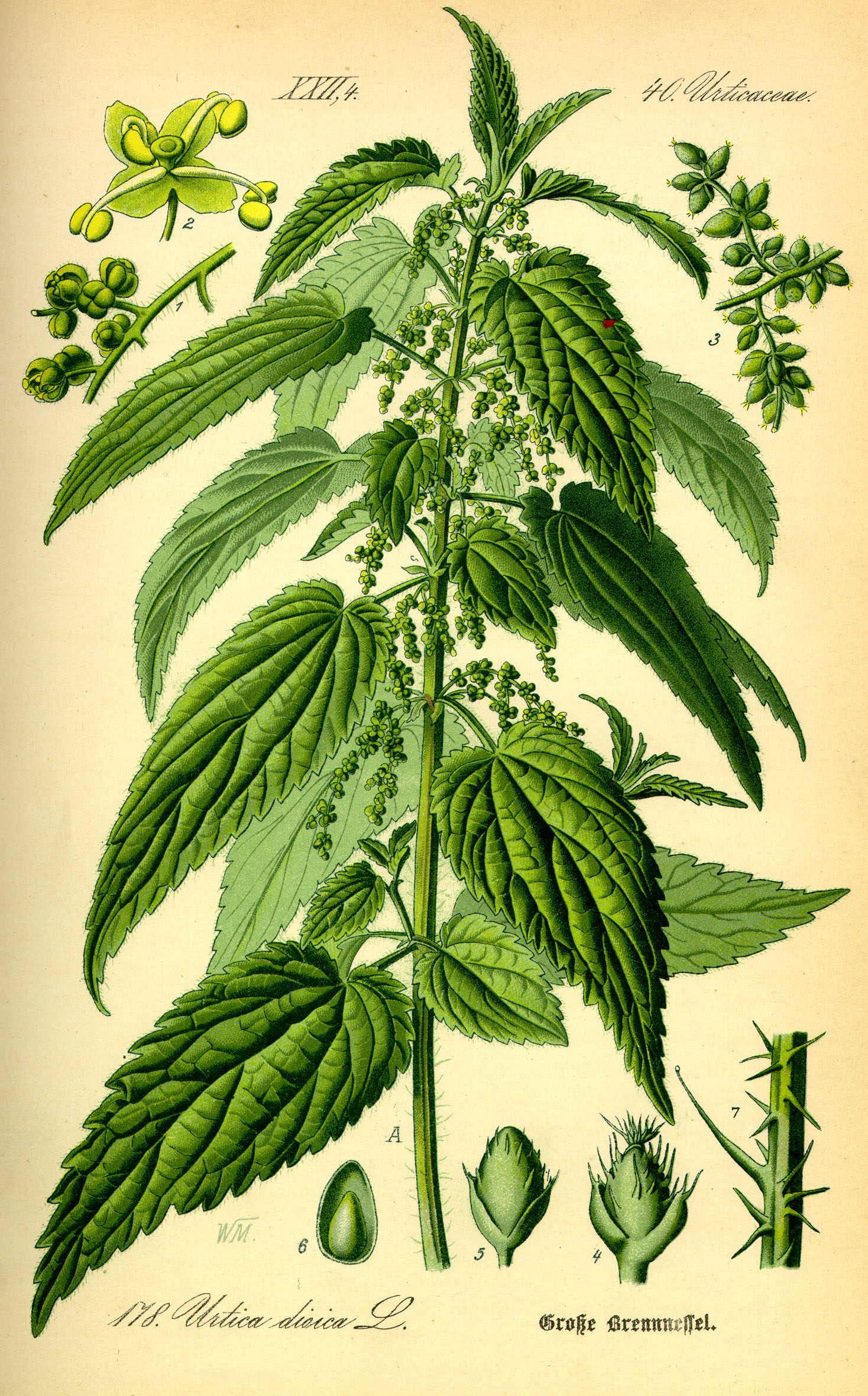
Stinging Nettle (Urtica dioica)

I remember my first encounter with nettle.  It happened as a young child when I was helping my mother to weed the garden.  I innocently pulled this ‘weed’ and soon thereafter had a nasty irritation all over my hand. Ow, nettle! She certainly has evolved an excellent defense mechanism.

Luckily, that early interaction did not deter me from learning about nettle and her many benefits.

Susun Weed reports an impressive list of nourishment found in nettle:

{Note from 1/2016: As discussed in the comments, there is some debate about the actual amounts of vitamins and minerals found in these infusions and whether fat-soluble vitamins A, D, and K can be assimilated in this form.  Please see the comments for a link to another analysis of vitamin & mineral content in infusions.  Either way, it is without a doubt that adding infusions to your life will increase the vitamins and minerals you’re consuming and have certainly made a difference for many people’s overall health.}

Nettle is a superior source of protein; 10 percent by weight.

Nettle is a rich storehouse of  readily-absorbable minerals, trace minerals, and micro-nutrients:

calcium (1000 mg per quart of infusion)

magnesium (300 mg per quart of infusion)

potassium (600 mg per quart of infusion)

zinc (1.5 mg per quart of infusion)

selenium (.7 mg per quart of infusion)

iron (15 mg per quart of infusion)

manganese (2.6 mg per quart of infusion)

    plus chromium, cobalt, phosphorus, copper, sulphur, silicon, and tin.

Nettle is super-charged with vitamins:

    Vitamin A (5000 IU per quart of infusion)

    Vitamin B complex, especially thiamin, riboflavin, niacin, and folate

Plus Vitamin C, Vitamin D, and Vitamin K

All of this combines to provide an excellent source of energy and nourishment that is easy to come by and easy to use!

After experimenting with nettle infusion for about a year now, I would not turn back and I drink this infusion about 3-4 times a week.  I find that I crave the nourishment of this drink when I haven’t had it for a few days.  When I drink it, I feel as though I am drinking Earth milk (but I have not tried it on cereal!). I feel nourished and more connected with the natural world.  Plants (commonly considered weeds!) right outside my door can contribute to my health and well being.

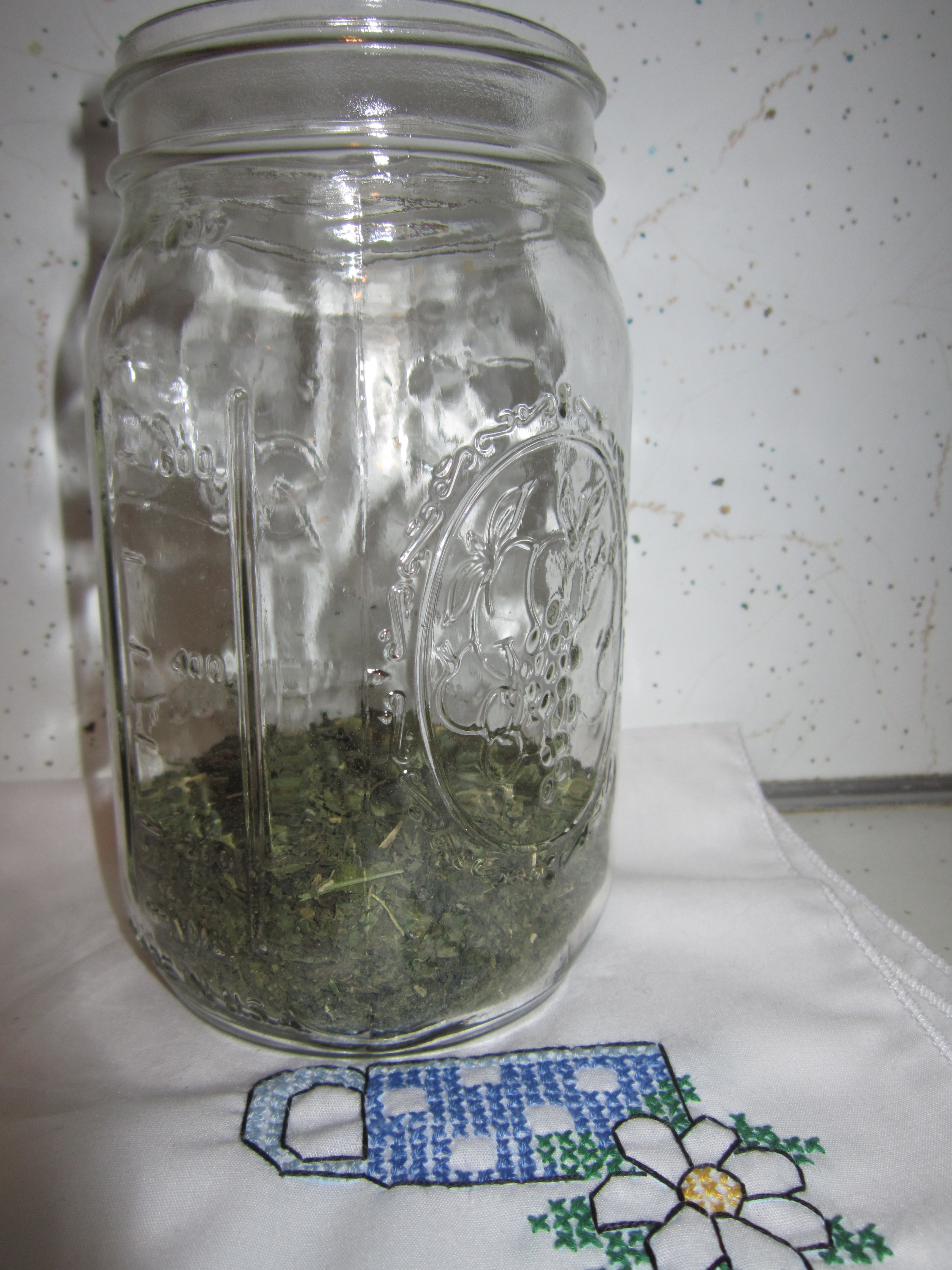
The process starts by measuring out an ounce of dried nettles.  I’ve seen other people write about nettle infusions using just a few tablespoons of herb — this will still be a healthy drink, but won’t pack quite the same punch of minerals.  When I was beginning, I measured this ounce out with a scale, but I have since measured nettle out enough times to simply visualize an ounce of the herb in my quart jar.
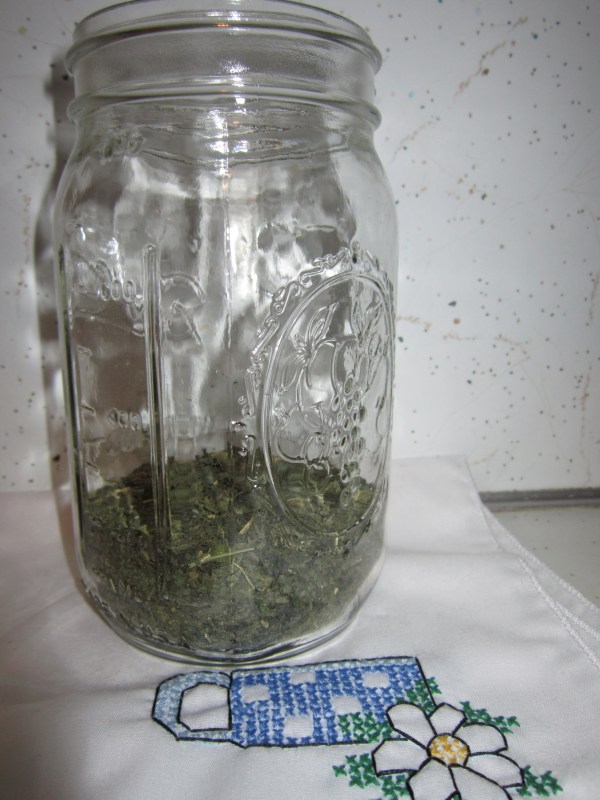
Ounce of dried nettle

Next, I boil water and distract myself with teeth brushing or other before-bed chores.  When the water is ready, I pour it over the herb, seal the jar, and am off to bed.  The minimum time to leave an infusion is 4 hours, but it is fine to leave it overnight.

(Tip: pour the water over a knife placed across the jar lid to help diffuse the heat and avoid breaking jars!)
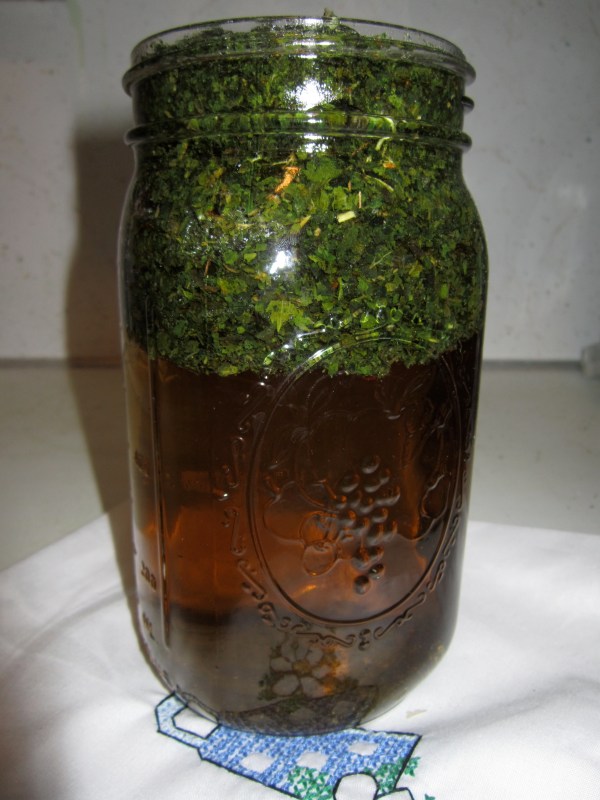
Nettle infusion ready to sit for the night

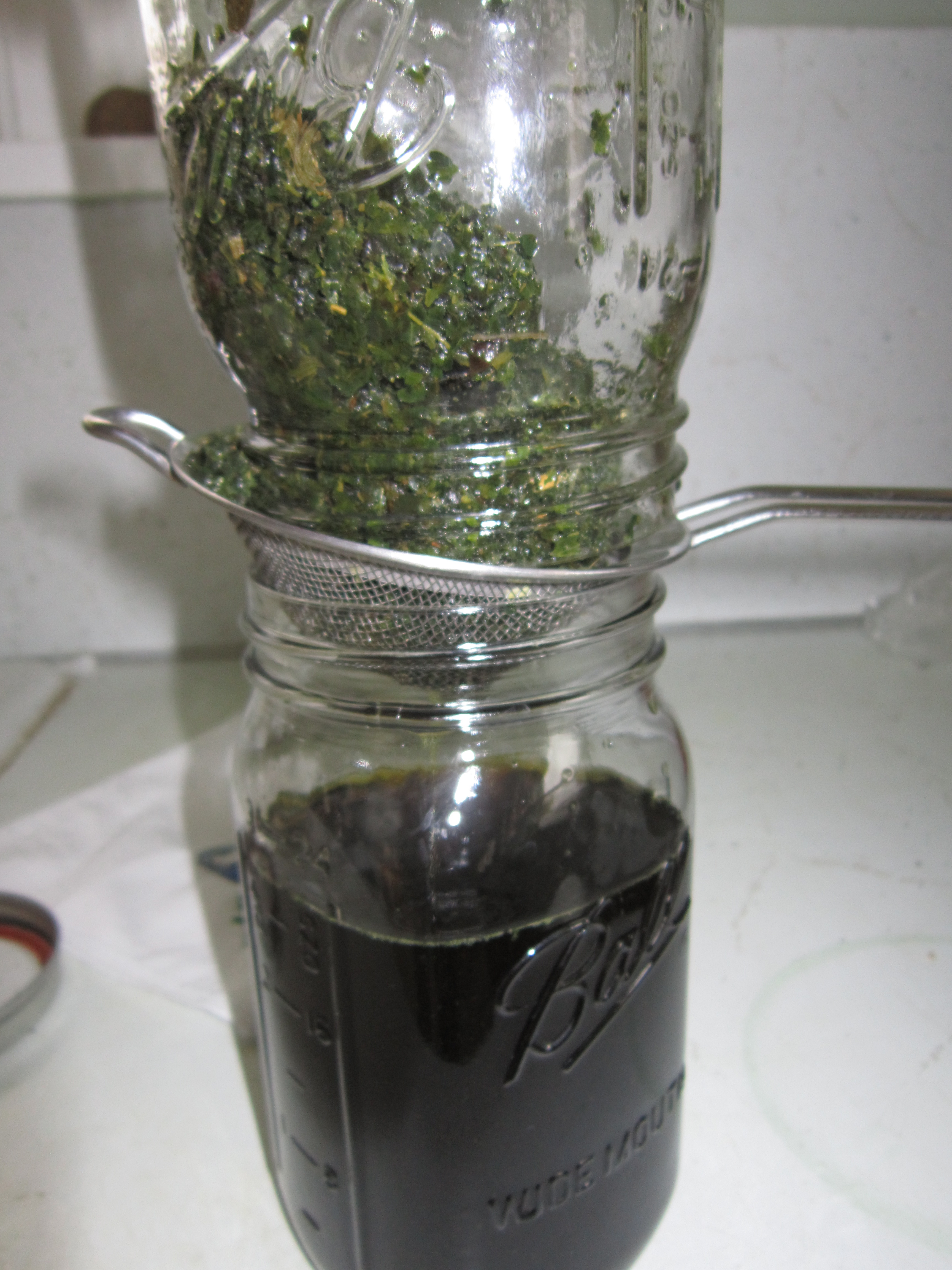
In the morning, I strain the herb and drink the resulting infusion throughout the day.  I drink it cold and straight out of the fridge, but it could also be warmed.  When I first started drinking nettle I added honey a few times to see if I preferred it that way (I didn’t, but I know that others do.  Mint is also a popular addition — just add a tablespoon to the ounce you measured out.).
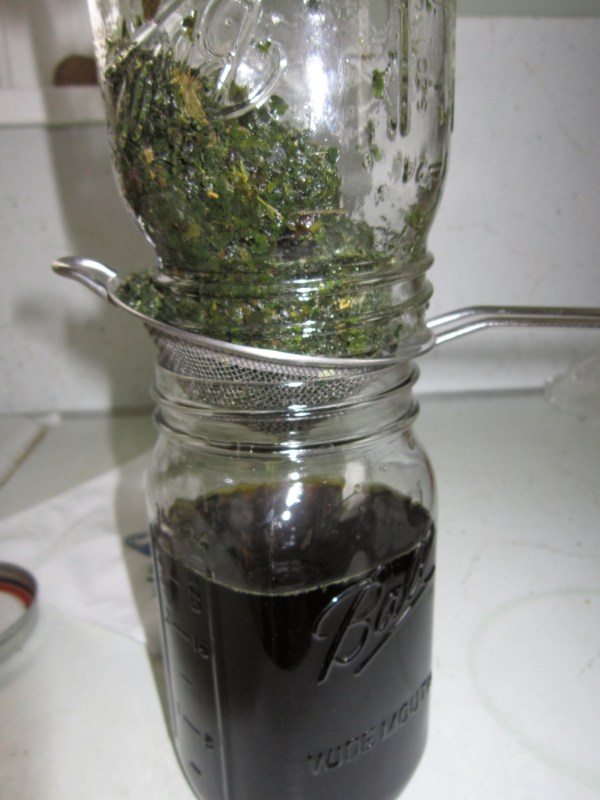
Straining the infusion

What isn’t used right away can be stored in the refrigerator for several days.  If it isn’t used in that amount of time, it can be used as a hair rinse or to water houseplants.

Don’t forget to compost leftover herbs!

So where do you get this much nettle?  It’s awesome if you can harvest it somewhere local to you, but Mountain Rose Herbs is my favorite source for organic bulk herbs.  You can find their nettle HERE.

FTC DISCLOSURE: As a way to support my blogging and related activities, I may receive monetary or other compensation for my endorsement, recommendation, testimonial and/or link to any products or services within this article. However, it is my promise to you that I am sharing my honest opinion and that I only recommend products or services that I have personally used or recommend and are in alignment with Light Footsteps ideals.

Beginner’s Worm Composting – Welcome to Wormville Towers

This winter, I ran into a problem that I’ve experienced before  — my outdoor compost pile is filled to the top, but I still have more scraps!

It’s not the right season to start a new pile (nor do I have the room to start a new pile at the urban house that I rent), and it’s not time to start hauling out the compost that is accumulating on the bottom for use in my garden.  What’s a person to do?

Compost from my outdoor pile ready to be put in the garden!

Start to vermicompost, of course!

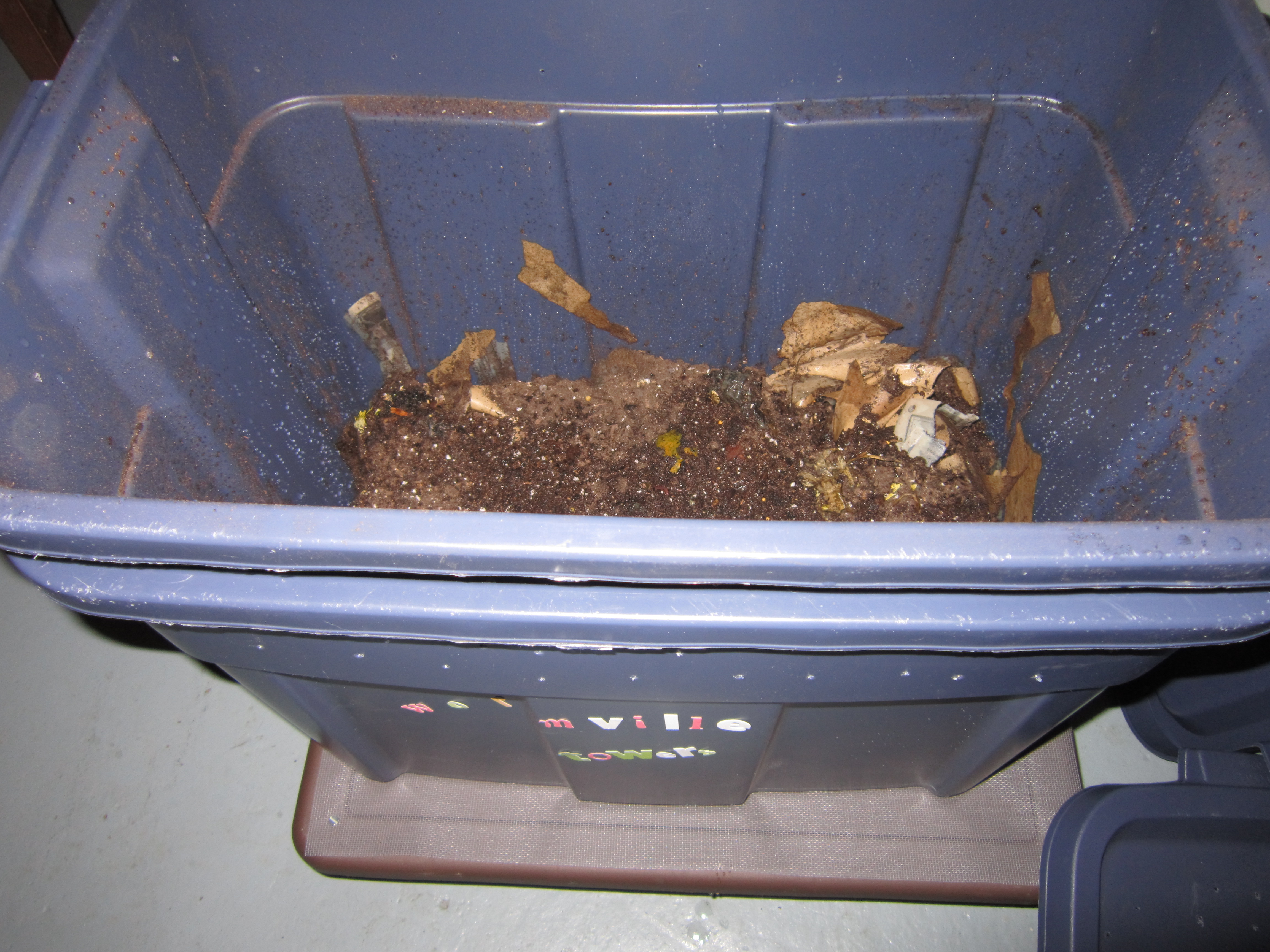
I don’t have much experience with worm bins, but I’ve seen a fair number of the commercially available ones and have also explored some that are set up as singular bins.  I decided to try a mix.  I call this worm home, Wormville Towers, because it is much more fun to live with worms that have a named community.
Here’s how the community moved in with me:

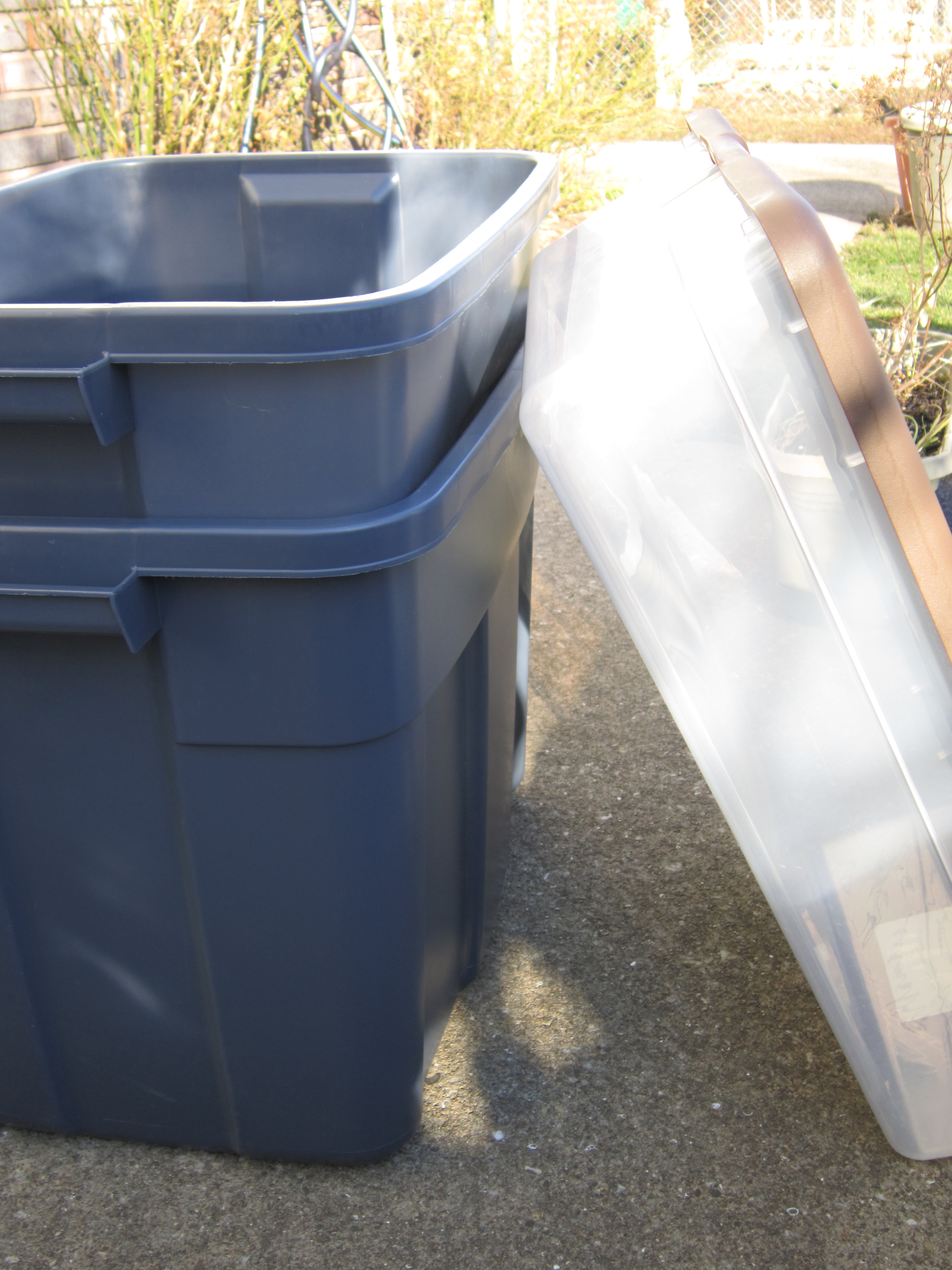
  1. I acquired three bins — two large 10 gallon bins that fit inside one another (and a lid) and a smaller see-through bin (with a lid). The general idea is that the two large bins are going to be stacked and rotated with the worms and composting material while the see-through bin always remains on the bottom and is just to catch any “worm tea” that drains out during the composting process.

    The three bins

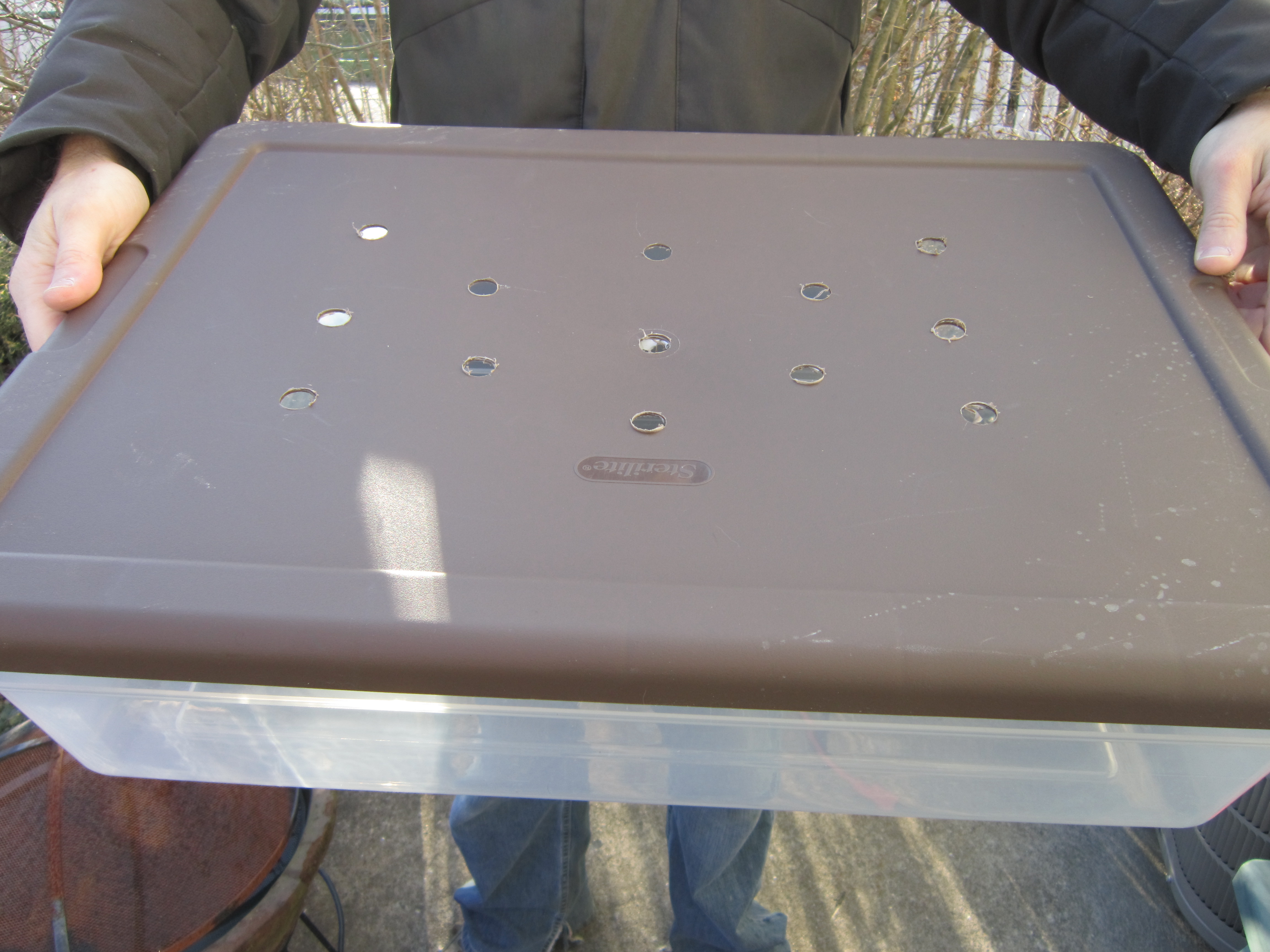
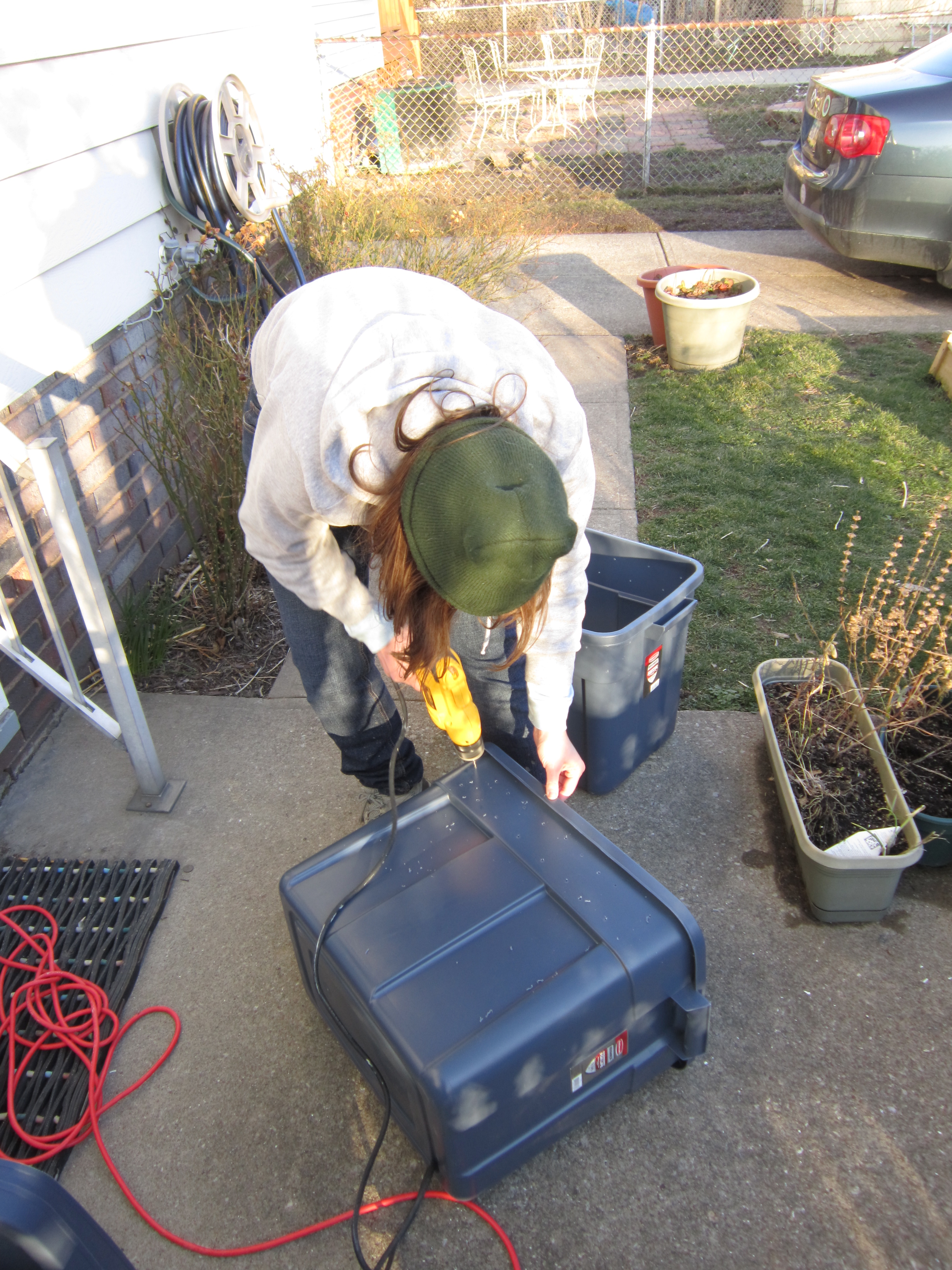
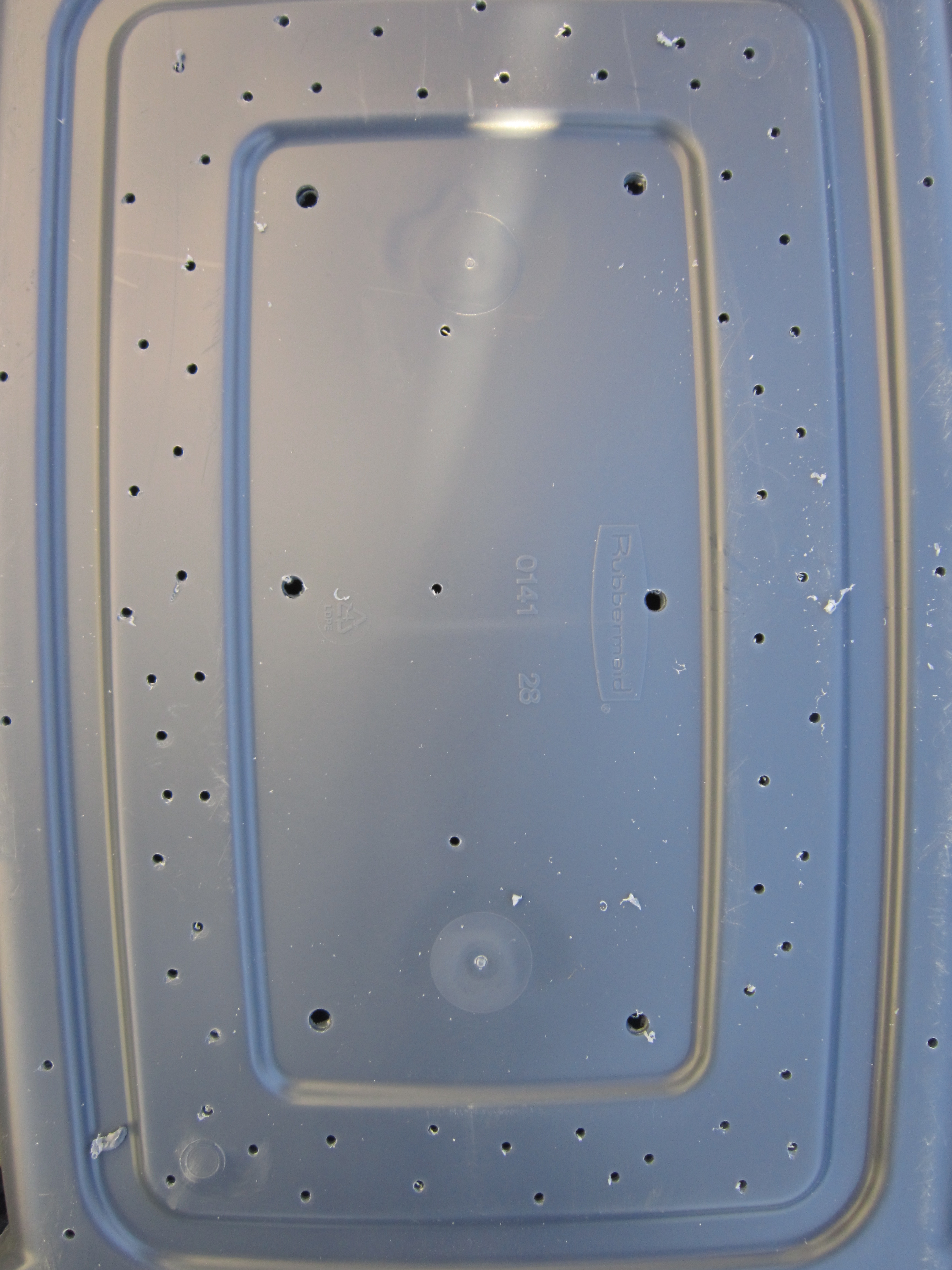
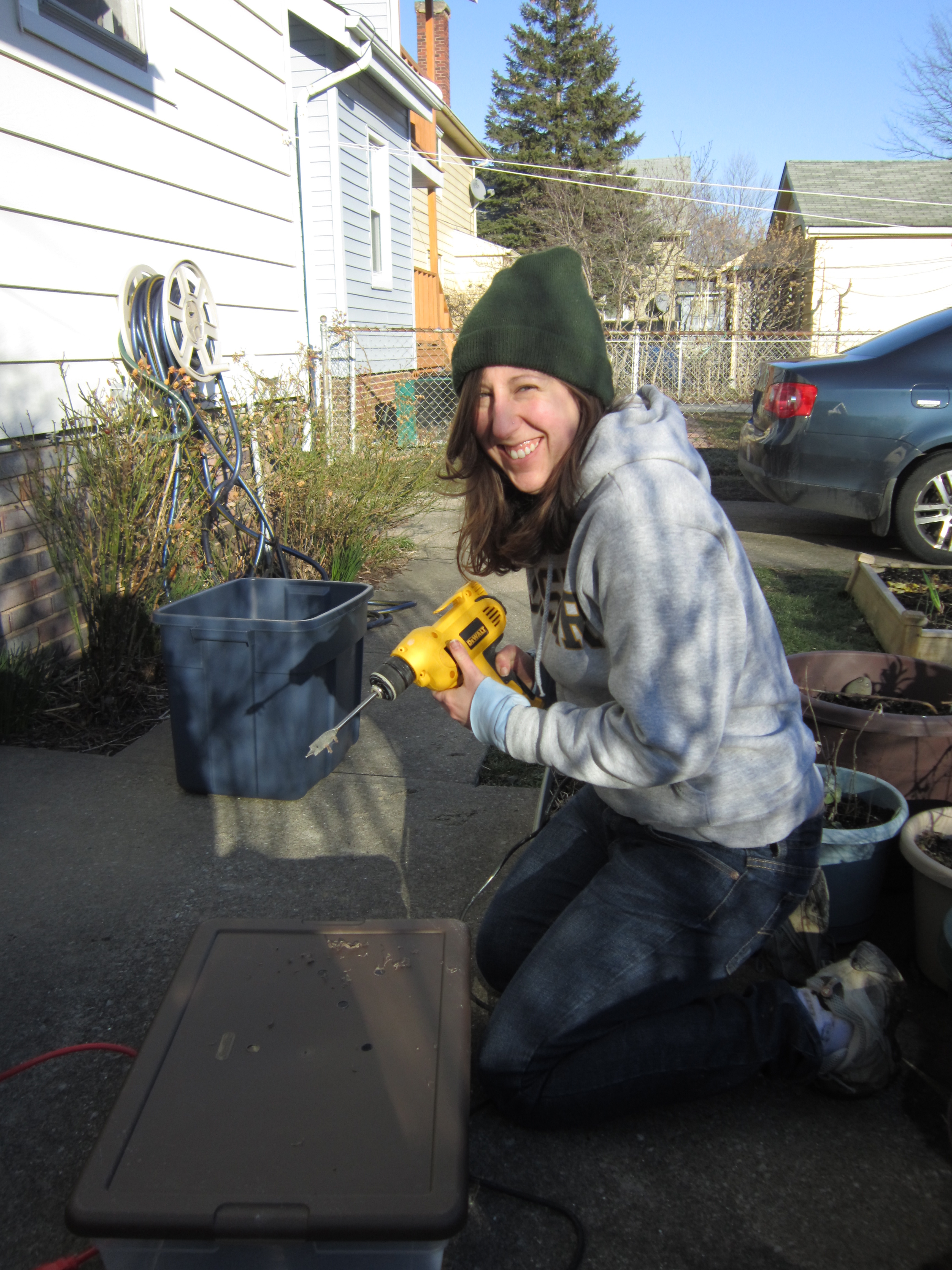
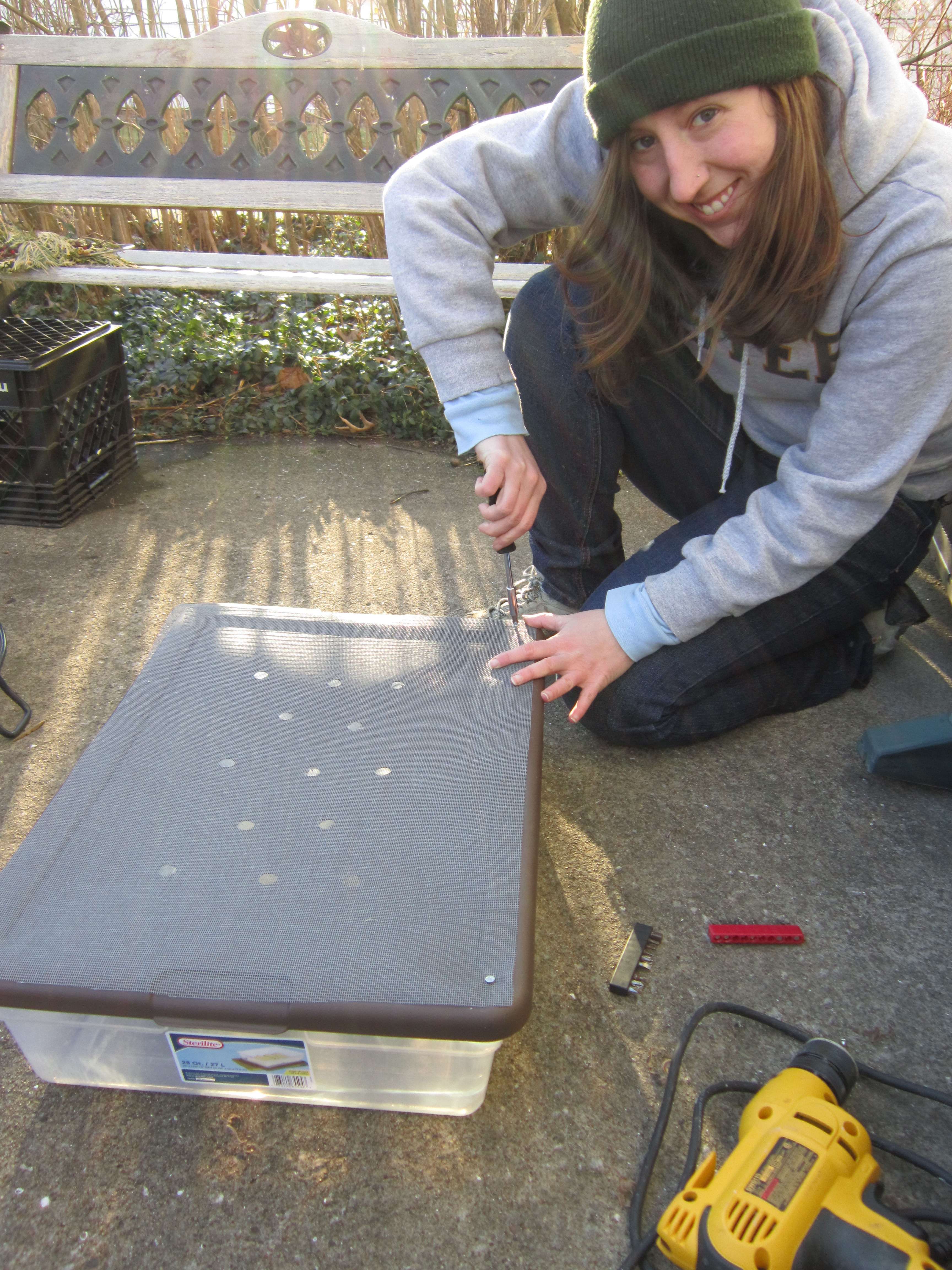
  2. We started by drilling 1/4″ holes into the lid of the bottom bin to allow worm tea to drain in.  We liked the idea of getting a clear bottom bin so that we can see if/when this bin needs to be changed.  We also measured out some screen to screw onto this lid so that no worms could fall into this bin.

    Drilling holes into the lid.

Holes on the lid.

3. Then we started working on the larger bins.  We drilled air holes around the perimeter of the top and drainage holes along the bottom.  We also drilled some larger holes in the bottom so that the worms have an easier time of migrating upward when the bins are rotated.  The idea with the double bins is that we will start one bin, and when that bin is full, it is moved to the bottom, and a new bin is started on top.  As the worms continue to compost the remaining matter on the bottom, they will gradually move up to the top bin when there is more to eat.  After about 3 weeks, the bottom bin should be fully composted and ready to be used.  It is my understanding that the worms will not be tempted to move down and out of the bin as long as there is a yummy environment for them.  However, they should move on up when living conditions become better there. Sounds like we could create a TV show.

Drainage and migration holes

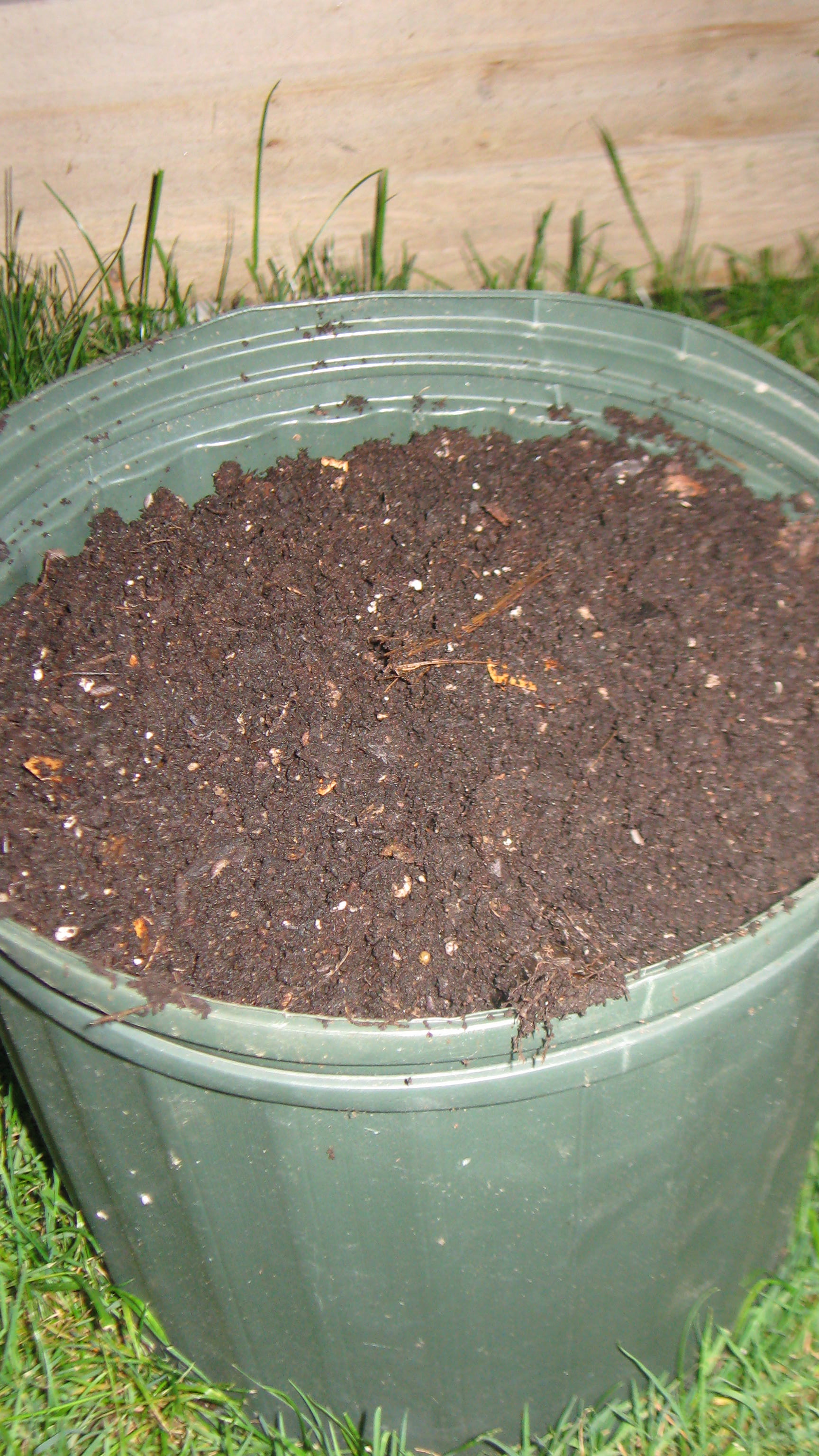
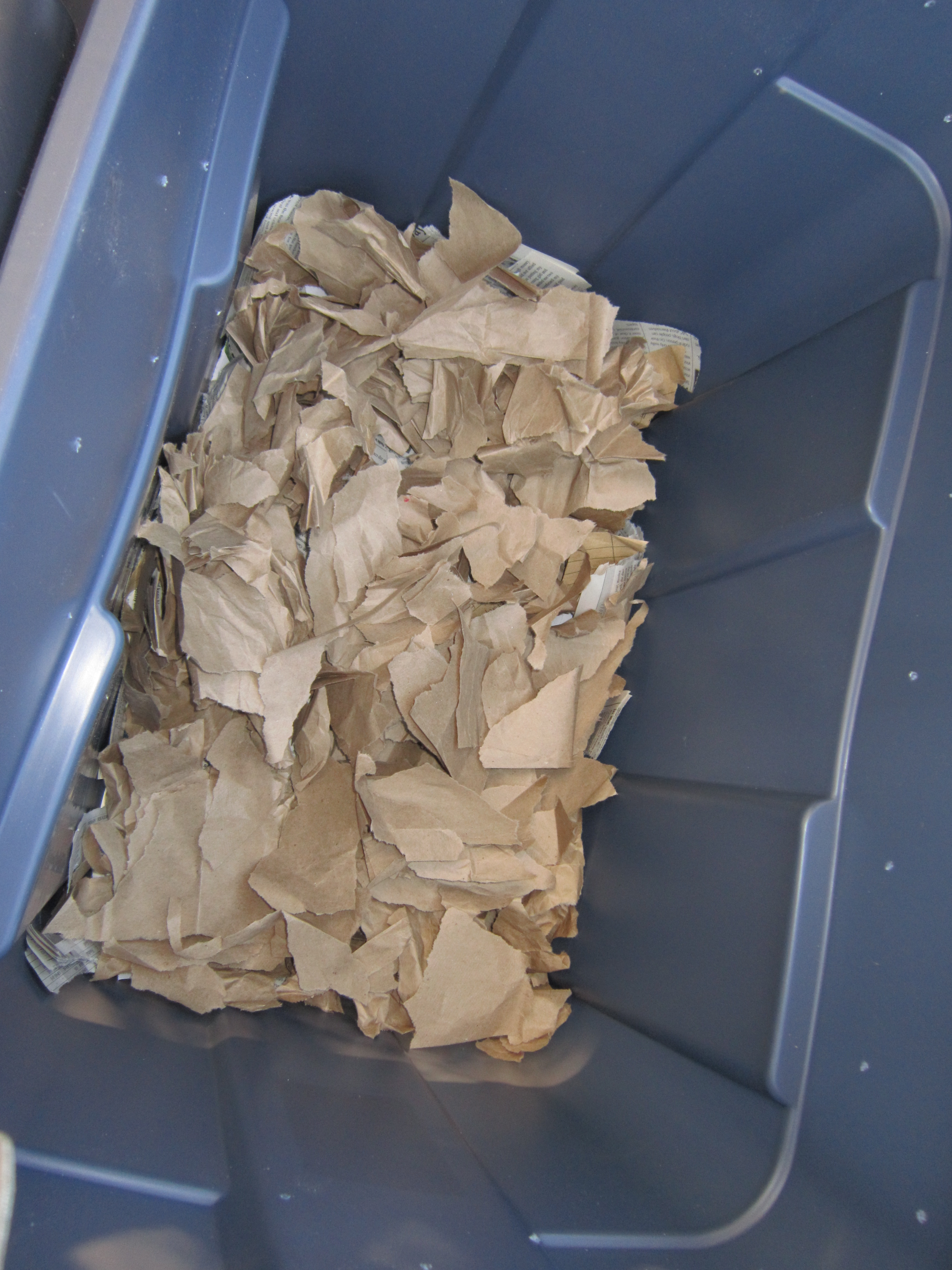
4. Next, we improved the living conditions — we added some interior decorating, if you will.  Many people use paper shredded by a paper shredded or other forms of fibrous material (coconut fiber), but my worms are a little thriftier and like paper ripped by hand. This serves as the worms’ bedding.  We put a little soil on top of this and moistened everything.  Worms should not dry out, but they can drown and do not like to be soaking wet so make sure to go easy on the water.  They might try to escape if they feel like they’re living in a lake.

What a lovely bedroom!

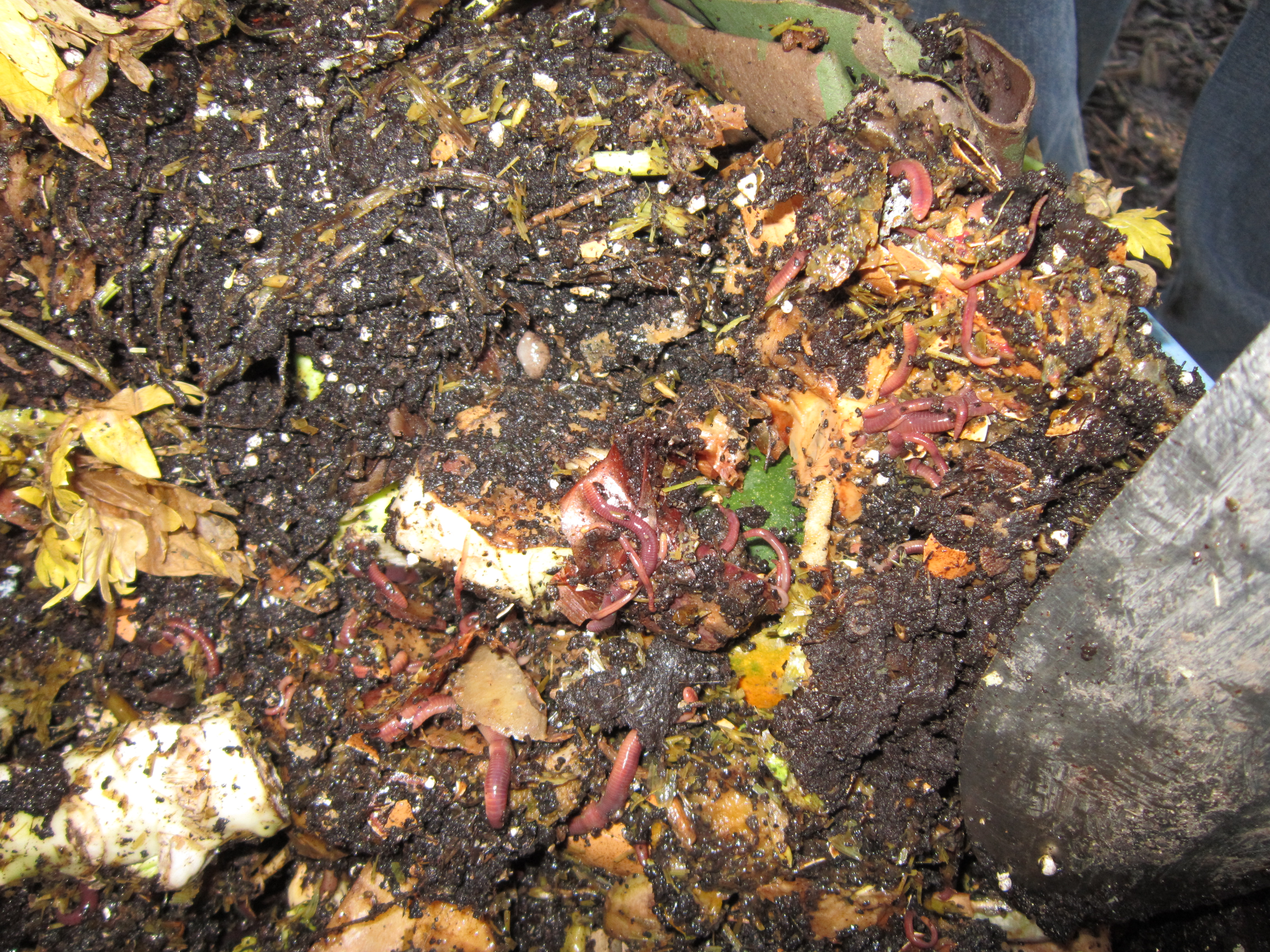
5. Time for the residents!  We raided my outdoor compost pile that has attracted a great many wigglers.  It’s pretty easy to find worms outside, but if you just Google “buy red wigglers” it’s easy to find them for sale. Remember to thank them and tell them that they are going to a place where there is always good food.

Look at all those wigglers in my outdoor pile!

6.  We added more soil, a few kitchen scraps, and covered everything up with more paper.  We assembled the stack and welcomed the worms to their new hang-out in the basement.  In a few days, I’ll start adding more kitchen scraps.

Stacked towers

Once this bin seems full, I’ll switch the bins so that the one shown here (now on top) is on the bottom.  I’ll have new bedding and some soil ready for the worms in the (new) upper bin, take a couple of them from the bottom bin up there to get things established, and start adding new scraps.  The worms should migrate and reproduce so that the top bin is the “working” bin again while the bottom bin is “ripening”.

So far the worms have been in the basement for a few days and everything seems to be going well!  This will be a great way to continue my composting and be a better participant in the cycle of life!

Shared on:

Small Footprint Friday

Steps Back to Nature: Harvesting Wild Chives

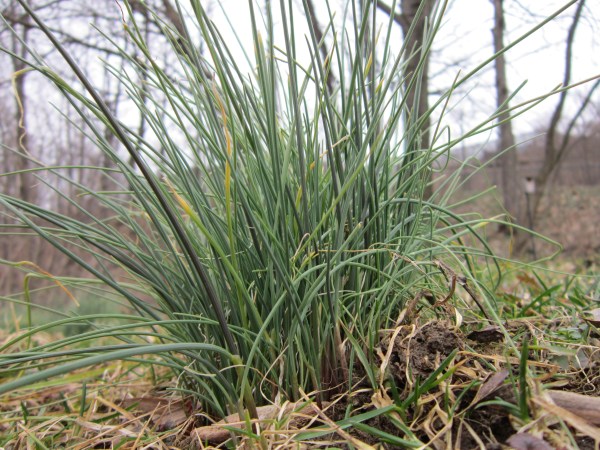
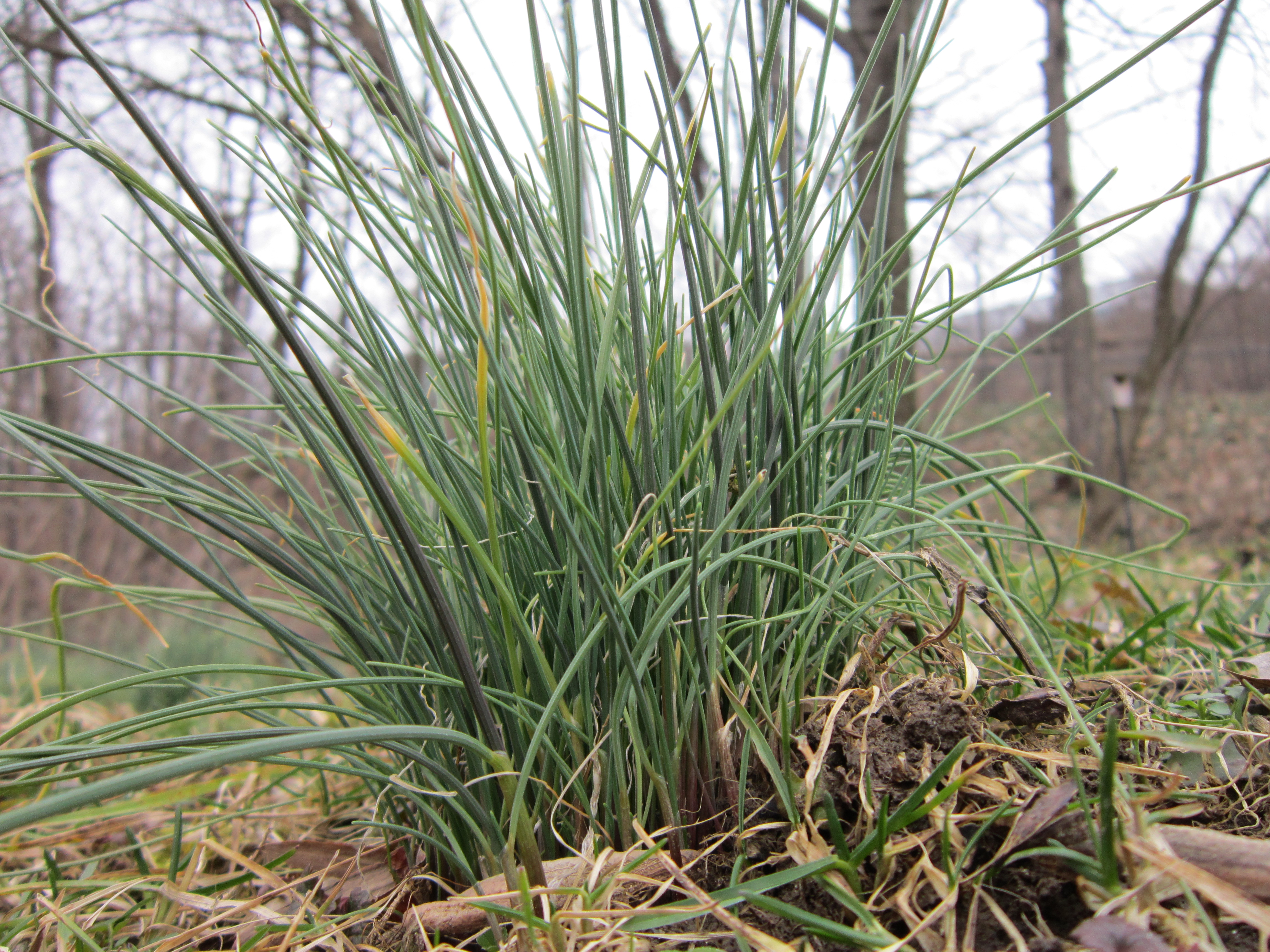
Beautiful chives!

Harvesting wild foods is a great way to foster a sense of connection to nature.  Not only does it get you outside, but you establish a relationship with a plant and are reminded that this process of taking food from the Earth has happened as part of every meal ever consumed.  Being the one to do the taking yourself makes the connection all that much stronger (although it’s a beneficial exercise to think of how all of your food was handled before it got to you).  Harvesting wild foods also fosters a sense of self-reliance and a beautiful feeling that we are a part of a continuous unfolding of life that cannot come from eating something packaged.

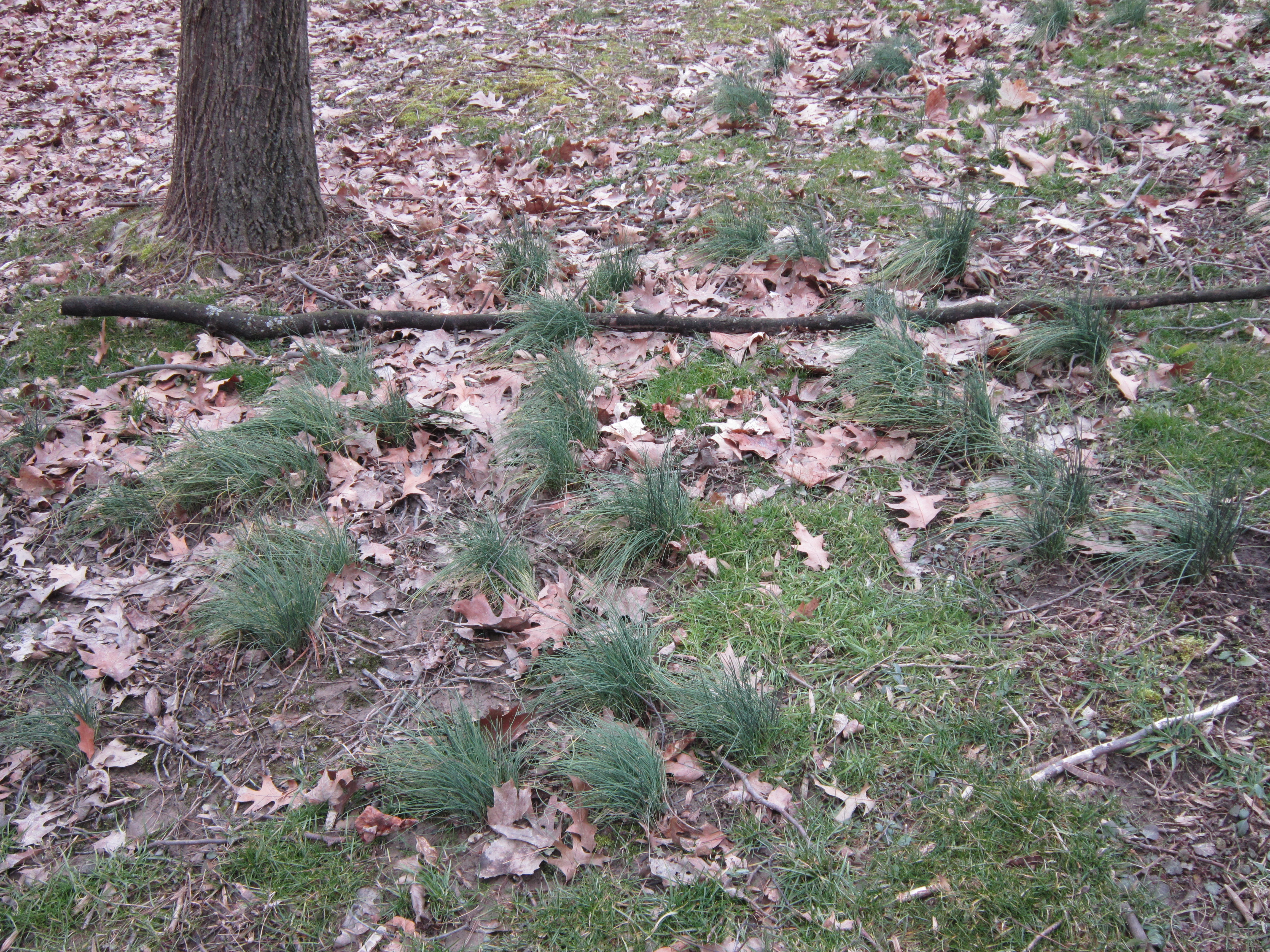
Wild chives (Allium schoenoprasum L.) are very similar to those grown conventionally, but with the added bonus that they can be found for free in moist areas! Despite being the middle of February, I recently was happy to come across a patch of land with several clusters.

Patch of Wild Chives

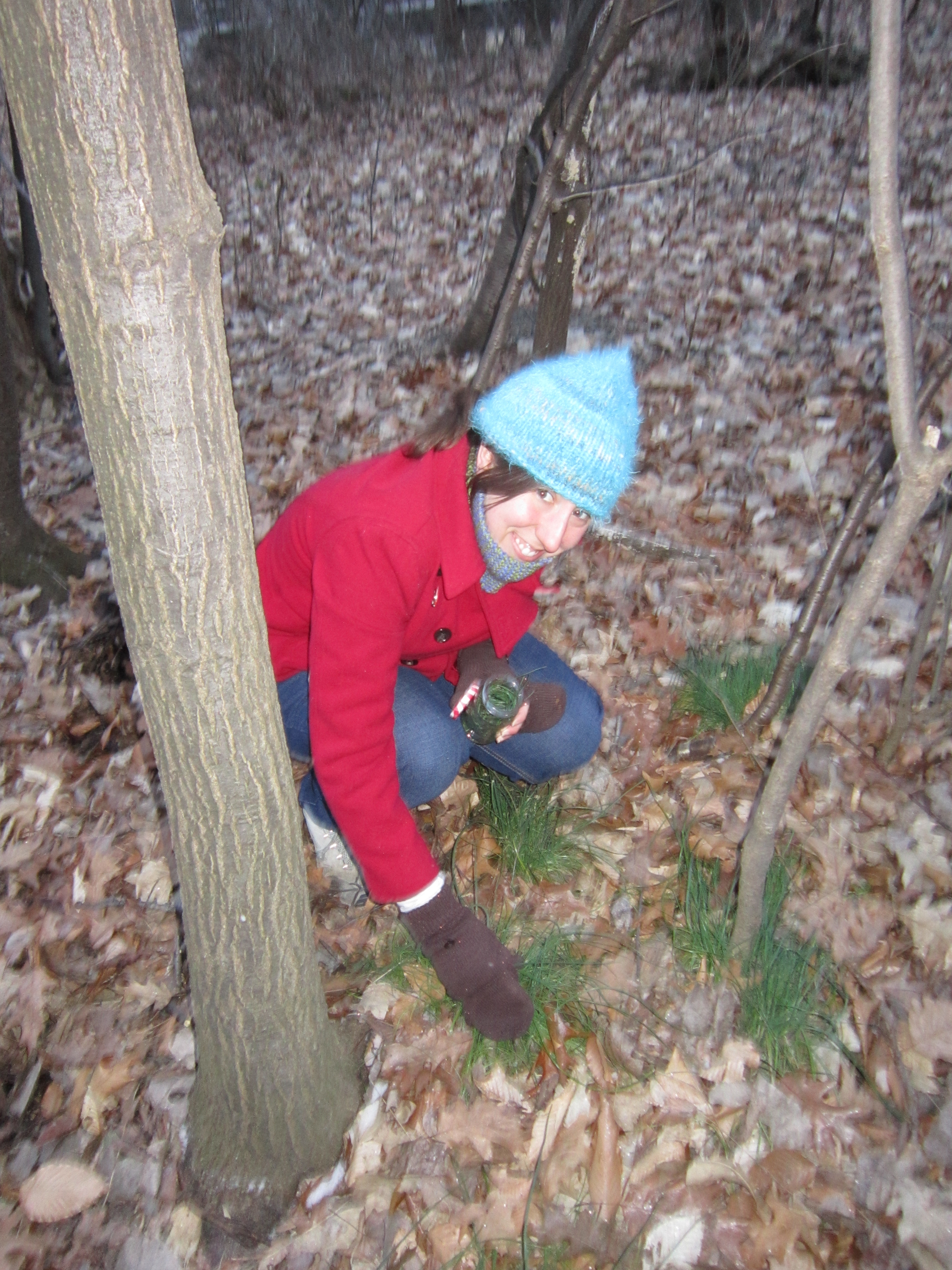
After inspecting them more closely and making sure that they had their characteristic chive smell (i.e., onion-y), I grabbed several to chop into vegetables for lunch. I also ate a few on the spot as it had been quite awhile since I had eaten food straight from the outdoors!

A few days later I wanted to try having even more fun with wild chives so I collected some in glass jars to bring home.

Harvesting more chives

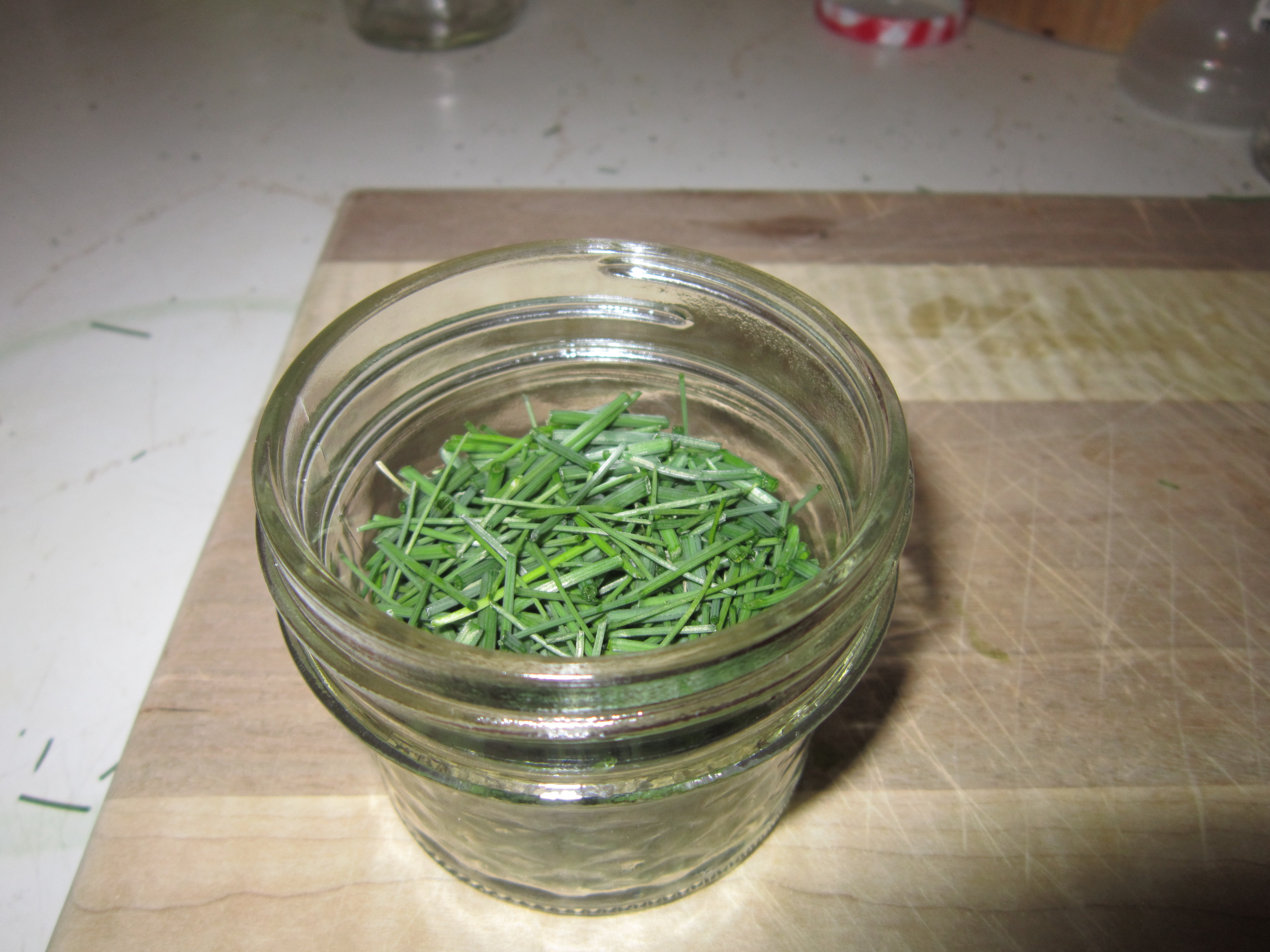
Once home, I started the process of infusing them into olive oil.  First, I cut them up into smaller pieces so that there was more surface area of plant matter. I put all of these chopped bits into a small glass jar.

Chives to chop

Filling the jar with chopped chives

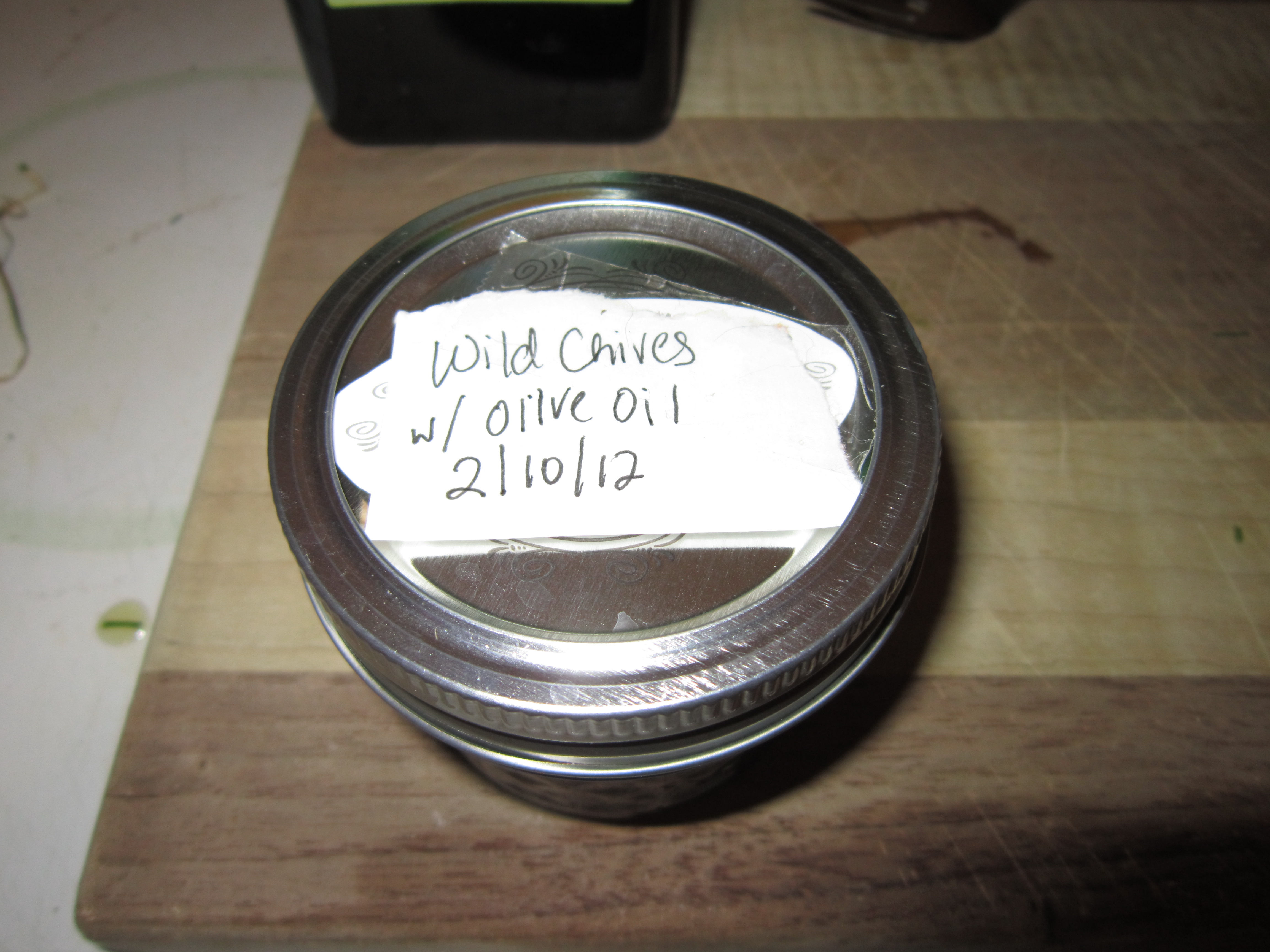
After this, I poured olive oil over the top of the chives to completely cover all the green parts.

Covering the chives with oil

This oil should be refrigerated promptly and used within a day or two.  The herbs can be strained for ease of use.

Chive-Infused Olive Oil

For more information on chives and to even discover some medicinal uses, see this web page: Wild Chives.

Happy chive hunting!

Welcome

Market FlowersAs night closes in on this first day with theselightfootsteps, I am unsure where this venture will take me.  However, I feel optimistic about making some major life changes and using this venue as a way to share them.

I will use this blog as an outlet to connect with others who share my dream of living a life of balance (with nature, spirit, meaningful work, rest) and to provide support, guidance, education, and inspiration as I ponder what it means and how it is possible to break free from captivity.
What do I mean by “captivity”?

While I in no way mean to trivialize the situation of persons who truly live in confinement or inescapable situations, I have observed similar patterns of behavior and health problems in the animals I have watched as a zoo scientist and within our culture at large.  Although many of us in the Western world are technically free to do as we choose, there are major institutional and psychological blocks that prevent us from living the lives that our hearts most desire.  As I write this, I know that my calling is to live simply, to create the Earth of the post-oil age, and to share this dream and my love of nature with others. However, it is a serious struggle to take my first steps outside of the model that I have grown up with — what will it look like, what if it doesn’t work, how will I always make sure that my basic needs are met?
But what if I don’t?

Should I continue to live in a system that dictates my time and where I spend the majority of my life’s energy?  Will I end up with the same chronic diseases of Western Civilization that we share with our ape relatives in zoos — diseases which are likely to be caused by improper diet, sedentary lifestyles, and stress that are the trademarks of “captivity”? Should I carry on in my current haze in hopes that my future will be better?  Why don’t I begin living my authentic life this very moment?

And really, this is what we all need to do.  People like to talk about the little changes we can do to make the world “greener” and to offset environmental catastrophes. Although behavioral modifications like recycling and switching to CFLs are good, I don’t think they will be enough. We really need to change the way we live and approach life — for the sake of the planet, our future as humans, and for our individual health and well-being.

This will not be an all-at-once affair for me, but I intend to take my commitment to living a more authentic, balanced life to the next level starting now. In the process, I’ll share some of the projects I’ve already begun, new ones that arise, and what other people are doing (especially locally around Cleveland, OH) to live alternatively and in ways that promote the health of our planet.