
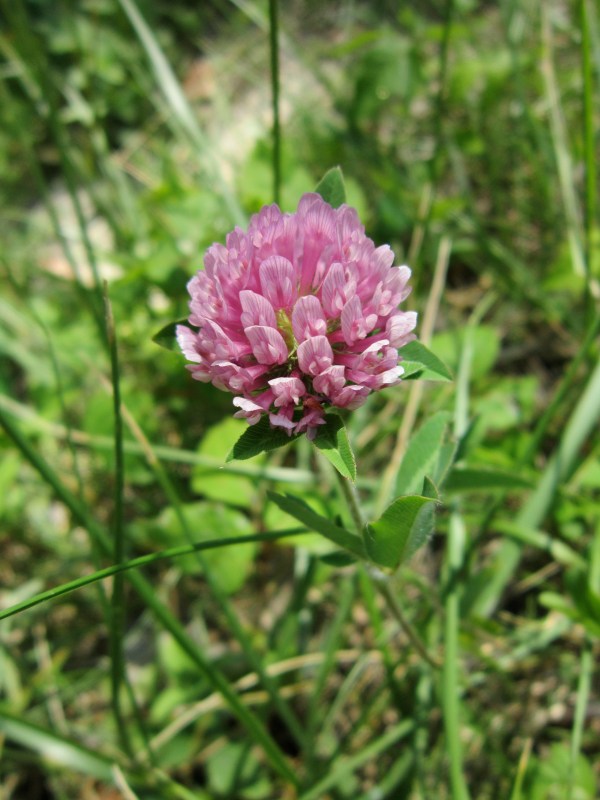
Ah, red clover. A versatile plant that helps with so many things — amusing young children in an attempt to find 4 leaves; food for grazing animals; medicine; and fixing nitrogen into the soil, to name a few.
Ah, red clover. A versatile plant that helps with so many things — amusing young children in an attempt to find 4 leaves; food for grazing animals; medicine; and fixing nitrogen into the soil, to name a few.

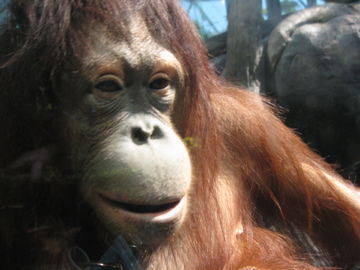
The Standard American Diet (SAD), or Western Pattern Diet, is a recent phenomenon, born of increased industrialization that allows for nearly unlimited access to high-calorie foods with little diversity in food choices. Aspects of this diet have repeatedly been correlated with the chronic disease conditions that are so common in our culture including type 2 diabetes, heart disease, and various cancers.

It took me a month of working with my sourdough starter, but it finally resulted in a delicious loaf. It still needs work, but I think it was a darn good first try.
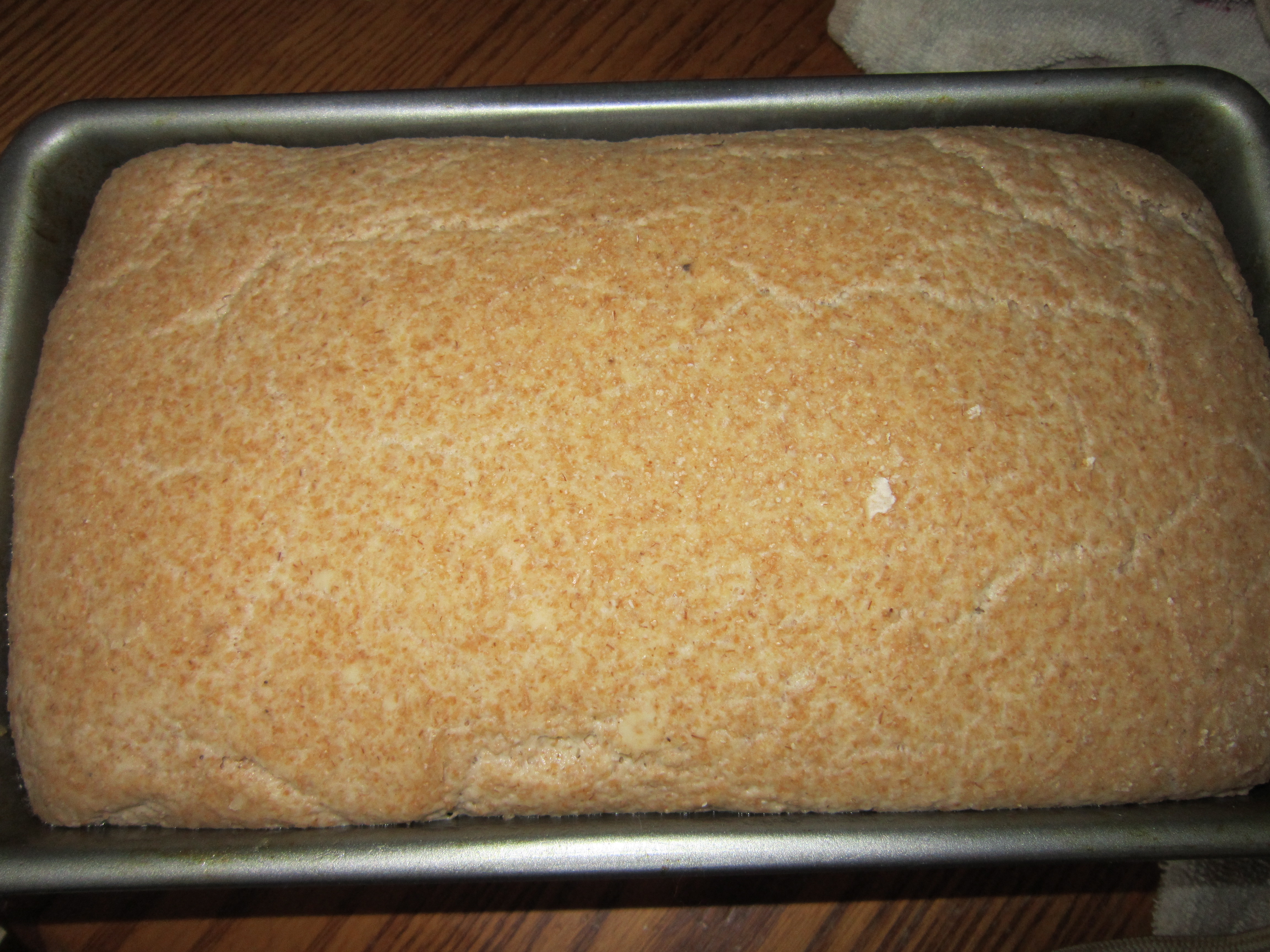
Fresh sourdough bread!

The list of reasons why I aim to eat as locally as possible keeps growing all the time, but some of my favorites include: it makes me feel more connected to nature and the seasons; it means that I eat more whole, non-processed food that is therefore healthier; and it is a great way to build and support our communities.
In addition to the psychological and health benefits that come from eating a local diet, it is also much more environmentally friendly in some very important ways. There are many, but I’ll focus on two here.
It reduces our carbon footprint.
The traditional Western diet is a fossil fuel hog. We use synthetic, petroleum-based fertilizers to feed our crops, we sow and harvest those plants with huge, energy-intensive machines, and to top it all off, the food is then shipped all around the world (using fossil fuels in planes, trains, and automobiles) for processing, packaging, and finally traveling to your location. Additionally, the very process of tilling the soil releases huge amounts of carbon into the air. In fact, the food system uses more fossil fuel than any other part of our economy — somewhere between 19 and 37% of carbon emissions depending on what study you look at. What’s sick, and a true indication of how unsustainable this system is, is that it now takes 10 calories of carbon-based fossil fuel energy to make ONE calorie of food that you’ll find in a traditional supermarket. As Michael Pollan put it in his letter to the president published in The New York Times (2008), “When we eat from the industrial-food system, we are eating oil and spewing greenhouse gases”.
Eating local changes a lot of this. Many local farmers are smaller-scale (less energy intensive) and use methods that reduce their dependence on excessive fossil fuel inputs and inappropriate tilling methods (farmers love to talk about their farms — ask about their methods if you’re concerned). Also, local food cuts out the midway travel-thon that most food goes through — food is either going directly from farmer to consumer, or processed at a local facility before being sold. There are not vegetables grown in California that are shipped to China for processing and packaging that are then shipped back to the Eastern United States for consumption (yes, this happens).
Anything that we can do to limit our carbon footprint is ultimately good for ourselves and other animals, including orangutans, because we’re taking steps to lessen the deleterious effects that climate change will have on disrupting ecosystems.
LOCAL FOOD DOES NOT CONTAIN PALM OIL
This is the big one for orangutans, and also relates back to the previous point drawing links between industrial agriculture, carbon emissions, and global warming. Huge swaths of rainforest land are cleared to support the industrial agricultural system, primarily for food like soybeans, palm oil, and cattle. Rainforests are storehouses of carbon that is then released into the atmosphere when they are destroyed (and then the food grown there is shipped around the world for processing and traveling to markets further exacerbating the issues at hand).

Forest in Merawang Subdistrict, Bangka County, Bangka Island being cut for palm oil plantation. (Photo credit: Wikipedia)
As serious and life-threatening as global warming is to us and all other animals, there are more obvious casualties happening daily because of the conversion of rainforest to plantation. The battle between palm oil plantations and orangutans is a particularly brutal one.
Orangutans need large areas of land to find enough food to support their large body size. They also are extremely intelligent and form mental maps of where their preferred feeding sites are located. They roam between these sites, knowing at what time of year they must be in certain locations to find the most energy-rich foods.
When someone comes and cuts down the forest where orangutans live it is not easy for them to just pack-up and relocate to a new area of forest — it might be occupied by other orangutans who have already capitalized on all that food, and they haven’t learned where all the feeding locations are outside of their home range. It would be like losing all of your current ways of procuring food — what would you do? How would you find food?
And so, many orangutans continue to hang out in the palm oil plantations where they are then considered nuisance animals by the palm oil companies that then trap, shoot, burn, or leave orangutans to reach any number of horrible ends.
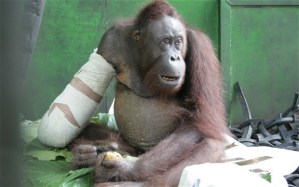
This orangutan chewed off its own arm to escape a trap set in a palm oil plantation. Luckily, it was found and saved before dying. It will likely be re-released into the wild. Photo: Caters. Click on photo to link to article.
What to do?
Some palm oil activists have advocated boycotting palm oil products, but focusing on a boycott of industrialized products can be maddening. Almost half of the processed products you find have some derivative of palm oil.

A few of the thousands of products with palm oil.
Other palm oil activists suggest supporting companies that have signed on to the Roundtable on Sustainable Palm Oil (RSPO), which aims to “promot[e] the growth and use of sustainable oil palm products through credible global standards and engagement of stakeholders.”
The problem with the RSPO is that it is greenwashing. Crops grown in monoculture systems such as palm oil are inherently unsustainable, and it will never be sustainable for people in the United States and Europe to depend on a crop that was grown in Southeast Asia. It has to fly all over the world for processing, packaging, and delivery before it reaches us, creating unnecessary carbon emissions and waste.

Monoculture palm oil plantation. (Photo credit: angela7dreams)
Additionally, the companies that have signed on to the RSPO, while they might be interested in having good PR this way, are still huge corporations with questionable practices happening at every other level of production. And the food is probably not healthy for you.
Instead, let’s embrace diets and lifestyles that are beneficial on all levels — for orangutans, for our local environments (and therefore those abroad), our communities, our health, and to help stop global warming.
The best decision: eat locally from small, sustainably run farms. And grow your own food, too!
Let’s look at the food in my Midwestern United States diet in mid-May.
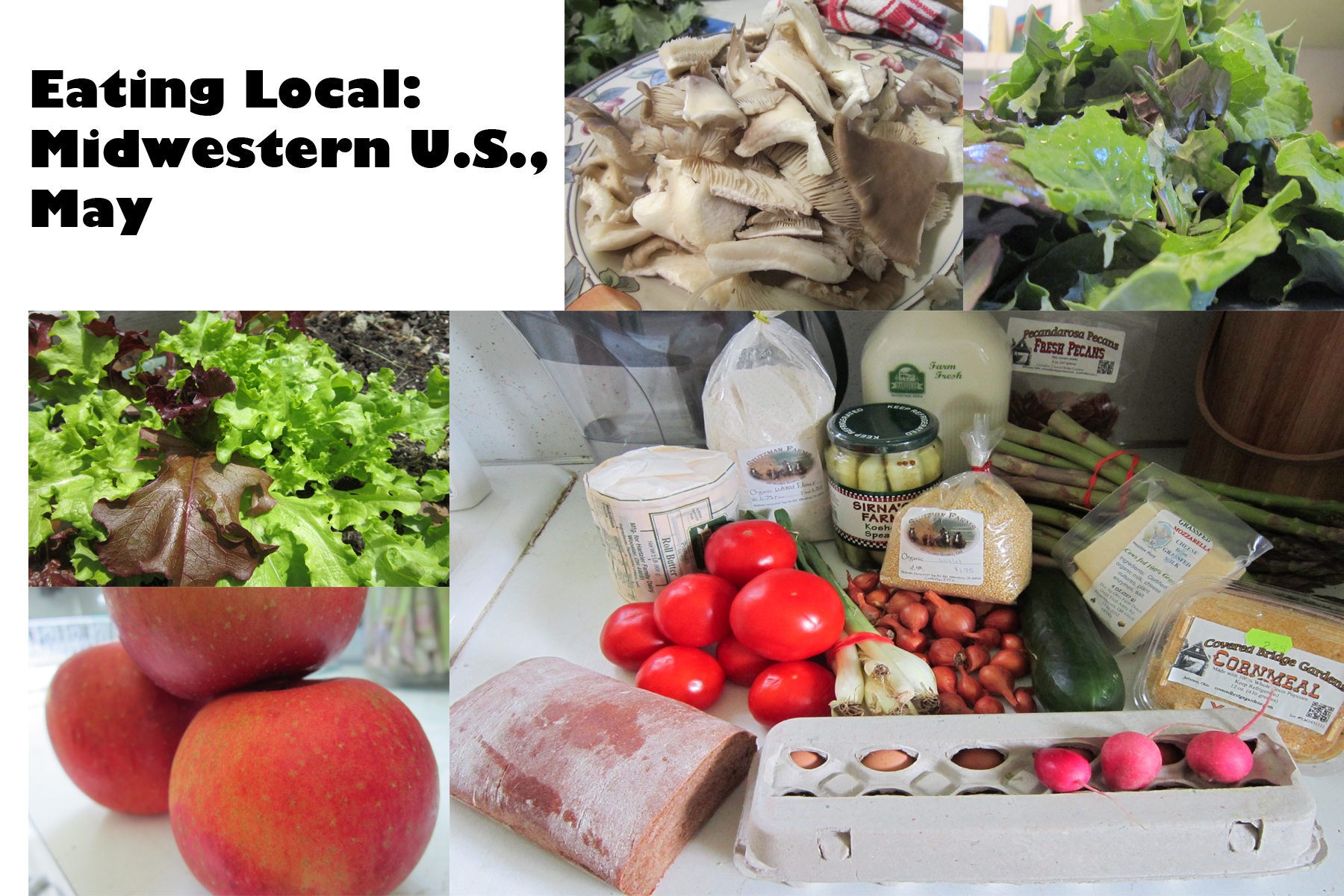
What is here? Foods grown and processed in Northeastern Ohio including:
And I also depend on things like sauces, berries, other vegetables that I’ve frozen, canned, or dehydrated in other seasons, and wild foraged foods.
What is not here?
I admit, this is more of a lifestyle change than just a diet change, and it takes time. Especially at this point in time, it requires skills that many of us have lost, planning that we’re not used to doing, and time for processing and preparing our food that has to be reclaimed.
I’m certainly not perfect with this as I still depend on some products that I can’t find locally or don’t know how to replace, and I am still learning skills and how to create a life that affords me the time and space to work with food in a way that I find meaningful. However, we have to start somewhere.
The joys that come from moving to a more local diet make it well worth the effort (REAL, fresh strawberries are back? Hallelujah!), and it provides a sense of power when so many sad, maddening things are happening to our world’s ecosystems and animals. You can know that you are truly taking steps toward making the world a better place, and other people will learn by your example.
If you still want to do more, check out Orangutan Outreach, Slow Food, Millions against Monsanto, watch documentaries like Food, Inc., and sign petitions to stop destructive agricultural practices when you see them pop up.

Click for More Resources
Also, be sure to find local farms and farmers’ markets in your area: Local Harvest
Linked up at:


It had been brewing for some time. It would bubble up and haunt me, but I would talk it away – “you’re just asking for too much” I would tell myself.
“You just need to find more balance”, I would rationalize.
And yet there came a time when looking at my dissertation proposal thinking, “This is not what I want,” could not be ignored any longer. (I may have been a lump sobbing on the ground.)
The process of following one’s dreams, intuitions, and inner guidance, however, is not as easy as we would like. It requires facing fears that we have long ignored, taking risks we have felt too scared to take, and learning more about ourselves than we ever have before.
Is it even worth it?
YES.
As I write this now, I feel confident in my decision and so much more excited about my life, my place in the world, and delving into my true passions.
Was it easy to get here?
No.
First, the Fears
They’re those dehabilitating, gut wrenching, sleepless-night causing, distracting thoughts that surface all too easily and frequently when we are faced with a huge decision that marks the difference between following our dreams and continuing with the life-sucking business as usual.
Some common ones that surfaced for me were:
Then, the Risks
Despite all of the fears, something deep inside kept nagging me that I was on the wrong path, that I would get stuck in a life that wasn’t what I desired, and that I would remain dissatisfied. In the face of overwhelming fear, I decided to take some risks and trust that:
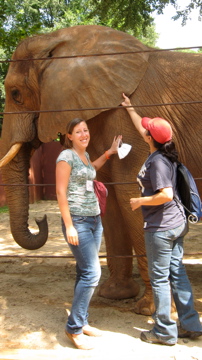 what sustainability really means (and that I couldn’t reach my ideal for a sustainable life working in a zoo), allowed me to practice and further develop my critical thinking and writing skills, and left me with a lot of fun memories and experiences that many people will never have. And I still got a Master’s degree in Biology out of it.
 And Then You Realize How Much You’ve Learned
Through all of the sleeplessness, the false alarm emergency room visits for heart attacks (this was a hard decision!), the tears, the fears, the worries, and then the risks, I have learned a lot. Not only about myself, my strength, and my capacities, but also about the life I want to create and how to do it.
Facing such a major decision made me want more than just intuition-based feelings that I was making the right decisions, so I also came up with long lists of real-world reasons that my decision would make the best sense for my desire to live a more healthy, sustainable, and freedom-based life. They fed right into and supported my intuitions in ways that provided me with strength to do the right thing.
I could make another bullet-point list of things that I’ve learned, but that’s what this blog is about, so look around and stay tuned for more insights!
What about You?
Are you a risk taker and dream maker? Are you living your authentic life?
Sadly, I don’t think many of us are. But you can! It might take some hard work, inner searching, determination, and de-conditioning from cultural expectations, but it’s worth it.
I believe the world would be a much more inviting, exciting, likable place if we were all following our passions and dreams rather than living in a belief system based on fear and what-ifs.
So name your fears. Acknowledge how scary and terrifying they are, and then defy them!
___________________________________
P.S. Although I enjoyed the elephant encounter shown above, I would prefer that we not keep elephants in zoos.

Did you know that pine needles can provide you with more vitamin C than orange juice? And that they can help to heal your body from respiratory ailments, colds, and the flu?
Some say that the Native Americans taught the early settlers about drinking pine needle tea to help prevent death from scurvy!
Pine needle tea is easy to make, but what are some other things that can be done with pine needles?
They can be infused into a variety of menstrums (liquids used to extract the nutritional or medicinal properties of plants) other than water. For example, tonight I got a nice dose of vitamin C by using vinegar infused with pine needles in my salad dressing. White pine needle vinegar (the type I made) tastes similar to balsamic vinegar.
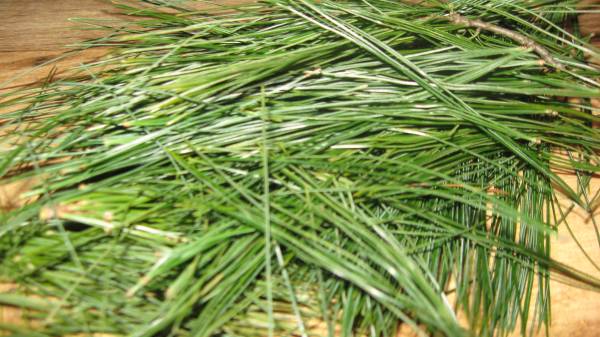
First, you’ll need to gather some needles. I collected a bunch from a white pine.

White pine needles
Pick through them to ensure the best ones are being added to glass jars. I also tore these up as I was adding them.
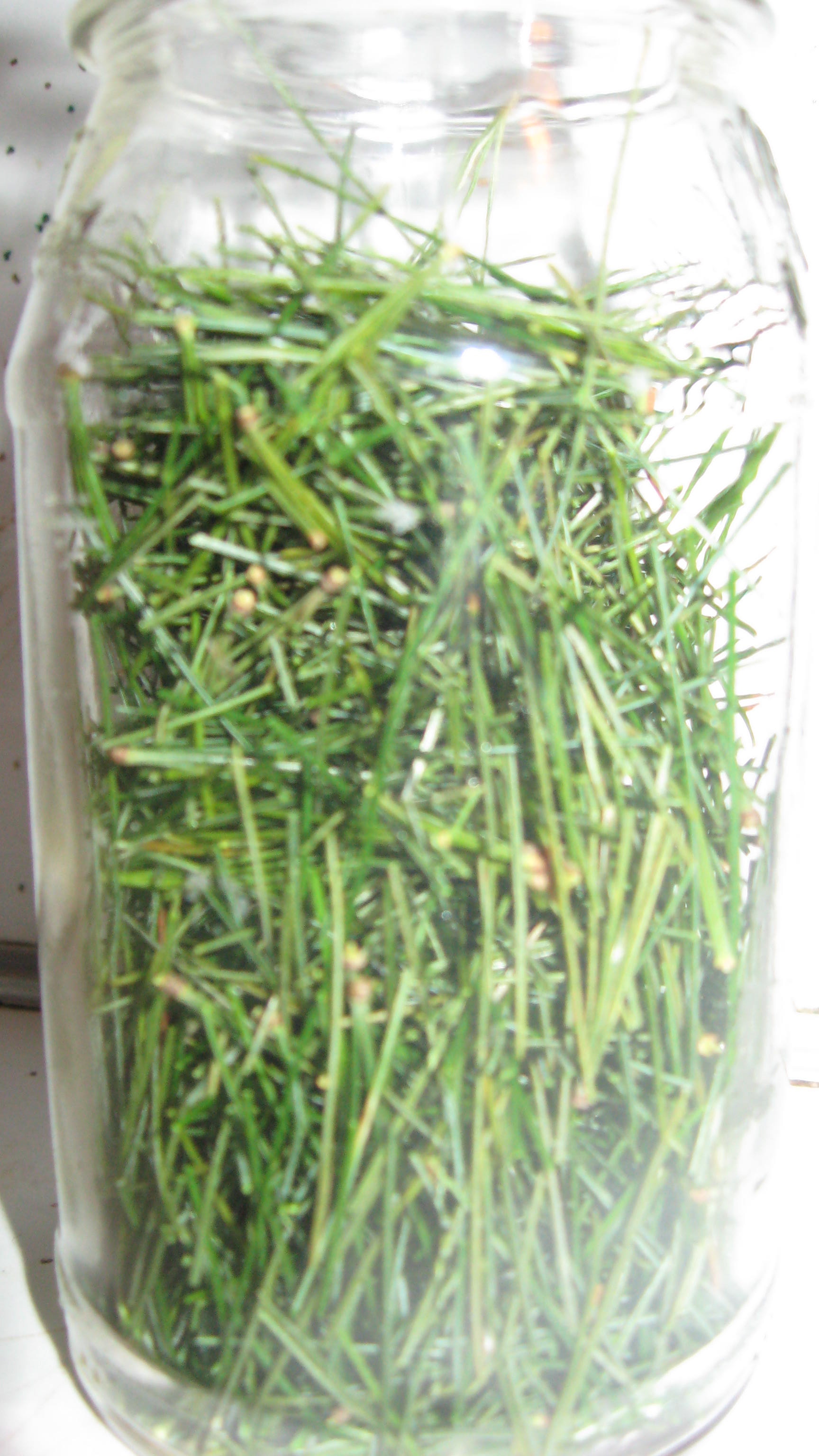
Fill the jar!
And then cover with the menstrum. In this case, it’s apple cider vinegar. I get large jugs of the raw kind so I boiled some first to ‘pasteurize’ it before making this vinegar (and I was able to boil enough extra for future use). Make sure to completely cover the needles — poke them down so that they’re an inch below the liquid line.
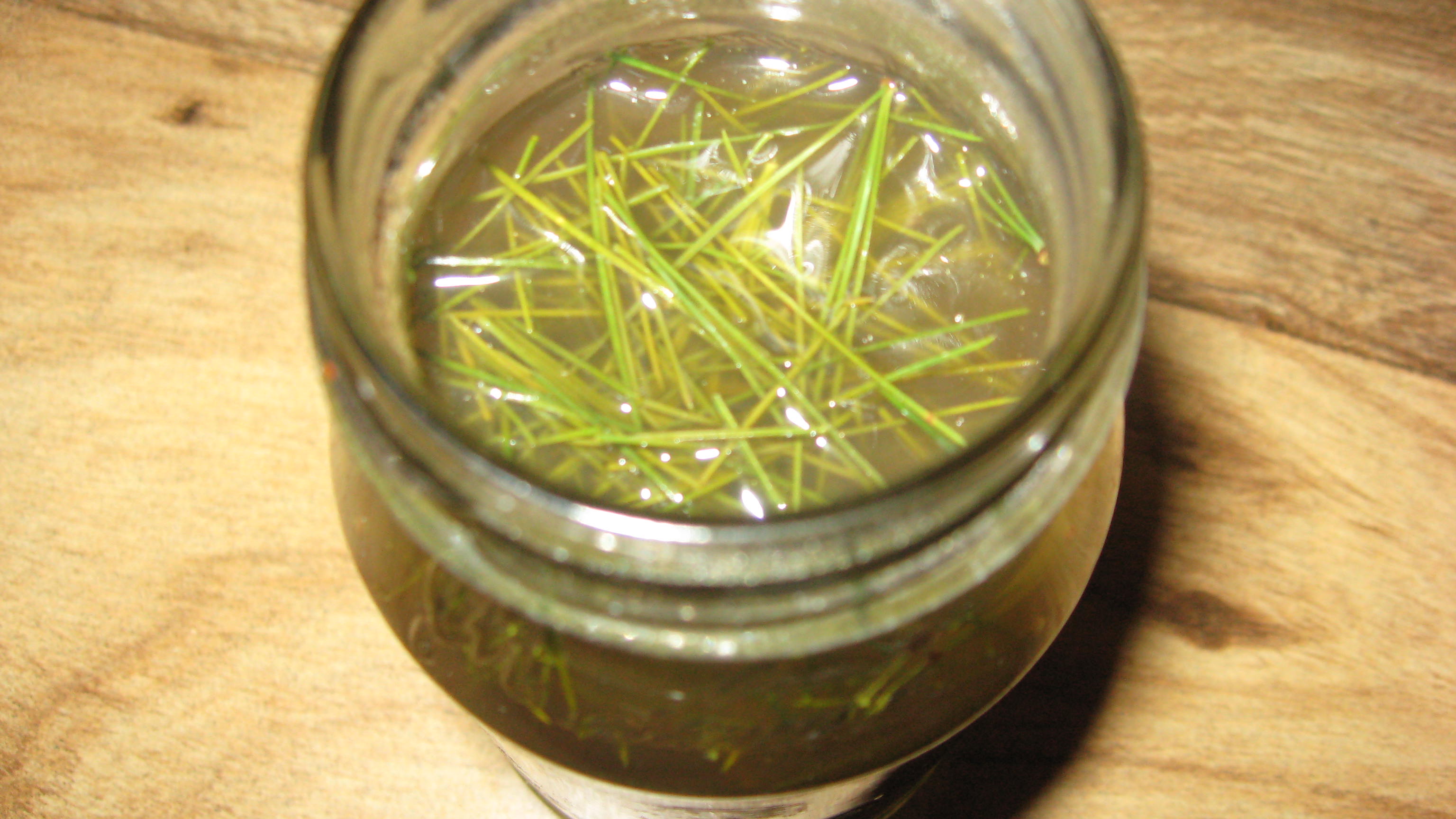
Let the finished product sit for 4-6 weeks before using. Also, use a plastic lid or put a piece of wax paper on top because vinegar will eat away at the lid.
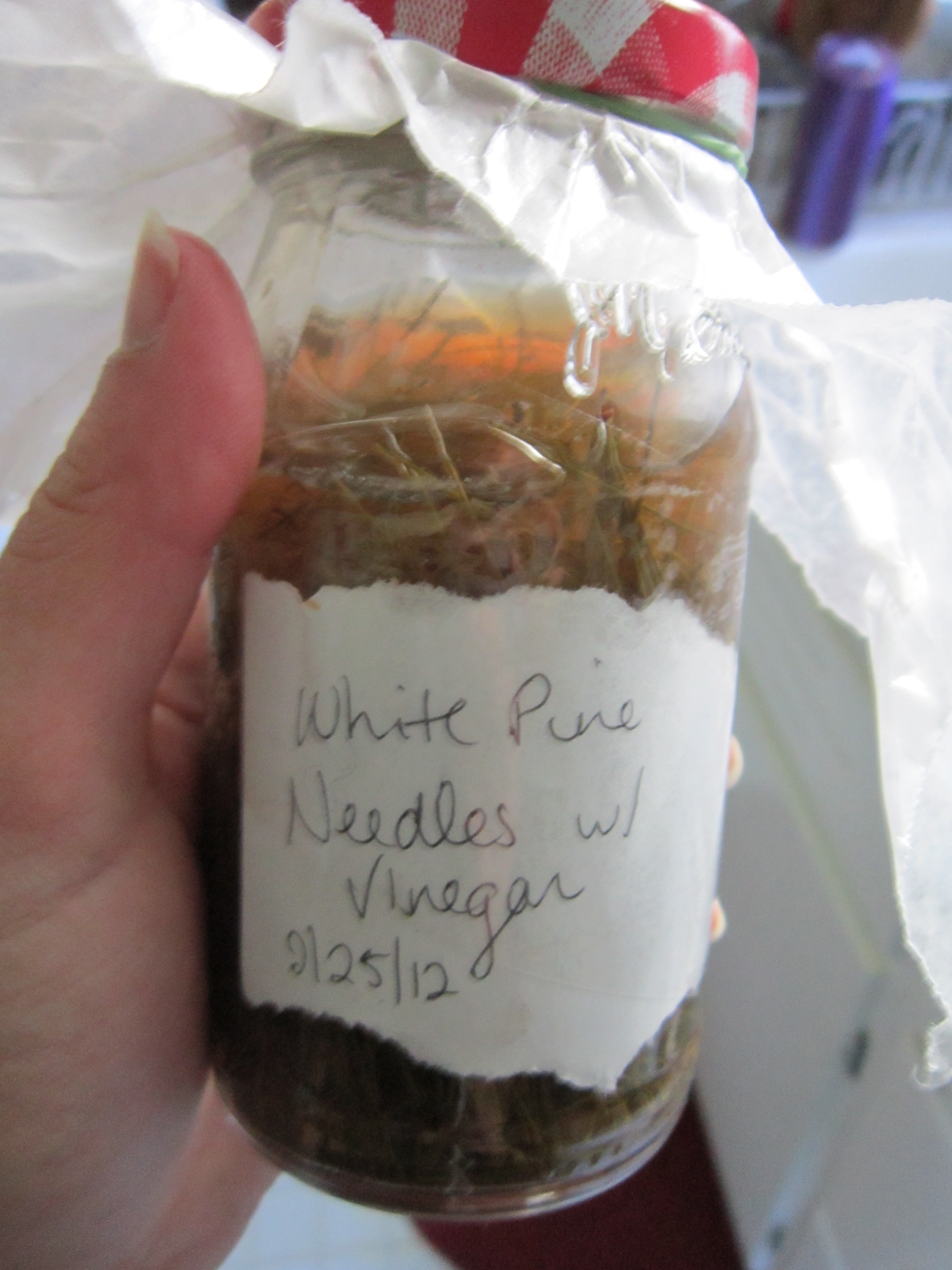
White Pine Vinegar ready to be strained!
What’s another use for the pine needles? Infuse them in olive oil! The oil can then be used as a relaxing massage oil or as a chest rub to help with respiratory issues.
Cover a jar full of pine needles with the oil and let sit for 4-6 weeks.
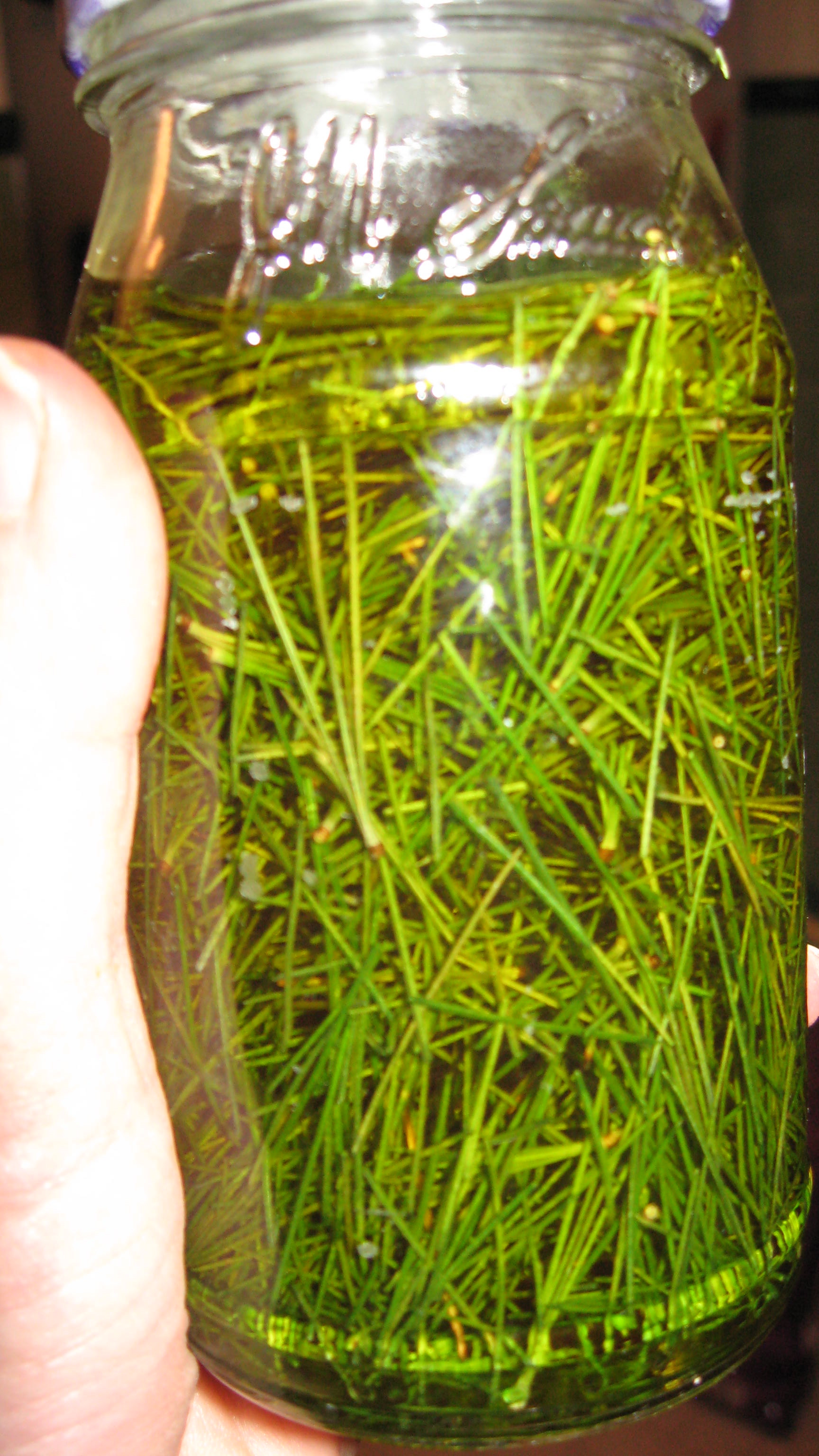 When you’re ready to use the oil, strain the needles out.
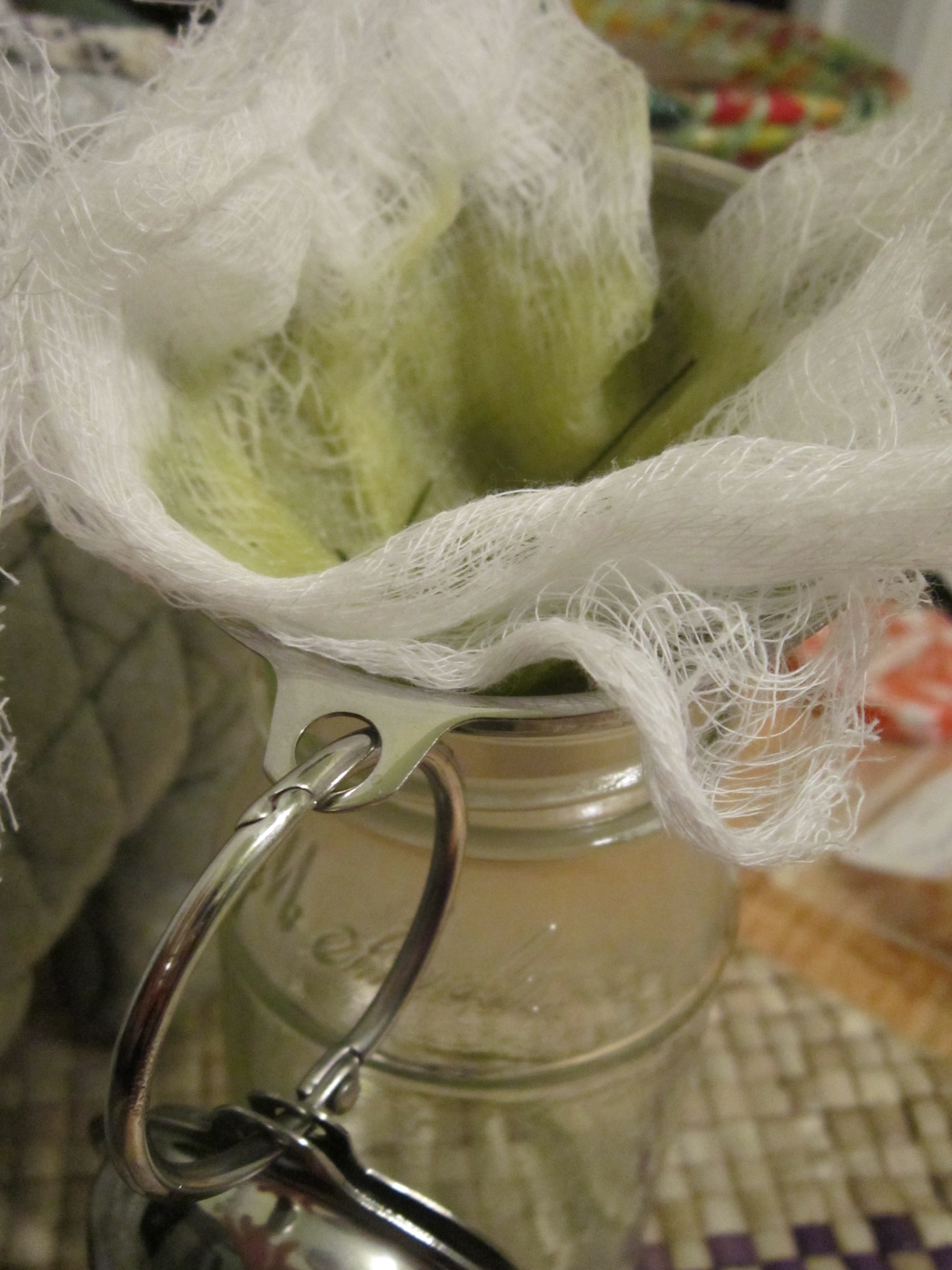
And you’re left with pine needle infused olive oil!
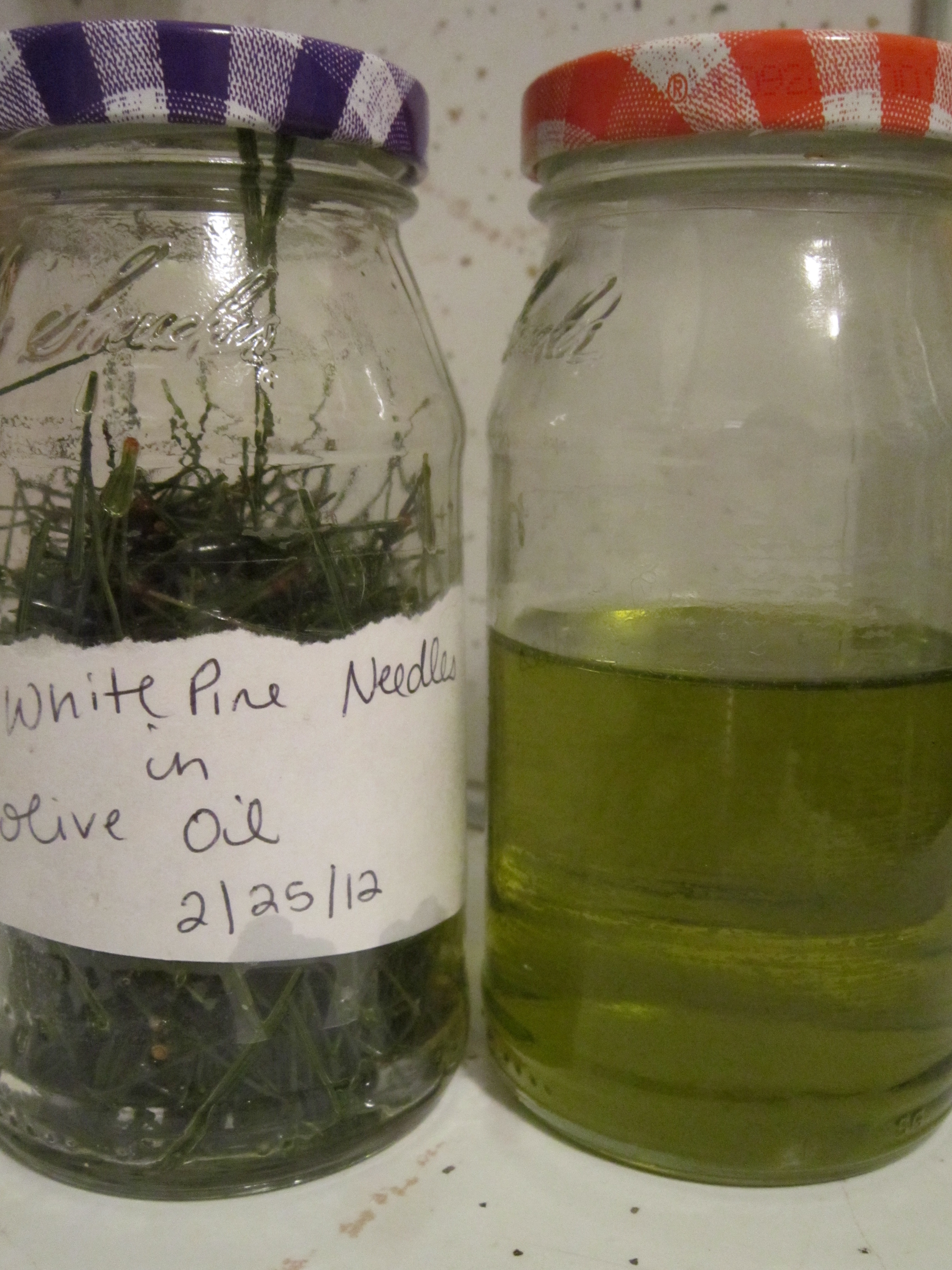
The oil can also be turned into a salve that can help to remove splinters (although it seems that the actual sap of a pine tree might be best at this!), or it can be put on small wounds to help them heal. I’ve also been having a fun time using it as a lip balm!
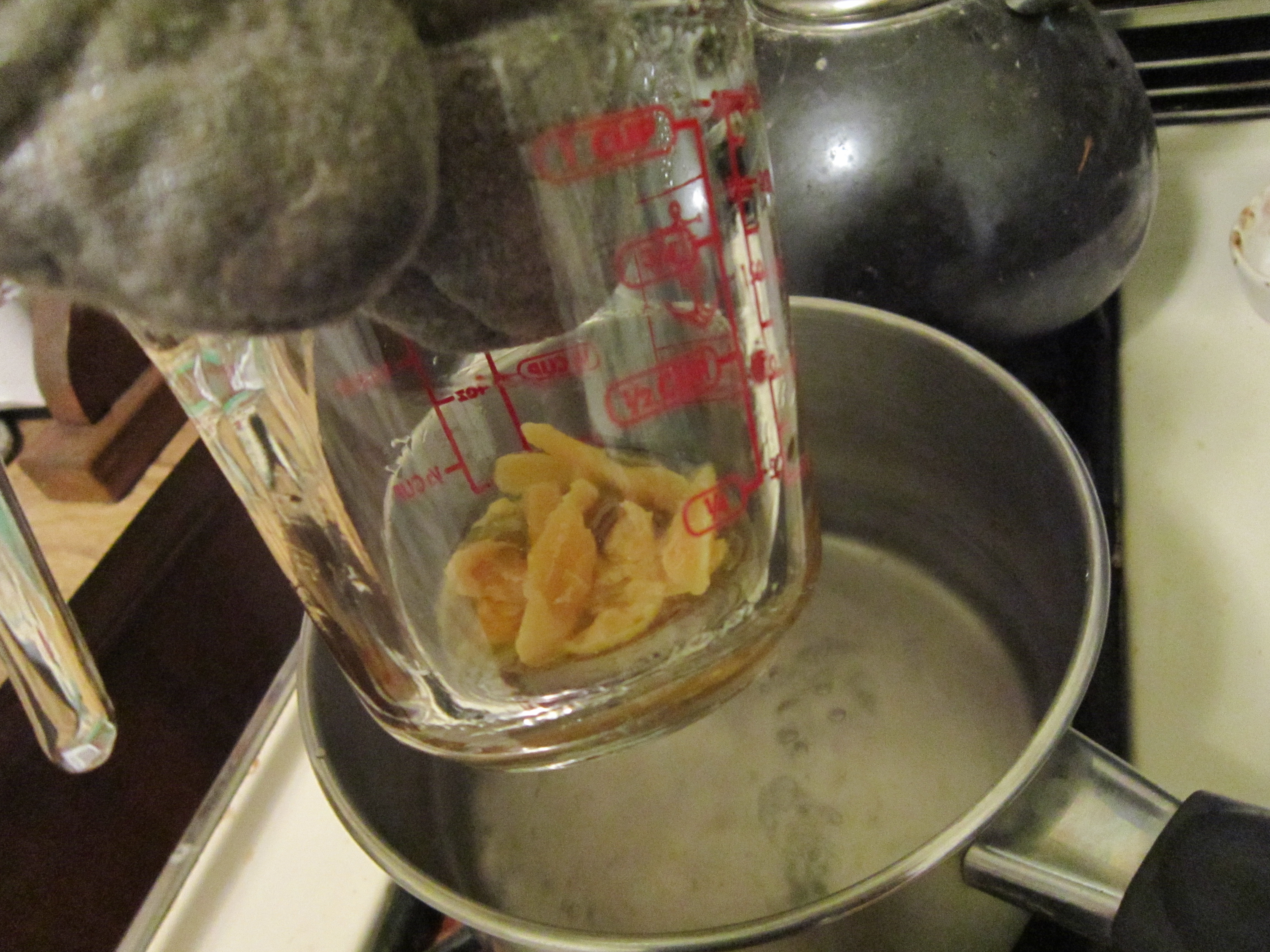
To make a salve, create an easy double boiler by putting a measuring cup into a pot of boiling water.
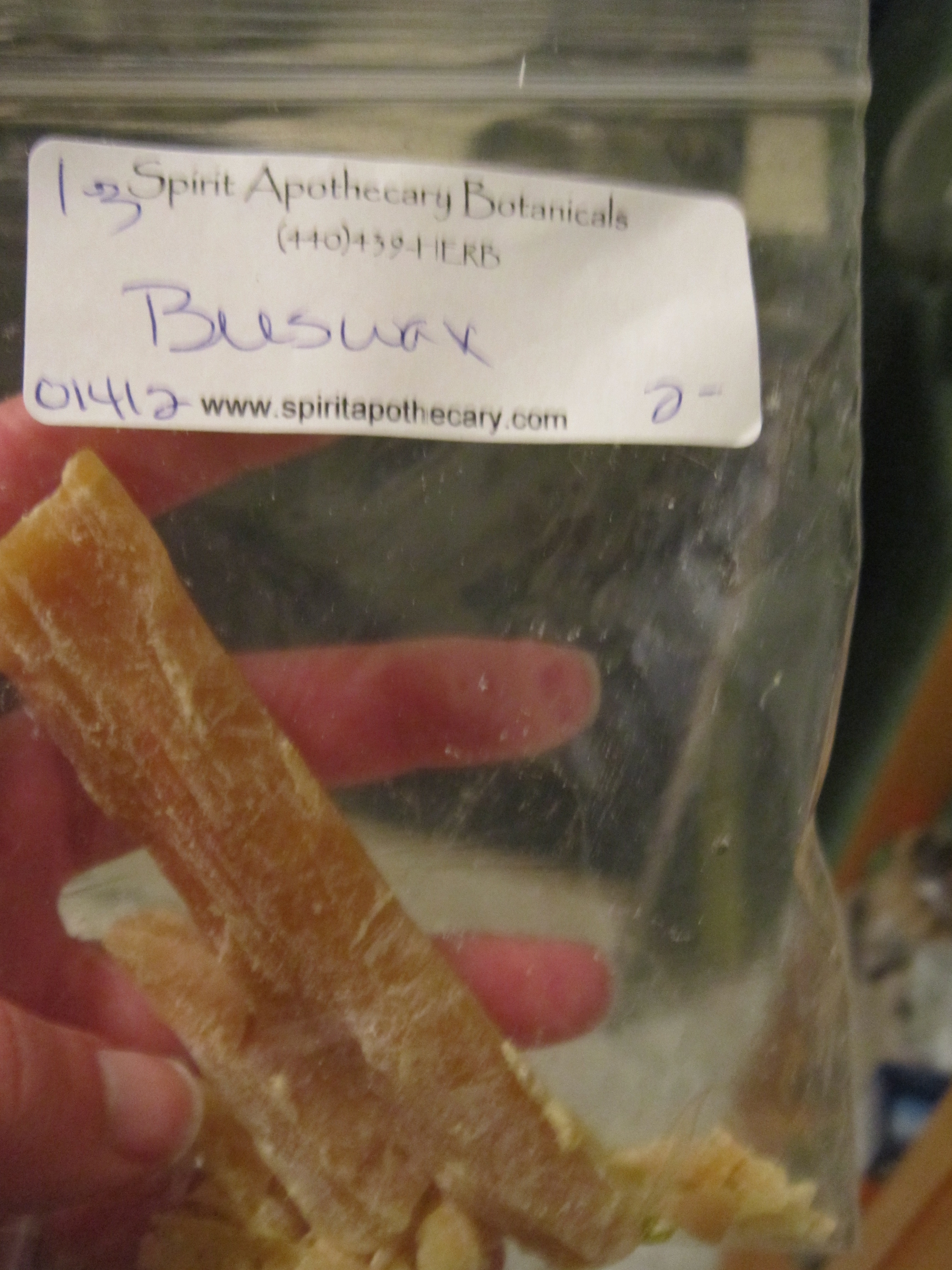
Add 2 Tablespoons of beeswax (I just guessed at the amount when I made this…) to the measuring cup and let melt.
After it has melted, add 2 ounces (1/4 cup) of the oil infused with pine. Stir with a chopstick until you reach an even consistency. Test to see if you’re done by putting a drop on your counter. It will allow you to quickly see if the salve is firm enough or too runny. Too runny? Add more beeswax. Too firm? Add more oil. 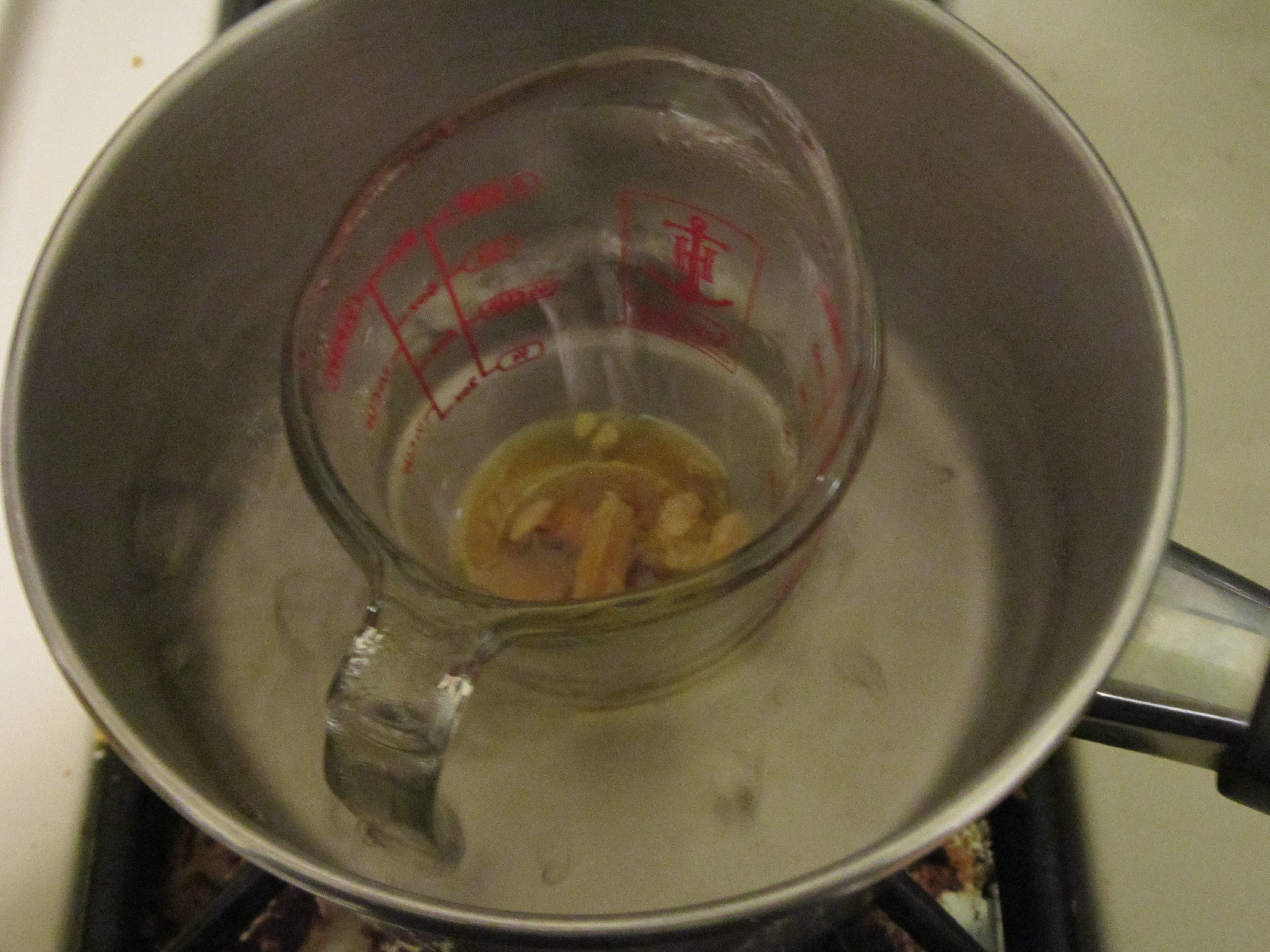
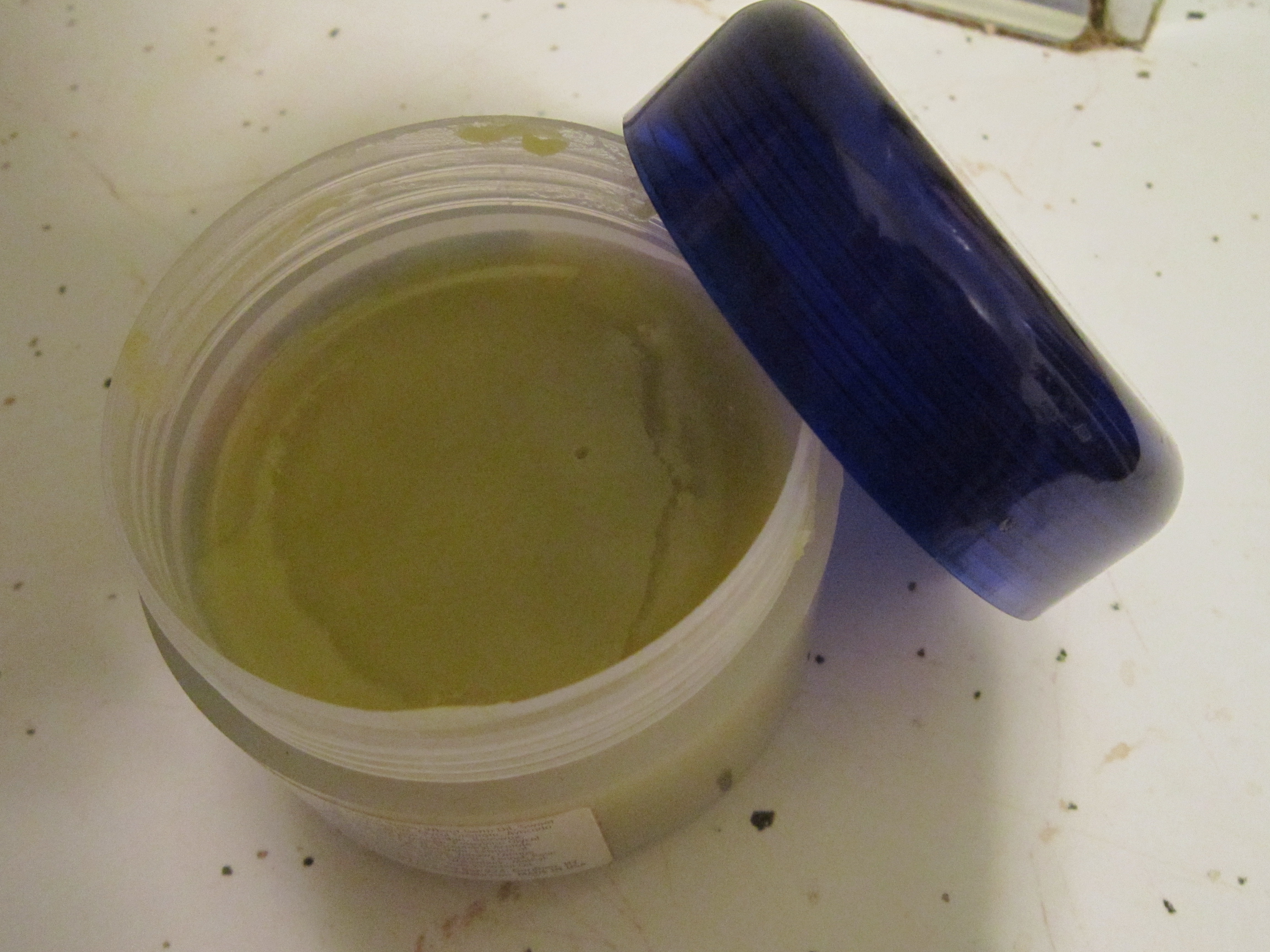
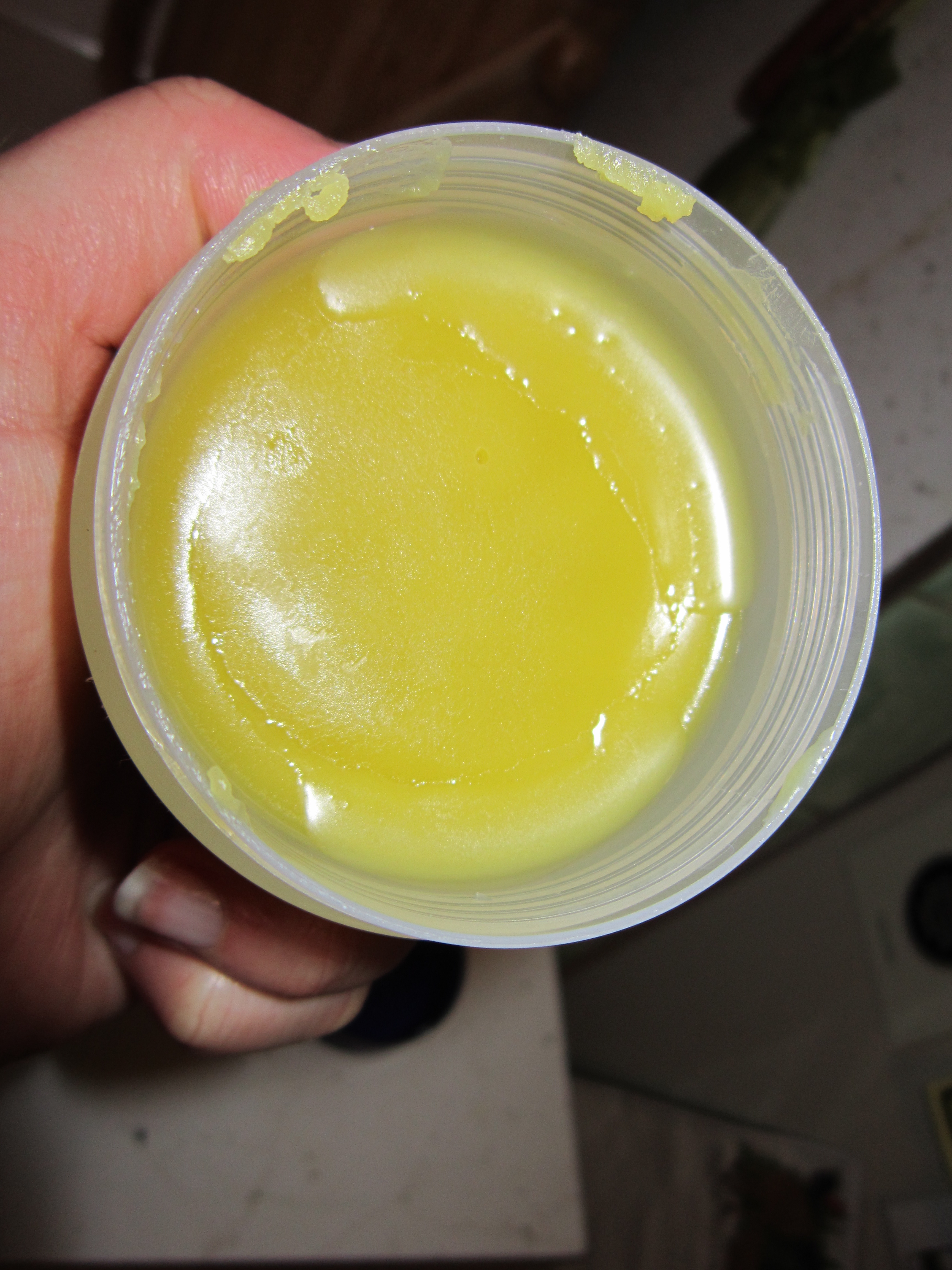
When the mixture is consistent, pour it into a reused container and let sit to become a salve! Use and enjoy knowing exactly what went into your product!


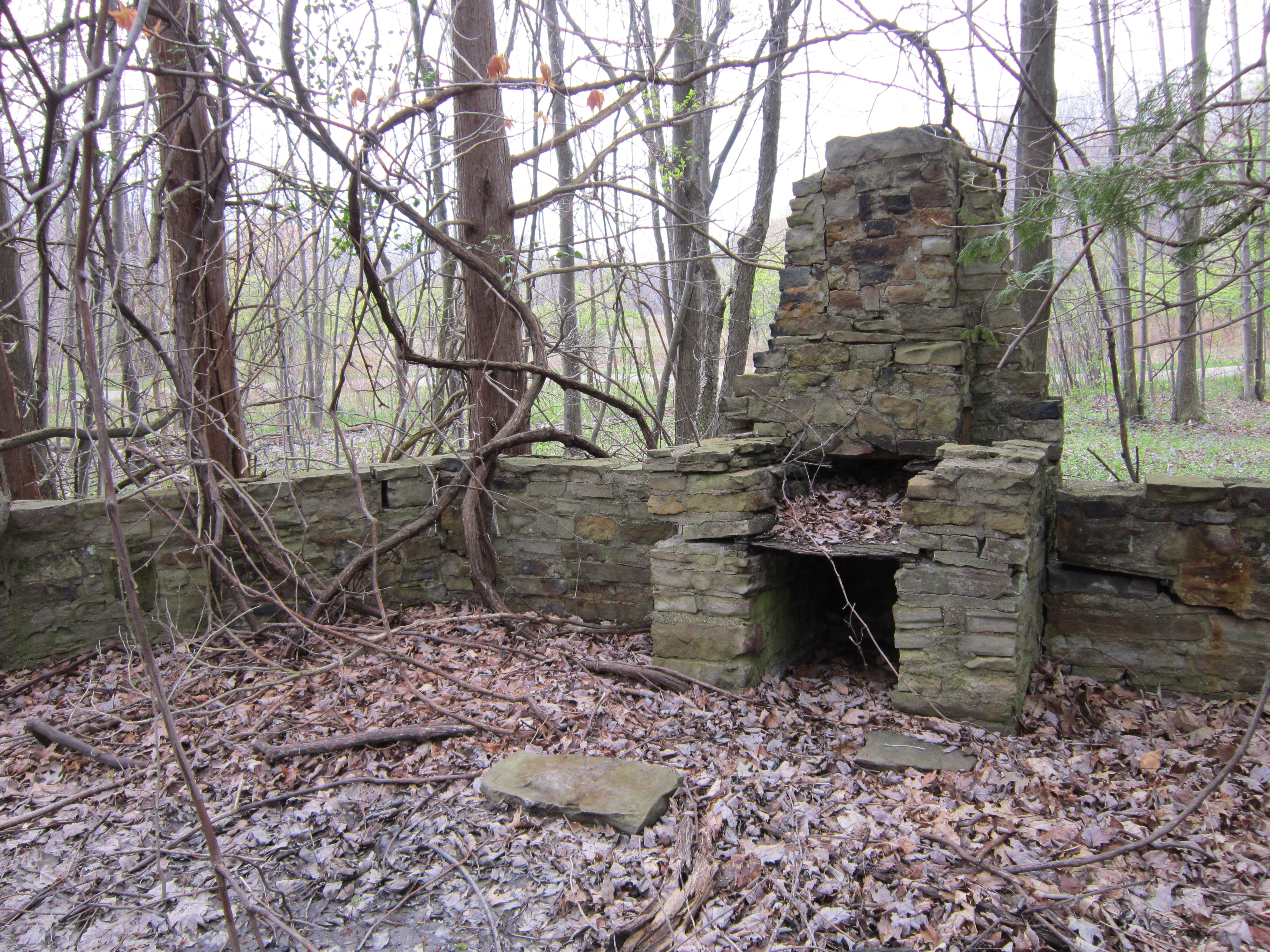
Yesterday, a hike through one of my favorite places to be in nature revealed several gifts.
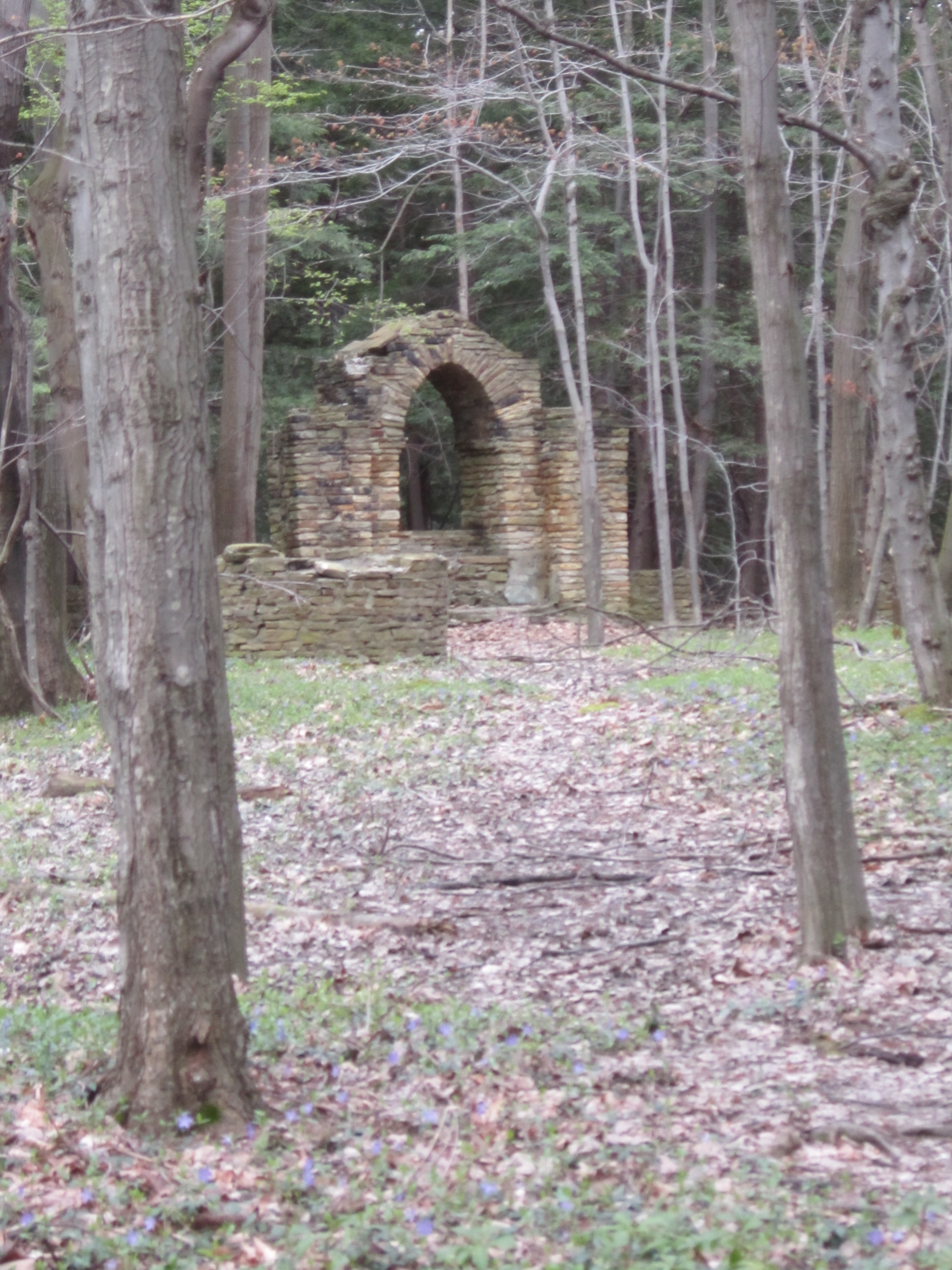
First, was a reminder of impermanence. Everything is always changing and it is best not to become attached to any objects, people, or situations. Strive to find happiness in each moment.
Everything will return to the Earth in time.
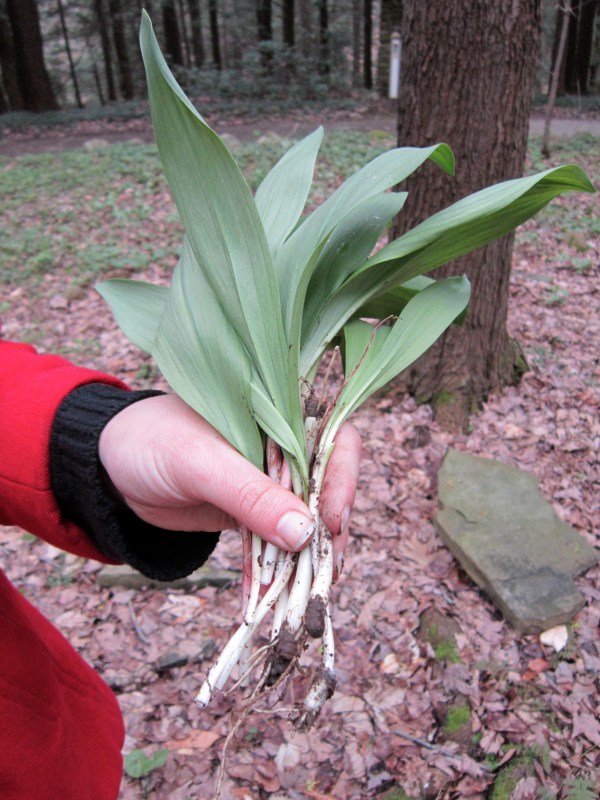
Second was a gift of free nourishment! We found wild ramps (Allium tricoccum), a perennial wild onion.
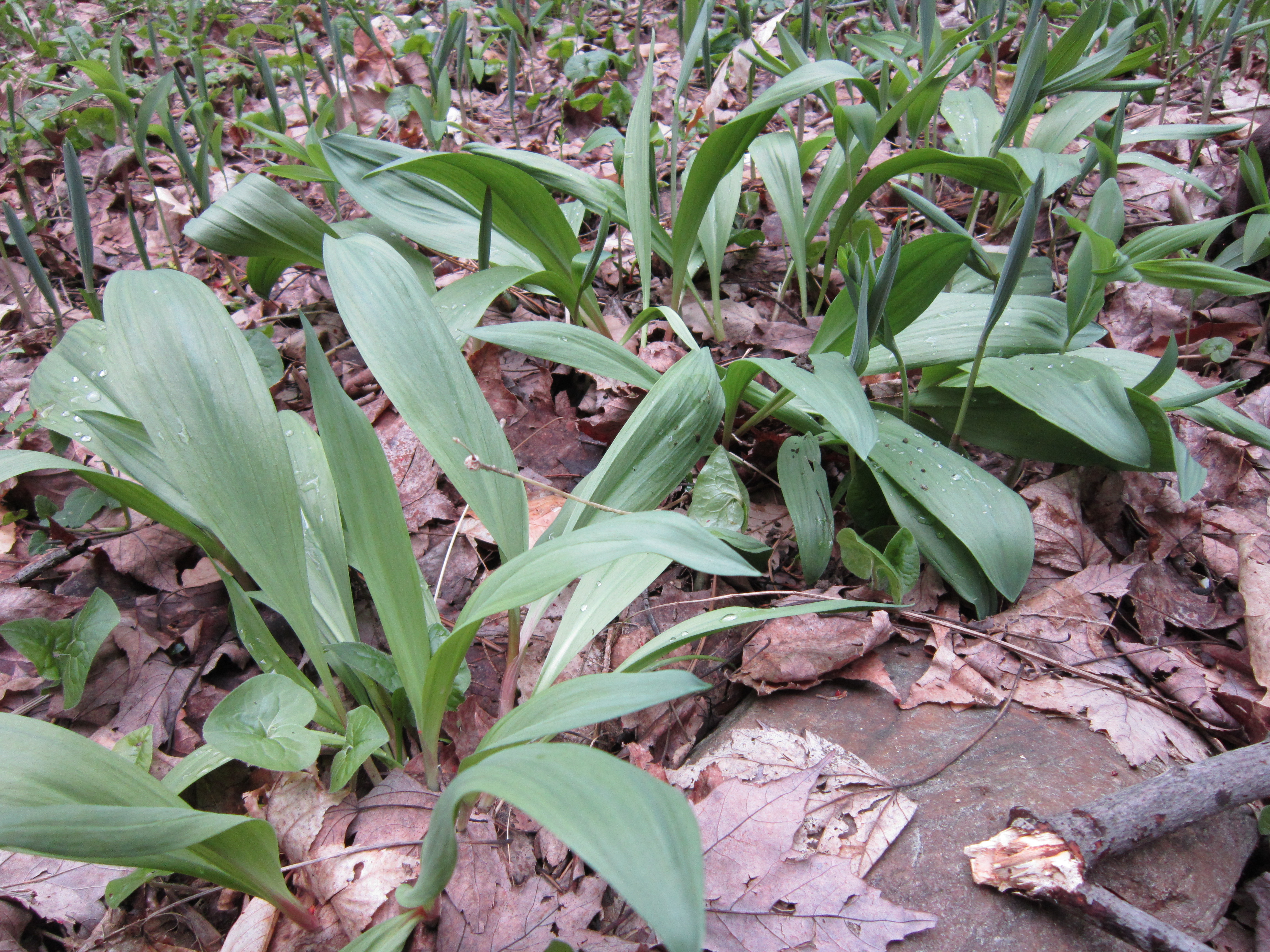
Patch of ramps
When you get closer, you can tell they’re ramps by the slight reddish-purple color where they meet the ground. And when you pull them, you’ll know they’re ramps by their characteristically onion smell.
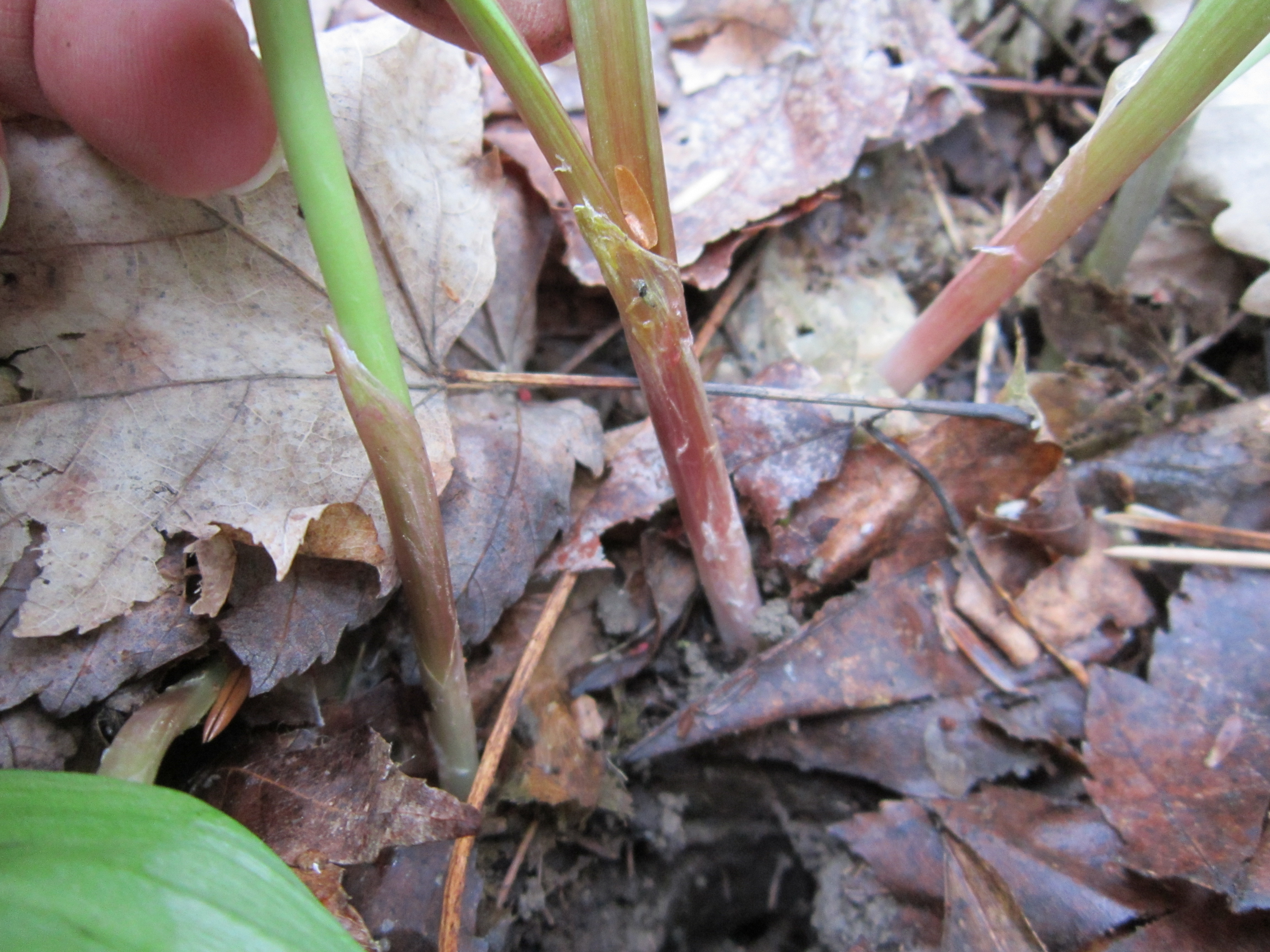
Reddish-purple: yup, ramps!
I harvested several. It’s important that we’re not greedy when wild harvesting things so that we (and other creatures who depend on them) will have these foods in the future. Always leave many more plants than were harvested (some suggest harvesting every 4th ramp). Another idea is to just pull the ramp up from where it meets the ground — you’ll still get some of the onion, but the bulb will be left to grow again. Or even consider being regenerative with the onions and if you take some bulbs, use a few to start a new patch elsewhere.
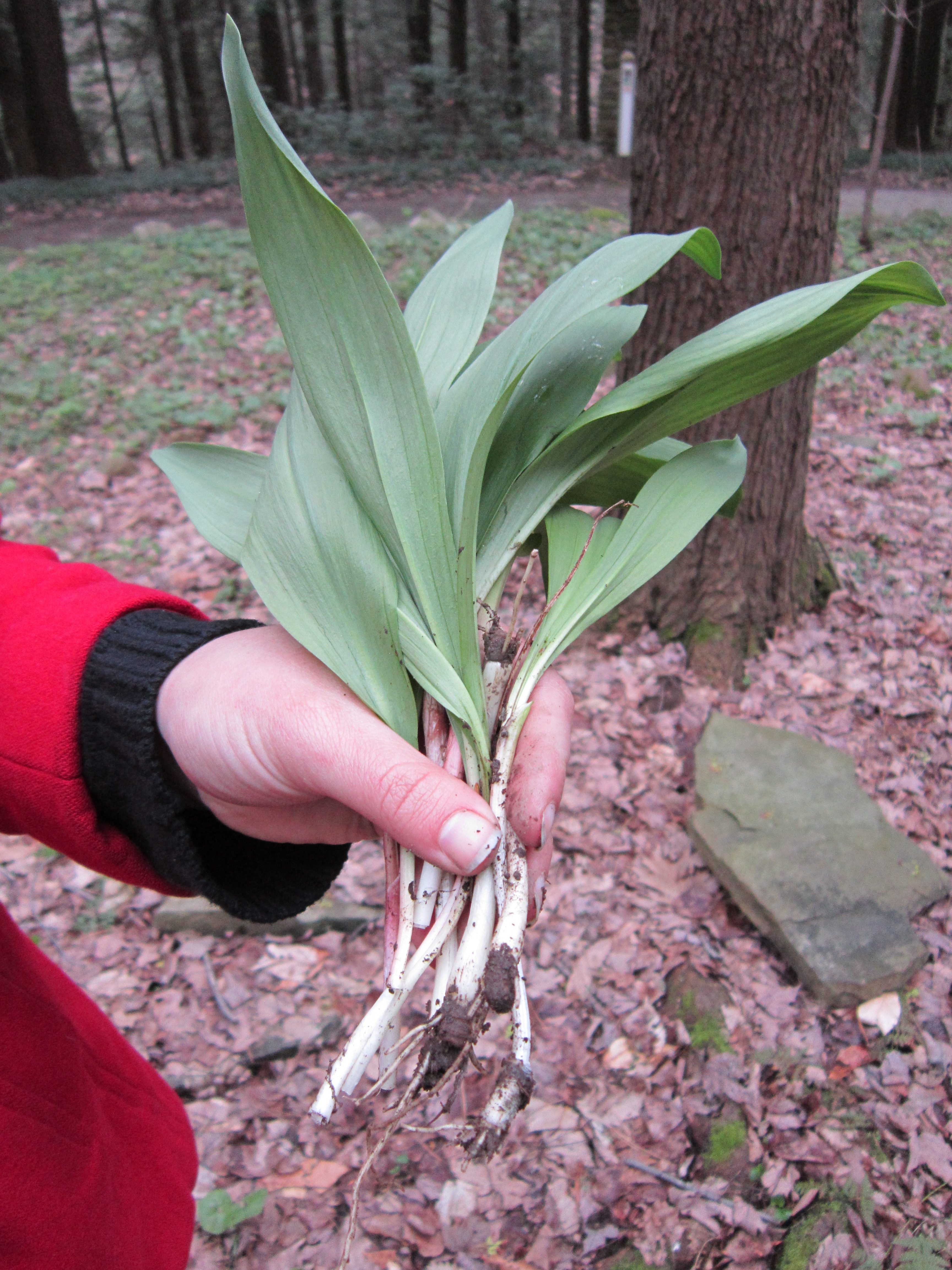
Ramps for me; ramps for free
Ramps have sulfur compounds that are detoxifying for your body — try some today!
Also, did anyone else participate in this year’s Earth Hour?
It’s a fun way to show support for the Earth, be reminded of how much we depend on electricity, and to unplug for awhile! The camera-flash makes it look bright, but we had fun with candles as our only light for over an hour. I’d like to do this more often!
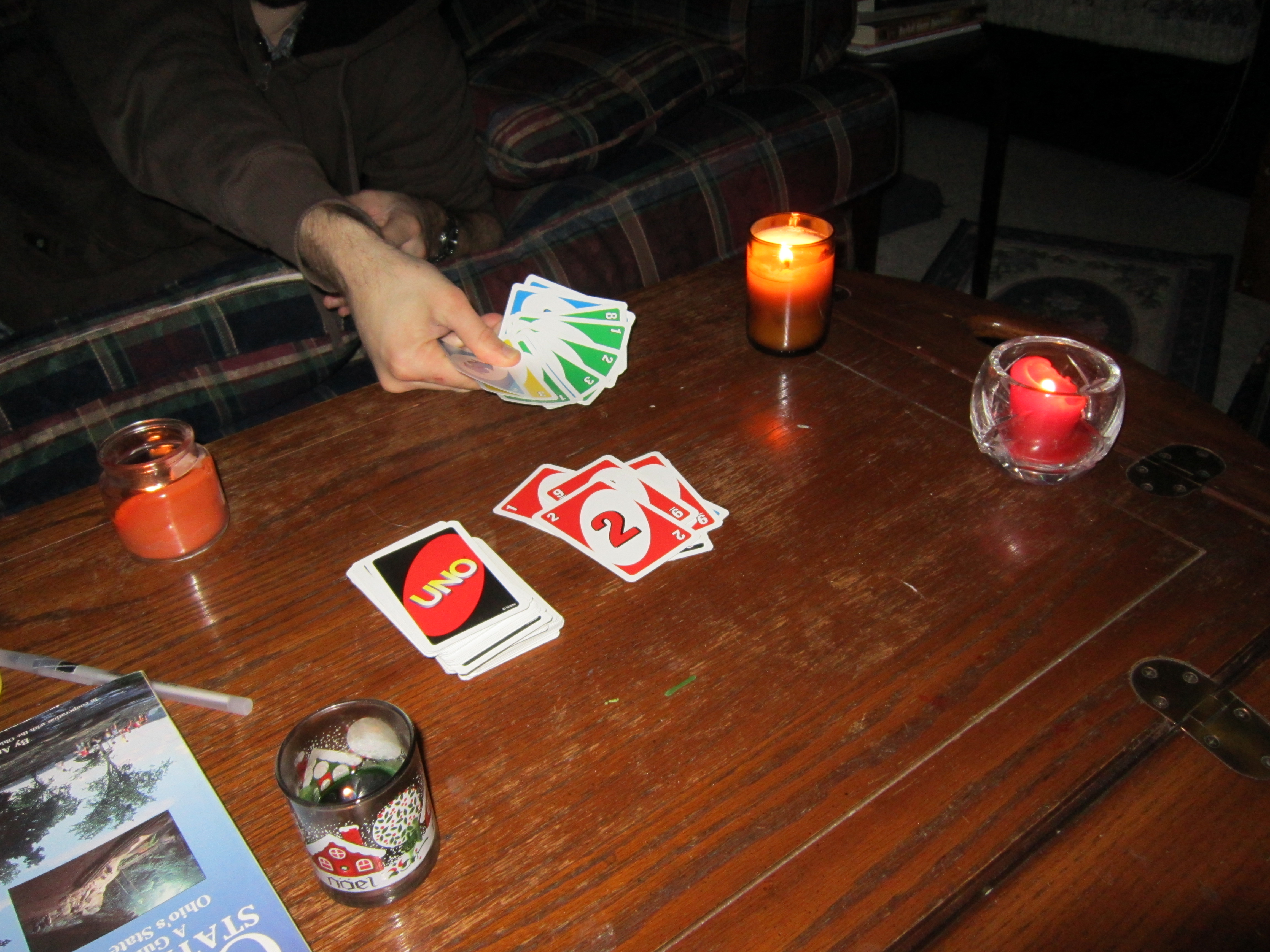
Candlelight night!

We must always ask the question, “Is this contributing to the repair of the world or its destruction?” (see full quote below)

(Photo credit: Wikipedia)
I want this to be a positive space. I like having a place to share my adventures in attempting to live more sustainably and I want others to know the joy that can come from moving in this direction.
Ultimately, I like doing things that bring me closer to nature because it makes me happy — I know that it improves my psychological and physical health and I know it helps others in these ways, too. However, it’s important to also consider more profound reasons for making these lifestyle changes. Because regardless of the benefits, it can be easy to put off these choices due to feelings of being too busy or too tired. It’s also easy to stay distracted and to ignore the larger picture of what is happening in the world and how we are all contributing to global problems. It’s much easier to think of the troubles or desires we know in our day-to-day lives.
But we can’t ignore the large issues and our role in them any longer. Whether you understand it from a spiritual, scientific, or some sort of hybrid standpoint, we are all connected and everything we do has an impact. We all have a responsibility to consider how our actions will impact other people and our home. If we do not address these issues, they will become a part of our day-to-day troubles in the future.
So, why step lightly? Here’s part of it, and I hope to be drafting additional “why step lightly” posts in the future.
Today I came across a 60 page report sponsored by the National Wildlife Federation that explains why the current mental health system is not prepared to address the effects of climate change (see also: Global Warming Will Mean Mental Shock and Adversity for 200 Million Americans). Largely, the report calls on the mental health profession to address the lack of adequate training and the number of individuals that will be needed to address the psychological impacts of increased weather disruptions (think tornadoes, floods, droughts, heat waves) that will inevitably lead to destruction. People will be displaced or die, food systems will be ruined, and a lot of us are going to have a hard time coping with the coming changes.
There are also psychological issues of guilt. How do we feel and cope with knowing that our industrialized lifestyles are likely to be the cause of this madness and that we are forever changing the lives of people and cultures who do not contribute nearly as much to climate change? Will some of us begin to feel badly that we couldn’t slow down our consumption or use our cars less often?
There’s also fear, anxiety (where do we go so that we’re safe? how to we adapt?), and sadness over the suffering and the loss (200 species are estimated to be going extinct every day, albeit from a combination of Earth-destroying factors and not just climate change). How will people cope? How do we inspire action instead of apathy?
Stop for a moment and think about this. How does this information make you feel? It’s very easy to push off the implications if global changes haven’t yet caused you any personal suffering. It is easy to say that others will solve the problem, that our individual lifestyles are not contributing that much, that the issues are out of our hands… but are they really? We’re participating in this destructive culture and we can start shifting our behavior so that we aren’t any longer.
To me, this report reminded me that I have lived in ways that have contributed to the destruction of the planet, human suffering, and species extinction and that this is not okay. I am determined to change the way that I do things. It is not up to policy makers or other people to change first. It is up to me. Hopefully, more and more of us will do the same and the policy makers will follow.
I have my fair share of anxiety about climate change and how we will manage to adapt. Sometimes I wish that I didn’t even think about environmental issues because it can be so overwhelming, sad, and everyone seems too busy to be bothered with the news that we have to deal with these problems now. However, I know that some of this suffering and some of the destruction can be lessened if we live more lightly now, and we will also be better prepared to adapt to the coming changes. I want to live in this way and I want to inspire others to do the same. Despite my forays into sadness, I feel very excited about the possibilities for sustainable lifestyles to spread on a larger scale; I think that this will eventually lead to greater satisfaction and joy in our personal lives.
Even if I’m wrong and we are not responsible for our own behavior, or things aren’t as urgent as they seem, I love this passage I found that highlights the myriad reasons for changing our behavior and suggests that even if all of these reasons are wrong, it is still a way of living that brings joy. It might just be a new manifesto for me. I hope you’ll take a moment to enjoy it, too.
The real and most essential moral questions of our lives are the questions we rarely ask of the things we do every day: “Should I eat this?” “Where should I live and how?” “What should I wear?” “How should I keep warm/cool?” We think of these questions as foregone conclusions: I should keep warm X way because that’s the type of furnace I have, or I should eat this way because that’s what’s in the grocery store. The Theory of Anyway turns this around, and points out that what we do, the way we live, must pass ethical muster first. We must always ask the question, “Is this contributing to the repair of the world, or its destruction?”
So if you announced, tomorrow, that the peak oil issue had been resolved, we would still keep gardening, hanging our laundry to dry in the sun instead of using a dryer, cutting back and trying to find a new way to make do with less. Because even if we found enough oil to power our society for 1000 years, there would still be climate change, and it would still be wrong of us to choose our own convenience over the security and safety of our children and other people’s children.
And if you said tomorrow that climate change had been fixed, that we could power our lives forever with renewables, we would still keep gardening and living frugally. Because our agriculture is premised on depleted soil and depleted aquifers and we are facing a future in which many people will not have enough food and water if we keep eating this way. To allow that to happen would be a betrayal of what we believe is right.
And if you declared that we had fixed that problem too, that we were no longer depleting our aquifers and expanding the dead zone in the Gulf of Mexico, we would still keep gardening and telling others to do the same, because our reliance on food from other nations, and our economy impoverishes and starves millions of poor people and creates massive economic inequities that do tremendous harm.
And if you told us that globalization was over, and that we were going to create a just economic system, and we had fixed all the other problems, and that we didn’t have to worry anymore, would one then stop gardening?
No. Because the nurture of a piece of land would still be the right thing to do. Doing things with no more waste than is absolutely necessary would still be the right thing to do. The creation of a fertile, sustainable, lasting place of beauty would still be right work in the world. We would still be obligated to live in a way that prevented wildlife from being run to extinction and poisons contaminating the soil and the air and the oceans. We would still be obligated to make the most of what we have and reduce our needs so they represent a fair share of what the Earth has to offer. We would still be obligated to treat poor people as our siblings, and you do not live comfortably when your siblings suffer or have less. We are obligated to live rightly, in part because of what living rightly gives us: integrity, honor, joy, a better relationship with our deity of choice — and peace.
–Sharon Astyk and Pat Meadows in the book Green Spirit edited by Marian Van Eyk McCain
I live this way because it fulfills me. I live this way because I think it’s necessary. I live this way because I love it.
I only hope to do it better. I want to feel connection. I want to feel alive. I want to feel like I am contributing to life and not causing undue suffering.
I invite you to live this way, too.

 These Light Footsteps