Happy St. Patrick’s Day! Plant some peas. Start a community garden.

Today is full of the color green in more ways than one. I’ve seen a lot of people sporting green shirts and I’m more than happy that I’ve spent the better part of the day engaged in some “green” activities — pea planting and helping with the foundation for a new urban permaculture garden.
I’ve been doing some garden clean-up activities this week, but today was the first day I really have dirt under my fingernails and that feels totally refreshing. There are so many possibilities for this year’s garden….it’s still very bare (with a few exceptions — some winter survivors, garlic, and weeds)!
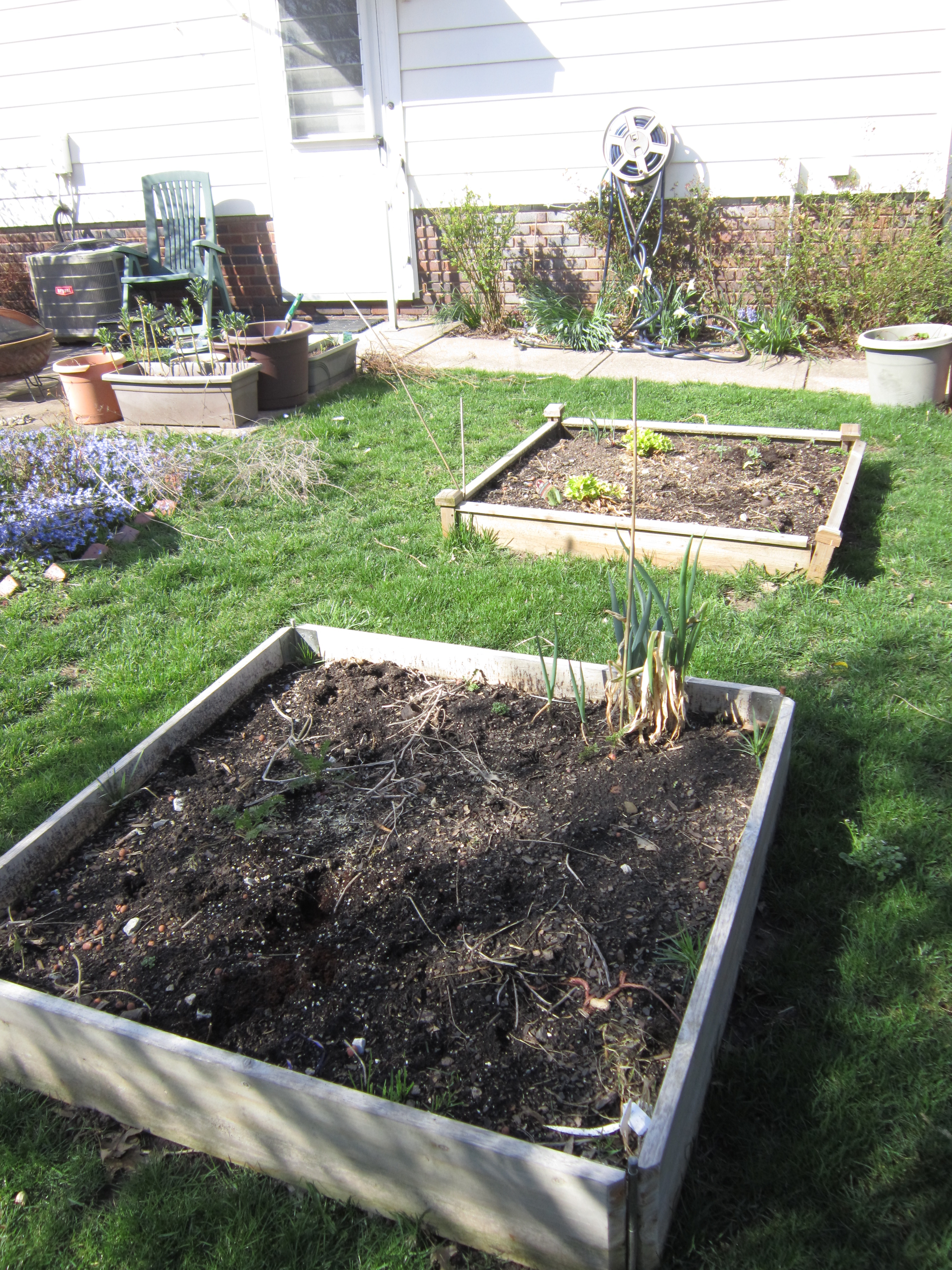
The before picture…

Grandma has always said that peas should be planted near St. Patrick’s Day. As one of 12 kids on a farm, I’d say she must be well aware of the best time to plant peas.  So, what better day than the actual St. Patrick’s Day?
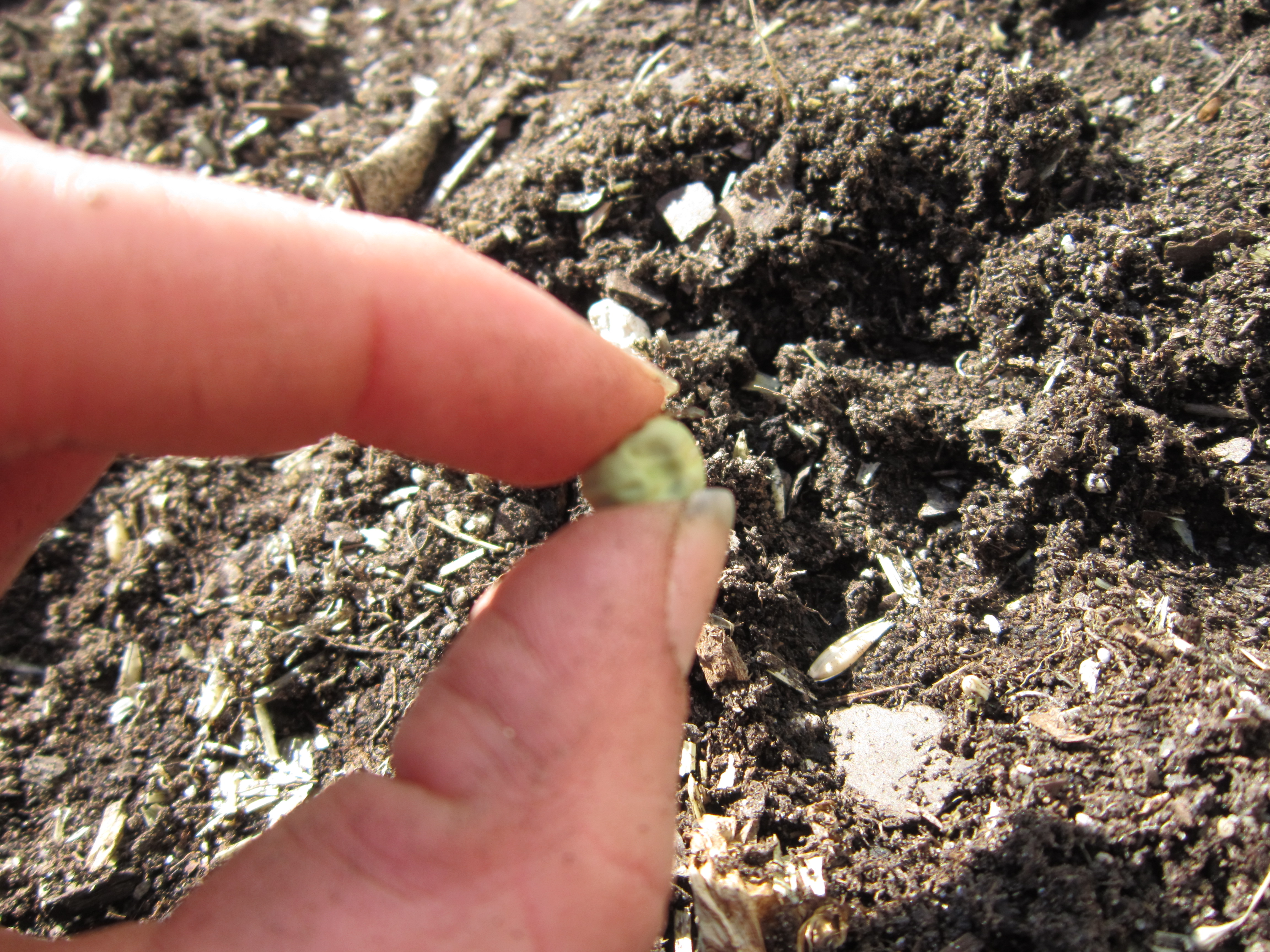
Let’s plant peas!

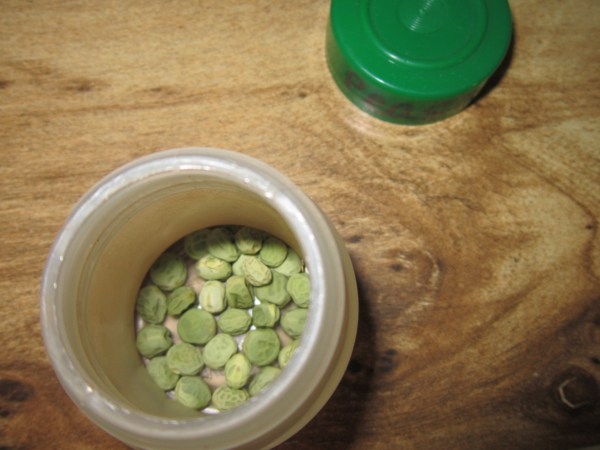
Lucky for me, I didn’t even have to buy peas as I saved some from last year.  This was one of my first tries at seed saving so I’ll keep my fingers crossed that this will work.
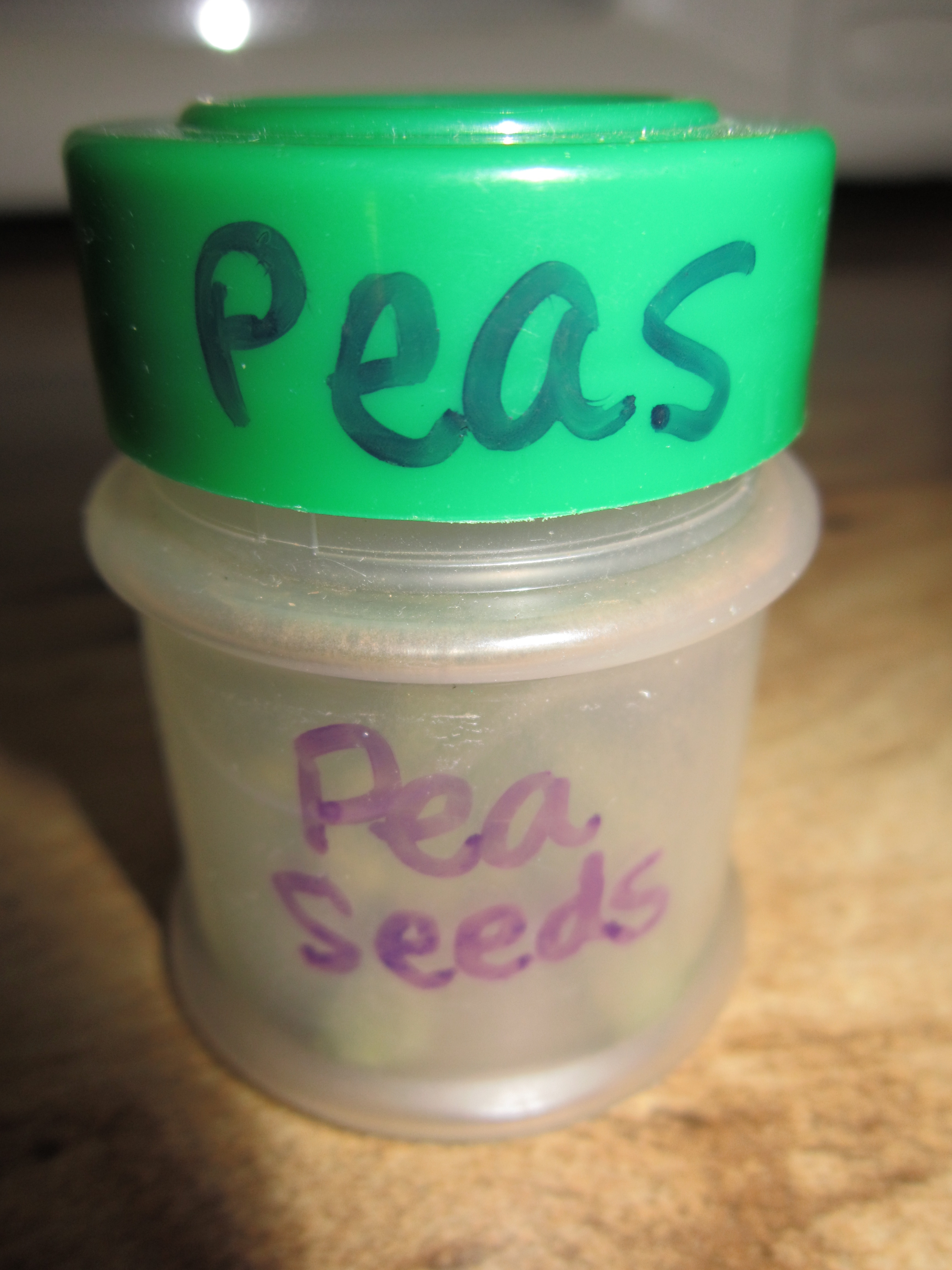
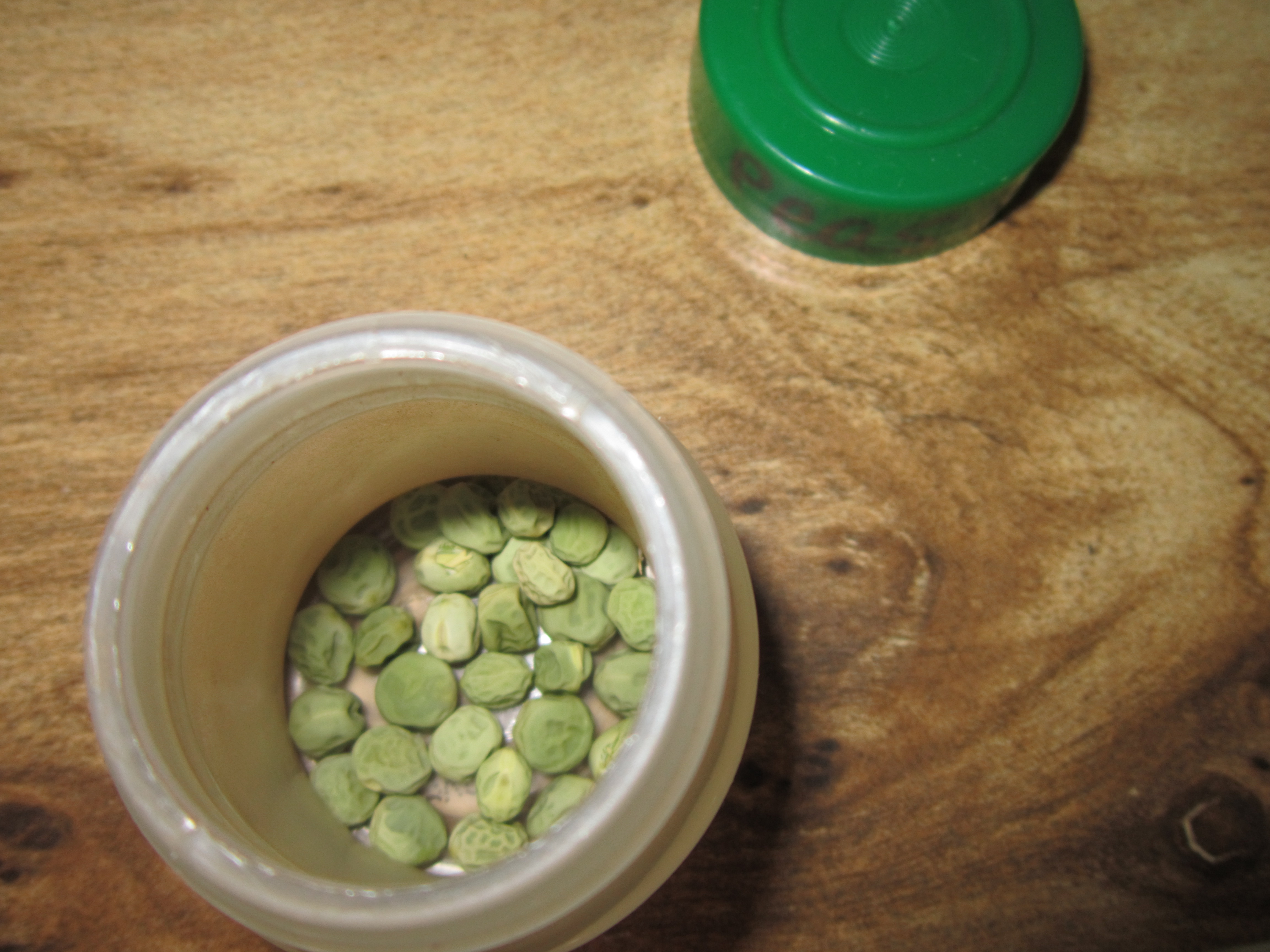
Not many but these will do!

I planted about 10 today — 2″ deep and I’m experimenting with them in a circle rather than a row to see if I can trellis them better this way.  I will plant another batch in a week or two. Hopefully that will allow for a bit larger/longer of a harvest than last year.  Last year’s peas were yum-tastic, but they only lasted a couple of meals (and I’m referring to seed peas — the snap peas seem to be around a lot longer).
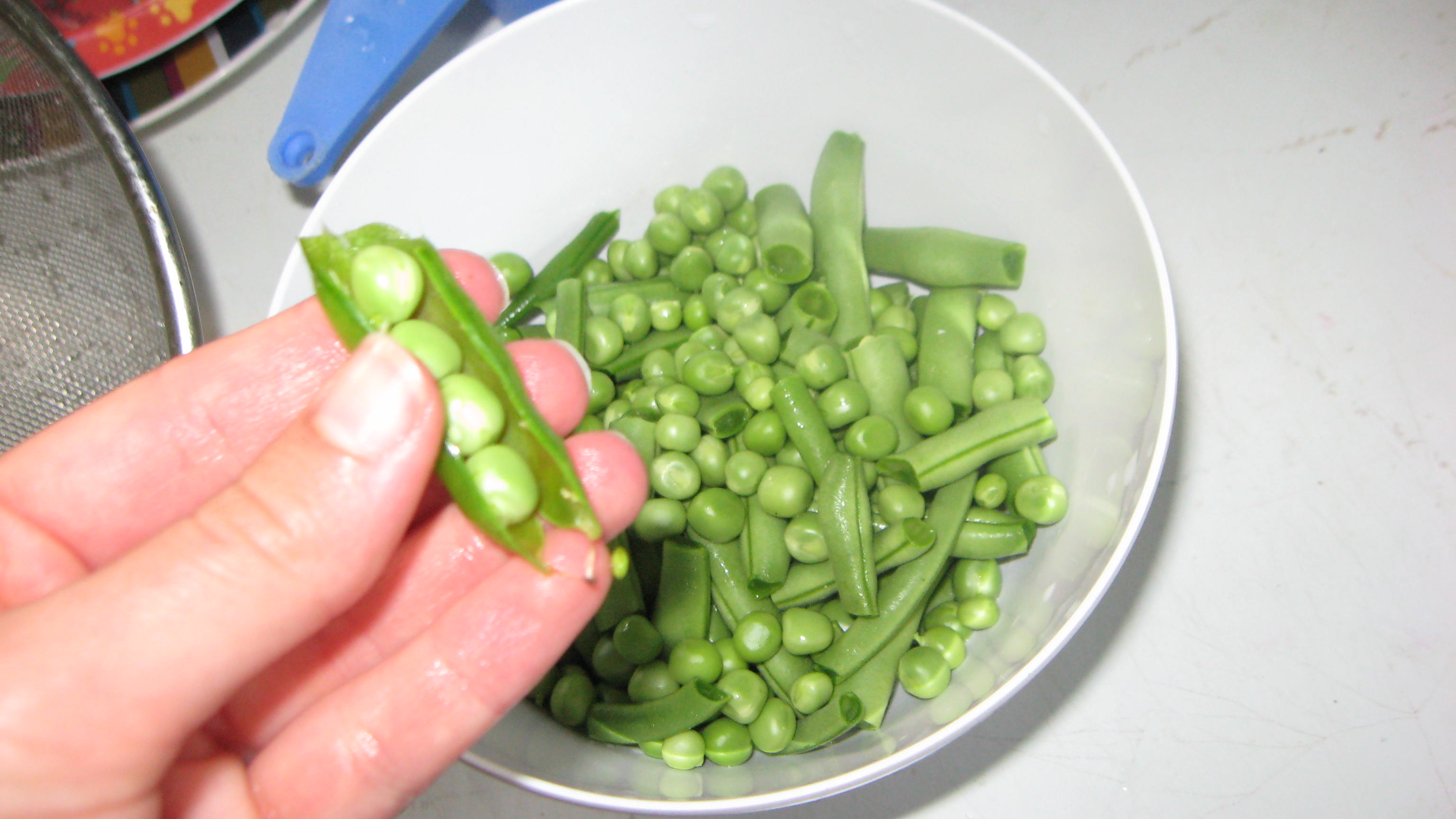
Last year’s peas. THEY ARE SO CUTE! (and some green beans..)

I also found some stragglers that survived the winter to harvest today. That’s fun!
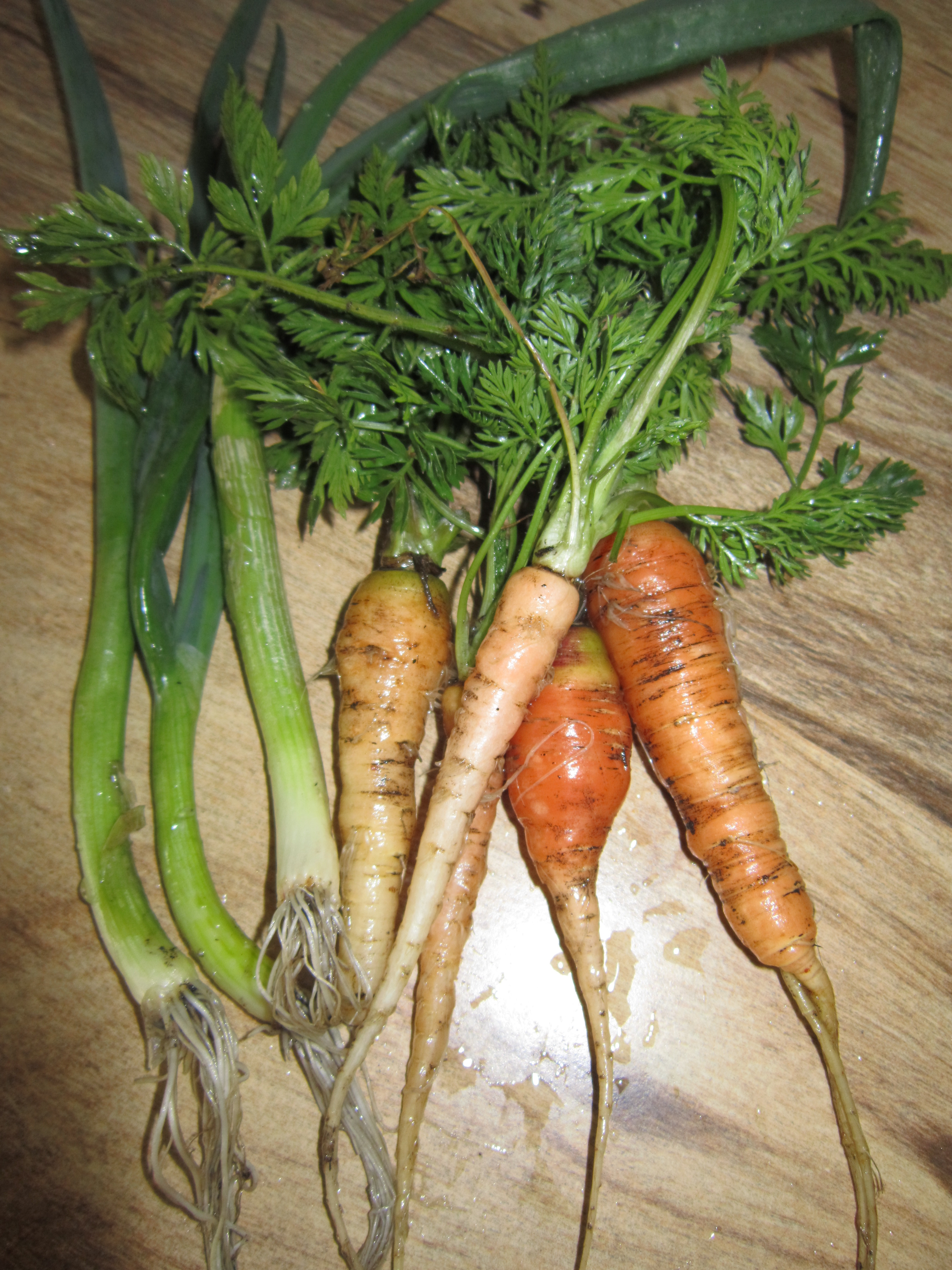
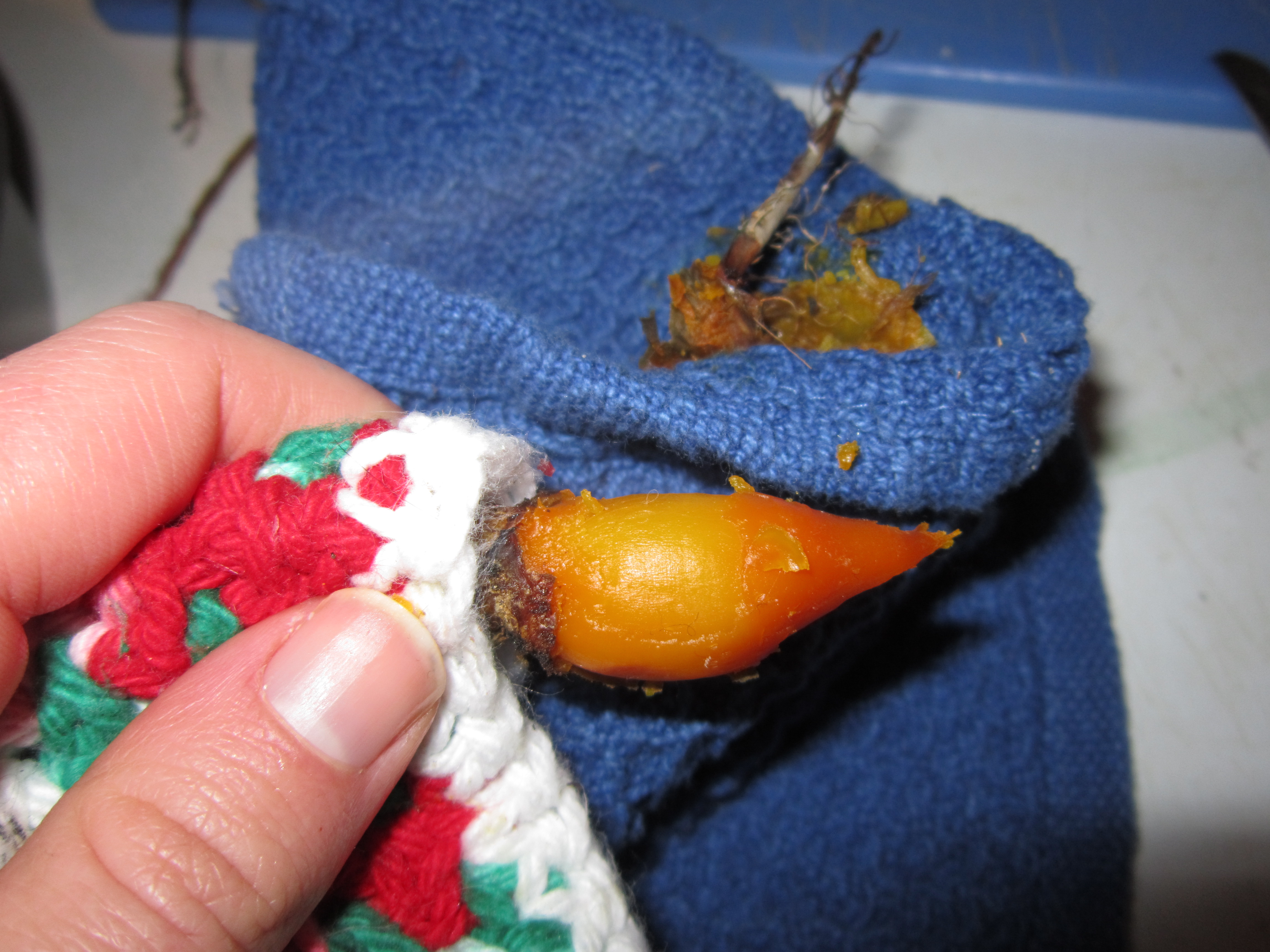
Carrot and green onion winter survivors.

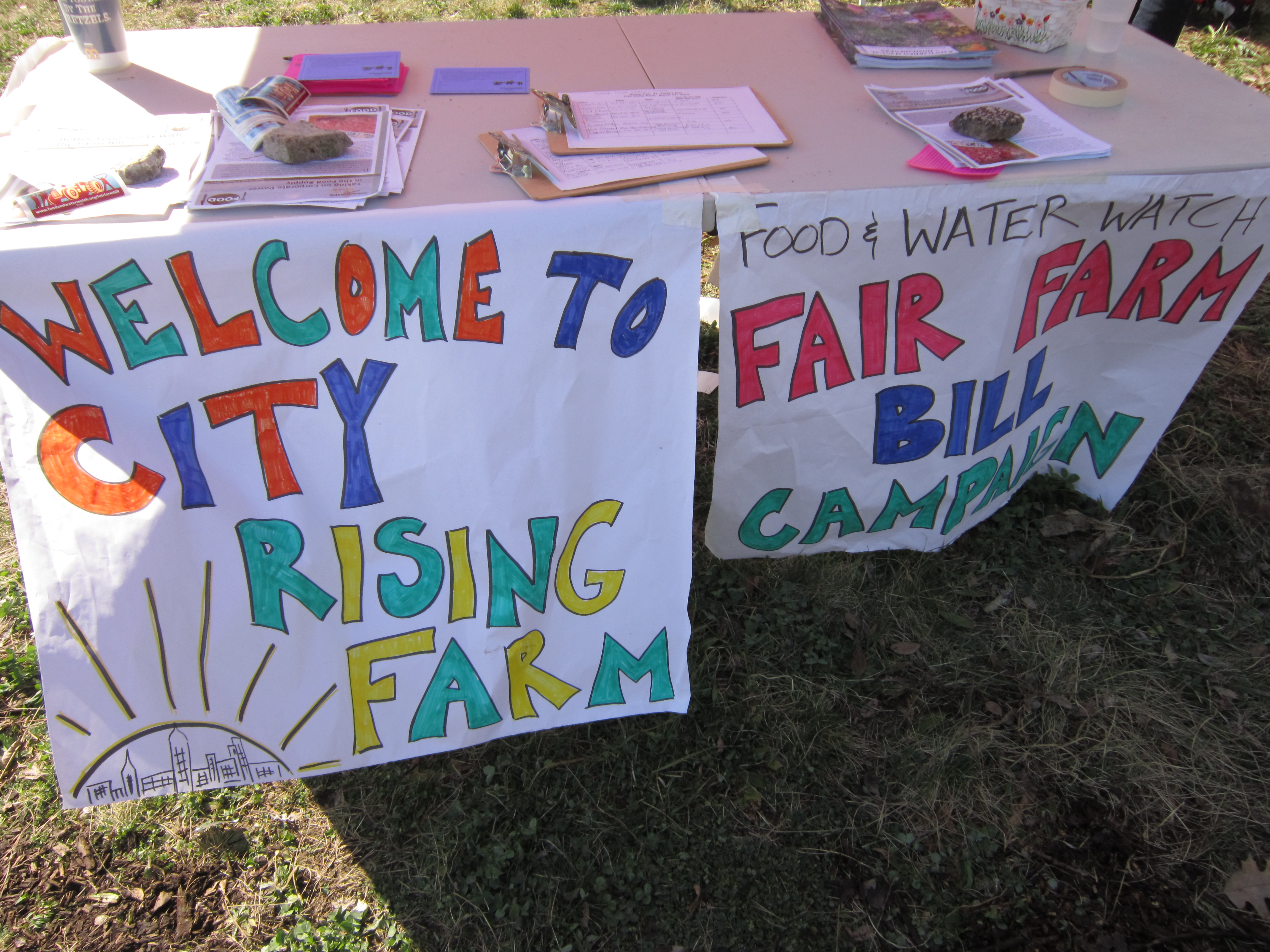
Earlier in the day, I went to a neighborhood on the East side to help expand City Rising Farm into a new vacant lot across the street from the garden that they’ve established previously.
Mostly the day involved moving wood chips to the front of the lot to start sheet mulching. Many wheelbarrows and tarps full of woodchips were transported from the back of the lot to the front.
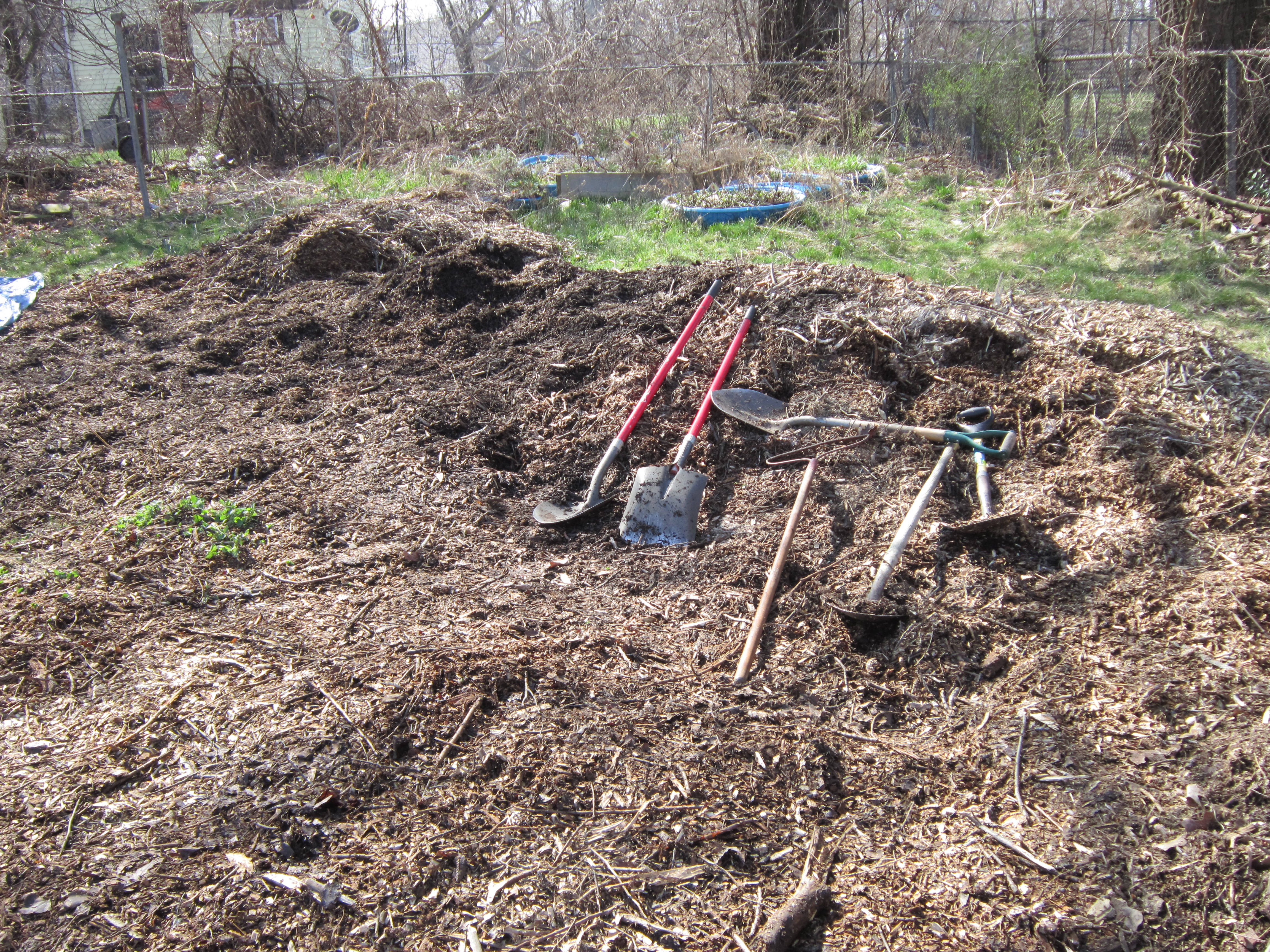
Depleted piles of wood chips

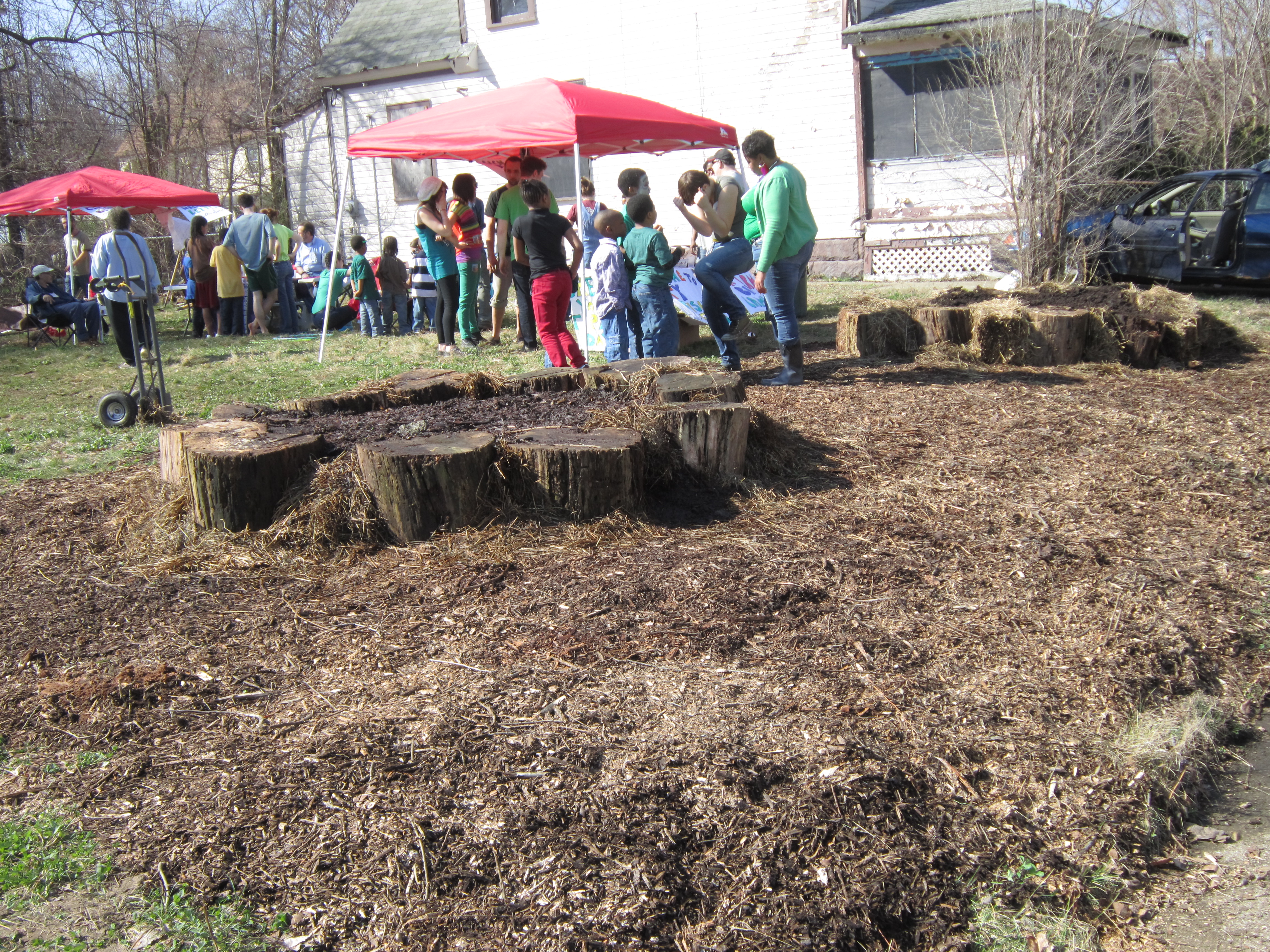
After getting a thick layer of woodchips down, two raised-beds were made from rings of old tree stumps.
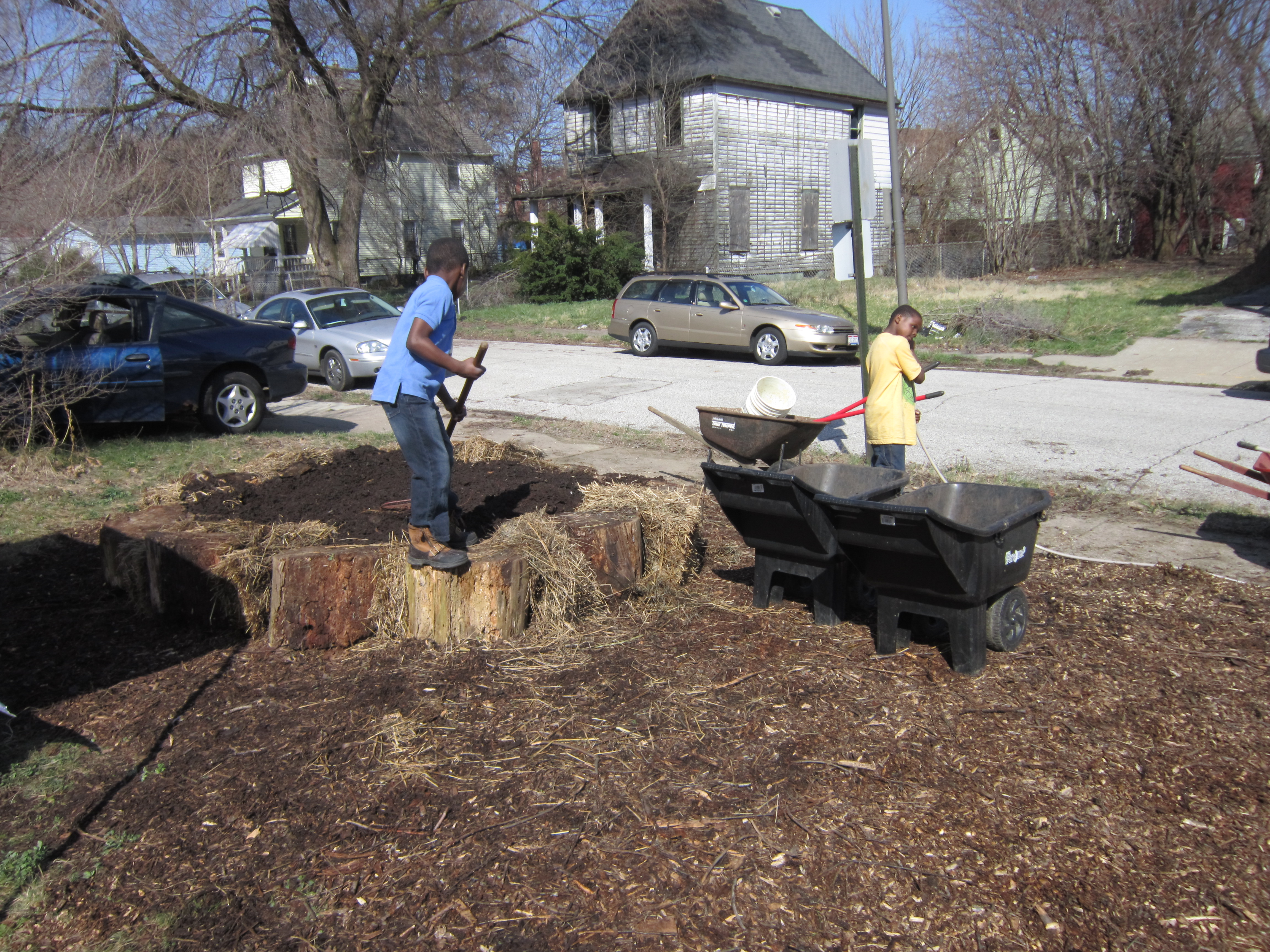
Young urban farmers
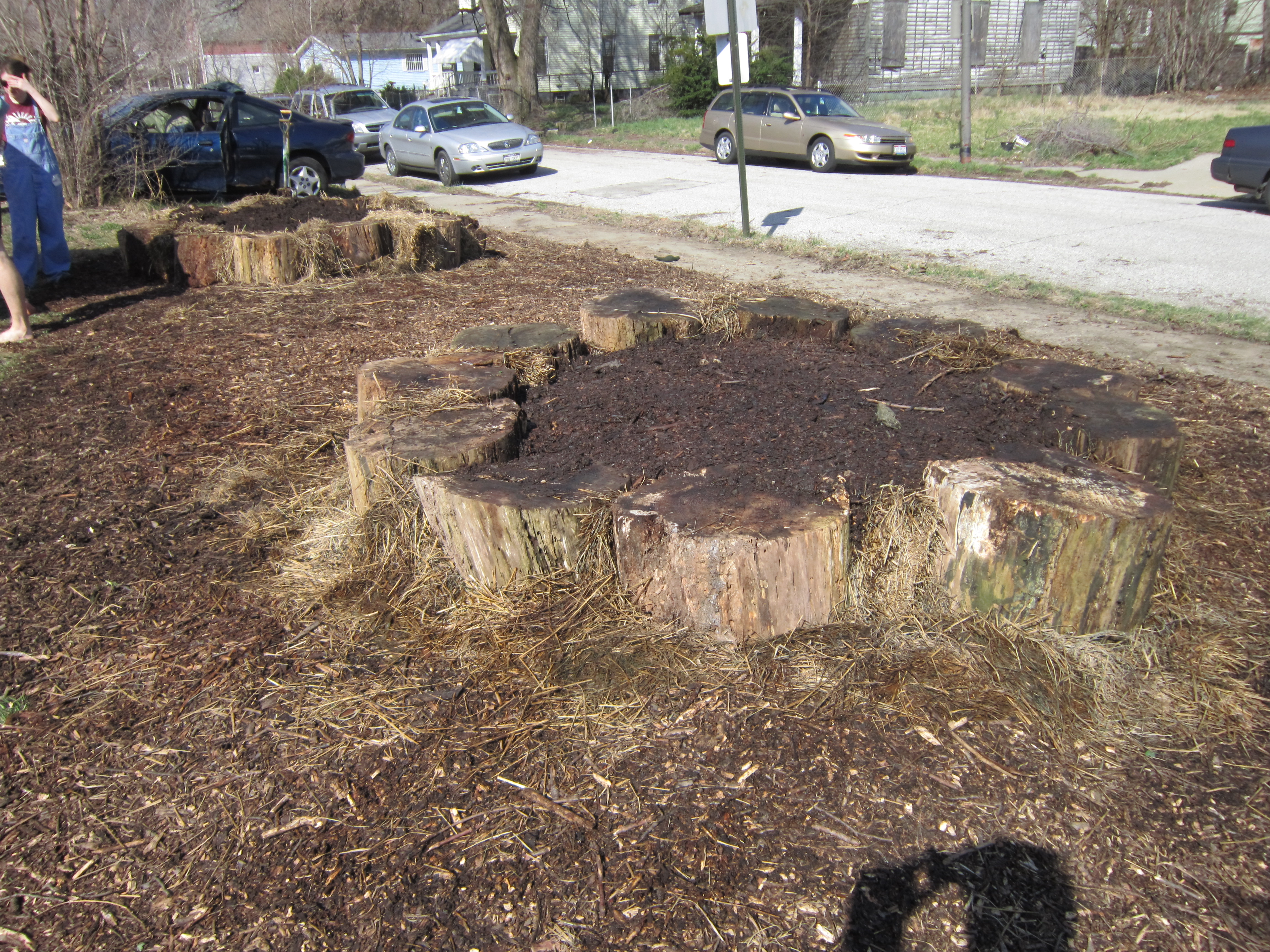
Raised beds bordered with tree stumps

There was also a lesson on beneficial insects that can keep pests down — in this case, there were praying mantis eggs.
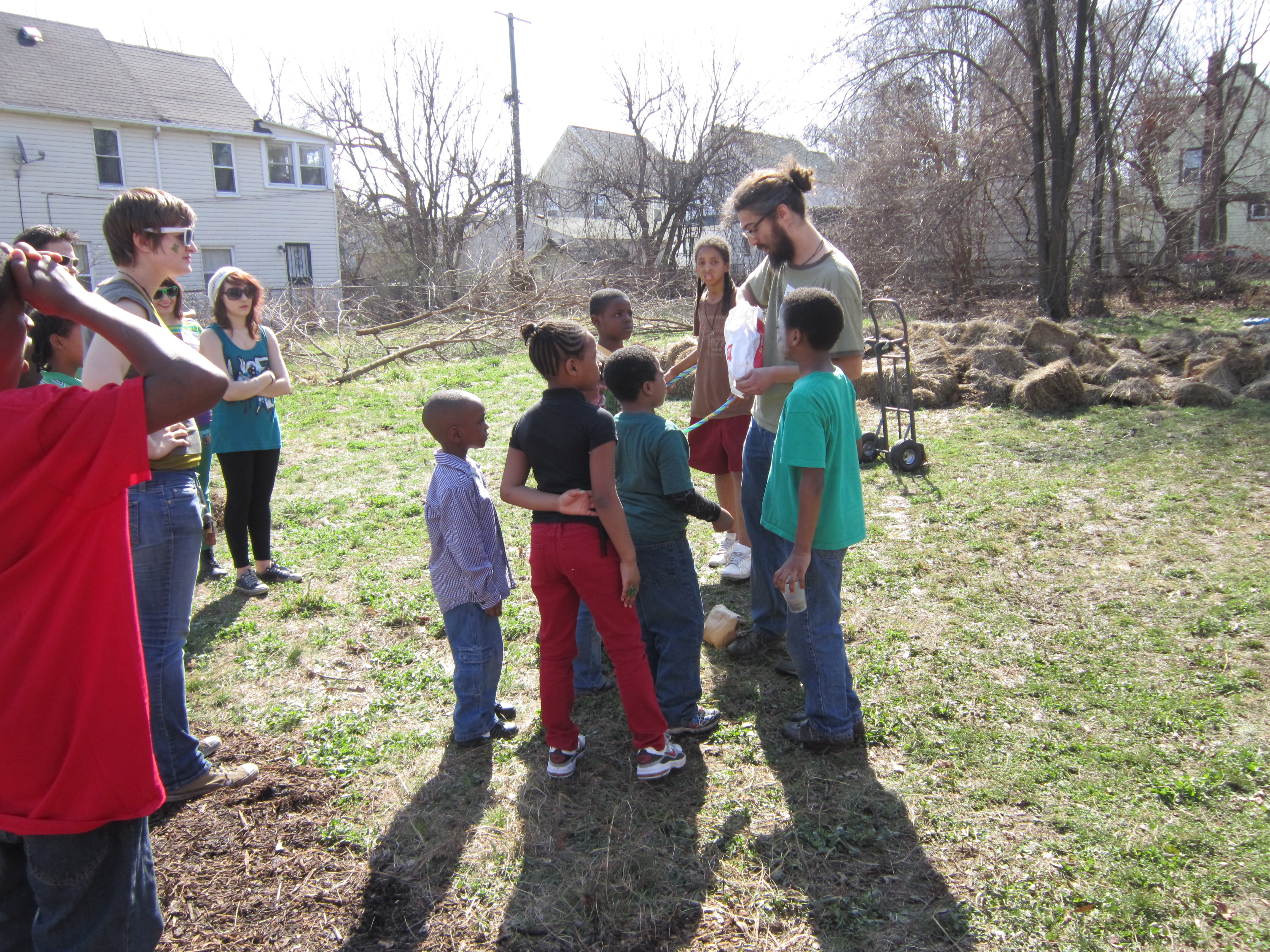
Praying mantis lesson

Overall, it was a really inspiring day — it’s great to see people of all ages working together on a project to improve a neighborhood and that will also bring fresh food into an area that wouldn’t necessarily have easy access to it.
There was also a booth set up to write letters to Senator Brown to ensure that he continues his support for small farms on the 2012 Farm Bill.  We can’t let big agribusinesses control our food supply! It’s not sustainable for communities, the environment, or our health!  Take action at the Food and Water Watch website, and also, take action by supporting your local farmers. Find them near you!

Happy St. Patrick’s Day!

Would reducing work hours help to create a better world? It just might!

I was happy to find this video on the multitude of benefits that could come from a reduced hour work week…

A change toward a reduced hour work week is likely to be necessary as we move into a future that understands our relationship with the planet and into a time of dwindling carbon resources.  Not only would this change be beneficial so that we could improve our lives by having more time for friends, family, personal development, exercise, and creativity (in addition to other reasons mentioned in the video…), but this change may also be necessary as oil becomes less readily available and as we make more sustainable lifestyle choices that lesson our contribution to issues like global warming, pollution, or human exploitation (who really makes all of your products and what is their quality of life?).

Being less dependent on oil and living with the good of all beings in mind means that we can’t outsource all of our needs to other people and ship our products/food hundreds of miles around the world — we will need to depend on our own ingenuity and local communities to provide most of what we consume.  I feel that many of us will need more time to do this (more than than is available after a 40+ hour work week, anyway).  This is especially true if we’re talking about a future where we’re not just sustainable from a resource perspective, but where we’re also sustainably healthy — both physically and psychologically. We need to spend time doing things that give us meaning, and we need to feel some sense of balance (however elusive that may be!).

It is exciting to think there could be a future ahead where people have more time to pursue things that increase their well-being and to step more lightly upon the Earth.

For some other ideas related to this, check out the Center for a New American Dream. Their mission:

We seek to cultivate a new American dream—one that emphasizes community, ecological sustainability, and a celebration of non-material values.

Sounds good to me!

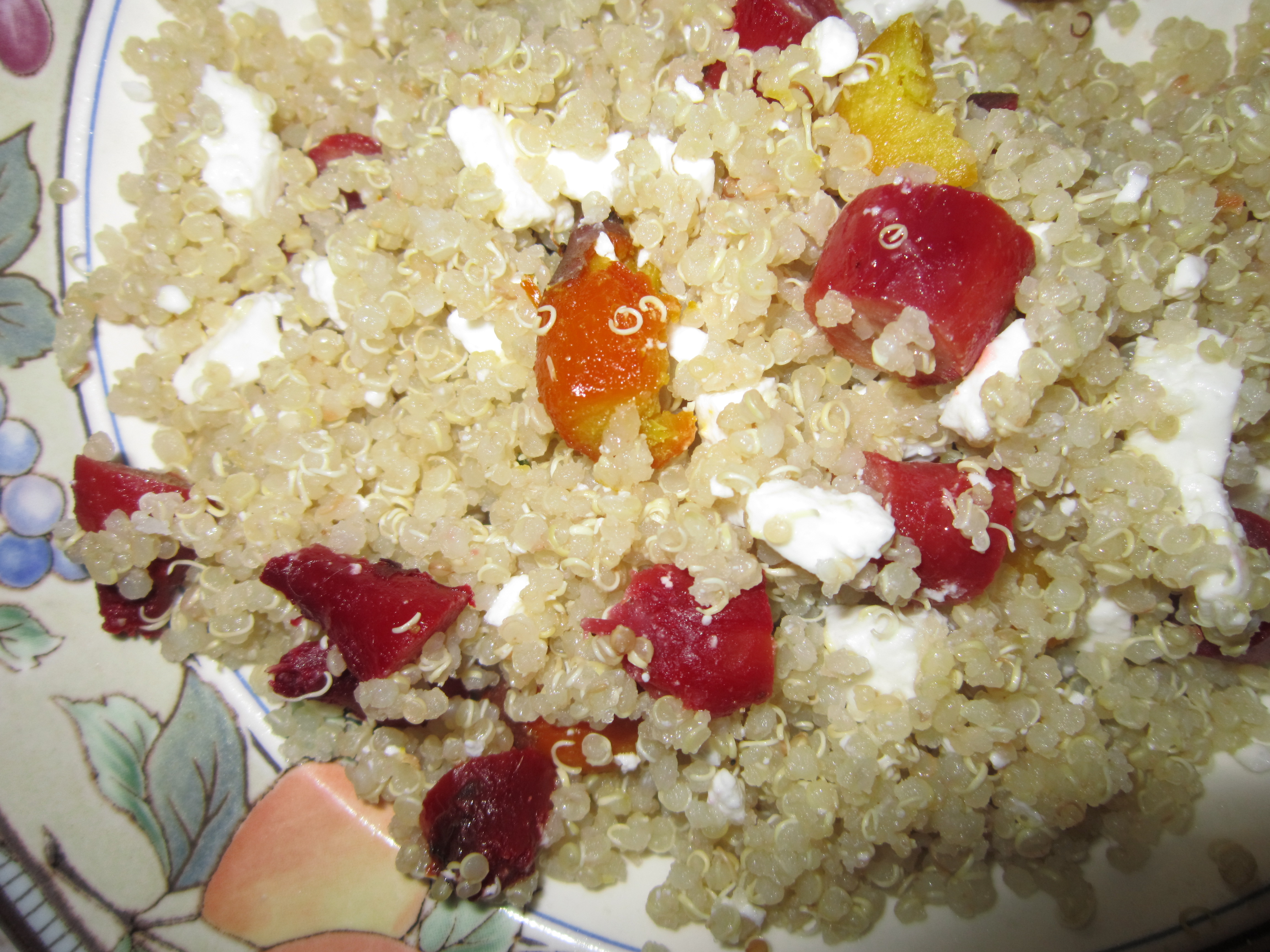
Roasted baby beets in quinoa with feta cheese!

I don’t know that I had ever even tried beets before getting serious about eating locally.  The weird canned ones on some salad bars didn’t exactly cry out, “eat me!”.

But, alas, they are often at the farmer’s market when other produce is lacking, and  I’m happy to have developed a relationship with beets because they are high in fiber, anti-inflammatory, and antioxidant.   I’ve come to enjoy them the more that I’ve played around with them, but I’ve never thought, “Wow, this is so delicious!” while eating them.  I’m happy to announce that this is no longer the case and I have crafted a winning recipe.

Roasted beets in quinoa with feta cheese!

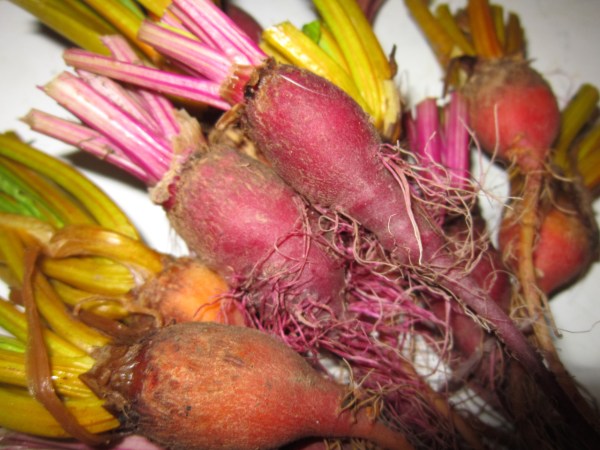
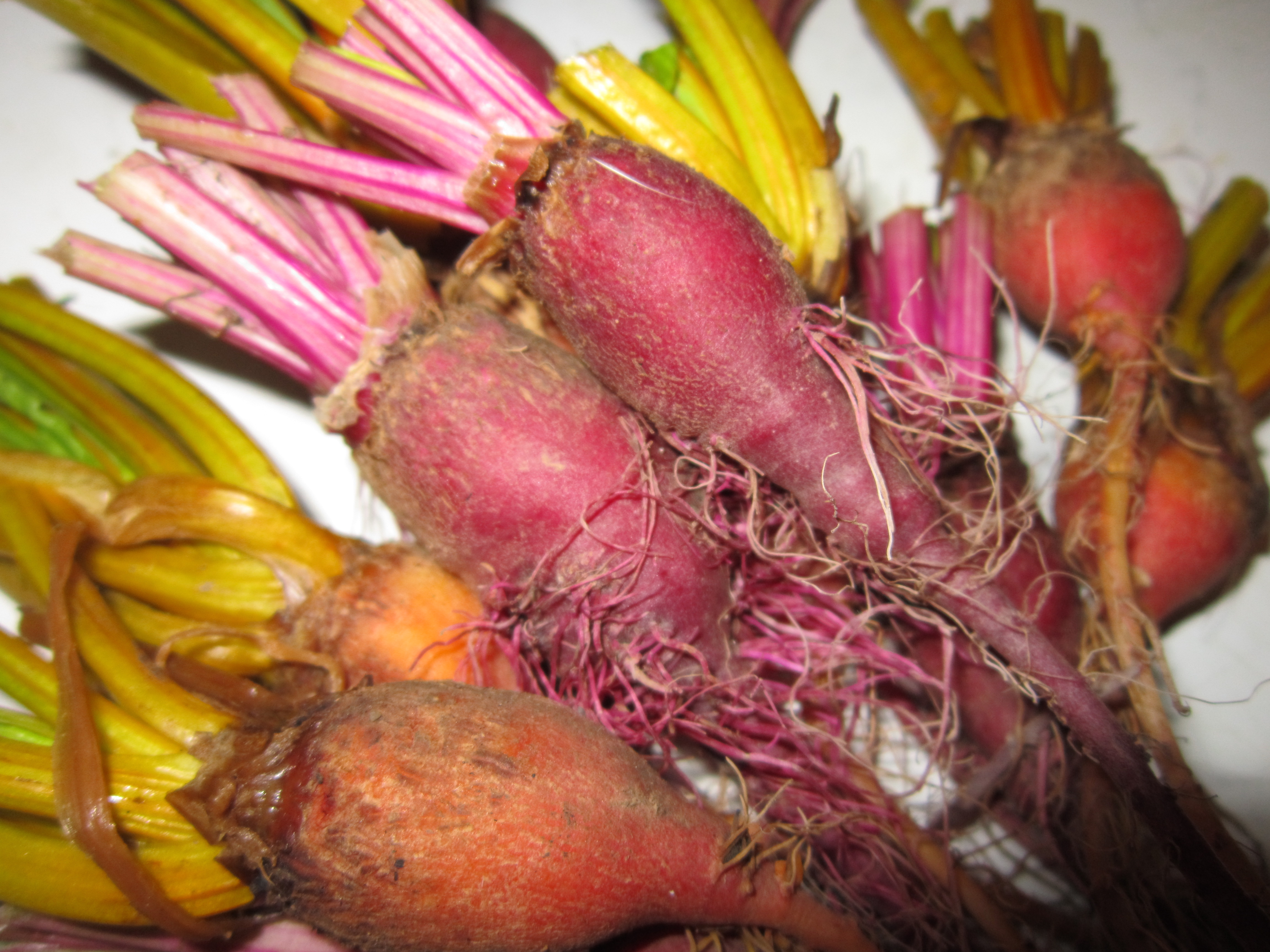
The farmer’s market that I frequent most has been held biweekly through the winter.  This has been wonderful because it at least ensures that I am always buying eggs and cheese from people that I trust and who recognize me as a regular.  (This is not true for eggs and cheese sold at the grocery store!)  There has also been a fairly steady supply of root vegetables and some greens grown in hoop houses.  This past Tuesday, one of my farmer’s had baby beets that I purchased.

I also picked up some feta cheese from a local creamery.

A lot of recipes for beets involve feta cheese so I decided to use this relationship.  I also had made extra quinoa the night before and decided it should all be mixed together.  It worked splendidly.

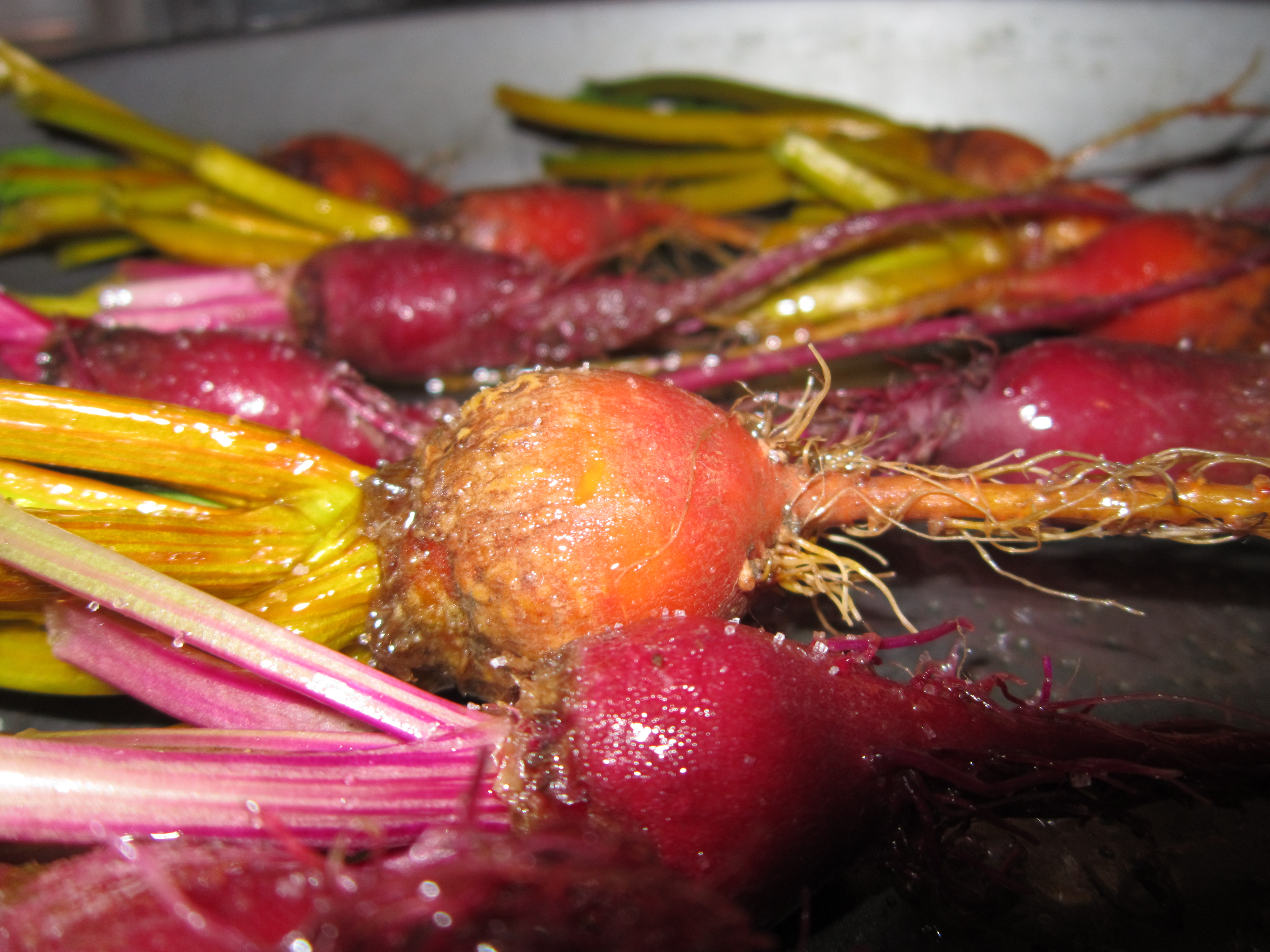
I cut the tops off of the beets but left some of the stems, washed them, placed them in an oven-safe pan, and then drizzled them with olive oil + a touch of salt.

I put them into a 400 degree oven for 30 minutes and made sure they were done after the allotted time by poking them with a fork.  They were ready!
Next, I peeled off the beet skins using a towel so that I didn’t burn my fingers.

I cut some of the beets in half, tossed them into a bowl holding the (warmed) quinoa, and also mixed in some bits of feta cheese. Yum! The combination made the beets taste very sweet and it contrasted well with the feta cheese.  I’m sure the fact that these beets were fresh and recently harvested helped a lot, too!

Hooray for local, seasonal food!!

Introduction to Nourishing Herbal Infusions – Nettle

Many people have jumped on the green juice bandwagon, and for good reason — these juices are a welcome addition of vitamins, minerals, and other nourishment to our diets.  They work well at helping people to feel more energized and healthy. Unfortunately, many green juice recipes call for produce that is not always, if ever, in season in my region.

Are there other ways to get a local, sustainable, and easy punch of chlorophyll, vitamins, and minerals?

Why yes there is.  Hello lady nettle.

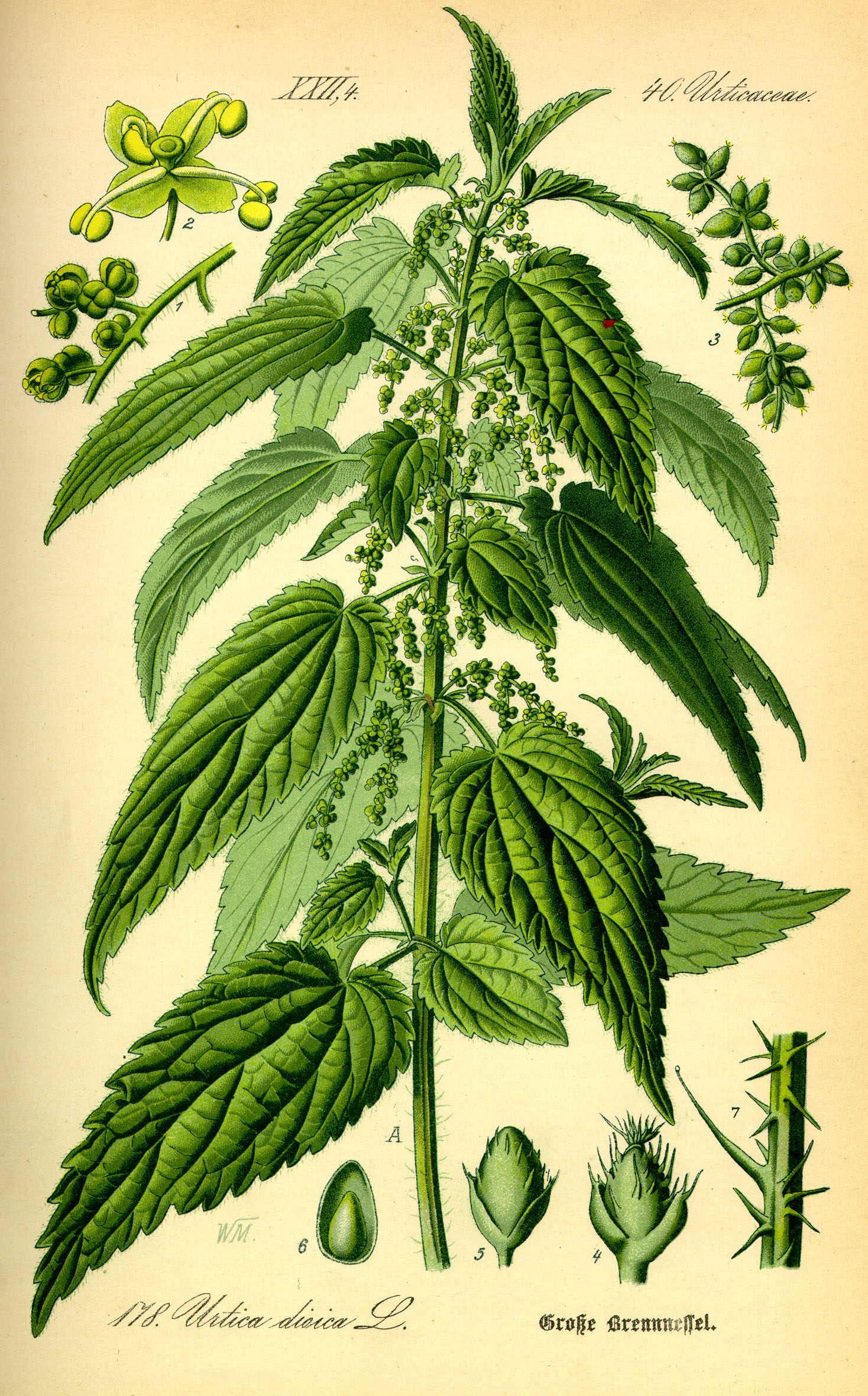
Stinging Nettle (Urtica dioica)

I remember my first encounter with nettle.  It happened as a young child when I was helping my mother to weed the garden.  I innocently pulled this ‘weed’ and soon thereafter had a nasty irritation all over my hand. Ow, nettle! She certainly has evolved an excellent defense mechanism.

Luckily, that early interaction did not deter me from learning about nettle and her many benefits.

Susun Weed reports an impressive list of nourishment found in nettle:

{Note from 1/2016: As discussed in the comments, there is some debate about the actual amounts of vitamins and minerals found in these infusions and whether fat-soluble vitamins A, D, and K can be assimilated in this form.  Please see the comments for a link to another analysis of vitamin & mineral content in infusions.  Either way, it is without a doubt that adding infusions to your life will increase the vitamins and minerals you’re consuming and have certainly made a difference for many people’s overall health.}

Nettle is a superior source of protein; 10 percent by weight.

Nettle is a rich storehouse of  readily-absorbable minerals, trace minerals, and micro-nutrients:

calcium (1000 mg per quart of infusion)

magnesium (300 mg per quart of infusion)

potassium (600 mg per quart of infusion)

zinc (1.5 mg per quart of infusion)

selenium (.7 mg per quart of infusion)

iron (15 mg per quart of infusion)

manganese (2.6 mg per quart of infusion)

    plus chromium, cobalt, phosphorus, copper, sulphur, silicon, and tin.

Nettle is super-charged with vitamins:

    Vitamin A (5000 IU per quart of infusion)

    Vitamin B complex, especially thiamin, riboflavin, niacin, and folate

Plus Vitamin C, Vitamin D, and Vitamin K

All of this combines to provide an excellent source of energy and nourishment that is easy to come by and easy to use!

After experimenting with nettle infusion for about a year now, I would not turn back and I drink this infusion about 3-4 times a week.  I find that I crave the nourishment of this drink when I haven’t had it for a few days.  When I drink it, I feel as though I am drinking Earth milk (but I have not tried it on cereal!). I feel nourished and more connected with the natural world.  Plants (commonly considered weeds!) right outside my door can contribute to my health and well being.

The process starts by measuring out an ounce of dried nettles.  I’ve seen other people write about nettle infusions using just a few tablespoons of herb — this will still be a healthy drink, but won’t pack quite the same punch of minerals.  When I was beginning, I measured this ounce out with a scale, but I have since measured nettle out enough times to simply visualize an ounce of the herb in my quart jar.

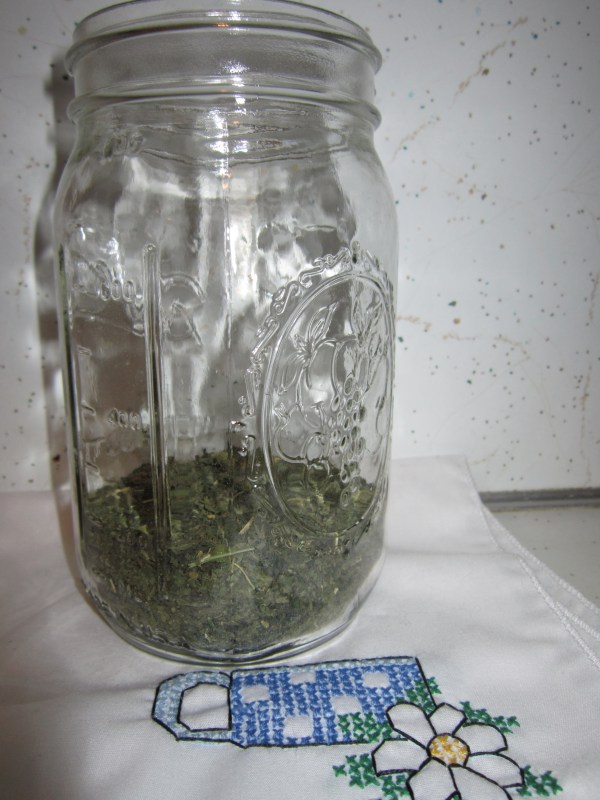
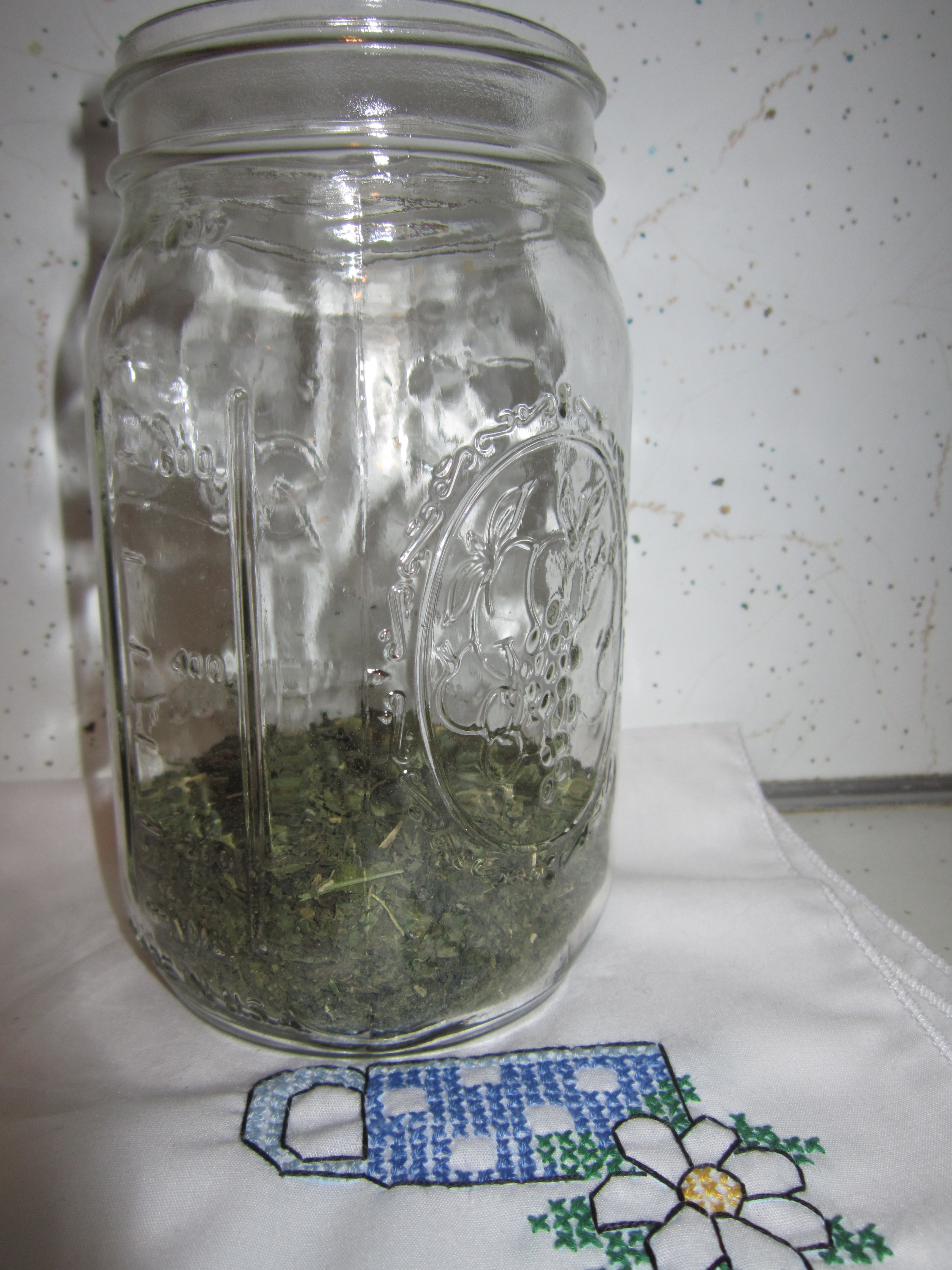
Ounce of dried nettle

Next, I boil water and distract myself with teeth brushing or other before-bed chores.  When the water is ready, I pour it over the herb, seal the jar, and am off to bed.  The minimum time to leave an infusion is 4 hours, but it is fine to leave it overnight.

(Tip: pour the water over a knife placed across the jar lid to help diffuse the heat and avoid breaking jars!)

Nettle infusion ready to sit for the night

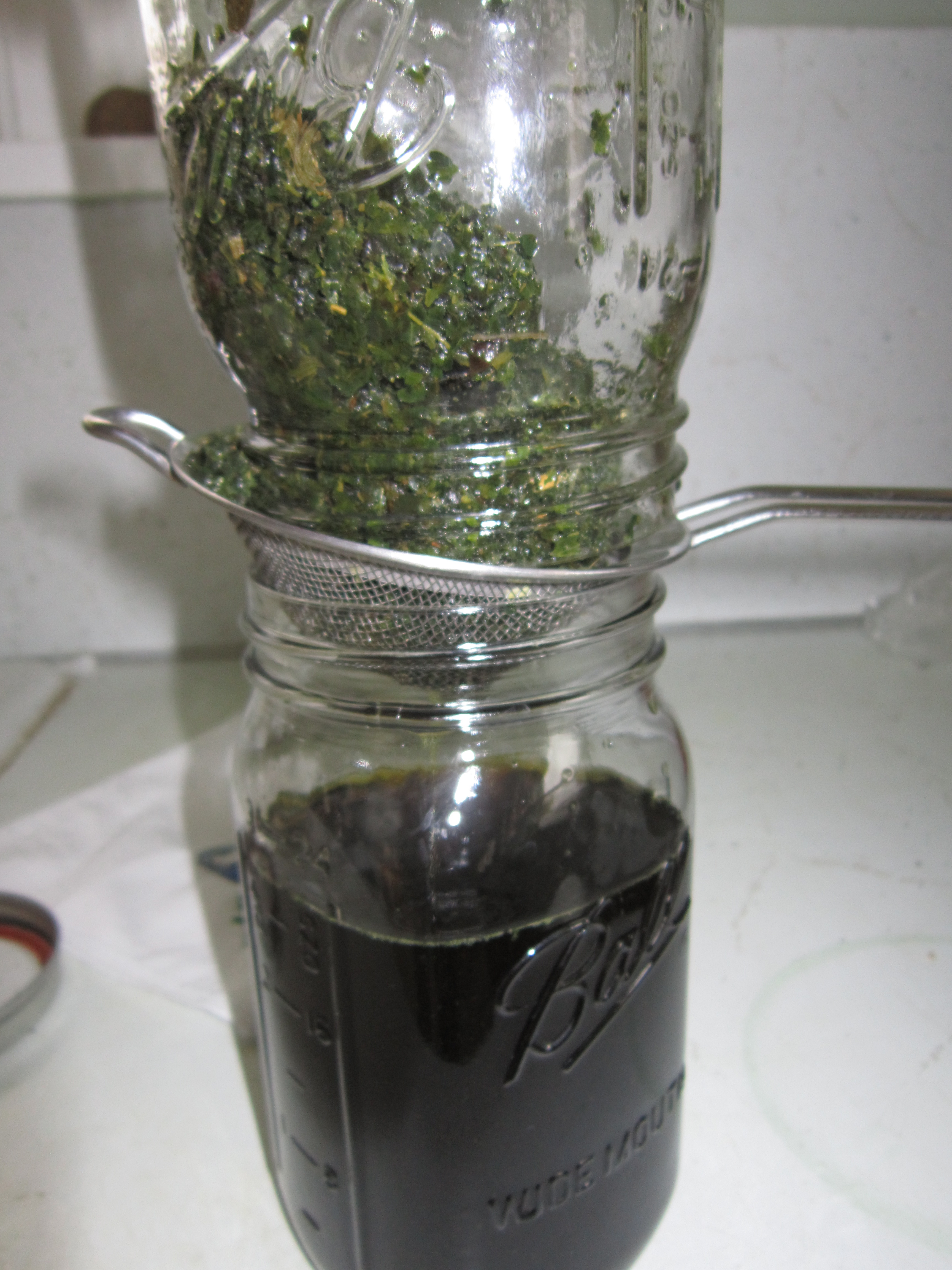
In the morning, I strain the herb and drink the resulting infusion throughout the day.  I drink it cold and straight out of the fridge, but it could also be warmed.  When I first started drinking nettle I added honey a few times to see if I preferred it that way (I didn’t, but I know that others do.  Mint is also a popular addition — just add a tablespoon to the ounce you measured out.).

Straining the infusion

What isn’t used right away can be stored in the refrigerator for several days.  If it isn’t used in that amount of time, it can be used as a hair rinse or to water houseplants.

Don’t forget to compost leftover herbs!

So where do you get this much nettle?  It’s awesome if you can harvest it somewhere local to you, but Mountain Rose Herbs is my favorite source for organic bulk herbs.  You can find their nettle HERE.

FTC DISCLOSURE: As a way to support my blogging and related activities, I may receive monetary or other compensation for my endorsement, recommendation, testimonial and/or link to any products or services within this article. However, it is my promise to you that I am sharing my honest opinion and that I only recommend products or services that I have personally used or recommend and are in alignment with Light Footsteps ideals.

Beginner’s Worm Composting – Welcome to Wormville Towers

This winter, I ran into a problem that I’ve experienced before  — my outdoor compost pile is filled to the top, but I still have more scraps!

It’s not the right season to start a new pile (nor do I have the room to start a new pile at the urban house that I rent), and it’s not time to start hauling out the compost that is accumulating on the bottom for use in my garden.  What’s a person to do?

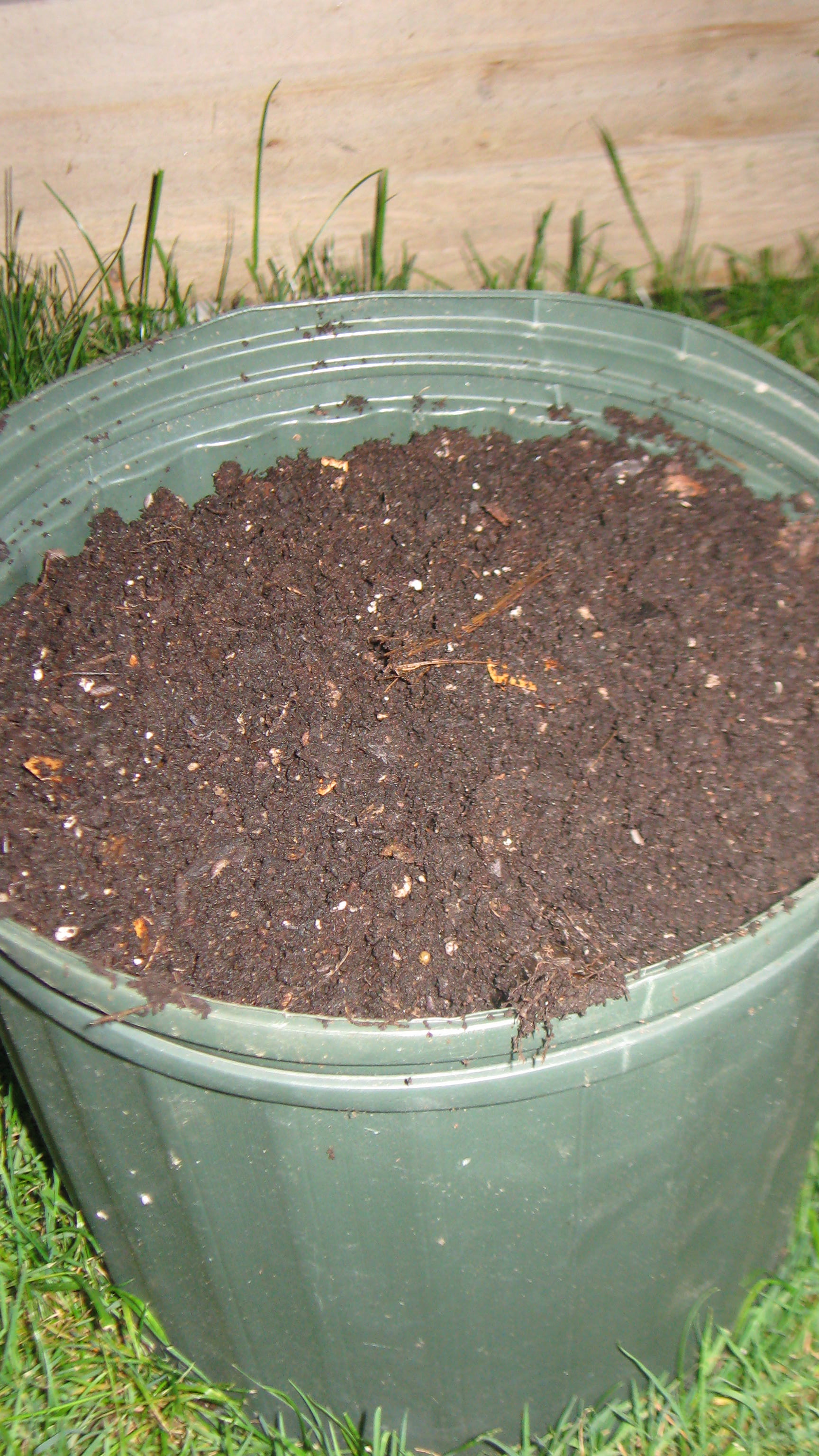
Compost from my outdoor pile ready to be put in the garden!

Start to vermicompost, of course!

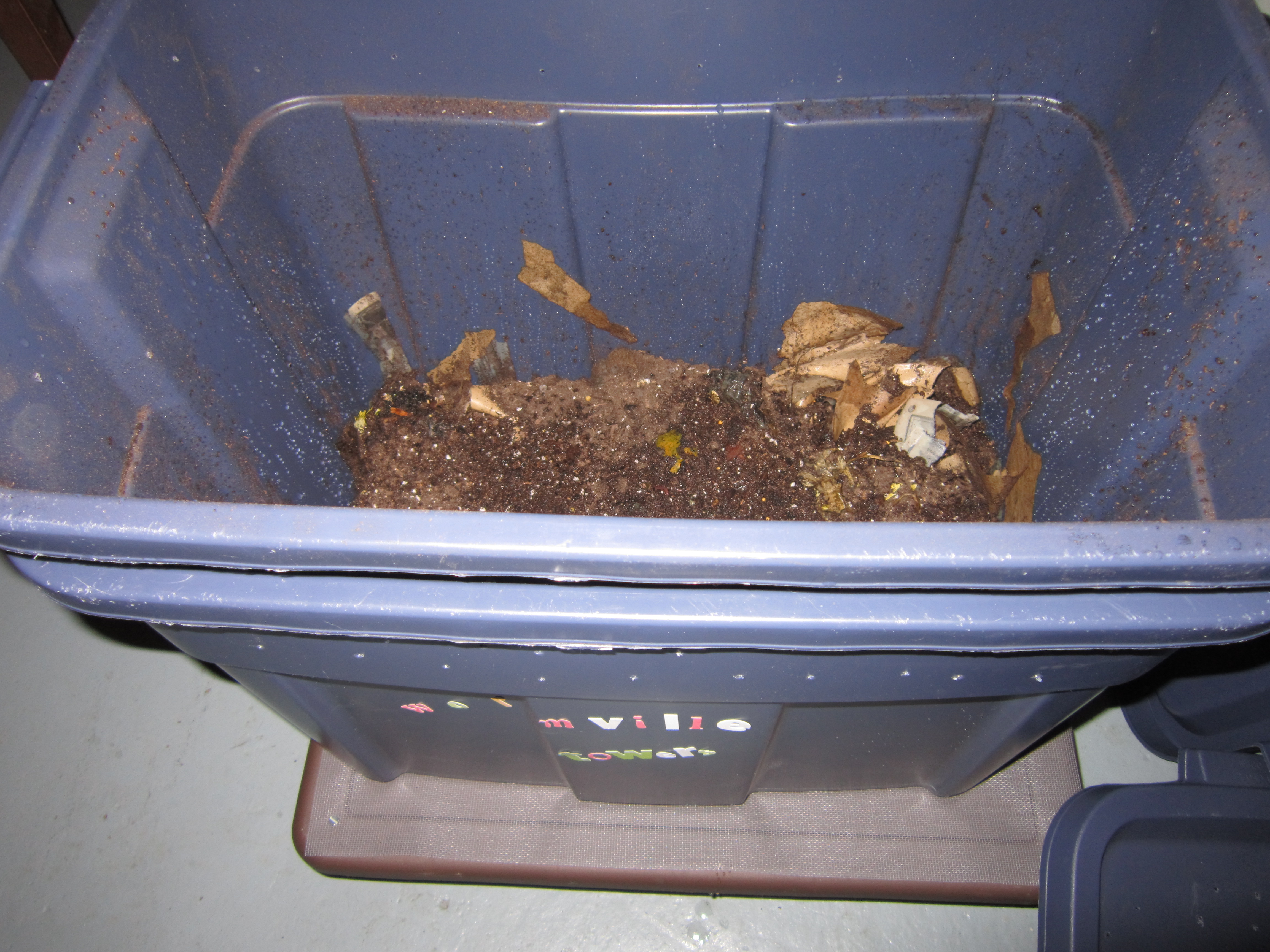
I don’t have much experience with worm bins, but I’ve seen a fair number of the commercially available ones and have also explored some that are set up as singular bins.  I decided to try a mix.  I call this worm home, Wormville Towers, because it is much more fun to live with worms that have a named community.

Here’s how the community moved in with me:

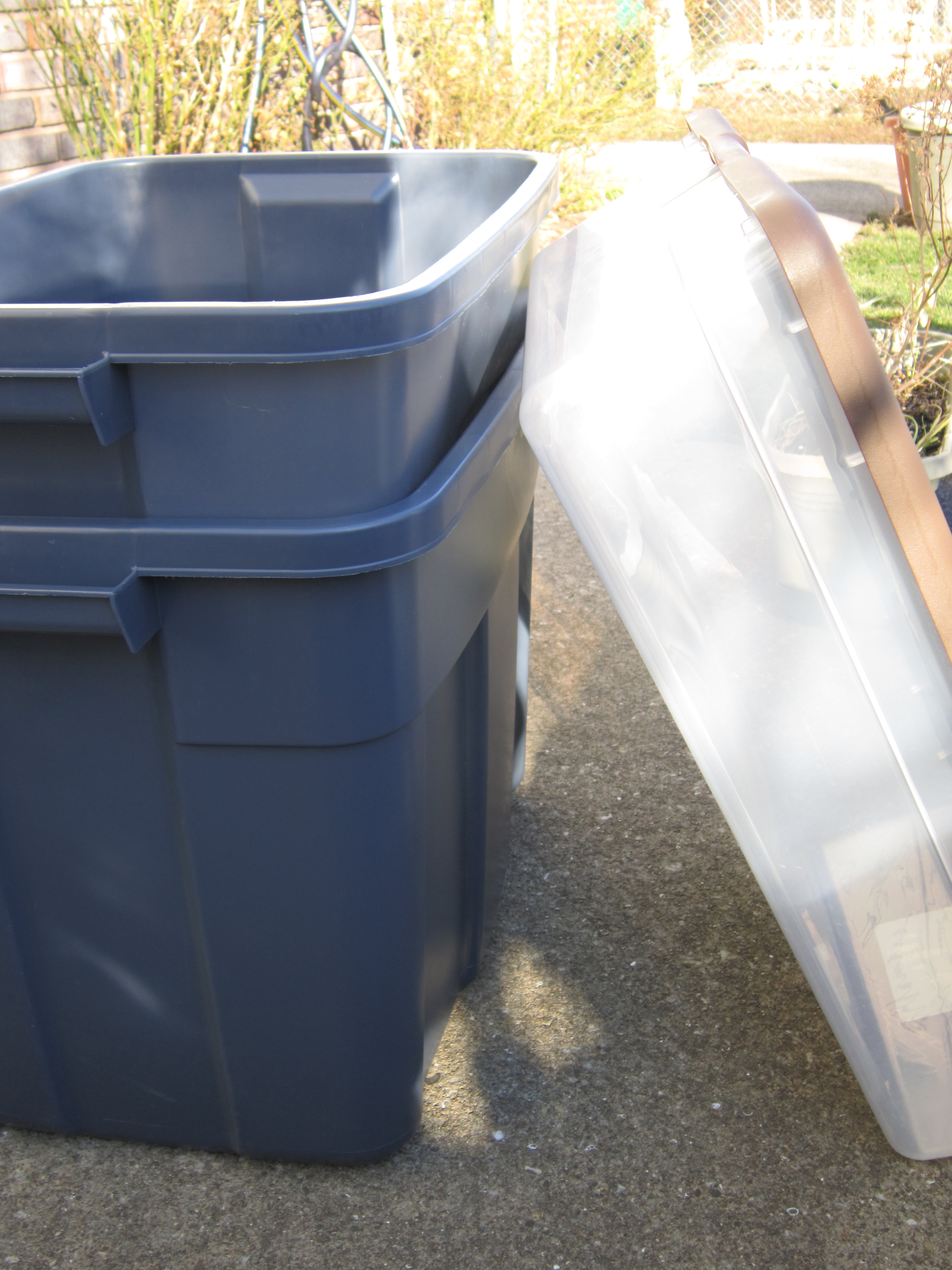
  1. I acquired three bins — two large 10 gallon bins that fit inside one another (and a lid) and a smaller see-through bin (with a lid). The general idea is that the two large bins are going to be stacked and rotated with the worms and composting material while the see-through bin always remains on the bottom and is just to catch any “worm tea” that drains out during the composting process.

    The three bins

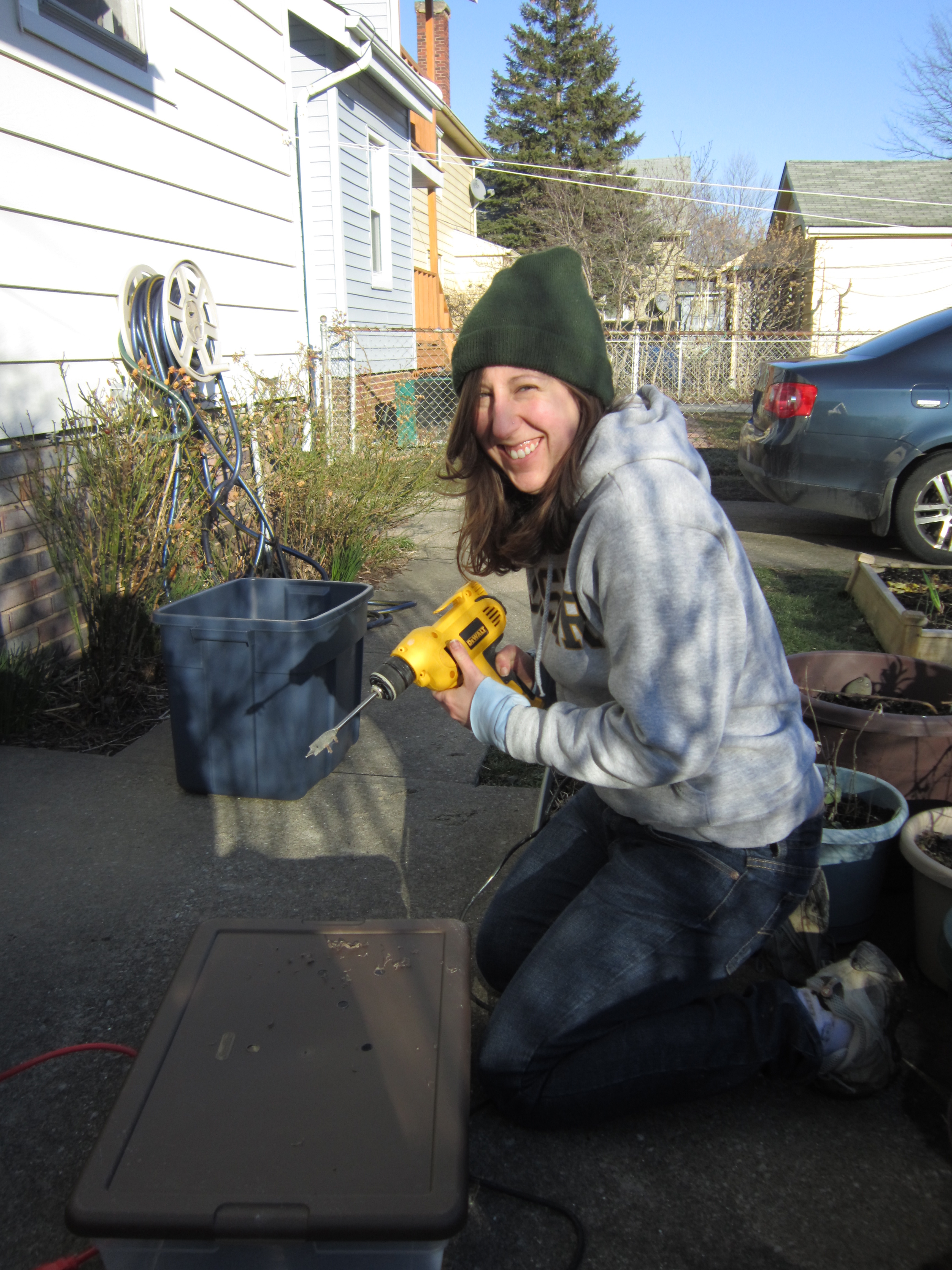
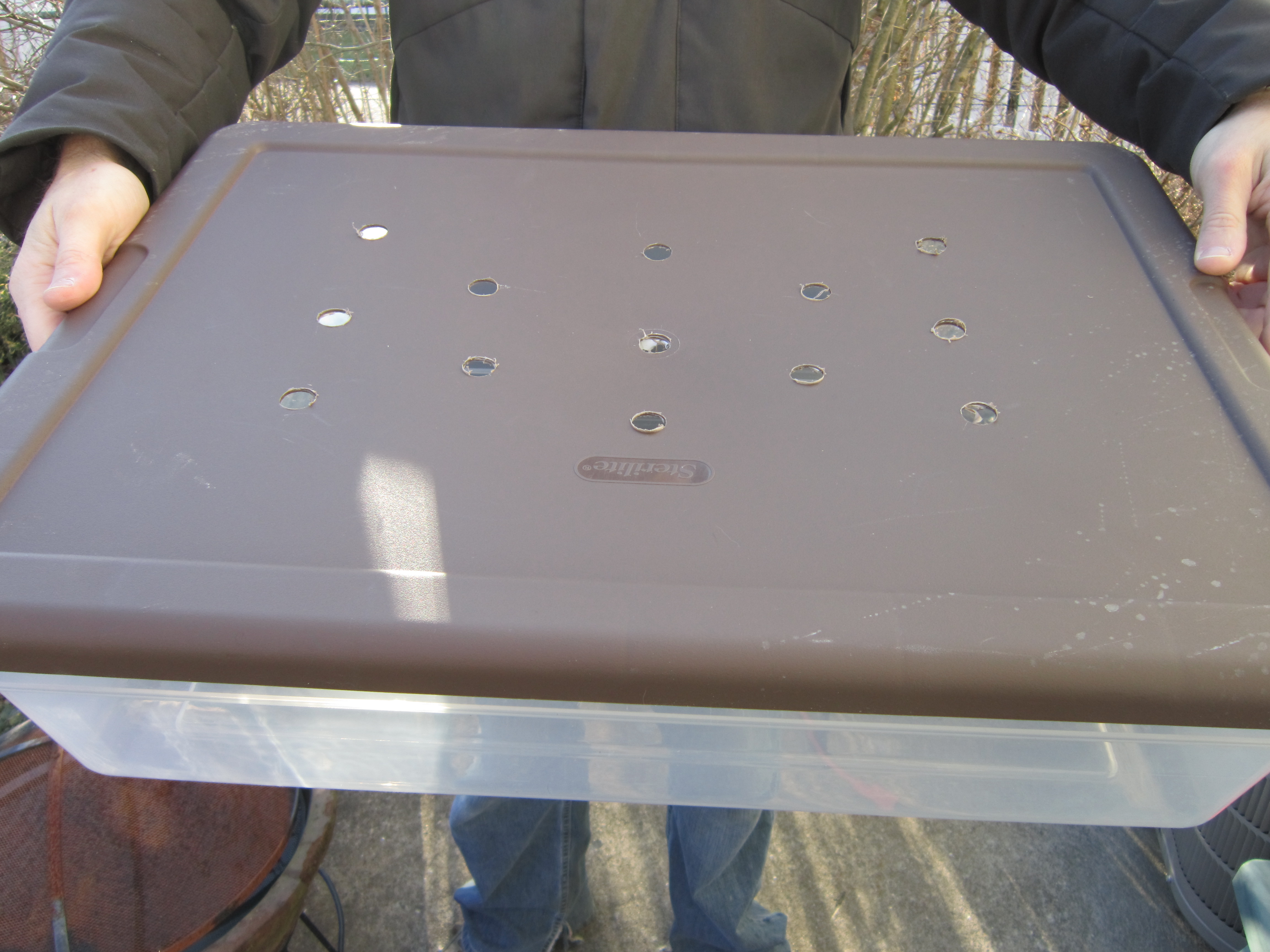
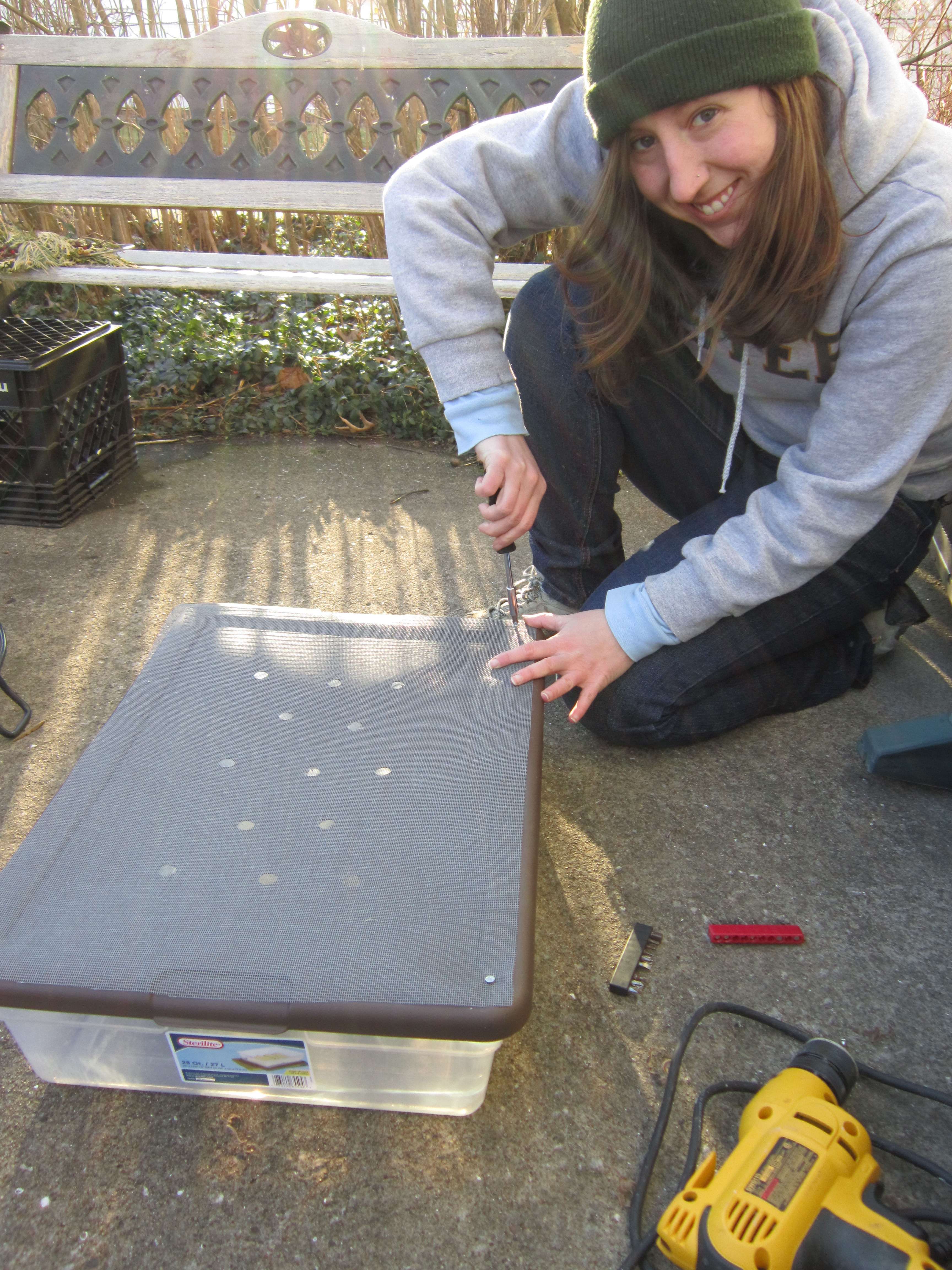
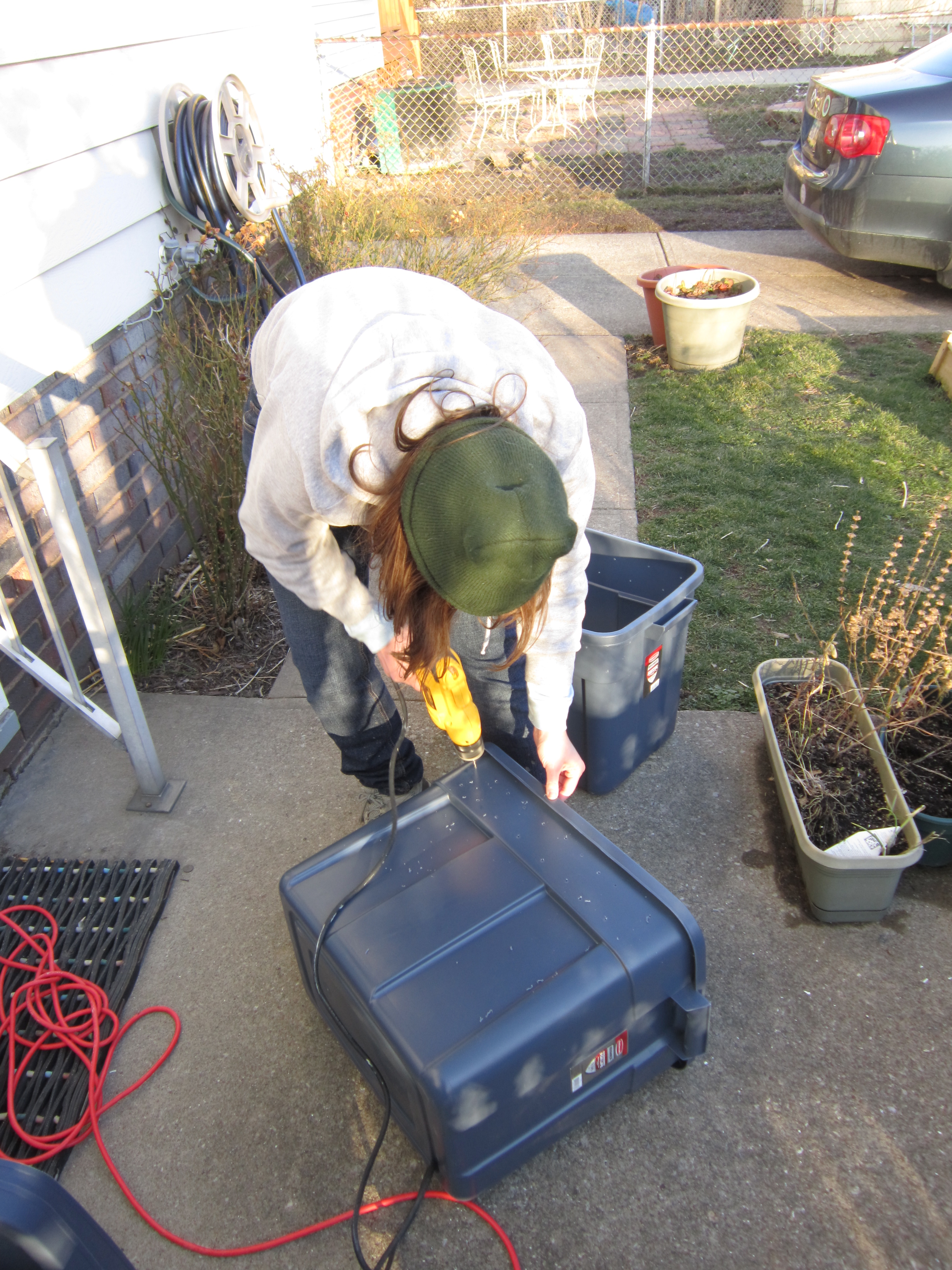
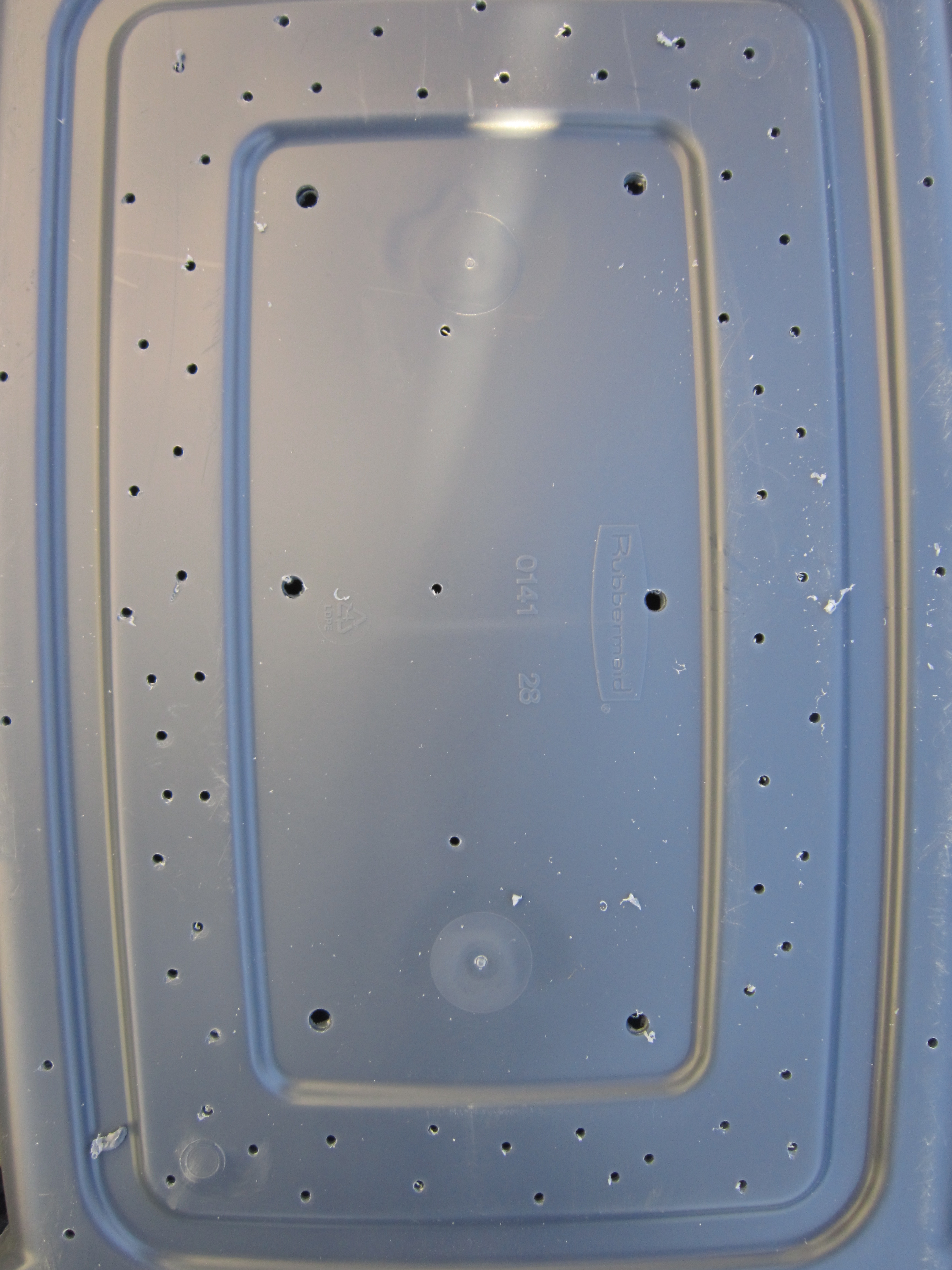
  2. We started by drilling 1/4″ holes into the lid of the bottom bin to allow worm tea to drain in.  We liked the idea of getting a clear bottom bin so that we can see if/when this bin needs to be changed.  We also measured out some screen to screw onto this lid so that no worms could fall into this bin.

    Drilling holes into the lid.

Holes on the lid.

3. Then we started working on the larger bins.  We drilled air holes around the perimeter of the top and drainage holes along the bottom.  We also drilled some larger holes in the bottom so that the worms have an easier time of migrating upward when the bins are rotated.  The idea with the double bins is that we will start one bin, and when that bin is full, it is moved to the bottom, and a new bin is started on top.  As the worms continue to compost the remaining matter on the bottom, they will gradually move up to the top bin when there is more to eat.  After about 3 weeks, the bottom bin should be fully composted and ready to be used.  It is my understanding that the worms will not be tempted to move down and out of the bin as long as there is a yummy environment for them.  However, they should move on up when living conditions become better there. Sounds like we could create a TV show.

Drainage and migration holes

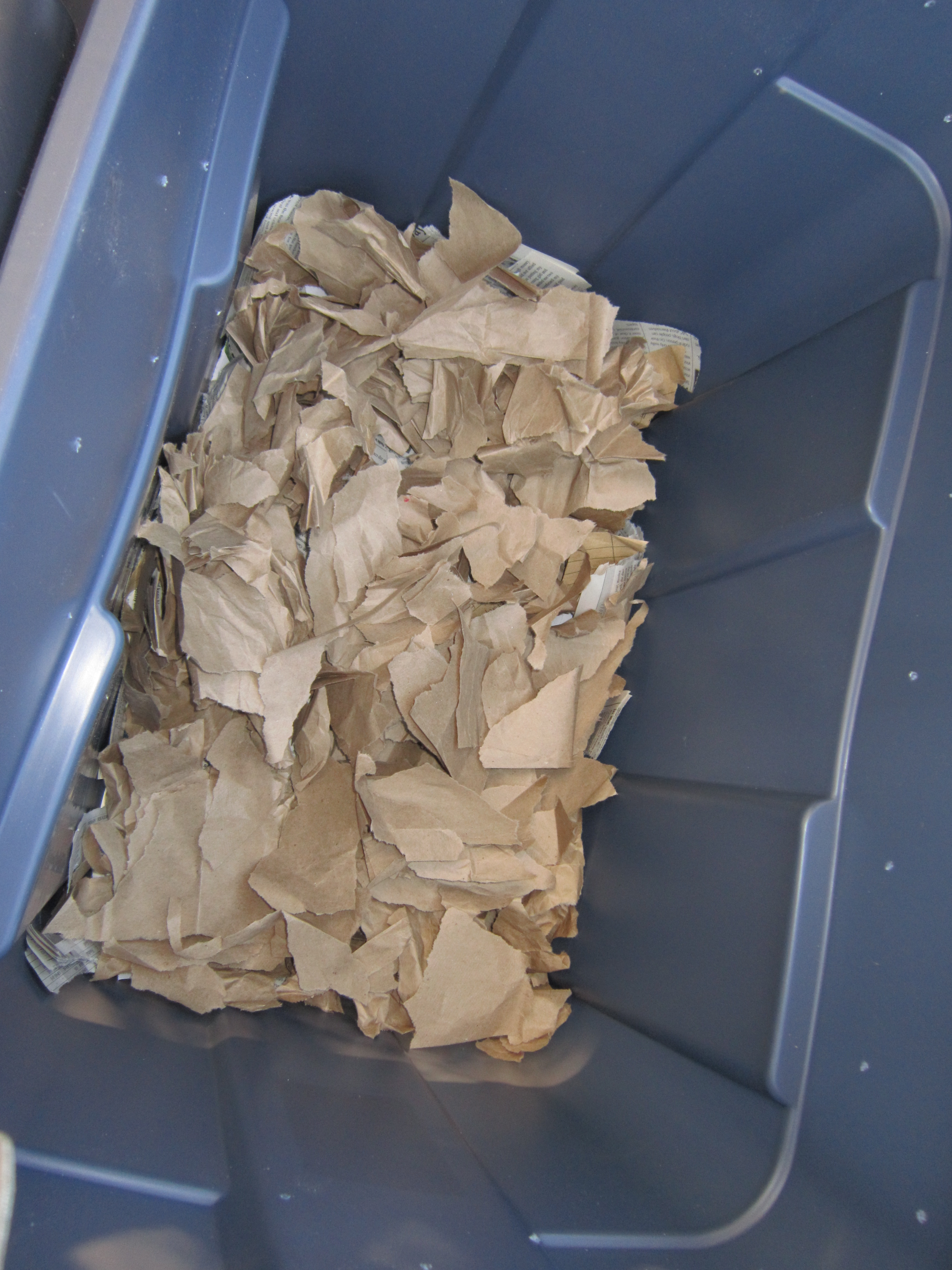
4. Next, we improved the living conditions — we added some interior decorating, if you will.  Many people use paper shredded by a paper shredded or other forms of fibrous material (coconut fiber), but my worms are a little thriftier and like paper ripped by hand. This serves as the worms’ bedding.  We put a little soil on top of this and moistened everything.  Worms should not dry out, but they can drown and do not like to be soaking wet so make sure to go easy on the water.  They might try to escape if they feel like they’re living in a lake.

What a lovely bedroom!

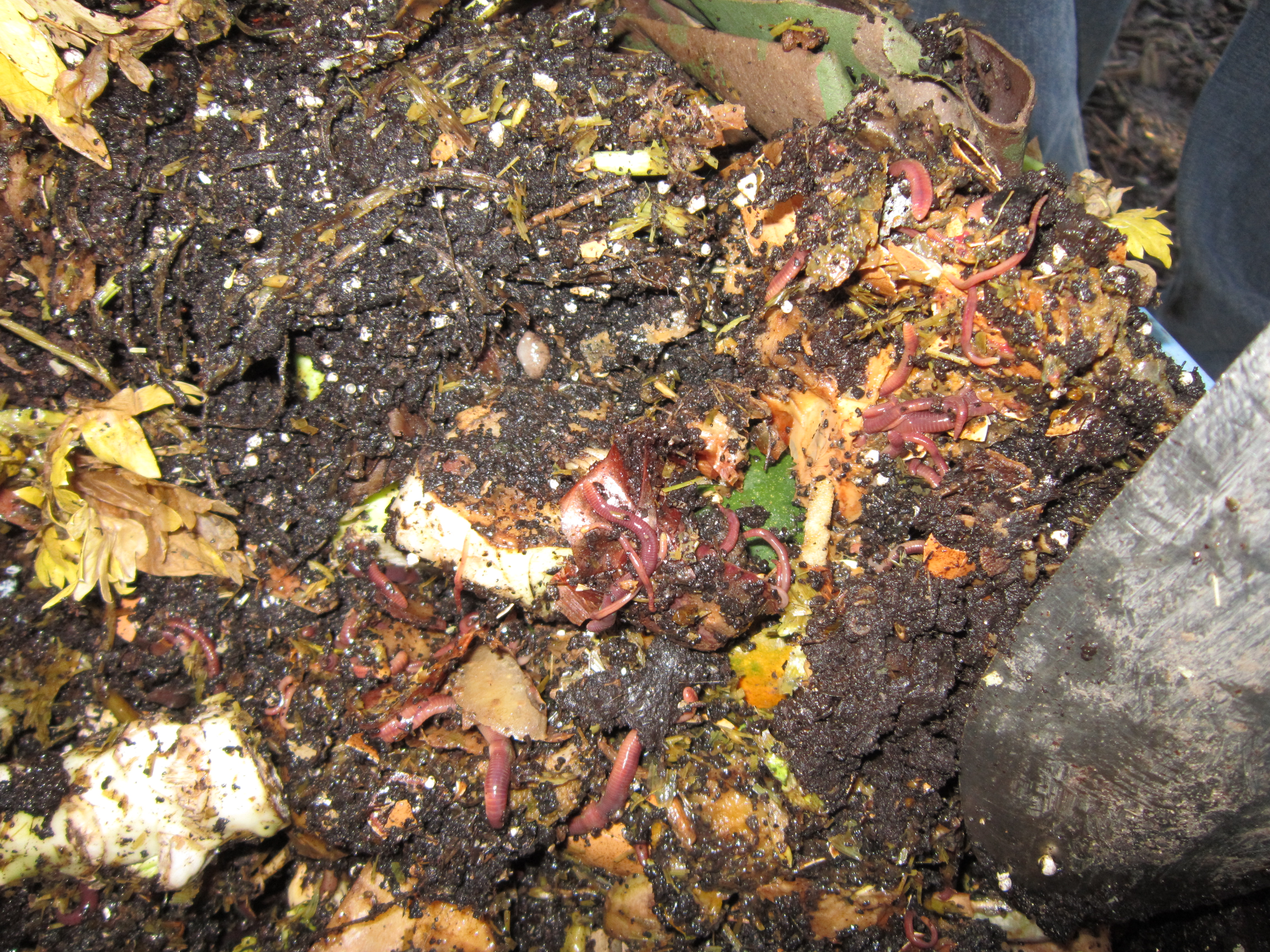
5. Time for the residents!  We raided my outdoor compost pile that has attracted a great many wigglers.  It’s pretty easy to find worms outside, but if you just Google “buy red wigglers” it’s easy to find them for sale. Remember to thank them and tell them that they are going to a place where there is always good food.

Look at all those wigglers in my outdoor pile!

6.  We added more soil, a few kitchen scraps, and covered everything up with more paper.  We assembled the stack and welcomed the worms to their new hang-out in the basement.  In a few days, I’ll start adding more kitchen scraps.

Stacked towers

Once this bin seems full, I’ll switch the bins so that the one shown here (now on top) is on the bottom.  I’ll have new bedding and some soil ready for the worms in the (new) upper bin, take a couple of them from the bottom bin up there to get things established, and start adding new scraps.  The worms should migrate and reproduce so that the top bin is the “working” bin again while the bottom bin is “ripening”.

So far the worms have been in the basement for a few days and everything seems to be going well!  This will be a great way to continue my composting and be a better participant in the cycle of life!

Shared on:

Small Footprint Friday

Opportunities to Connect with Nature are All Around – Does Anyone Notice?

Walking through the zoo today, an eerie cry from above caught my attention.  It was the long and ghostly call of a seagull in battle with a red-shouldered hawk.  Although it was unclear what caused the argument,  the gull was continually diving aggressively toward the hawk who appeared to remain unperturbed and gently swooped out of the gull’s way each time.

The gull’s screams seemed to become more forlorn and desperate as the hawk continued to glide toward its destination, ignoring each of the the gulls valiant attempts. Eventually, the gull gave up and turned to fly off into another direction, its cries continuing to echo throughout the area.  Watching all this, my hearbeat changed as I simultaneously felt the desperation of the gull and the satisfaction of the hawk, feelings that come from some far more ancient part of my body and that do not require words or detailed thoughts to comprehend.

This is part of what it is to connect with animals and nature — to have moments where we can share emotions, experiences, and to learn from them about how the Earth works — to know that it is always in a balance of giving and taking, of life and death. Beautiful, breathtaking, and heartbreaking all at once.

As I was having these thoughts, I glanced around at the zoo visitors near to me.  There I was obviously staring into the sky watching other beings in an intense moment of life experience and no one else had even noticed, despite the desperately loud alarm calls and all of the amazing aerial acrobatics.  The people were walking along pointing at lumps of sleeping animal masses.  They were showing their kids confined animals, trying to make a connection with the natural world, but missing the point and missing the amazing display of animal behavior directly above their heads.

Many people seem to come to the zoo because they want to connect with animals, they want to feel like they still have some understanding of nature.  They tap the glass trying to get animals to look into their eyes and acknowledge that they exist, but all the while ignoring the animal life that is going on around them.

Animals needn’t look into our eyes to remind us of a connection to nature because it’s already there, it has just been forgotten.  And the best way to remember the connection is not to try to capture the attention of zoo animals, but to reawaken one’s senses and notice that nature is everywhere and is always communicating.  Like, for example, this interaction between a gull and a hawk and all that this can teach us about the balance between perseverance and of letting go.

Do these life lessons come from watching confined animals at the zoo?  If not, what type of lessons do arise from watching animals at the zoo?

And when animals at the zoo do share eye contact with us, when we recognize them as individuals in their artificial enclosures and feel a connection, what does this reflect back to us?  What does this say about how we relate to nature currently and how we live our lives?  Are we living freely and in balance with the rhythms of nature, or have we created a system of captivity for ourselves?

What does this mean for our health and for the health of the planet?

Steps Back to Nature: Harvesting Wild Chives

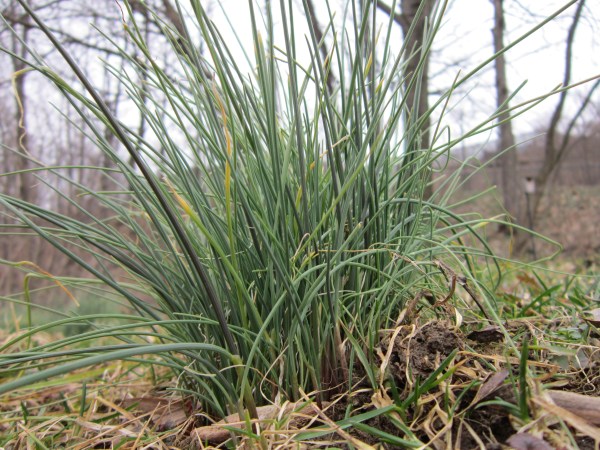
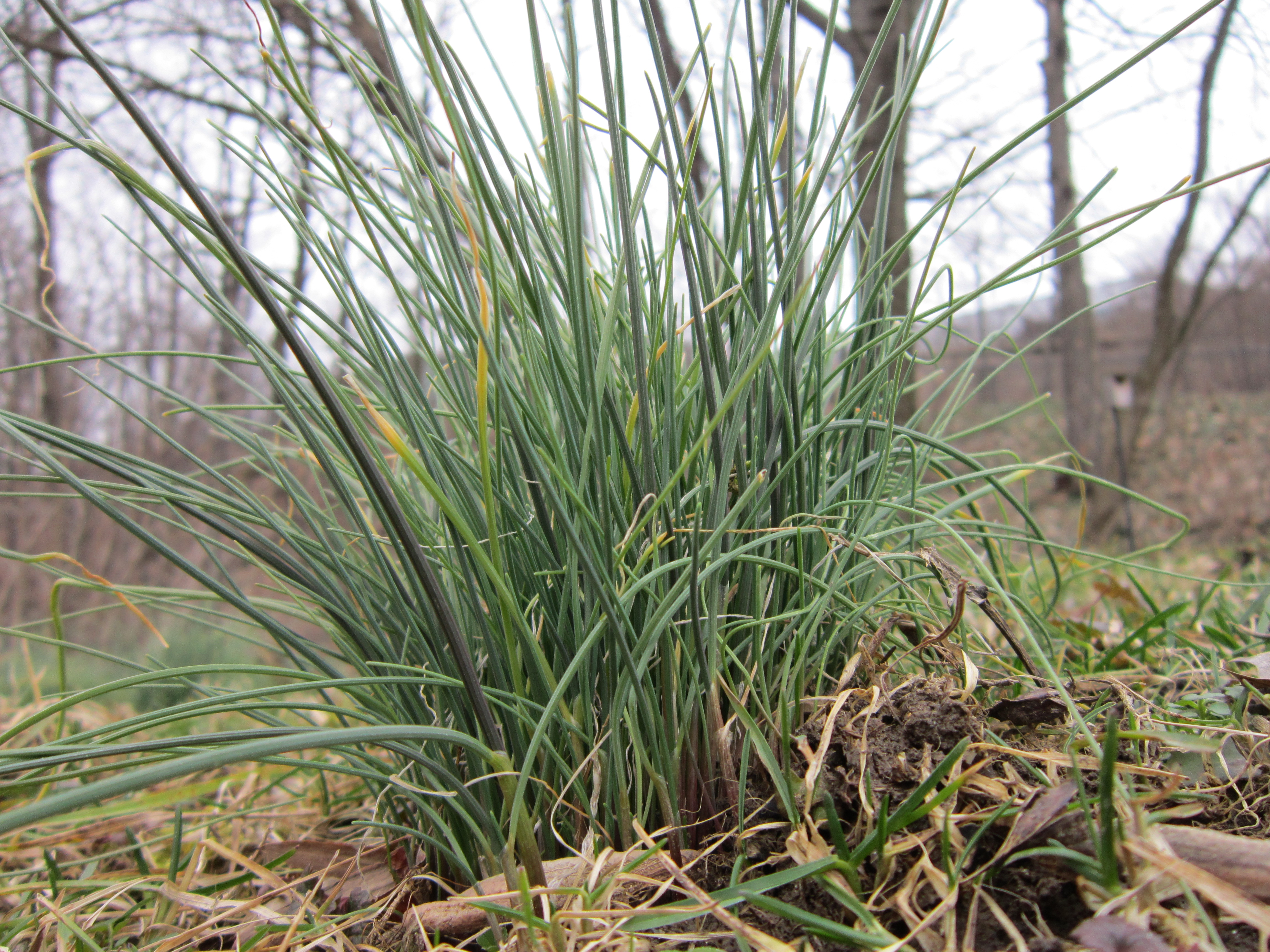
Beautiful chives!

Harvesting wild foods is a great way to foster a sense of connection to nature.  Not only does it get you outside, but you establish a relationship with a plant and are reminded that this process of taking food from the Earth has happened as part of every meal ever consumed.  Being the one to do the taking yourself makes the connection all that much stronger (although it’s a beneficial exercise to think of how all of your food was handled before it got to you).  Harvesting wild foods also fosters a sense of self-reliance and a beautiful feeling that we are a part of a continuous unfolding of life that cannot come from eating something packaged.

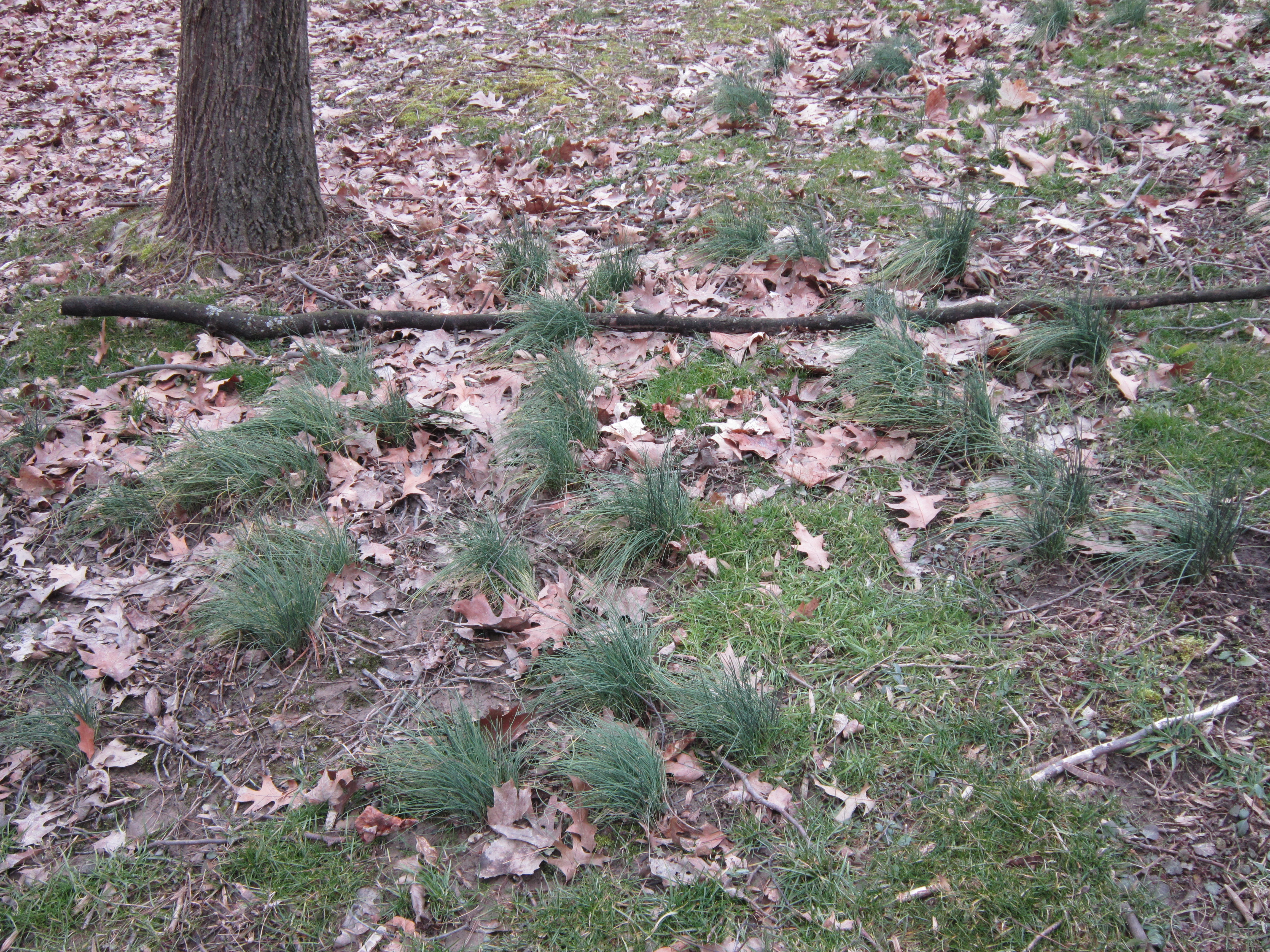
Wild chives (Allium schoenoprasum L.) are very similar to those grown conventionally, but with the added bonus that they can be found for free in moist areas! Despite being the middle of February, I recently was happy to come across a patch of land with several clusters.

Patch of Wild Chives

After inspecting them more closely and making sure that they had their characteristic chive smell (i.e., onion-y), I grabbed several to chop into vegetables for lunch. I also ate a few on the spot as it had been quite awhile since I had eaten food straight from the outdoors!

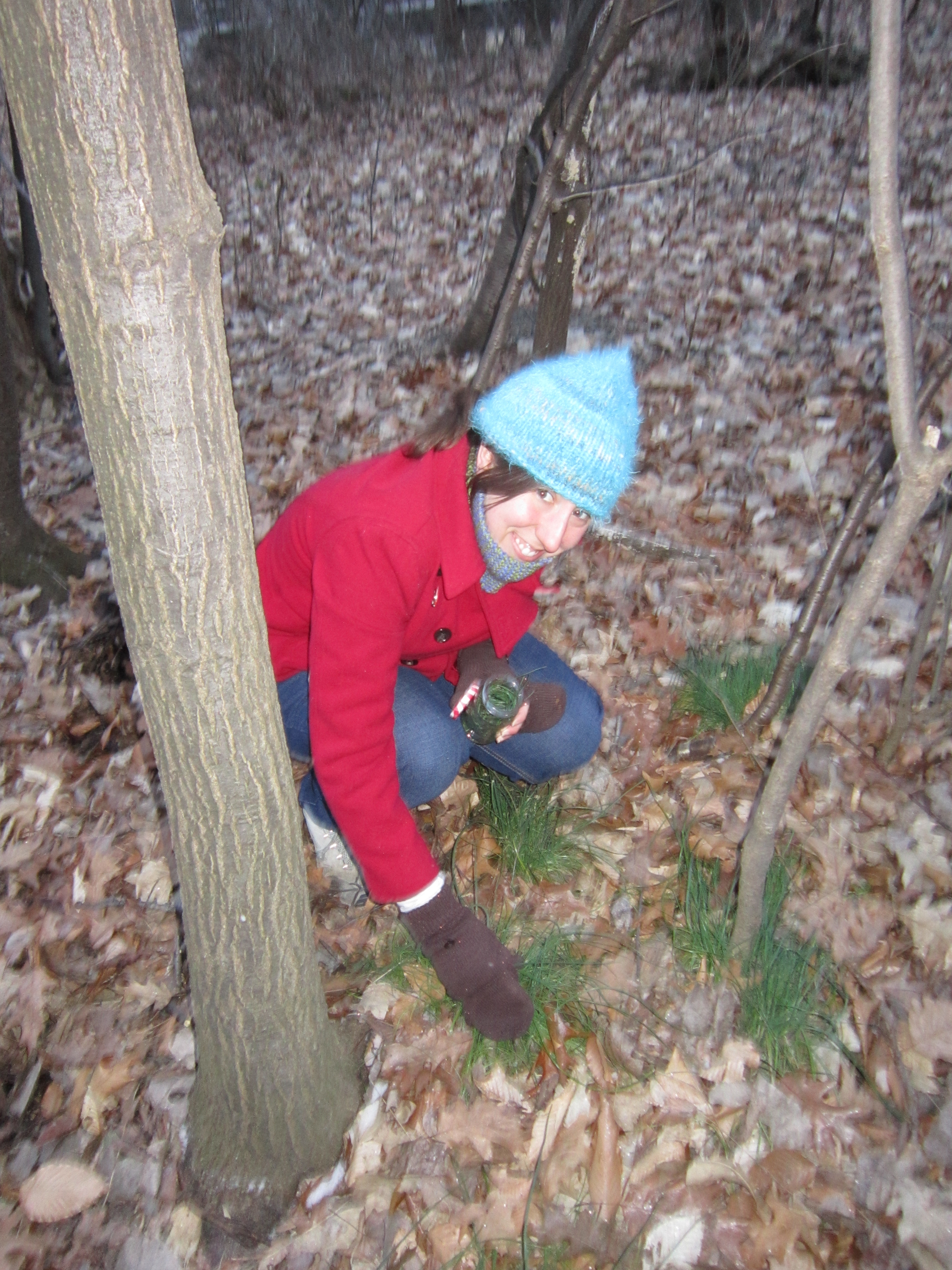
A few days later I wanted to try having even more fun with wild chives so I collected some in glass jars to bring home.

Harvesting more chives

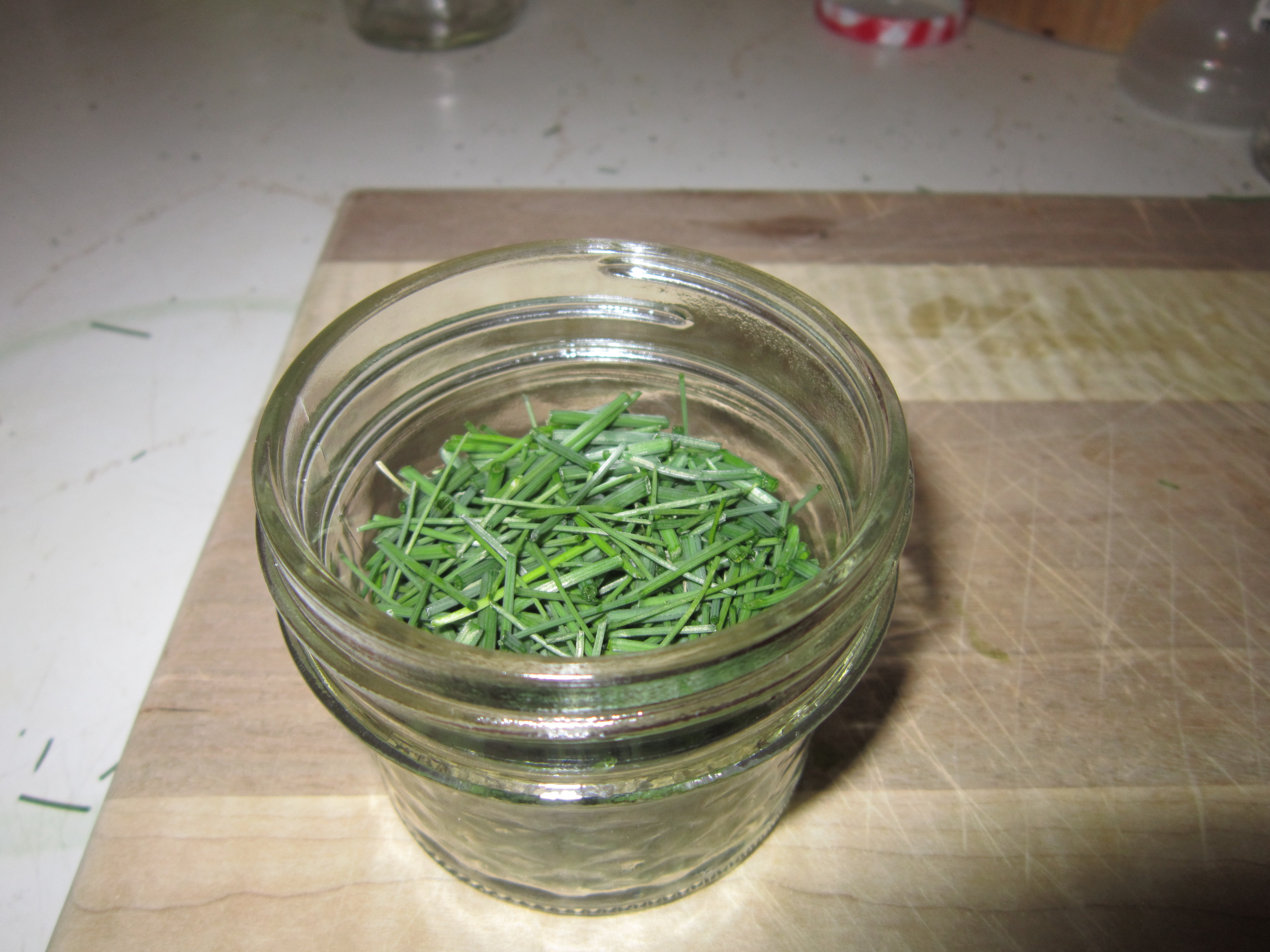
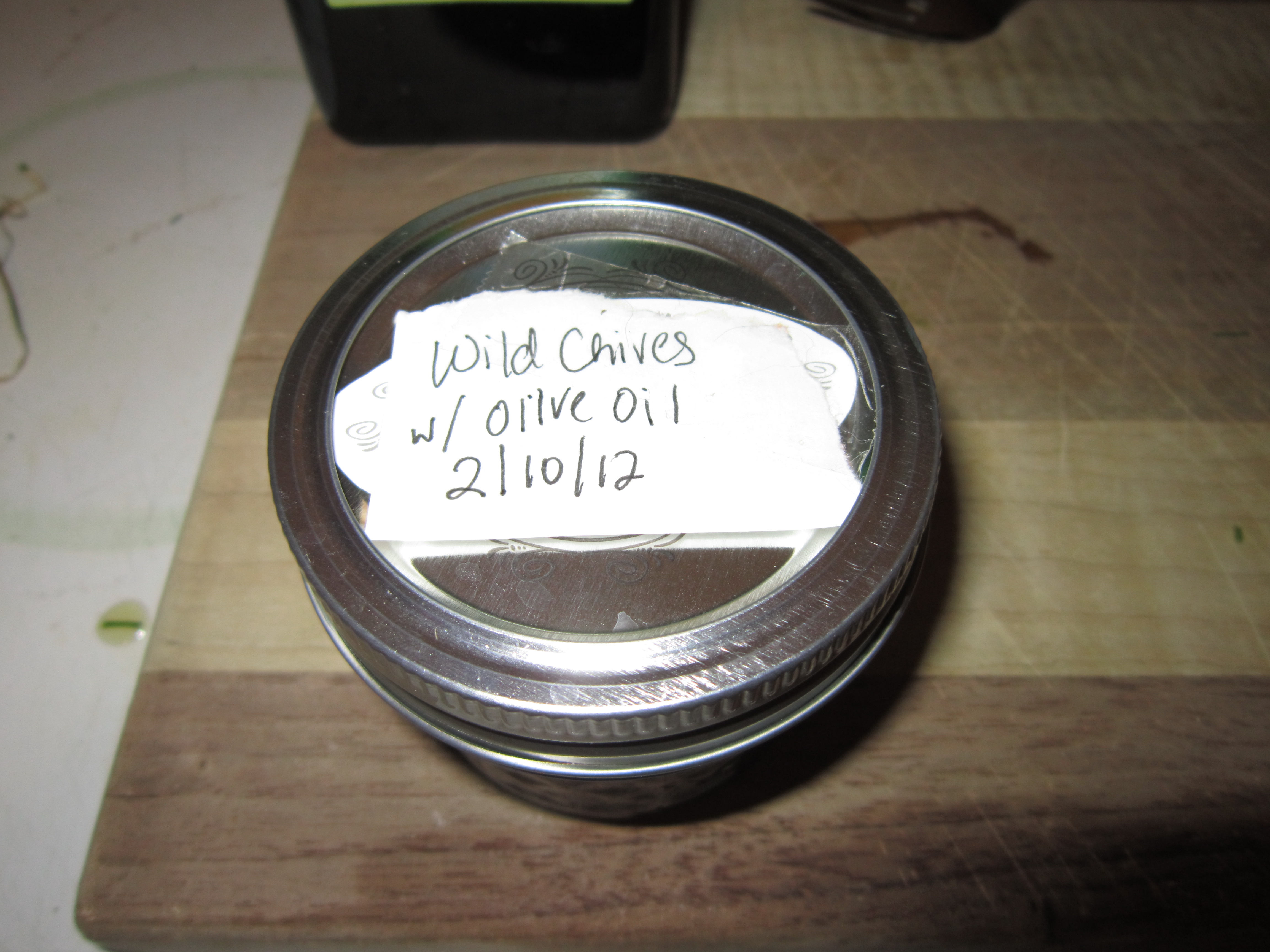
Once home, I started the process of infusing them into olive oil.  First, I cut them up into smaller pieces so that there was more surface area of plant matter. I put all of these chopped bits into a small glass jar.

Chives to chop

Filling the jar with chopped chives

After this, I poured olive oil over the top of the chives to completely cover all the green parts.

Covering the chives with oil

This oil should be refrigerated promptly and used within a day or two.  The herbs can be strained for ease of use.

Chive-Infused Olive Oil

For more information on chives and to even discover some medicinal uses, see this web page: Wild Chives.

Happy chive hunting!

Observing humans is often more interesting than watching other primates

There are a lot of loud noises in the primate building at the zoo, few of which actually emanate from the animals.  I often hear the loud thumps of people banging on glass, infants screaming or crying, and people yelling “Look here!” or “Ew!” to one another.

Today I heard the loud thud of banging on glass, but it was followed by startled humans.  One of the gorillas was the source of this noise and caused a group of people to jump and erupt into a flurry of alarm calls.  They then proceeded to retell the story of what had happened among themselves, and I could hear them explain that the gorilla had first made a chest beating display before pounding on the glass.

After their initial shock, the people changed to laughing.  Still staring at the perturbed gorilla, they were safely behind glass and could mock, laugh, and completely ignore his communication.  To me, this became a poignant example of what humans are often internalizing when at the zoo — a message that humans can do what they wish to other animals (/nature) with no repercussions.  We can dominate nature because we are above nature. And then we can stand back and laugh.

What kind of message about gorillas did this group of people receive?  Certainly they would have a much different impression of gorillas if they had witnessed this type of display in the wild.  In fact, they probably would be quite thankful for their lives (or for being at a safe distance quietly observing the display) instead of laughing.  But also, they did not really learn all that much about gorillas and their behavior through this experience – especially not about their fascinating social lives and how gentle they can be with one another.

Maybe they’ll go and learn more about gorillas later because of this experience, but probably not.  I think it’s more likely that they’ll go tell their friends about the “crazy gorilla” at the zoo and perpetuate the myth that gorillas are vicious and always aggressive.  I’m pretty confident that they won’t spend much time thinking about the ways in which they bothered him, or what it would be like to be confined to a space where loud people are continually filtering past all day trying to get your attention.

The broader concern of this small incident, though, is that the zoo is perpetuating an even more deeply ingrained myth than the one that gorillas are always aggressive.  It is a myth that may cause us our demise.  The myth is that we are superior to all of nature, that we can control and dominate it, and that we can stand back and laugh when it tries to warn us of our inappropriate behavior (global warming? ha!).

We would be wise to start communicating better with nature.  There will not always be a thick sheet of glass there to protect us from our stupidity.

We might start by going outside to develop a real connection with animals and nature. Yes, much of the free space for us to do that is gone and many people argue that we must go to zoos to see wild creatures, but somehow animals are still all around us. Pay attention to them, respect them, and work toward a future where we can all coexist.  Nature has been speaking to us. Will we start to listen in time?

100% Local Red Skin Potato Recipe

During the summer, I try to eat at least 90% local when I’m cooking for myself. There’s no excuse not to with so many wonderful farmer’s markets around (and what I can grow myself!)! With limited time, I often put things together randomly, but I thought this particular dish turned out well! It’s simple, but wholesome.

I used:

-red skin potatoes (I used the little ones that had probably been sold to me in a pint carton)

-2 green onions

-1/2 sweet pepper

-fresh picked rosemary

-tablespoon or so of butter

-farmer’s market veggie cheese to top!

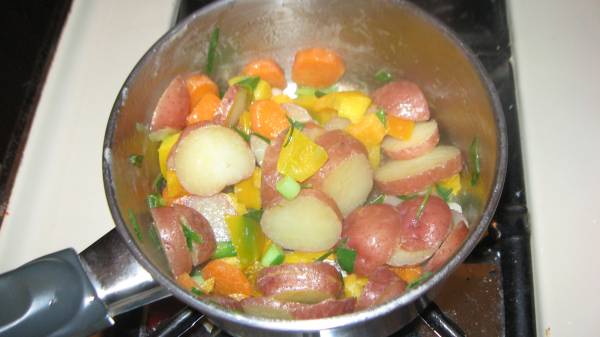
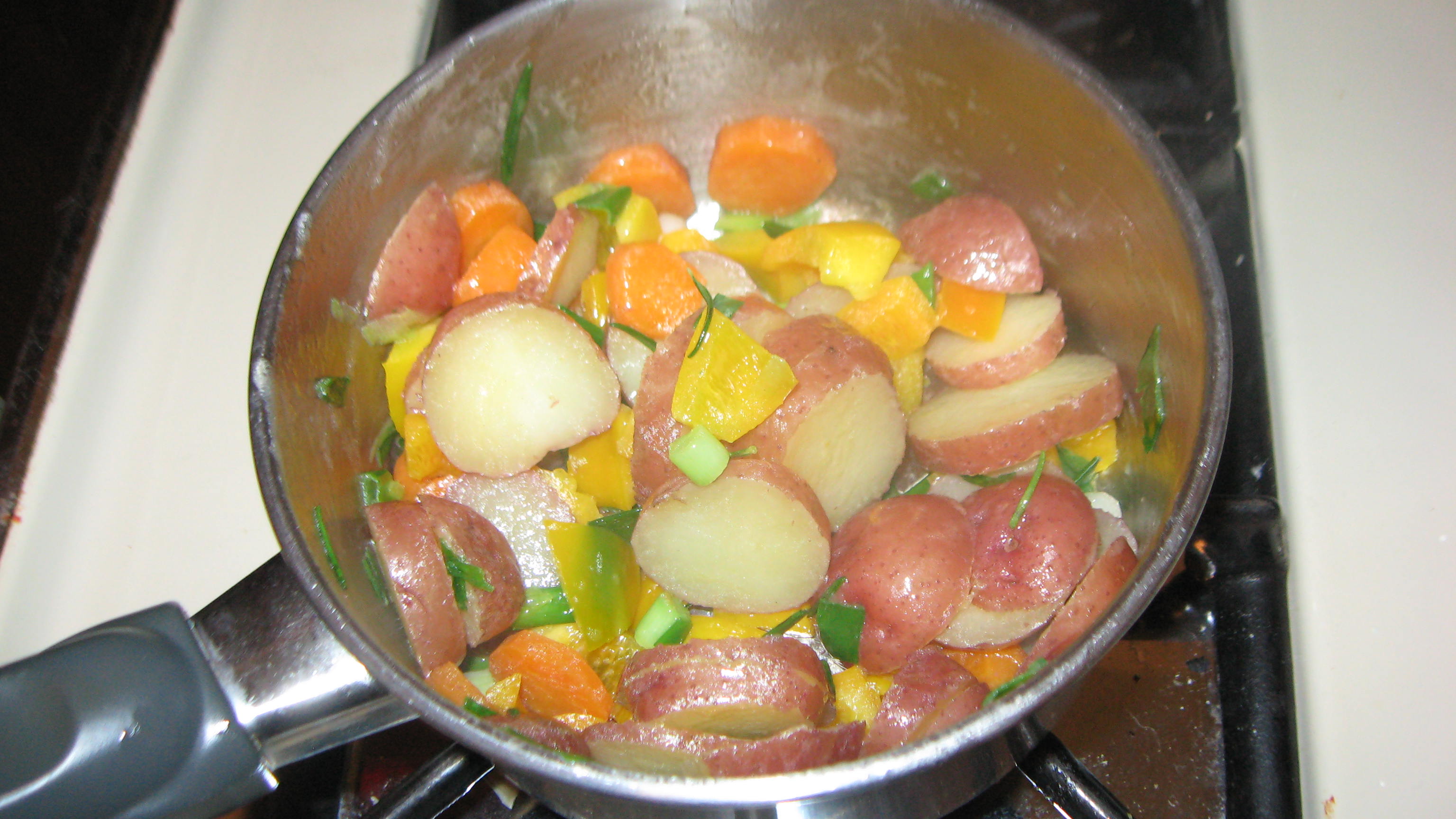
Mixing together..

1. Slice the potatoes and carrots and steam for ~10 minutes.

2. Meanwhile, go out to your garden (or fridge) and gather 2 green onions. Dice that (including some of the green leafy top) and the sweet pepper. My pepper was green- and yellow-colored.

3. Take the big tablespoon of butter and heat with some rosemary (I guess maybe a heaping Tbs.? Whatever you fancy!).  I did this in the pot at left to make step 4 easier. Add the onion and pepper and saute for ~3 minutes.

4. At this point, you can add the the potatoes and carrots. Mix well.

5. I love my farmer’s market cheese, so I grated some of that on top, but it’s not necessary!

6. Yum it up.

This was all that I ate for dinner that night, so this served one for me, but it could easily be for two if you had another little something to go with it.

Yum!

Enjoyed finding this today…


We have bigger houses but smaller families;

more conveniences, but less time.

We have more degrees but less sense;

more knowledge but less judgment;

more experts, but more problems;

more medicines but less healthiness.

We’ve been all the way to the moon and back,

but have trouble in crossing the street to meet our new neighbor.

We built more computers to hold more copies than ever,

But have less real communication;

We have become long on quantity,

but short on quality.

These are times of fast foods but slow digestion;

Tall men but short characters;

Steep profits but shallow relationships.

It’s a time when there is much in the window

But nothing in the room. –Authorship unknown