Homemade Ricotta – It’s Easy!

It’s official. I made my own cheese.

It’s been on my to-do list for quite some time now, but other projects have continued to get in the way. Also, I have a reliable source of cheese each week at the farmers’ market that has made it easy to neglect this to-do item. But…he doesn’t sell cheeses like ricotta.

I also think it’s inherently valuable to learn these skills on our own — it helps to save money and to bring us closer to where our food comes from.  It also helps in my quest to eliminate disposable food packaging from my life (what a waste and a huge hog of landfill space!).  If you make your own ricotta, you don’t have to buy a plastic container of it!

Isn’t it amazing that in just a generation or two skills like this have been lost by so many people? There are a great number of us that no longer have words like curds and whey in our vocabulary yet continue to consume a lot of cheese (often from questionable sources!).

I intend to keep the skills of self-reliance and food intelligence alive!

Plus, it’s really easy!

All you need is milk + heat + an acid (vinegar or lemon juice) to make ricotta.  To get into the harder cheeses, you need to start involving rennet in the equation (that will be next in my cheese-making endeavors).

To make 1.5 – 2 pounds of ricotta (which it turns out is a lot of ricotta and you might want to start with half of this recipe), you need:

  • 1 gallon organic (preferably local!) whole milk
  • 1/2 cup of an acid (I used white vinegar; can also use lemon juice)

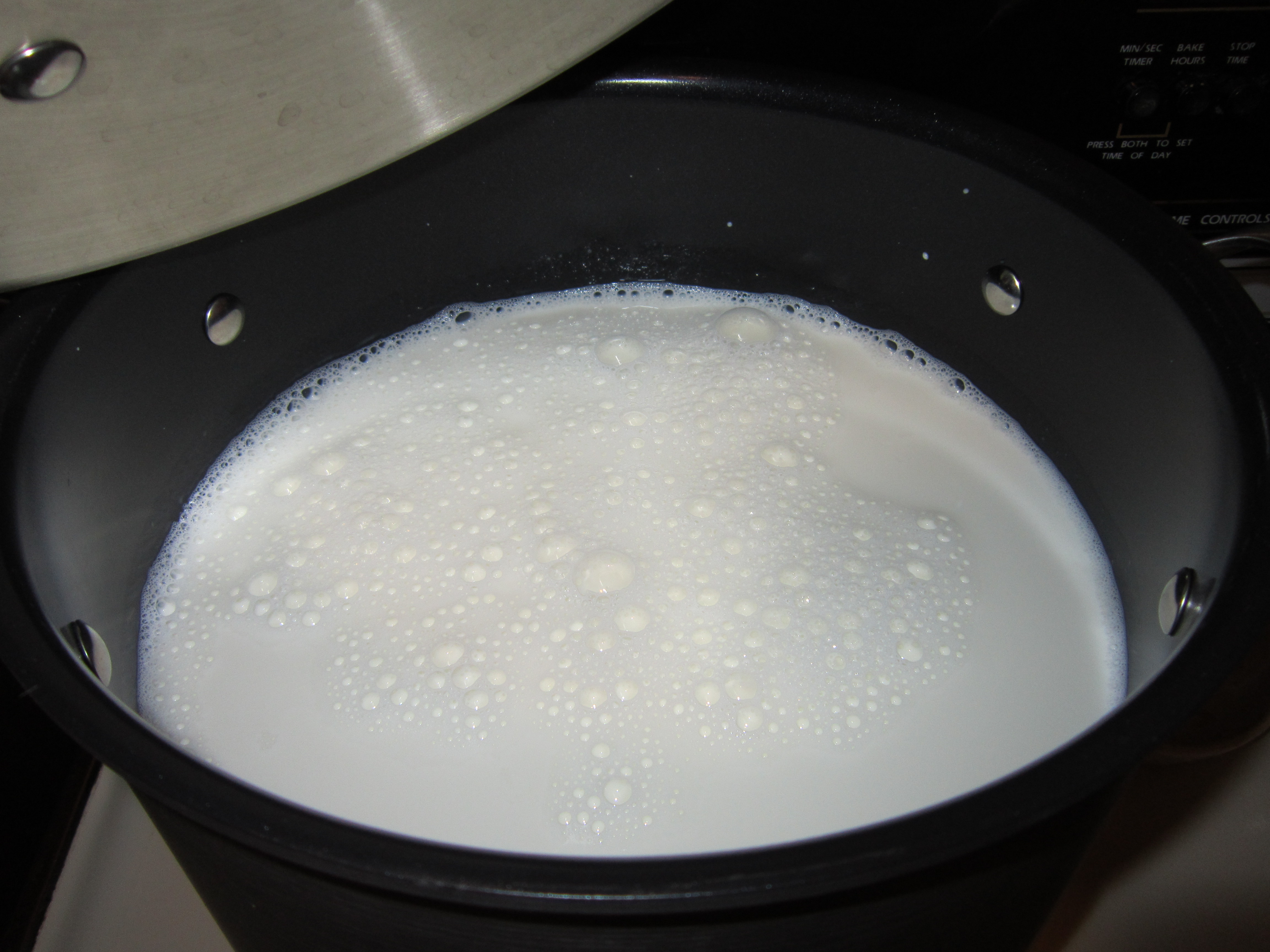
Combine the ingredients and heat the milk slowly on the stove, stirring periodically, and work the milk’s temperature up toward 180*-190*.  This should happen slowly — it might take anywhere from 30 minutes to an hour.

While you’re stirring, you might want to say an incantation such as, “Let there be curds!” and they will begin to appear! (Ok, you might not have to use magic, but it feels very magical when they begin to appear!)  When the curds begin to form, remove the mixture from the heat source.

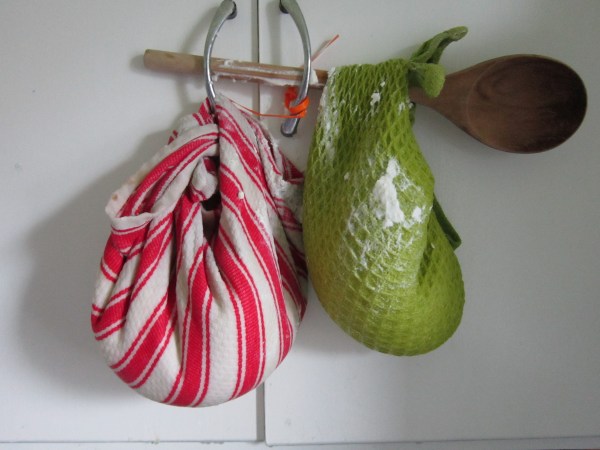
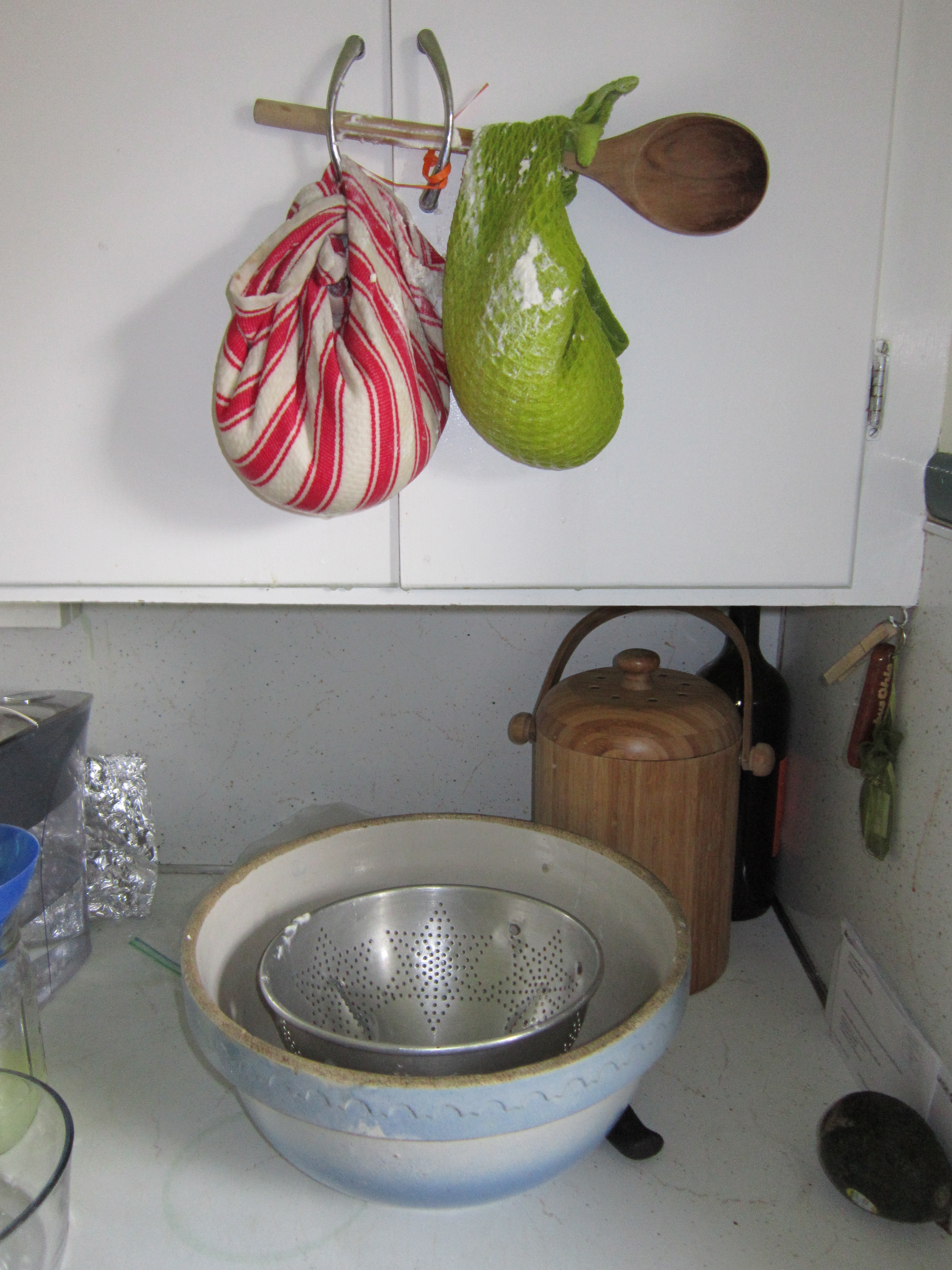
Let the mixture cool down for 30 minutes and then strain the curds from the whey by lining a colander with cheesecloth or a tea towel and placing a bowl underneath.  The longer you let the whey drain out, the drier your cheese will be.  I actually put mine in the fridge and let it drain out overnight.

The next morning, I realized that so much whey had drained out that the bottom of the cheese was getting wet in a puddle of whey. I got a bit creative to let a little more whey drain out.

Draining whey

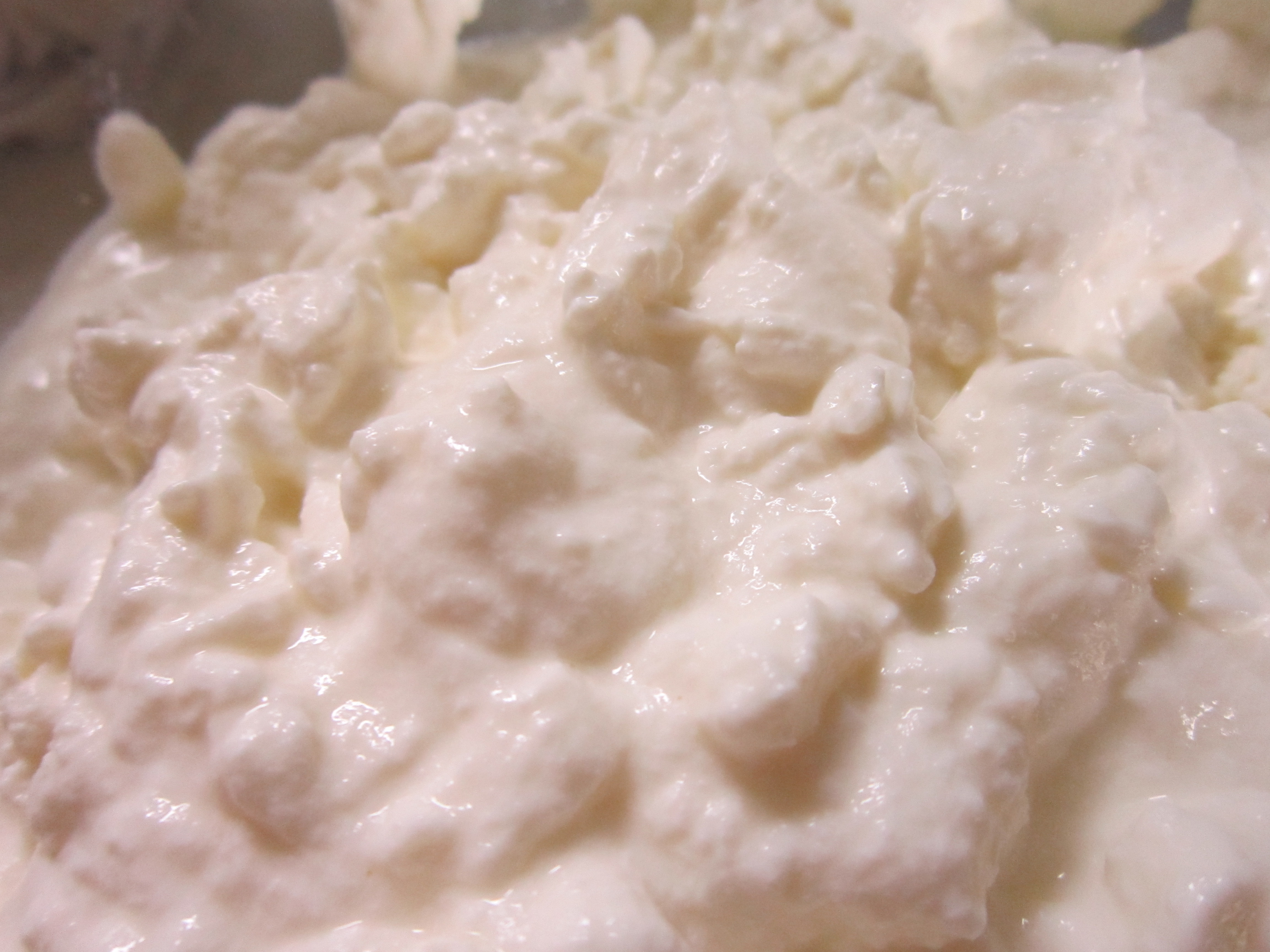
But I was left with some delicious ricotta!

Fresh ricotta cheese

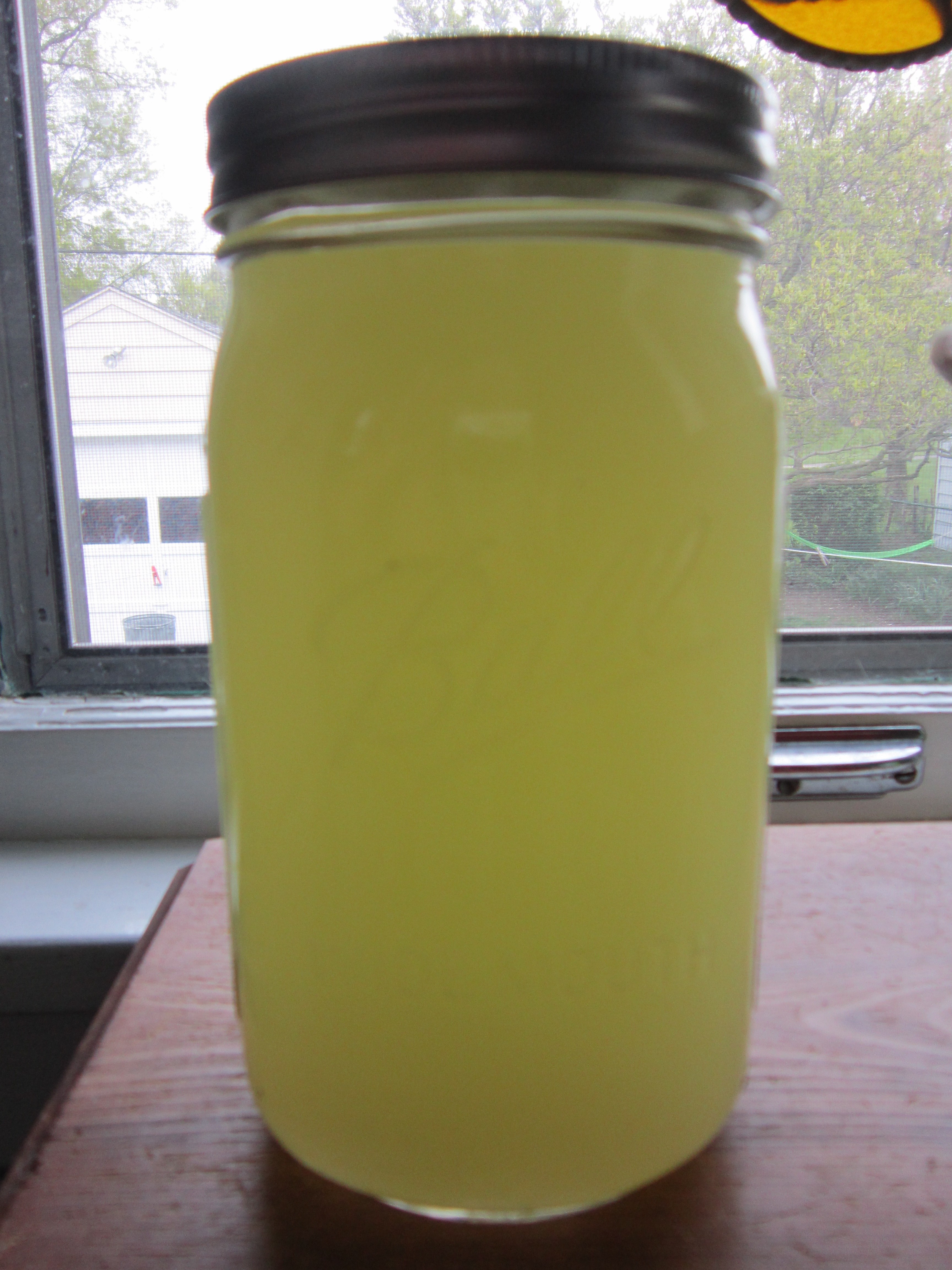
And I’ve also learned that there are numerous uses for the whey, so I saved that as well.  It’s useful as a stock, to cook pastas, to sprout grains, and more! It’s full of healthy enzymes.

Whey

Stay tuned to learn what became of this ricotta…

This post linked up at:

Laura Williams' Musings

Local Cooking: Making Friends with Kale

When you make the decision to start incorporating more local and seasonal foods into your diet, it can initially be overwhelming because not many of us are used to working with the foods that are found in seasonal abundance.  It forces us to get a bit more creative with our cooking.

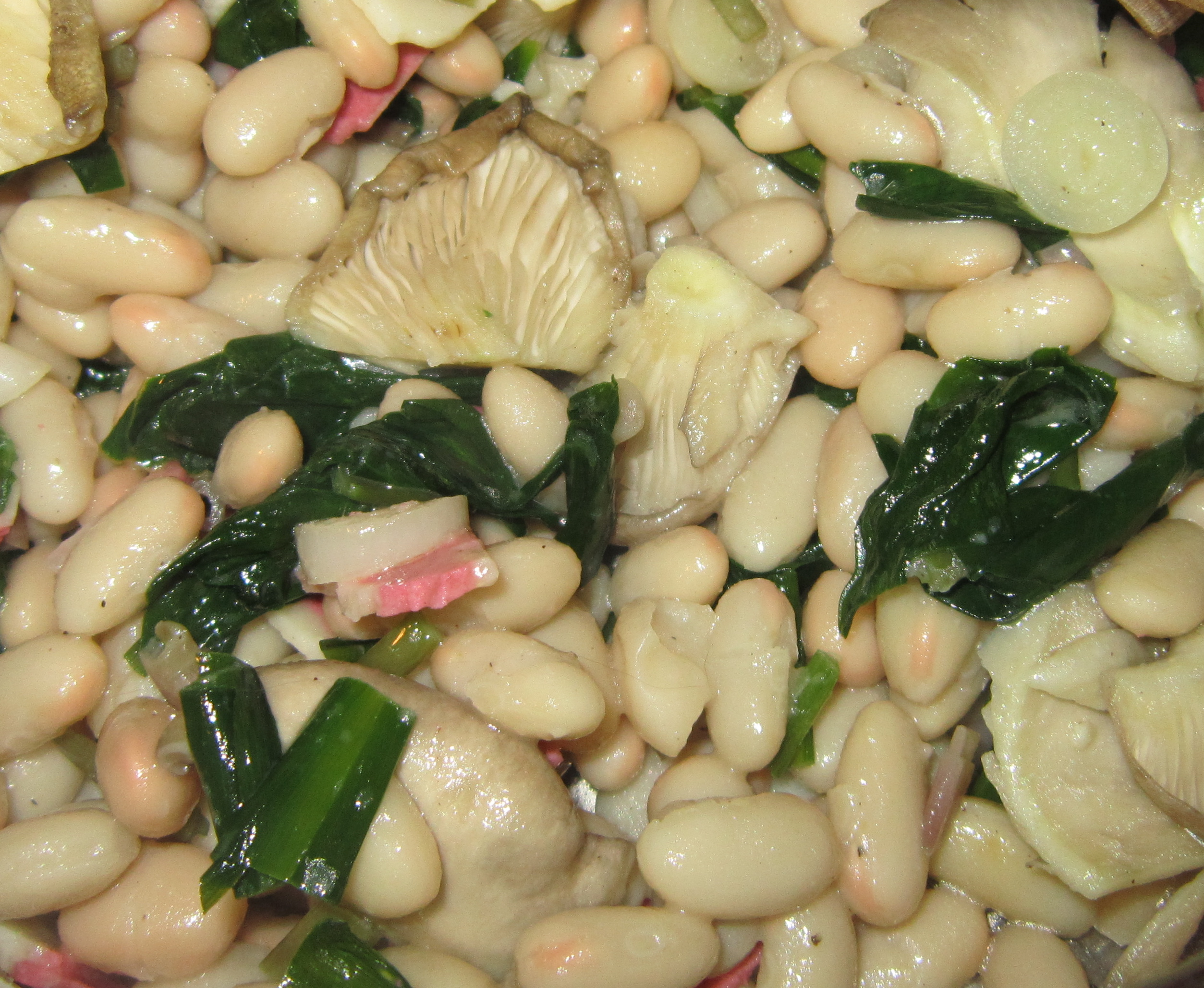
So for example, with ramps being abundant right now I’ve made them into pesto, chopped them into salads, sauteed them as toppings, and yesterday I tried what I’ve gathered to be the “authentic” West Virginian way to eat ramps — with beans (and cornbread). And I still have a few more tricks up my sleeve before the ramps disappear! (Stay tuned…)

Ramps and beans (and mushrooms)!

Another popular item at farmers’ markets in the Spring is kale.  I suppose I had started to learn about kale before trying to be quite as much of a locavore as I am today, but it’s definitely not something that I grew up eating. And when you’re not used to eating greens like kale and collards, they can be intimidating. But greens like kale are good to incorporate because they’re so darn healthy!

I think I first started to actually like kale because of kale chips.  I believe they’re relatively palatable even to the novice kale eater, and yet they start to break you in to kale’s bitter charms.

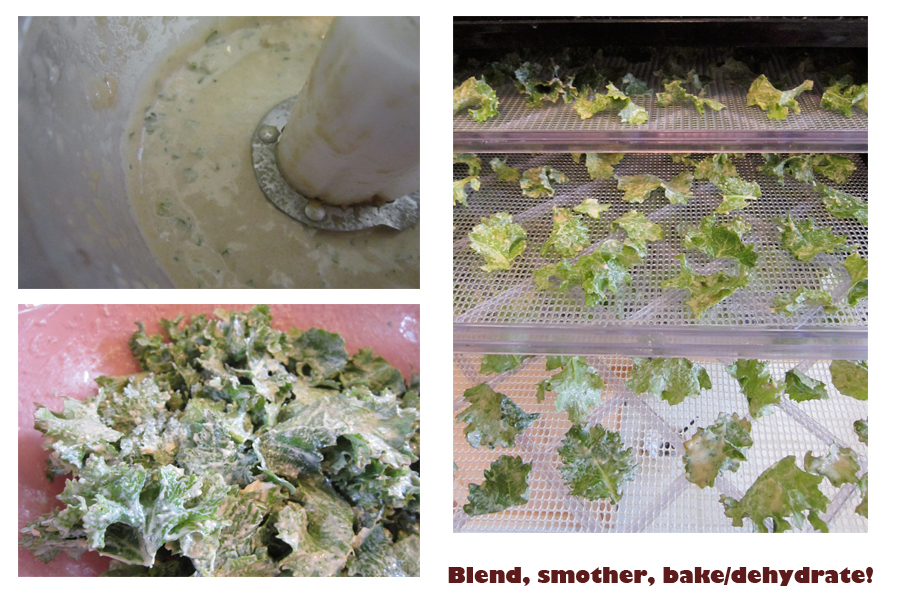
There are many types of kale chips to make, but I think it’s best to smother kale in a delicious tahini sauce.

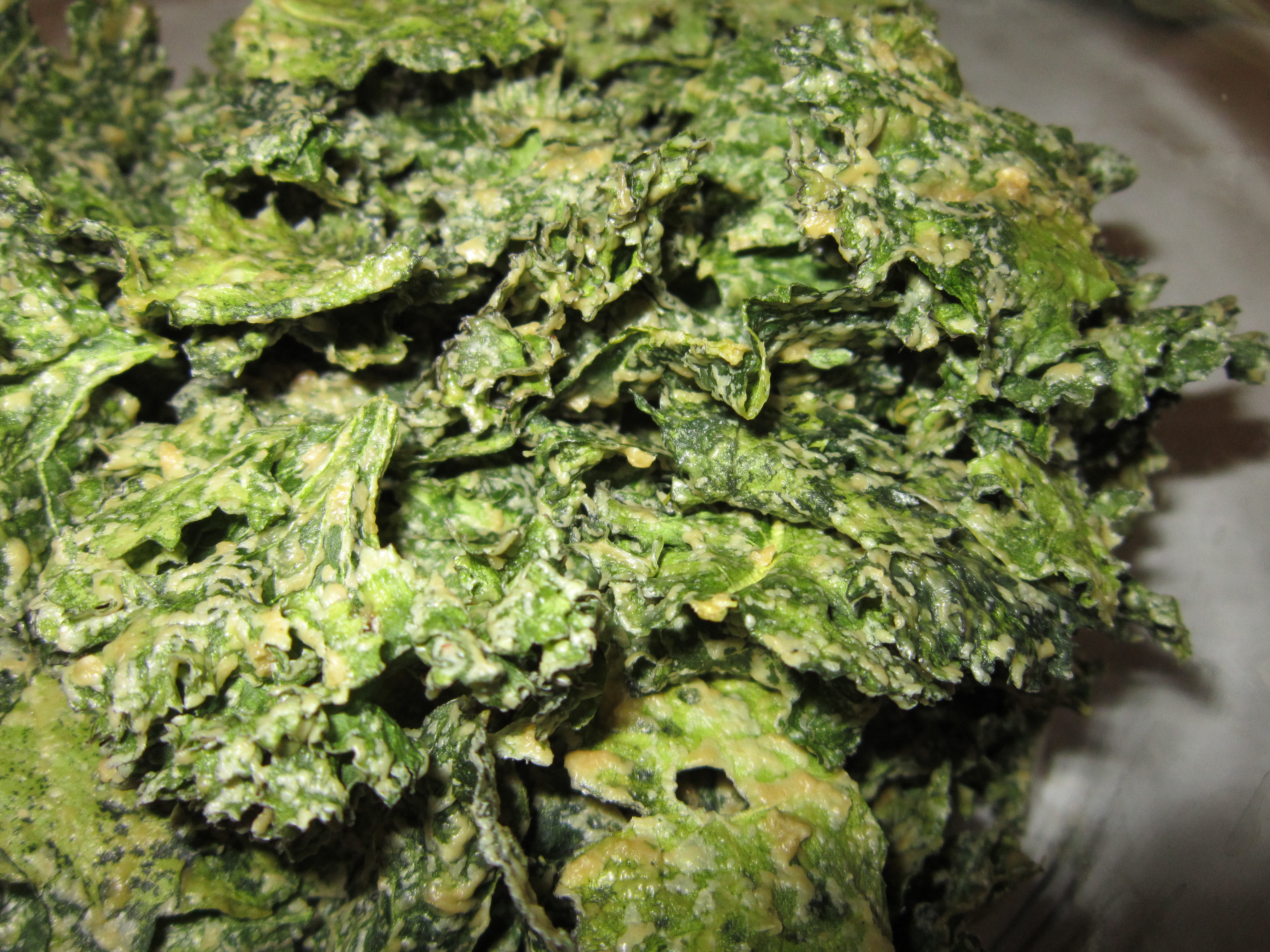
TAHINI KALE CHIPS

Kale Chips

Kale Chips

  • ~2 Bunches kale
  • 1/4 cup tahini,
  • 1/8 cup soy sauce (or Bragg’s liquid aminos)
  • 1/8 cup apple cider vinegar
  • some sprigs of parsley and oregano (and I added some purple dead nettle that was also growing nearby my parsley and oregano…why not?)
  • 2 cloves of garlic
  • 1-2 Tbs. nutritional yeast
  • dash of salt
  • enough water to mix well…probably 1/8 cup

Break the kale into bite-sized pieces and place into a large bowl (take out any of the thick stems).  Mix all of the other ingredients in a blender, and then pour the sauce over the chips and mix it in well.  Lay the coated chips out on dehydrator sheets or oven sheets.

Dehydrate at 115* for about 4 hours or until really crispy (some recipes call for up to 8 hours — I did this last batch for 6).  You can also use an oven at 200* for about an hour, but check it often.  I’m sure that some people have mastered the oven version of kale chips, but I haven’t had luck with that.

I realize that not all of these ingredients are local, but I think this is a good place to start experimenting with kale.  And you can try to get as many of these ingredients as locally sourced as possible.

However, I was also able to devise a more locally-sourced kale recipe this week…

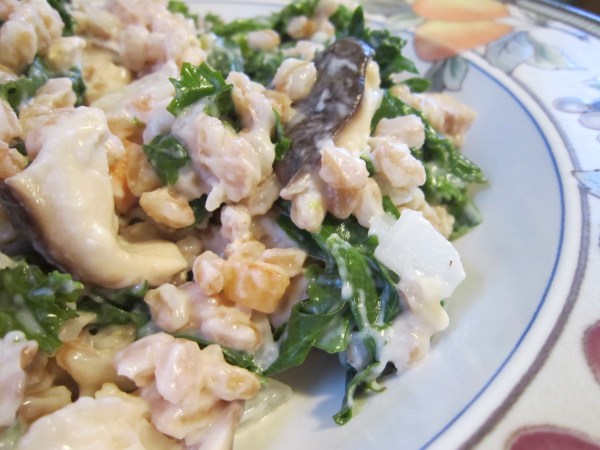
FARRO WITH KALE, SHITAKE MUSHROOMS, AND CHEVRE

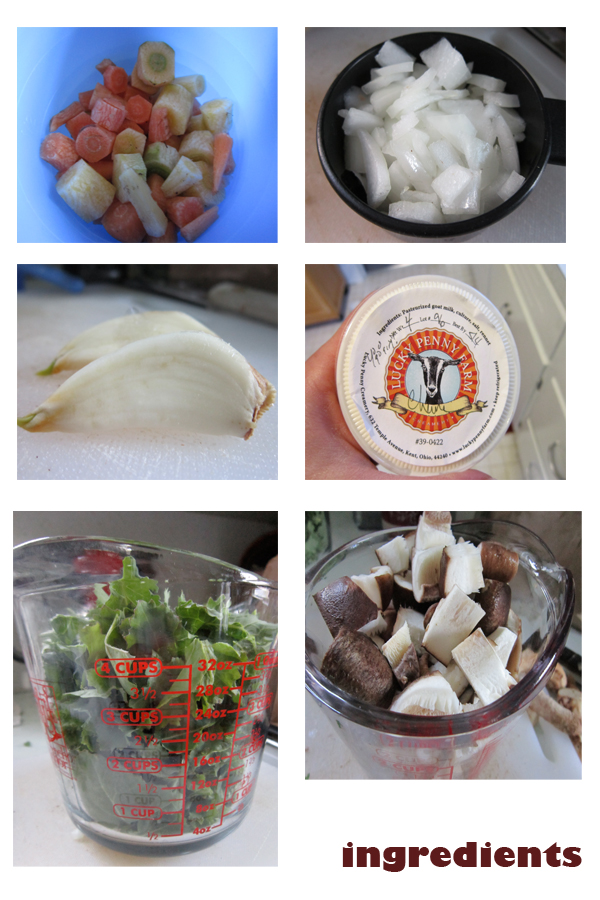
I found some star ingredients at the farmers’ market that I was inspired to combine into this dish.

  • 2 cups warm, cooked farro (but I made a lot more than this — freeze some for later!) To cook farro: boil the grain in a 2:1 ratio of water (lightly salted) to farro. Simmer covered for 25 to 35 minutes. Drain any unabsorbed liquid.
  • 1/2 cup carrots
  • 1/2 cup onions
  • 4 cloves garlic
  • enough butter to saute
  • 4-5 cups of kale
  • 2-3 cups of shitake mushrooms
  • 2 oz. chevre
  • salt/pepper to taste

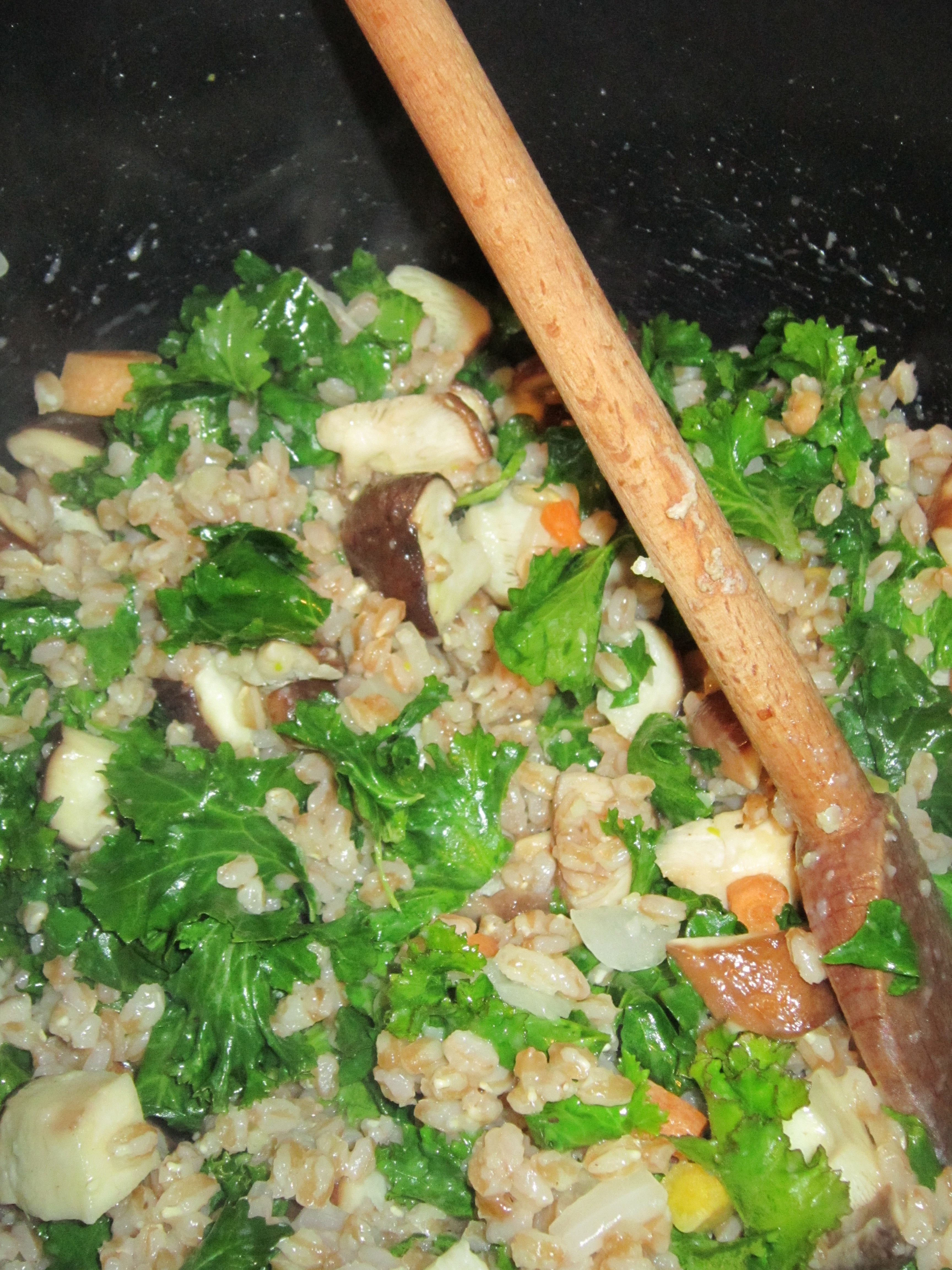
Start by sauteing the carrots, onions, and garlic in the butter until they’re soft and the onions are translucent.  Add the mushrooms and cook for about 2 minutes.  Add the kale and watch for it to wilt a bit and turn a darker color of green — this means it’s getting close to ready, and you can add the 2 cups of warm, cooked farro.

Stir it up

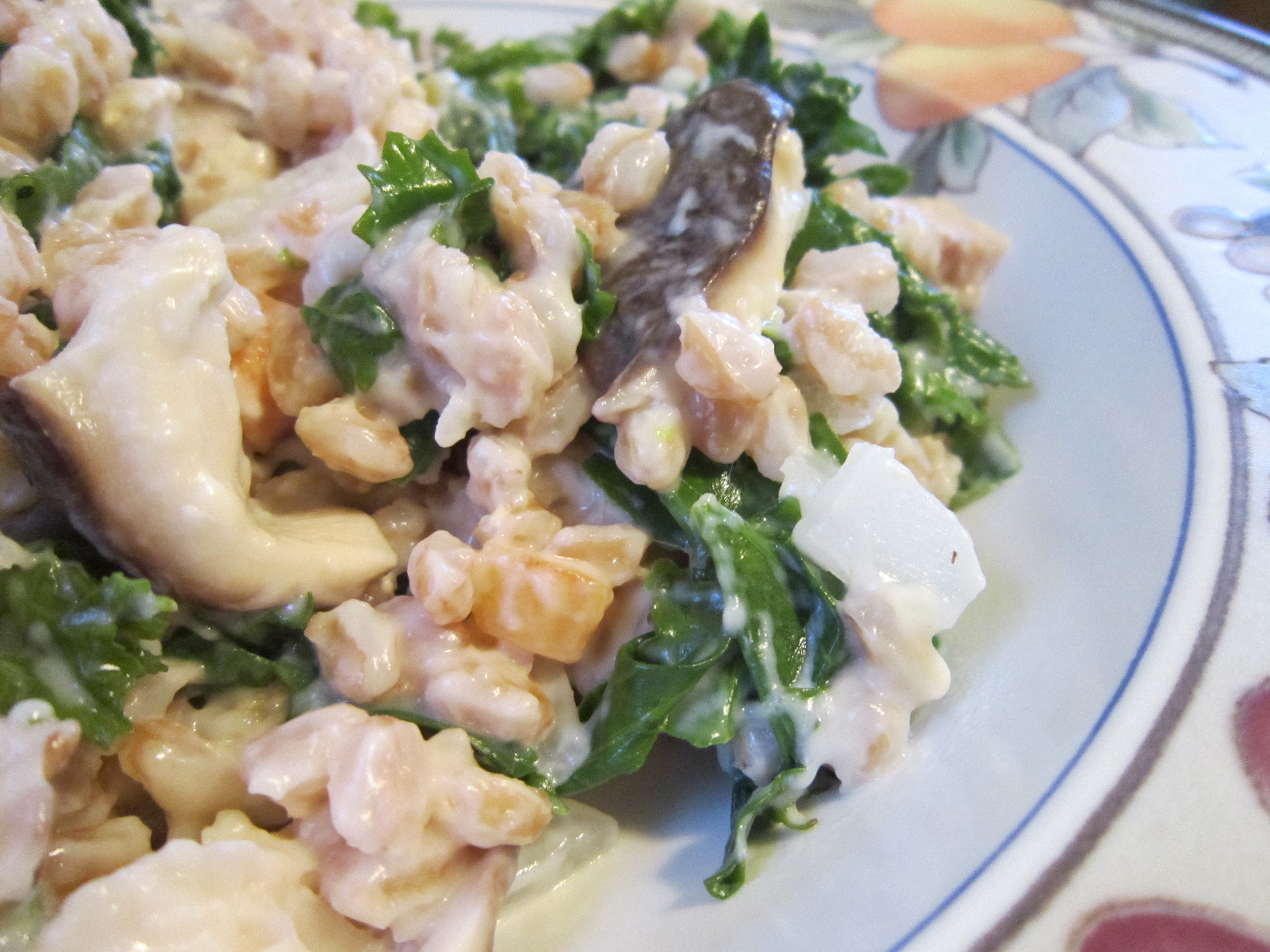
Mix all of this together and then add the chevre.  Keep stirring this while the heat is low until the cheese is melted in and creamy.  Local and delicious!

Farro with shitake mushrooms, kale, and chevre.

Linked up on the Homestead Barn Hop.

Also on ‘these light footsteps’:

Enhanced by Zemanta

Ramp + Oregano Pesto. Mmm.

Wow. My brain’s pleasure neurons are still lighting up after discovering this one. Ramp + Oregano pesto, you have won over my heart and my mouth.

Ramp + Oregano Pesto Goodness

This week at the Tremont farmers’ market, one of my favorite farmers (from Por-Bar Farms) had a deal on ramps and oregano with the suggestion of making a pesto.  I hesitated for a moment as I’ve been collecting so many of my own ramps, but I haven’t gathered any for a few days so I went ahead and got the deal. I am happy that I did as this makes a fantastic pesto!!

I looked around at quite a few recipes today, but didn’t find anything quite perfect enough for me, so I took what I learned and developed my own.

To make something similar, you will need:

  • 15 ramps
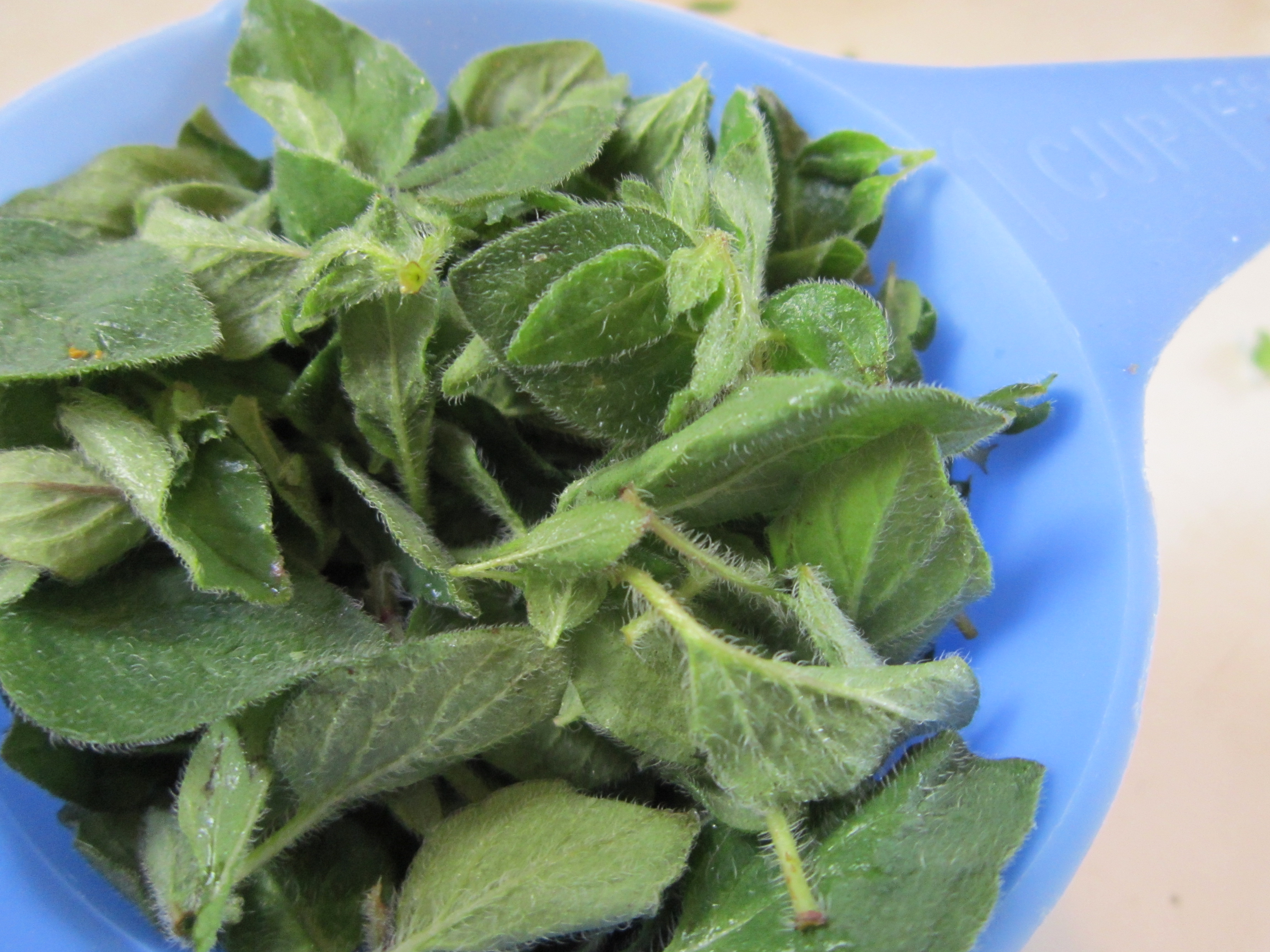
  • a bunch of oregano (mine was about 1 packed cup)
  • 1/3 cup olive oil (and I added about a Tbs extra when blending)
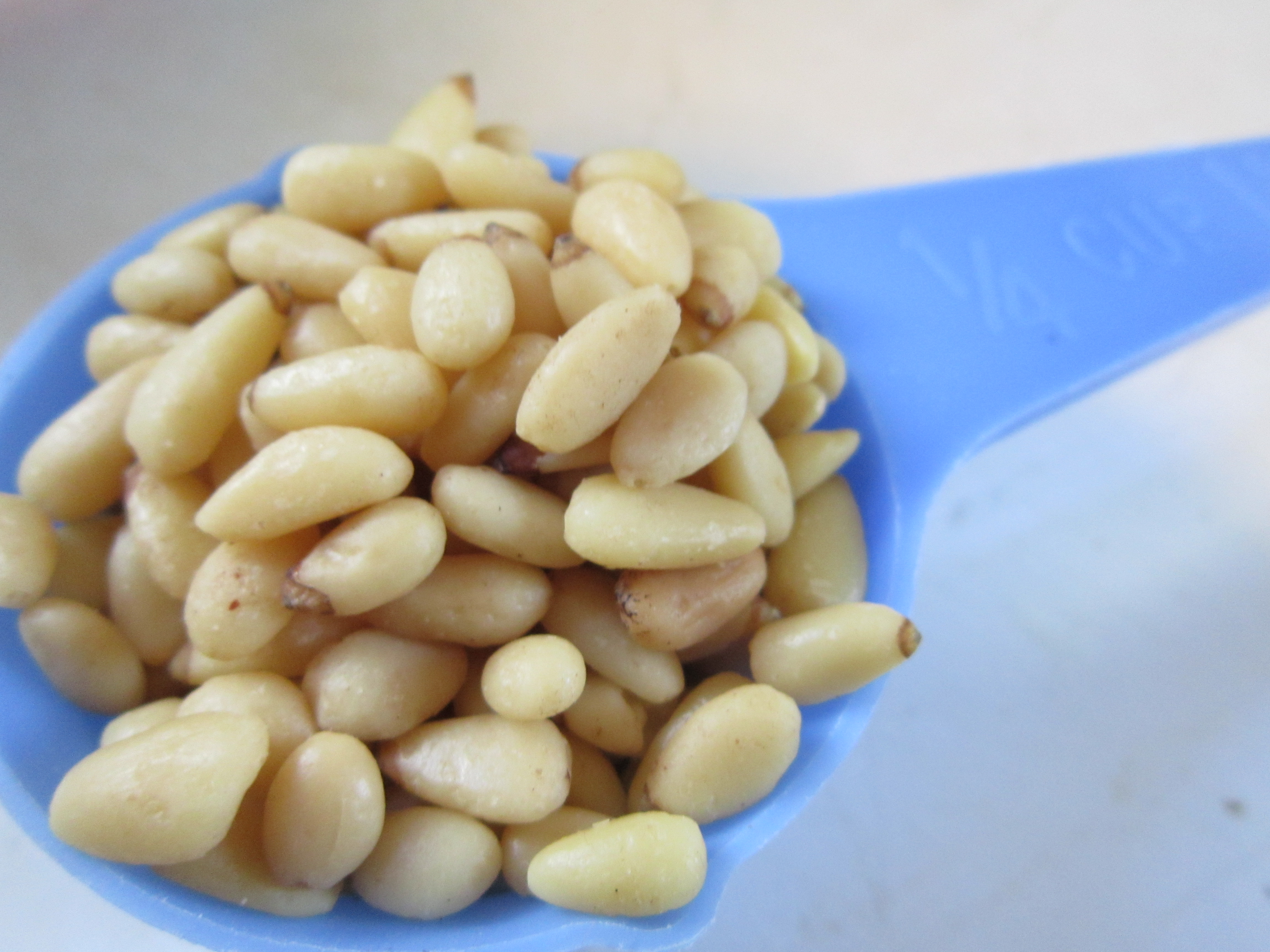
  • 1/4 cup toasted nuts (I thought I had some local nuts in the cupboard, but I ended up using pine nuts)
  • 1/4 cup hard cheese (something like parmesan)

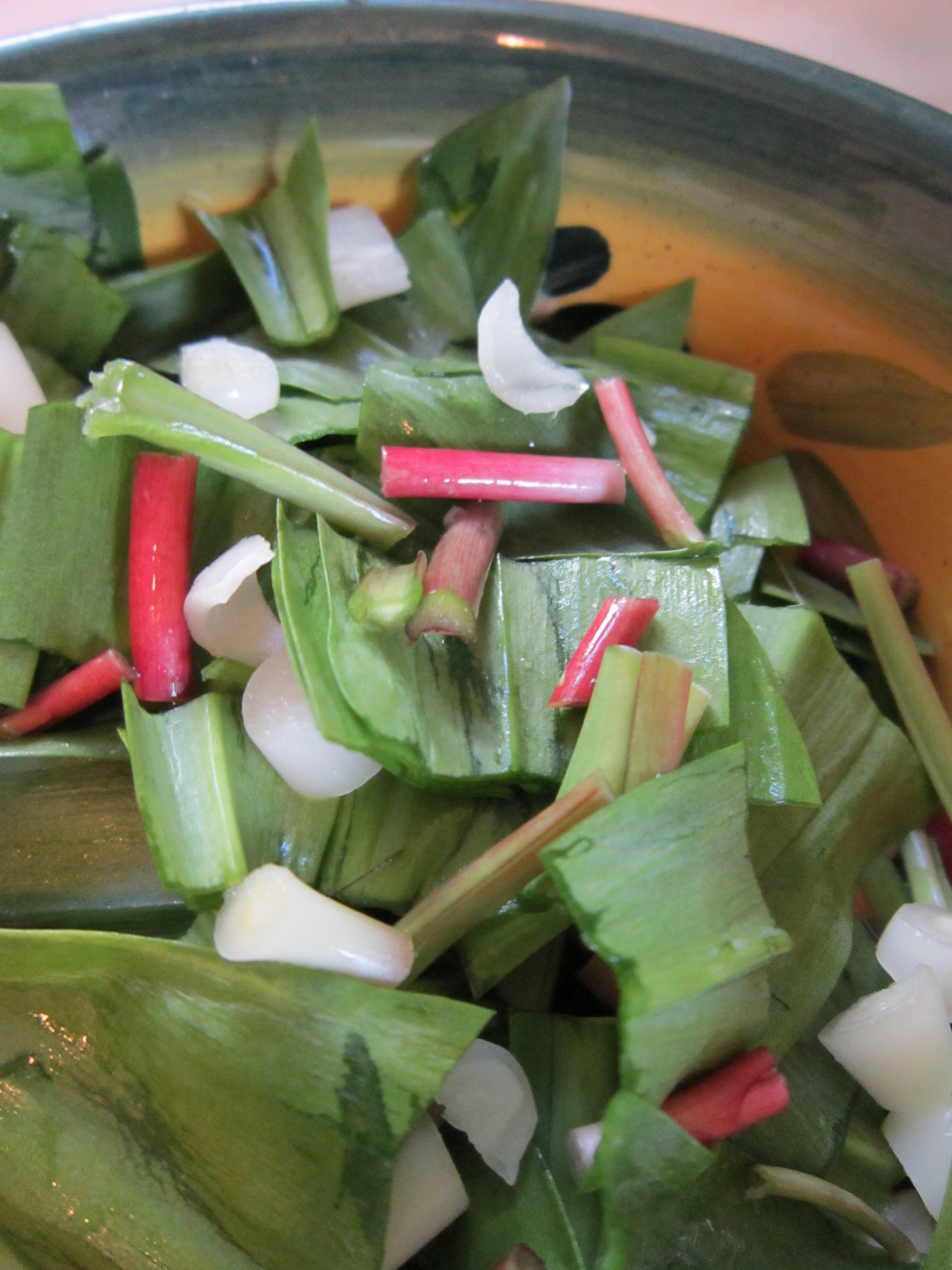
First, you’ll need to chop the ramps.

Chopped ramps

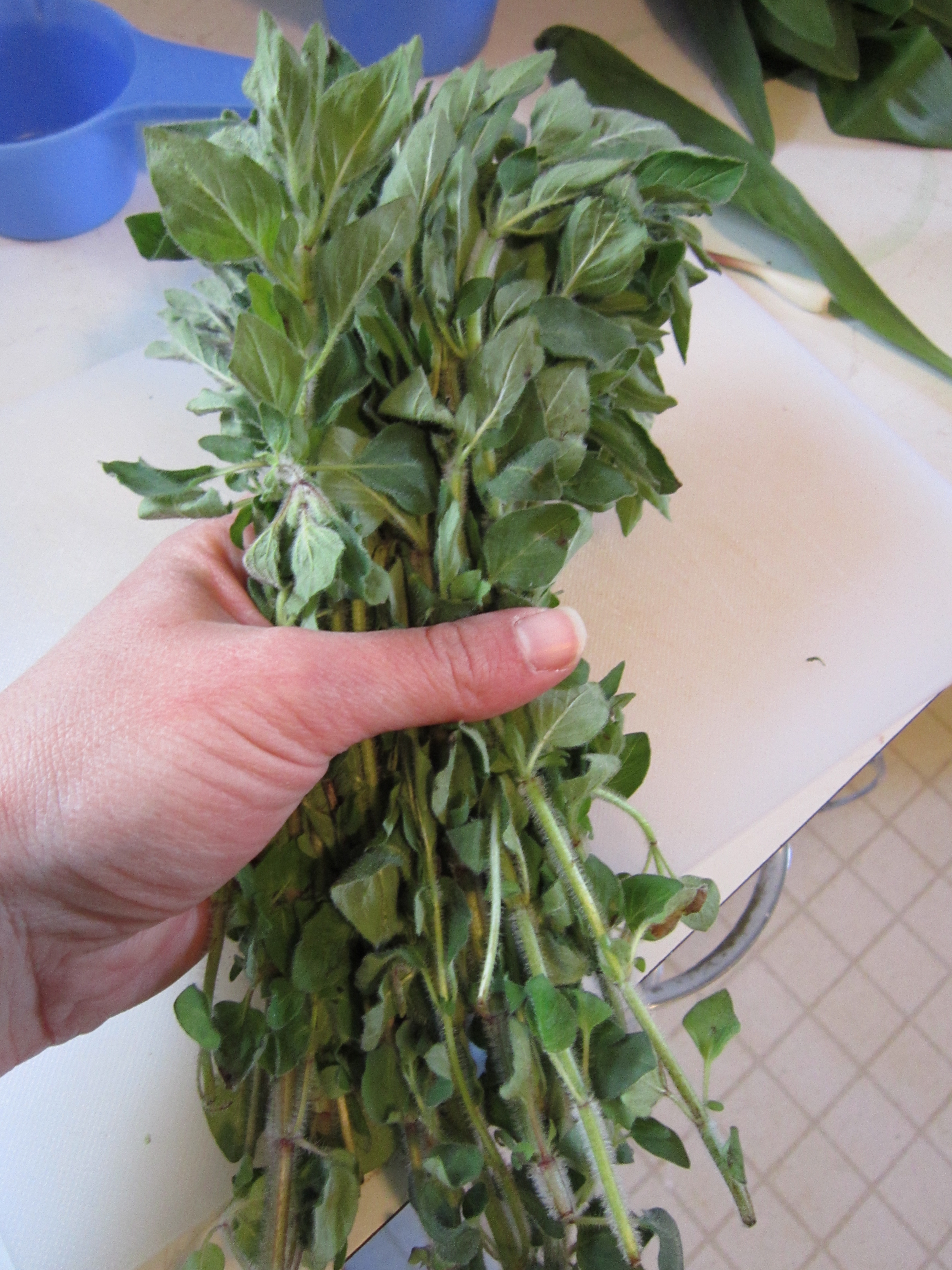
Then you’ll need to pull off the oregano leaves and tightly fill a cup.

Bunch of oregano.

1 Packed cup of Oregano.

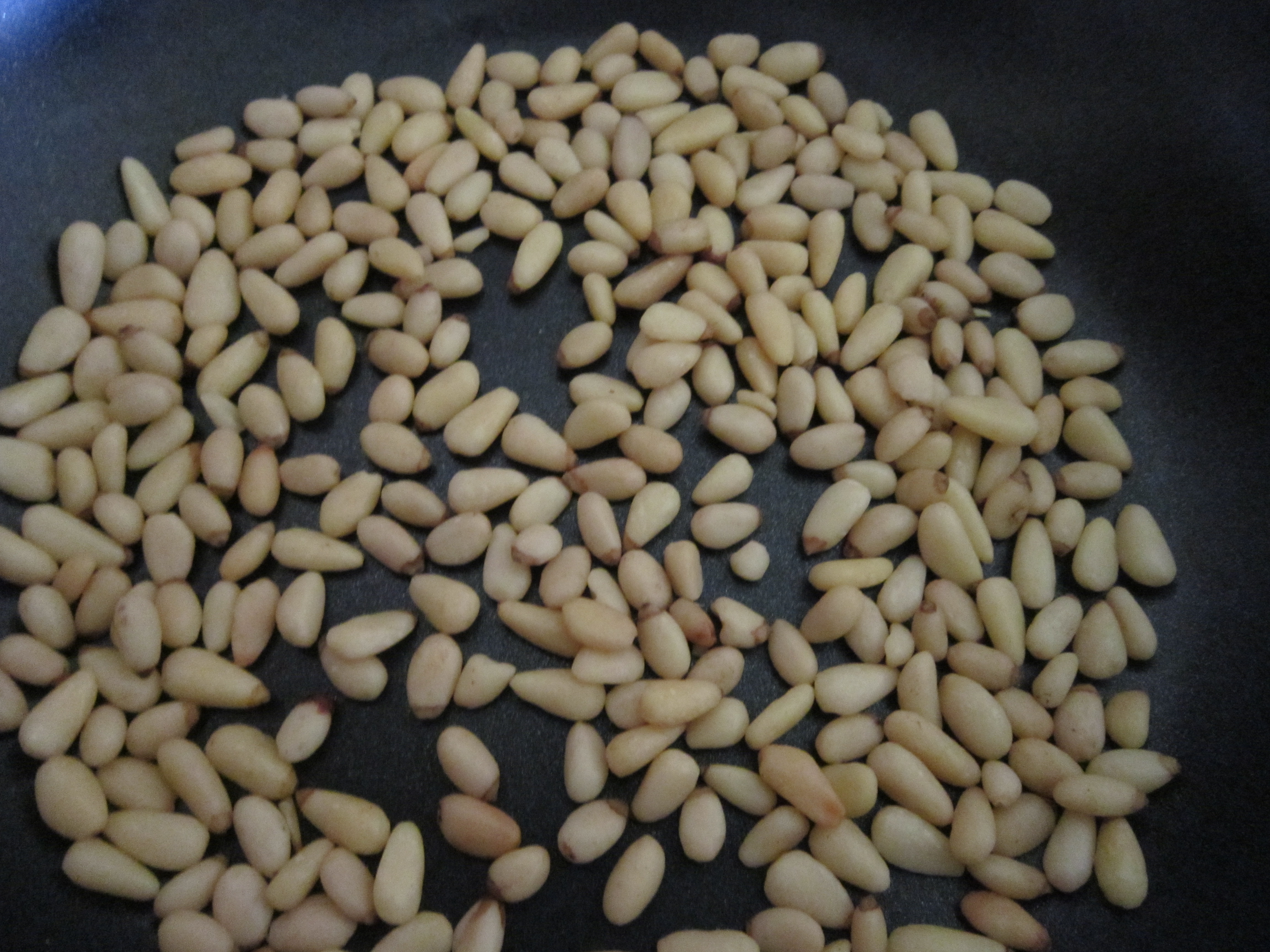
Measure out a heaping 1/4 cup of nuts and toast them.  Pine nuts need to be toasted for about 5 minutes.

Heaping 1/4 cup of pine nuts.

Toasting pine nuts.

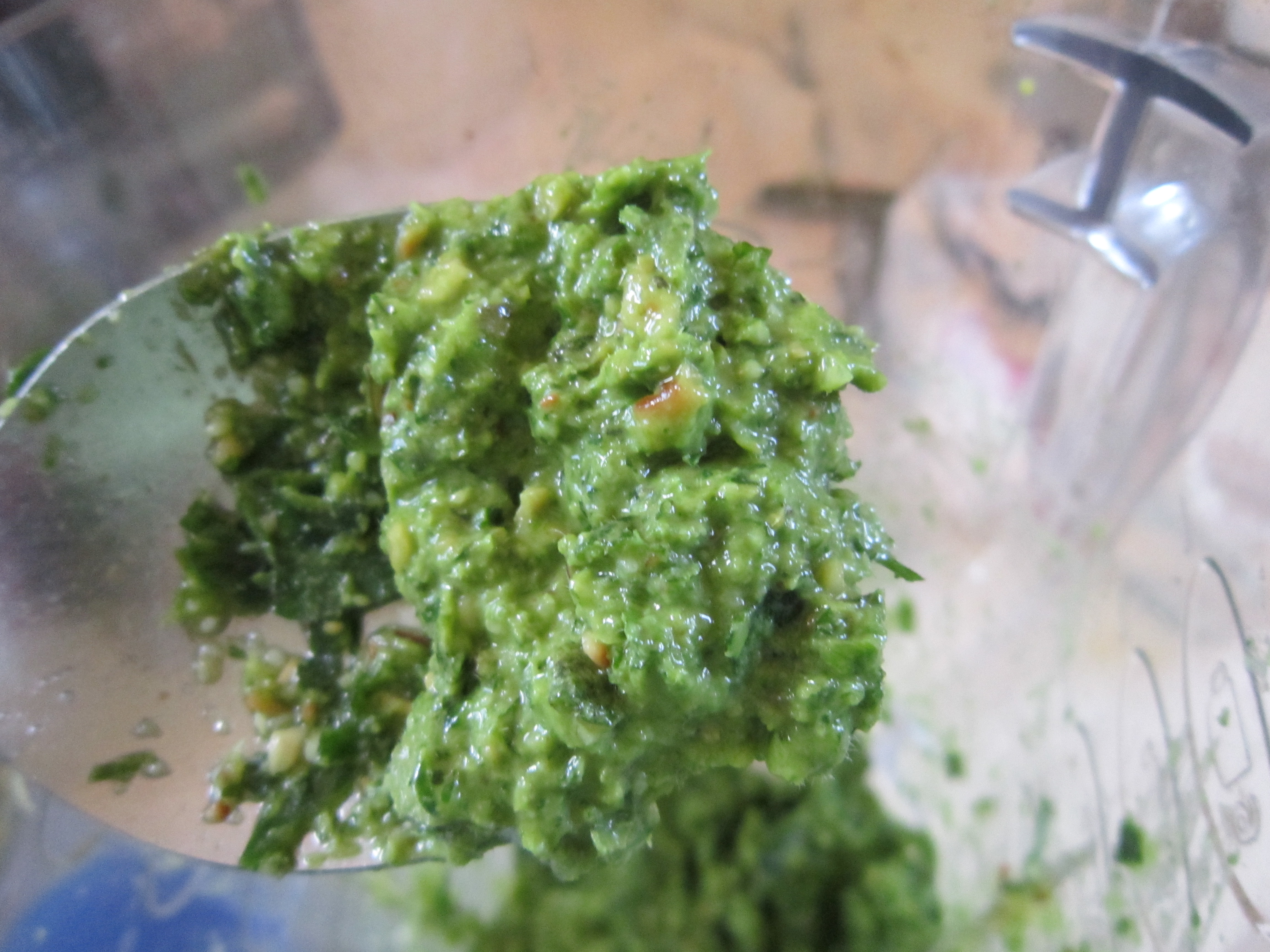
Add these ingredients plus the olive oil and cheese in a blender or food processor, and mix it all together!  But don’t go for too long because it’s best to still have some texture in the pesto.

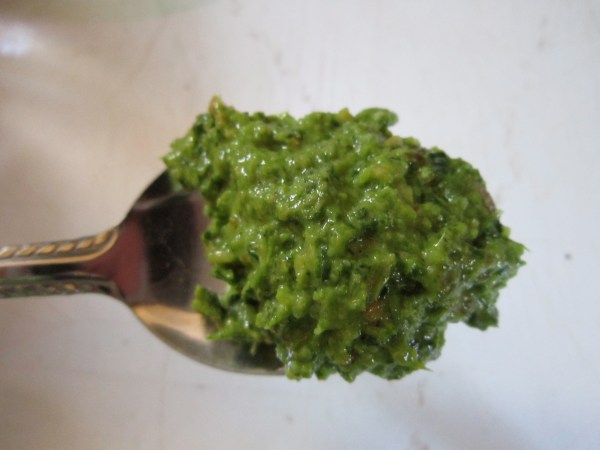
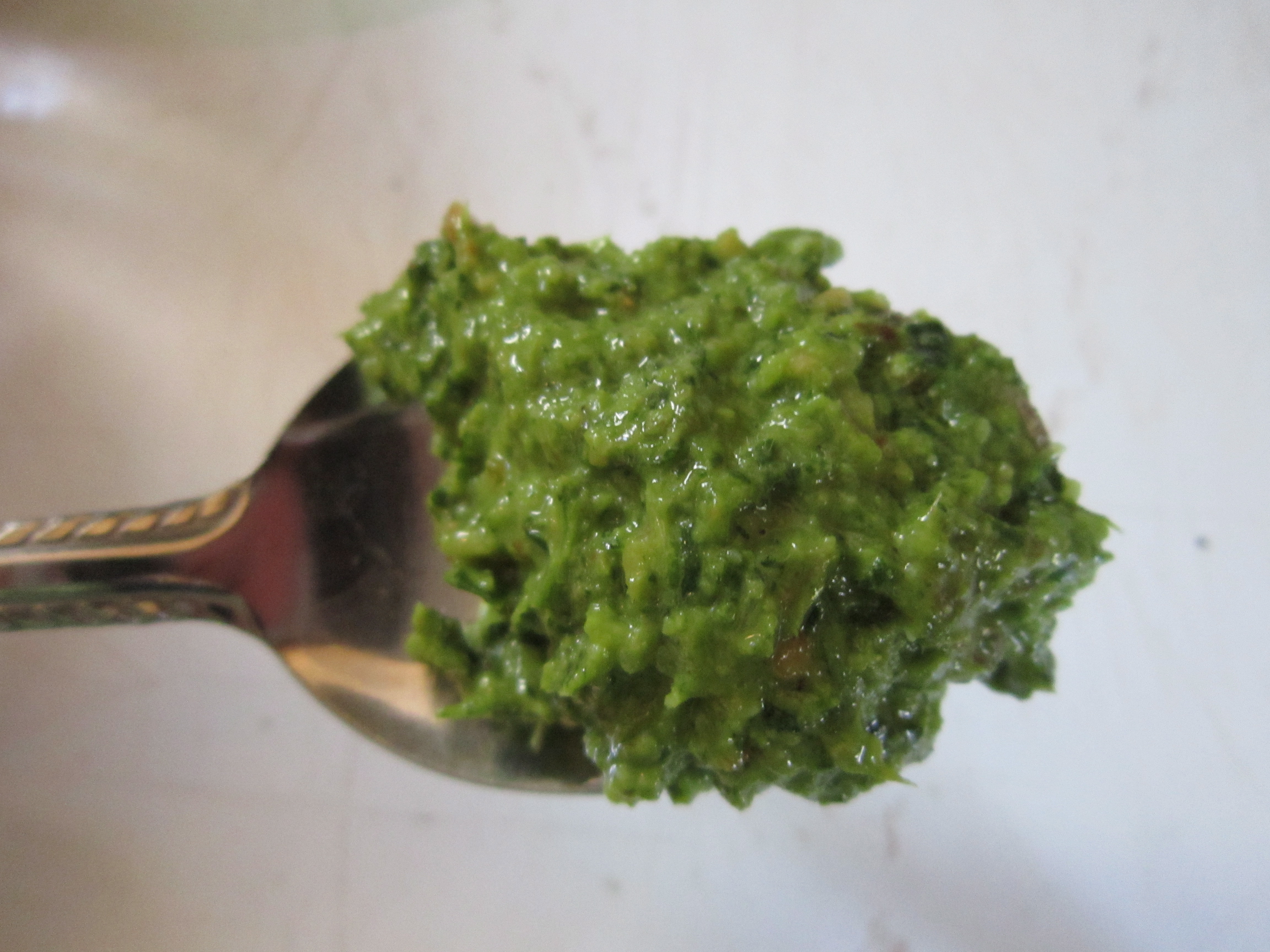
Pesto!

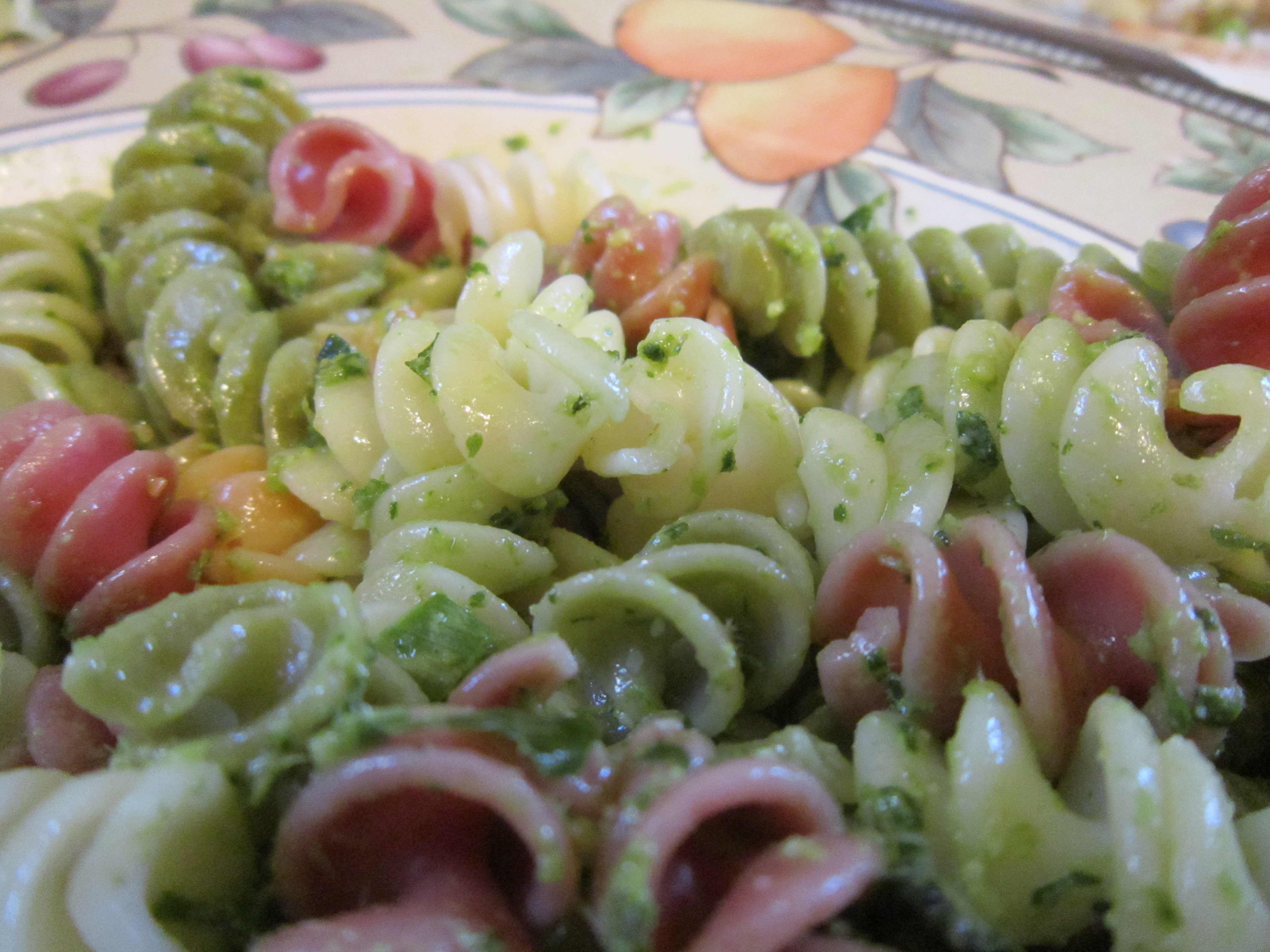
And then you can use this anywhere you desire an intensely awesome pesto! I tossed some of mine in a bit of tri-color pasta. Mmm. Depending on how much pesto you use at a time, I’d say this makes about 5 or 6 servings.  It’s about 1 cup of finished pesto product (I have a lot leftover and even was able to freeze some).

Pesto Pasta

My only warning is that it is a bit strong.  You can’t really give me too much onion/garlic, but if you’re sensitive to that taste, you may want to skip this recipe, or leave out some of the white bulbs of the ramps and focus on the green parts.

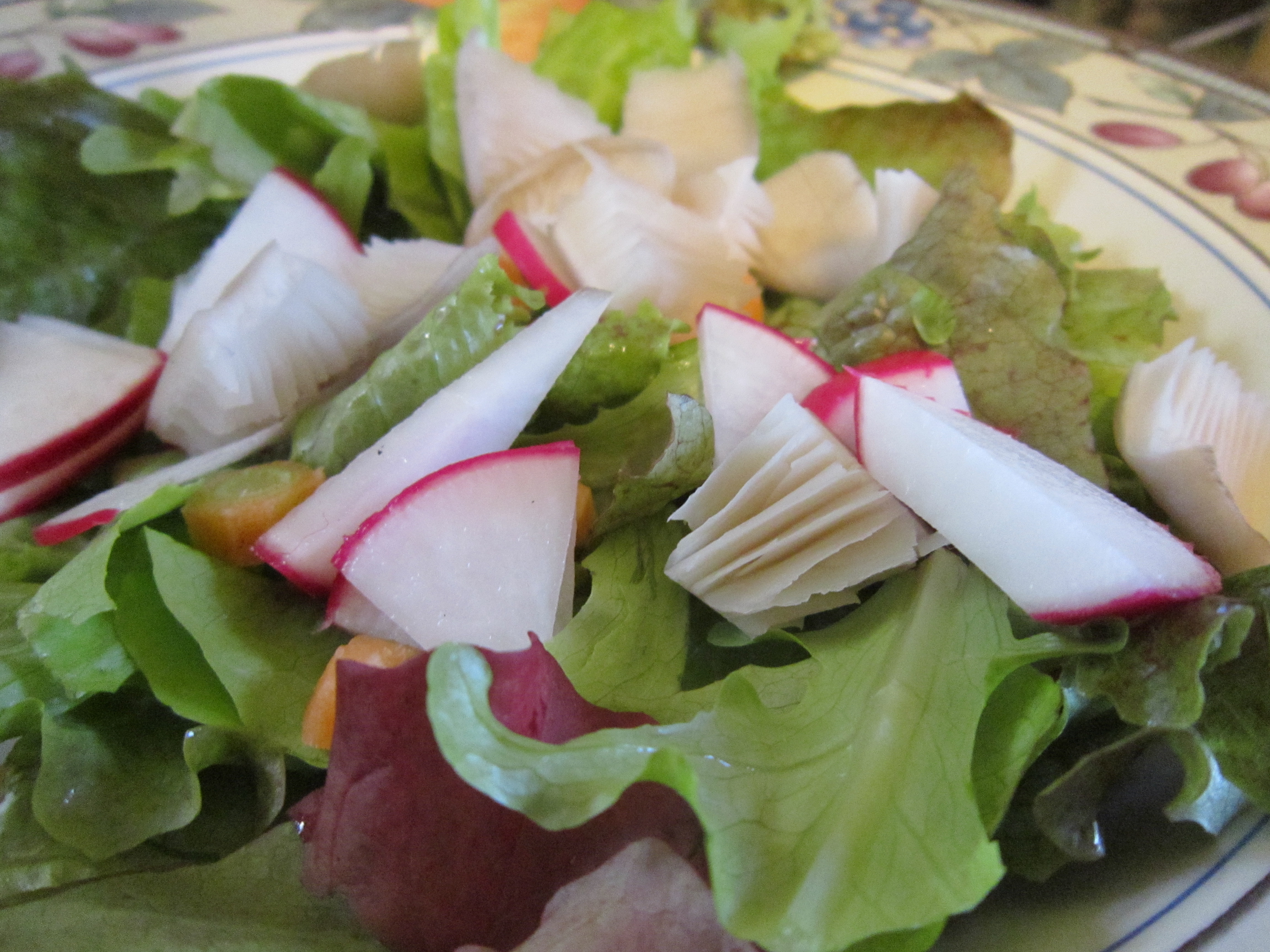
Also, I have to share that my salads are becoming increasingly exciting as the Spring picks up!  This 100% local side salad included lettuce, radish, mushroom, carrot, and cheese (not yet grated for this picture) all gathered from the farmers’ market.  Perfection!

Spring salad.

Enhanced by Zemanta

Restorative Humans & A Native Prairie Planting

What did the land you live on look like before humans arrived? Was it forest? Prairie? Desert? Wetland?

How did the Native people treat that land? And then what happened when the new culture arrived?  Did it become a monoculture farm? A suburb? A place to extract a natural resource?

Is there any way that humans are ‘supposed’ to live on the land?

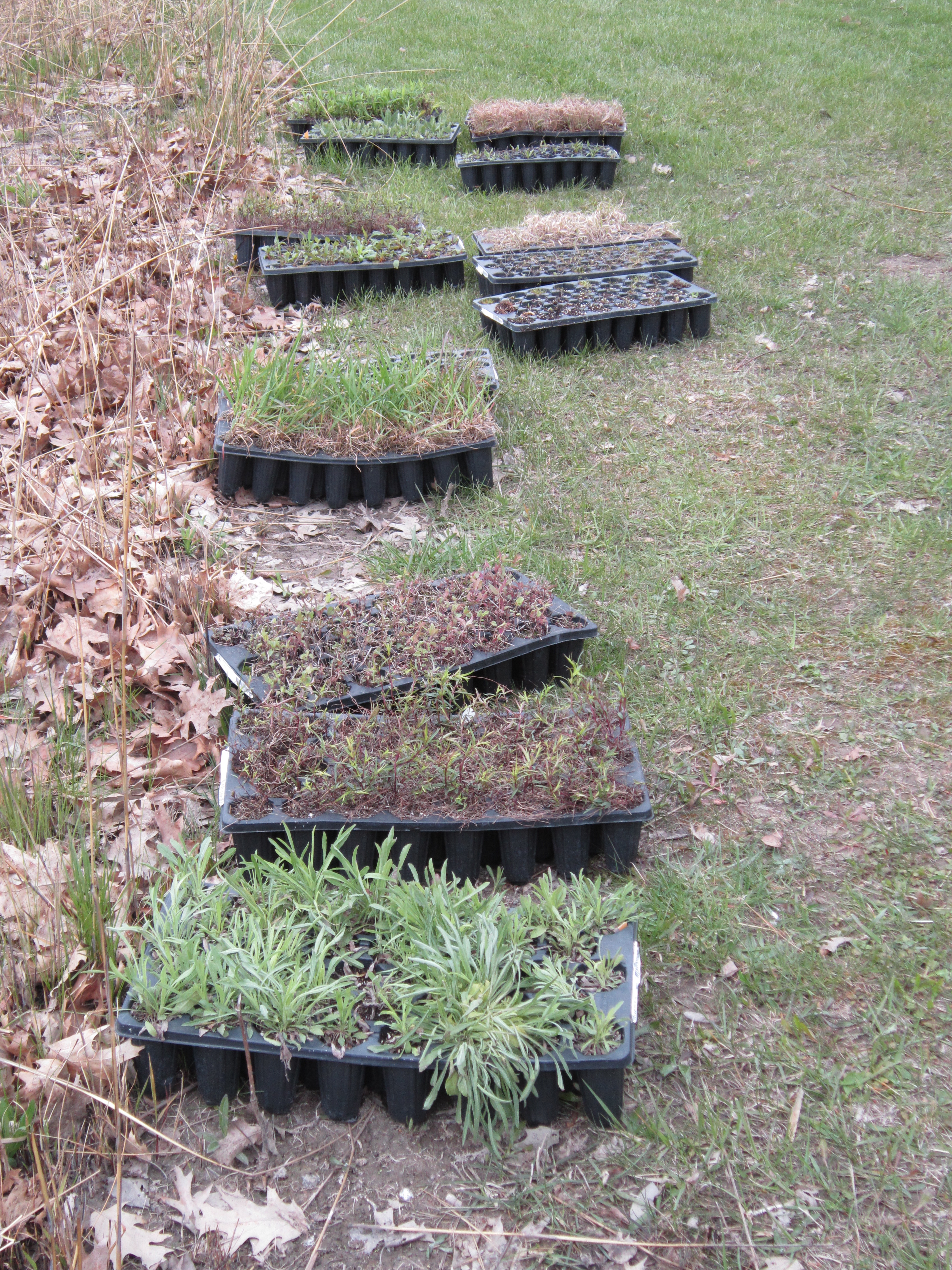
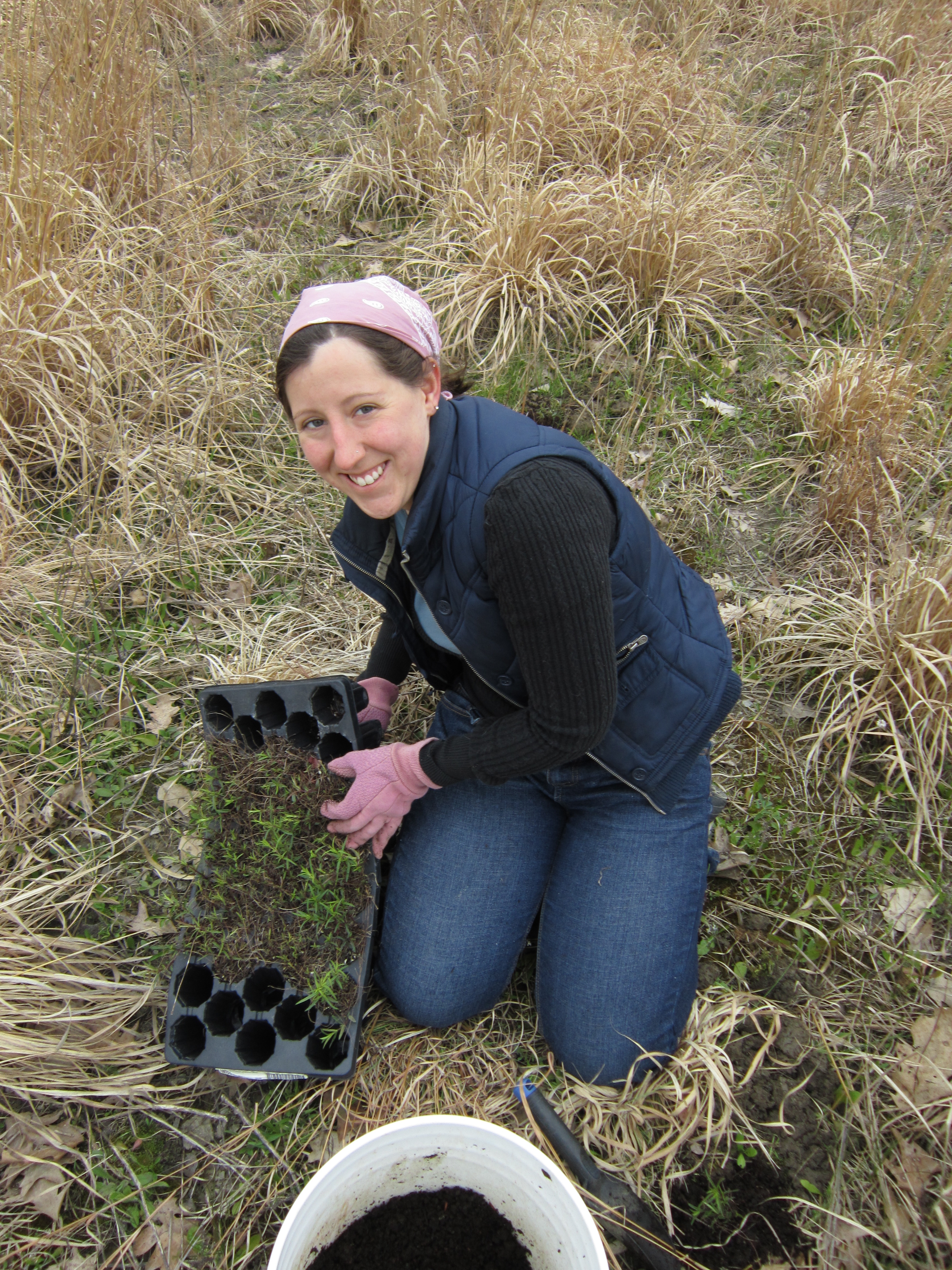
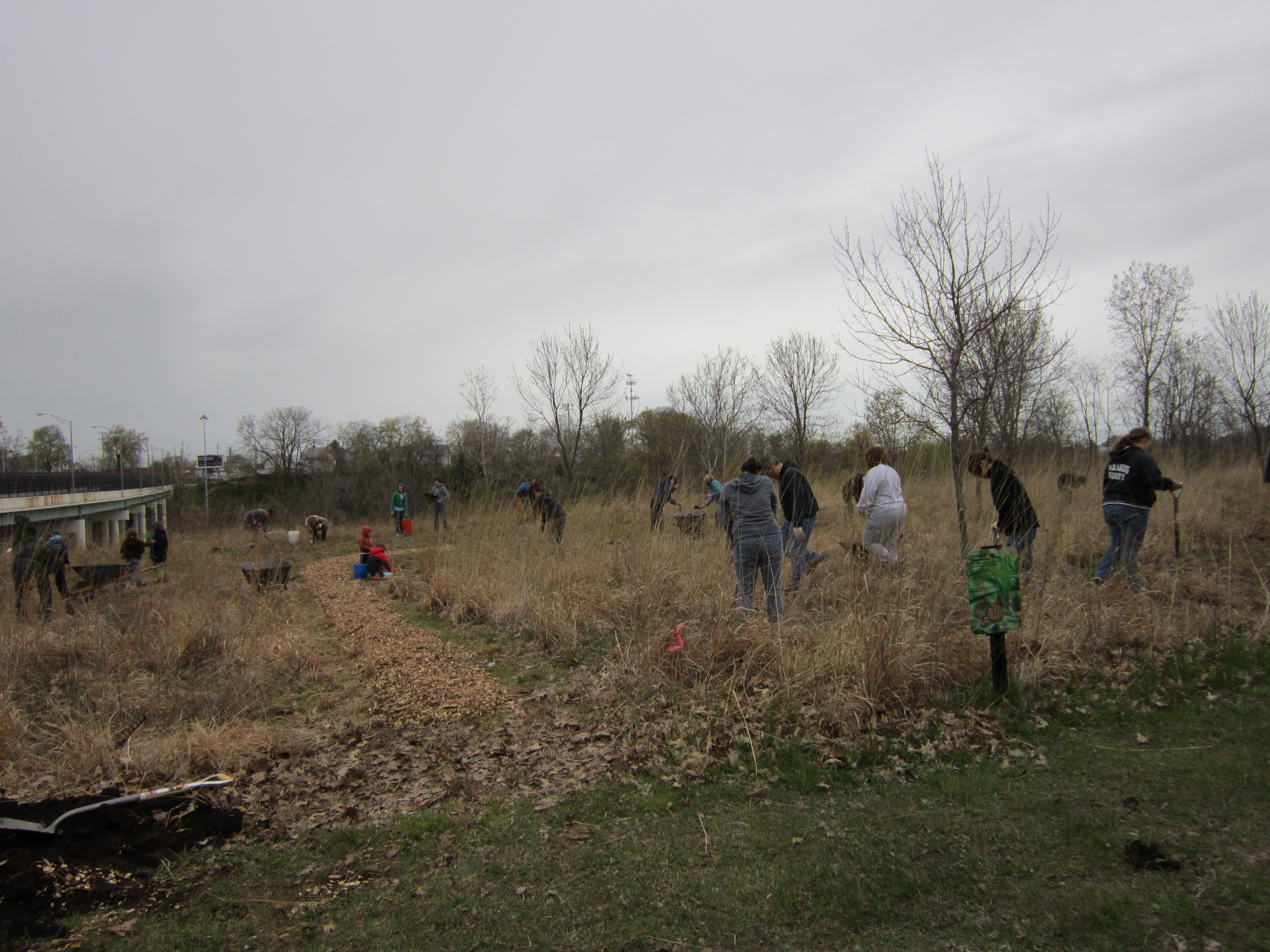
I reflected on this question as I participated in a native prairie planting over the weekend.

Native prairie-to-be

Native prairie plants

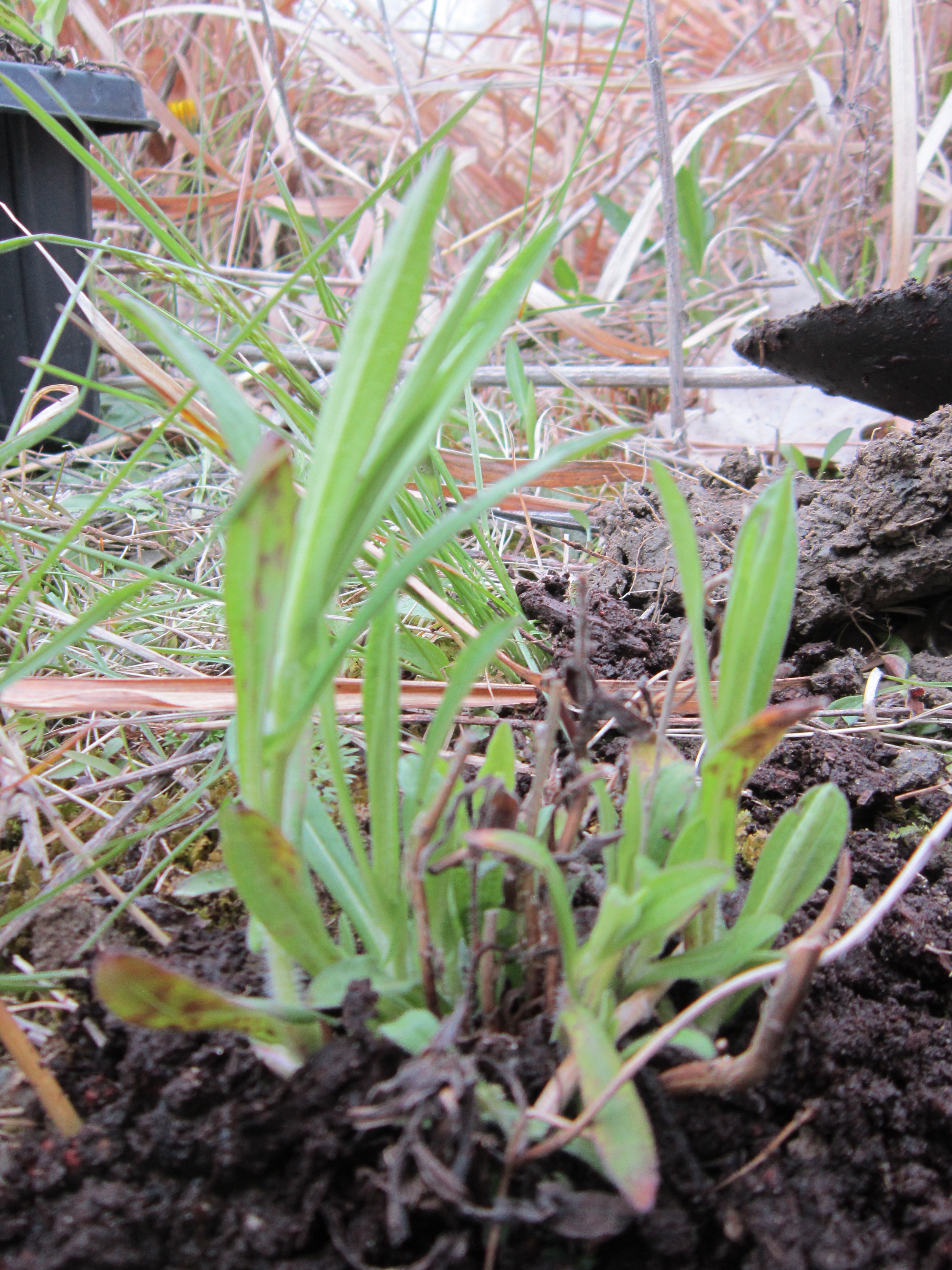
My partner and I focused on flats of two species in particular — the New England Aster

Baby New England Aster

and Narrowleaf Mountain Mint.

Baby Narrowleaf Mountain Mint

The experience got me thinking about the fact that all animals have roles to play in keeping their environments balanced, thriving, and diverse.  For example, birds help to move seeds around, insects assist with pollination, and predators keep populations of small mammals in check.  When one species overexploits its environment, there are consequences, often with a die-off of part of the population until balance is achieved once again.

Recently, humans have taken a very exploitative approach to our environment and our population numbers are booming.  This continued growth and the fact that so many of us can lead such extravagant lifestyles has been made possible by the availability of cheap carbon resources (oil, coal, natural gas) that allow for massive food production and a complex medical system that is able to keep so many people alive.

There are some problems with this, however. The resources that made this growth possible are nonrenewable (and we may have passed the peak of production), and we know that this approach to maintaining human livelihood is leading to the pollution of our air, water, and land, the destruction of natural environments, and countless species extinctions.  We also know that previous cultures that did not respect the limits of their natural resources are no longer in existence.

Is there a different way to approach our relationship to the Earth?

If all animals have roles in keeping nature balanced, it may help to reflect on potential ways that humans have evolved as part of ecosystems.

Perhaps instead of being dominators of natural cycles, we are intended to work with nature to create more healthy and vibrant ecosystems for ourselves and other organisms.  These big, long-term planning brains must be good for something beyond our own survival, and I don’t think it’s necessarily the ability to analyze stock market trends.   Perhaps the human role in the ecosystem is to function as a sort of ecosystem engineer that could bring greater diversity and balance to areas in which we live.

After all, we can foresee long-term trends and we understand complex cause-and-effect relationships.  As far as I can tell, we are the only species that seems to know that if we take a seed, plant it and add water, that it will grow.  We can use these planning abilities to take care of the planet in a much better way than we have recently.  We should also get better at using this ability to understand the dire consequences of continuing on with our current behavior, and to learn from the mistakes of cultures in the past.

I believe it is possible for humans to live as constructive co-creators with nature.

Prairie planting

We can take a field of grass, envision a thriving habitat, and find ways to create it.

Go and be restorative!

Enhanced by Zemanta

Spring Foraging

Outside of this strange world that we call the internet, I don’t know many people who would say that an ideal day is one spent in the woods learning about wild edible foods. But for me, a day spent meandering through the woods is in itself the indication of a day well spent, and to combine that with learning about and connecting with plants comes close to absolute perfection. Maybe other people just haven’t yet tried…

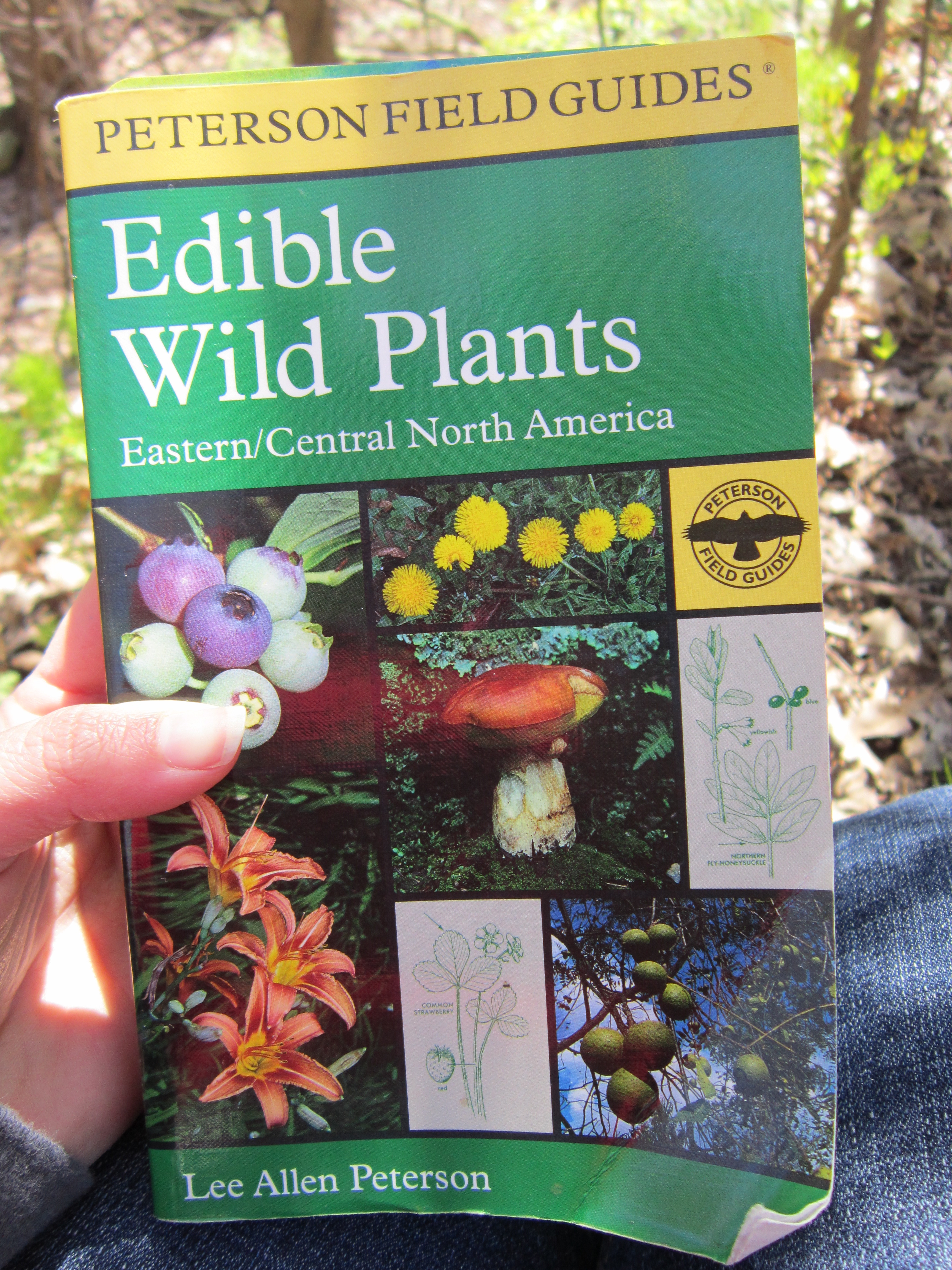
Behold the knowledge

Disclaimer: I have not tried eating all of the plants shown below and I am not suggesting that you do so without adequate preparation! My method generally goes something like this:

1) Find a plant and ID it in my field guide or learn about a plant and aim to find it and identify it.

2) Identify it on at least a few other ocassions.

3) Read about the plant and possible dangerous look-alikes.

4) Try a small amount to make sure it agrees with my body.

5) Eat more.

Let’s begin…

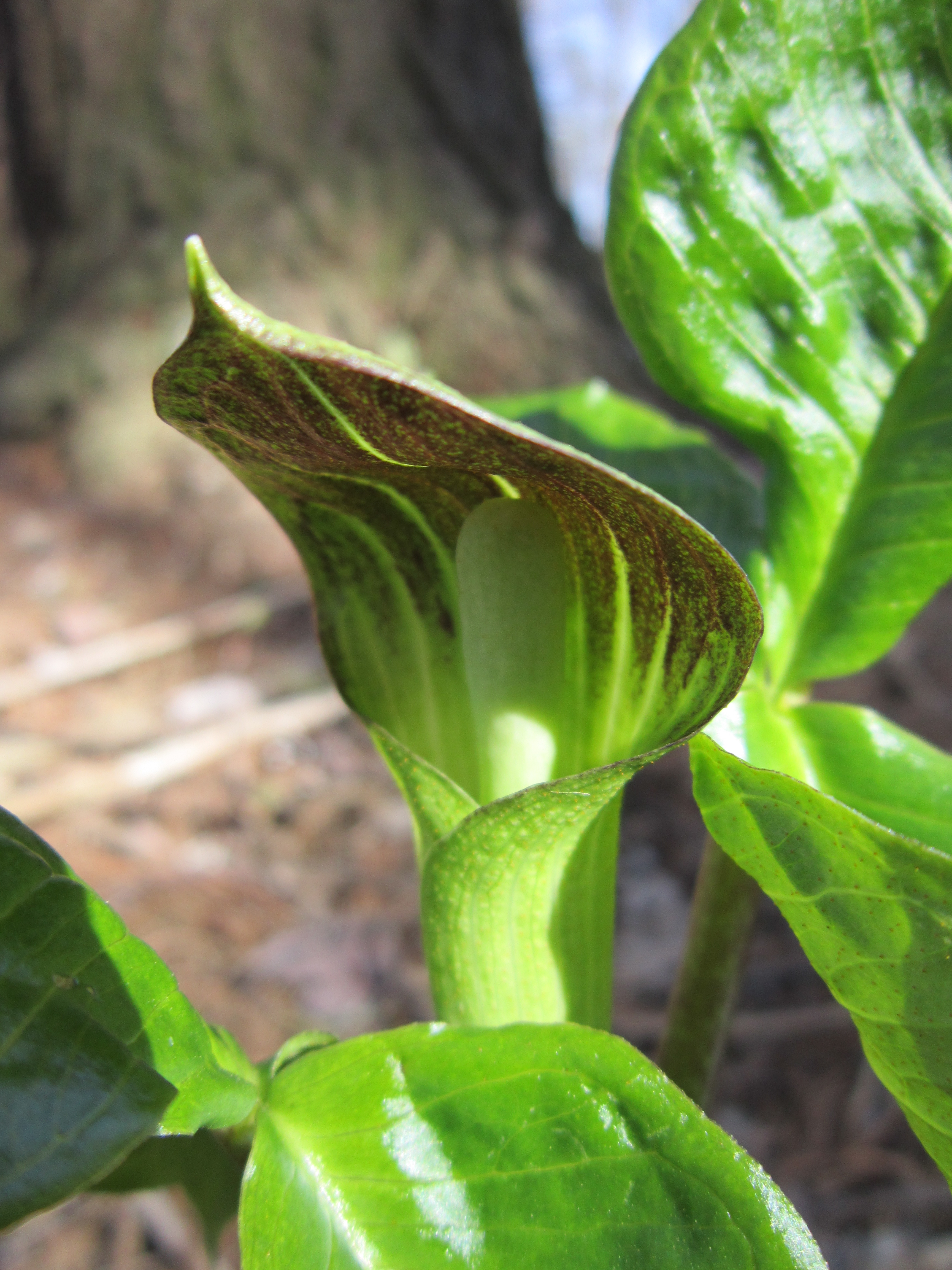
The dried corms (Wikipedia: a short, vertical, swollen underground plant stem that serves as a storage organ) of jack-in-the pulpits can be sliced and eaten like potato chips!

Jack in the pulpit

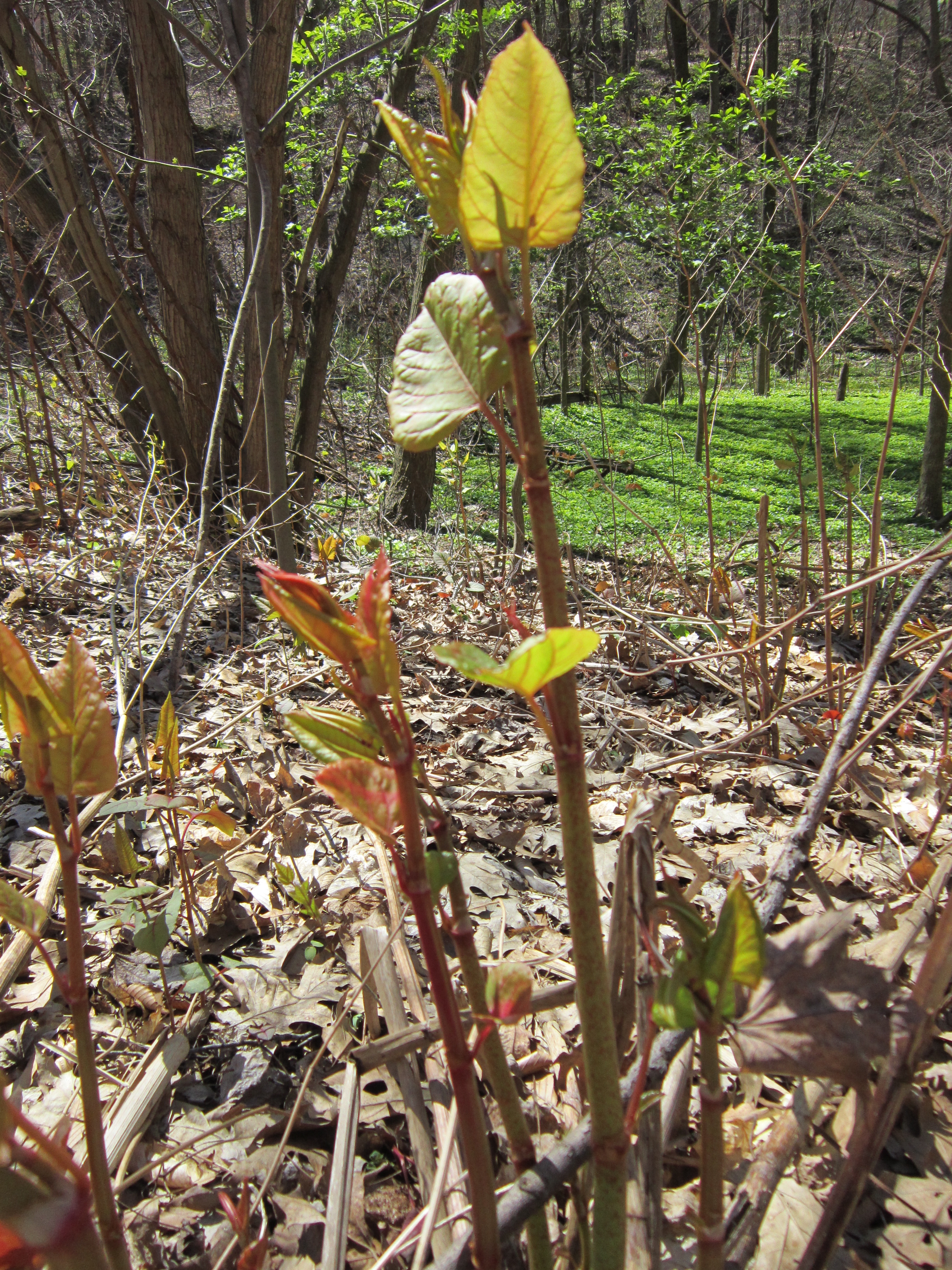
Japanese knotwood can be eaten like asparagus…and I encourage this one due to its invasive nature!

Japanese knotwood

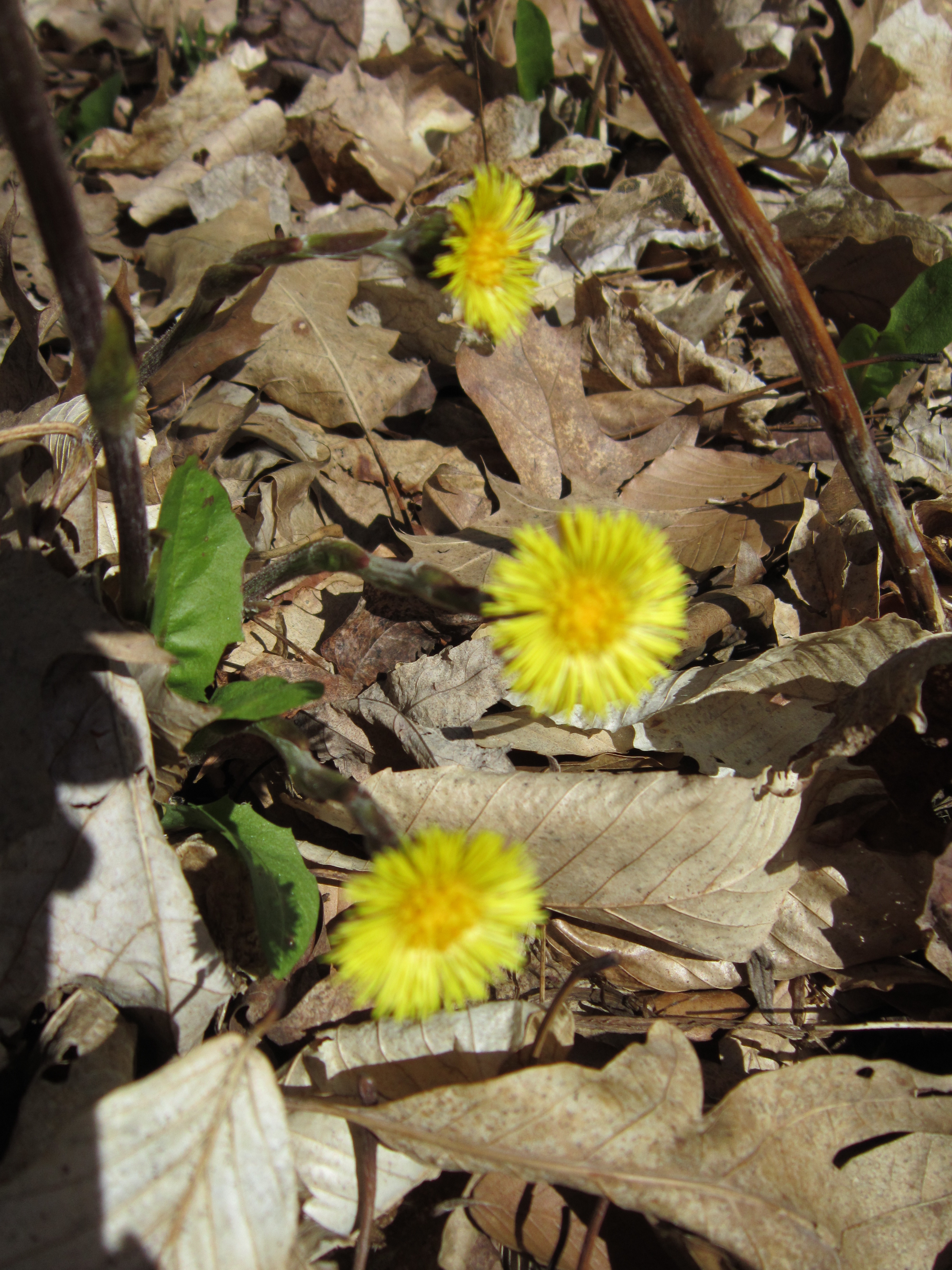
Coltsfoot can be candied and I’m still looking to find a patch big enough so that I can infuse the flowers into honey as a cough remedy!

Coltsfoot

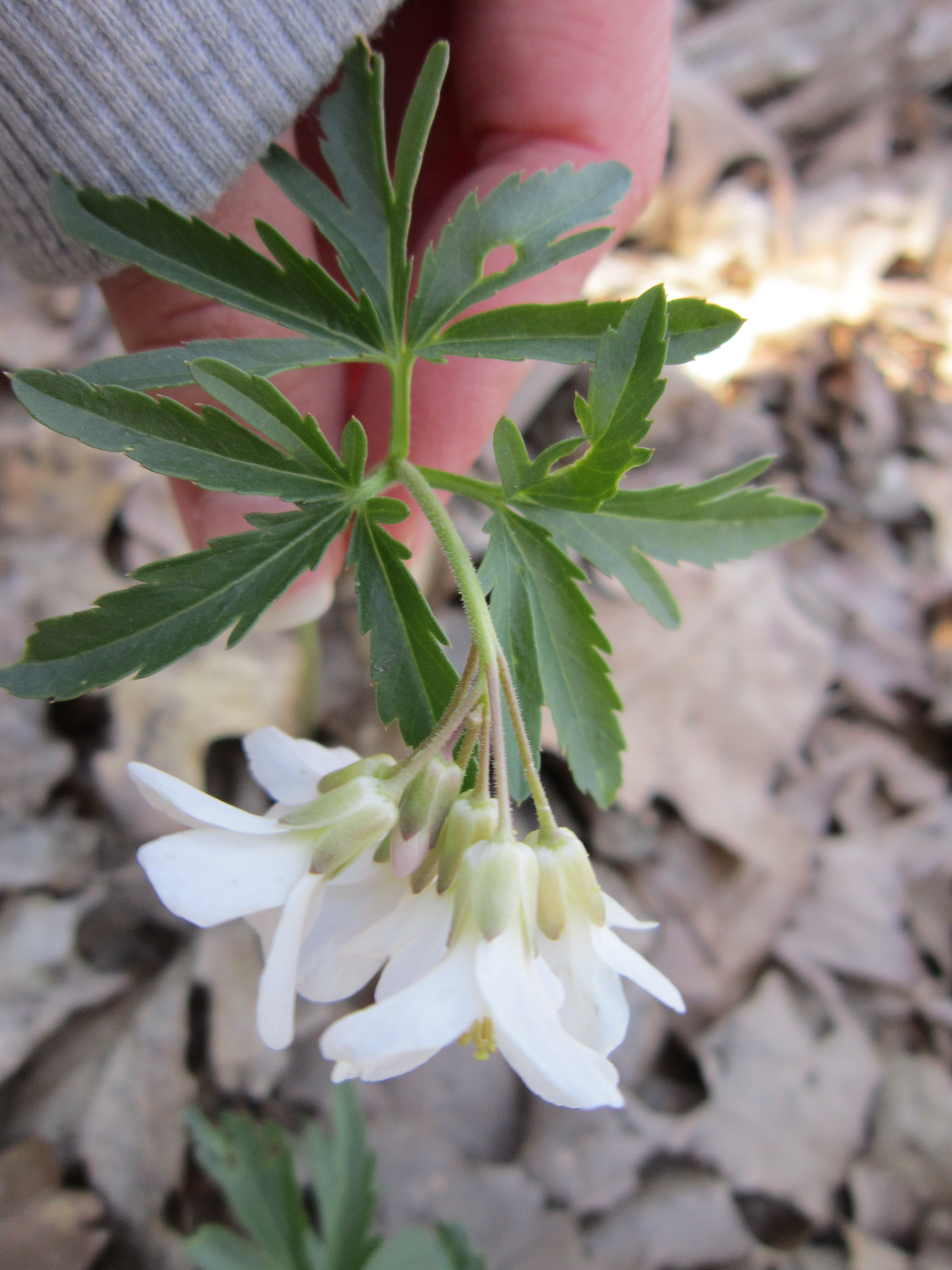
Chopped toothwort root can be substituted for horseradish.

Toothwort

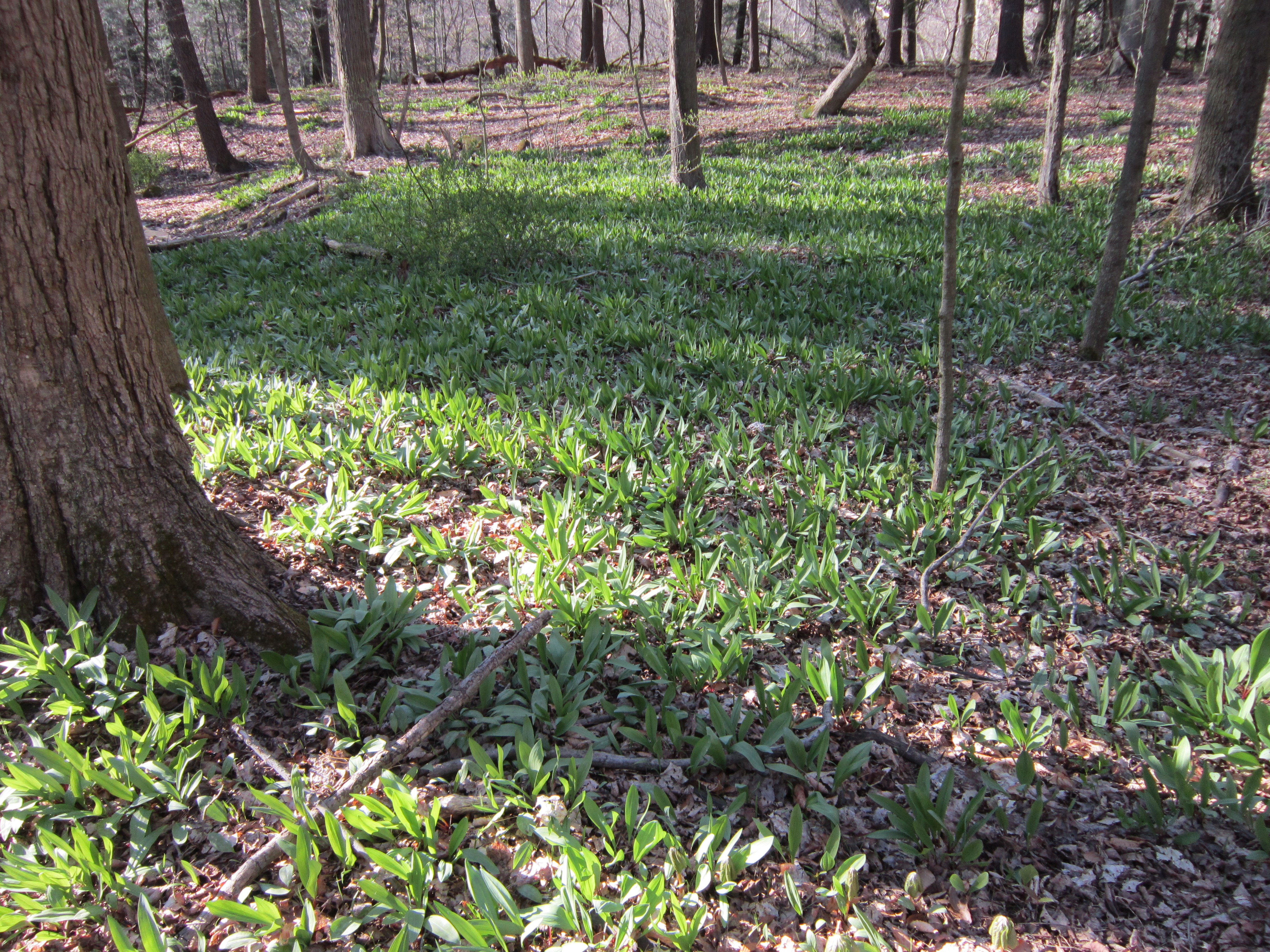
I also hit a ramp jackpot! They were everywhere!

Ramp overload!

Dinner!

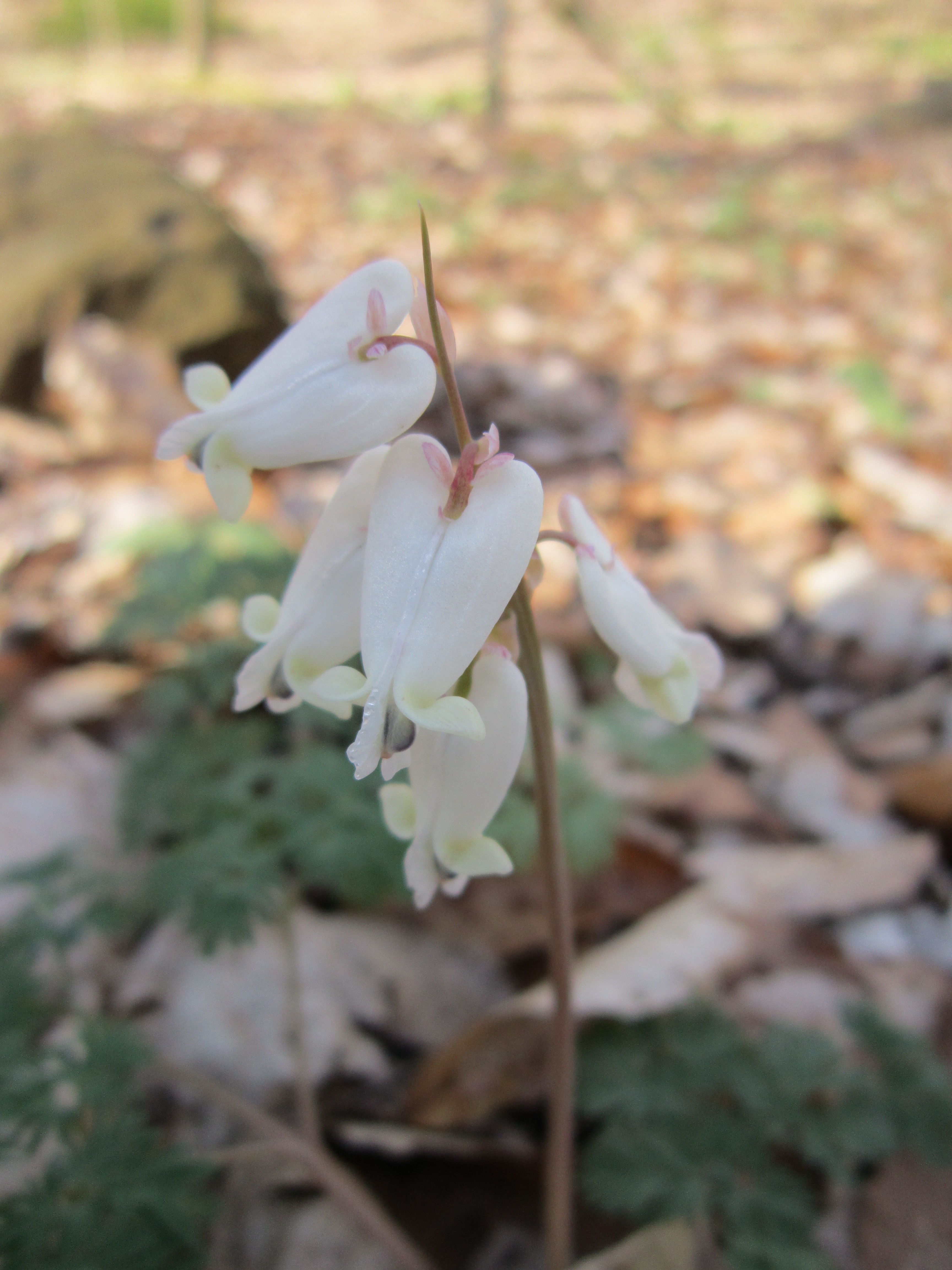
Wandering around this way also leads to other beautiful finds like Squirrel corn (I don’t have any idea about its edibility, don’t try!)…

Squirrel corn. Hehe - such a funny name.

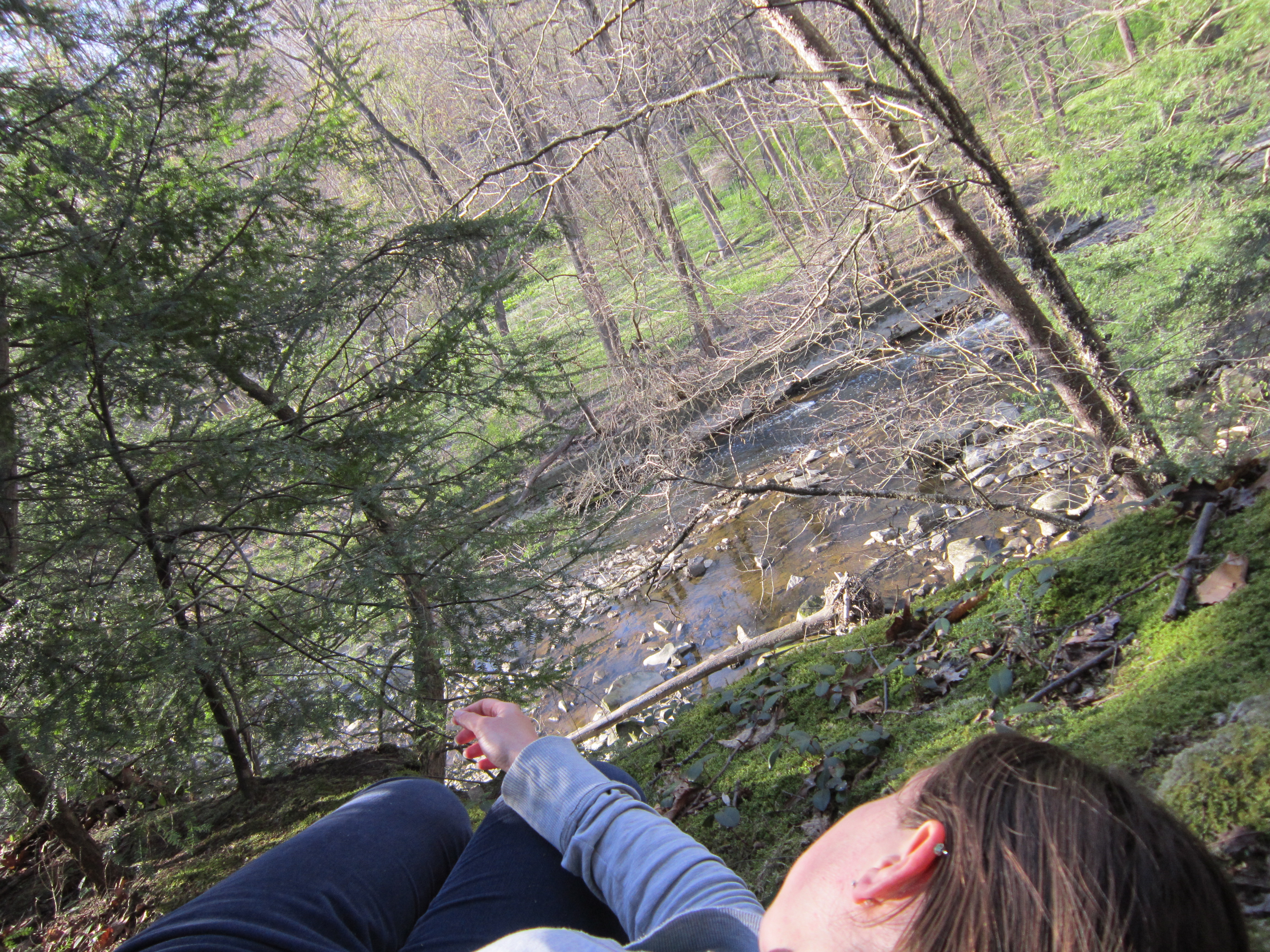
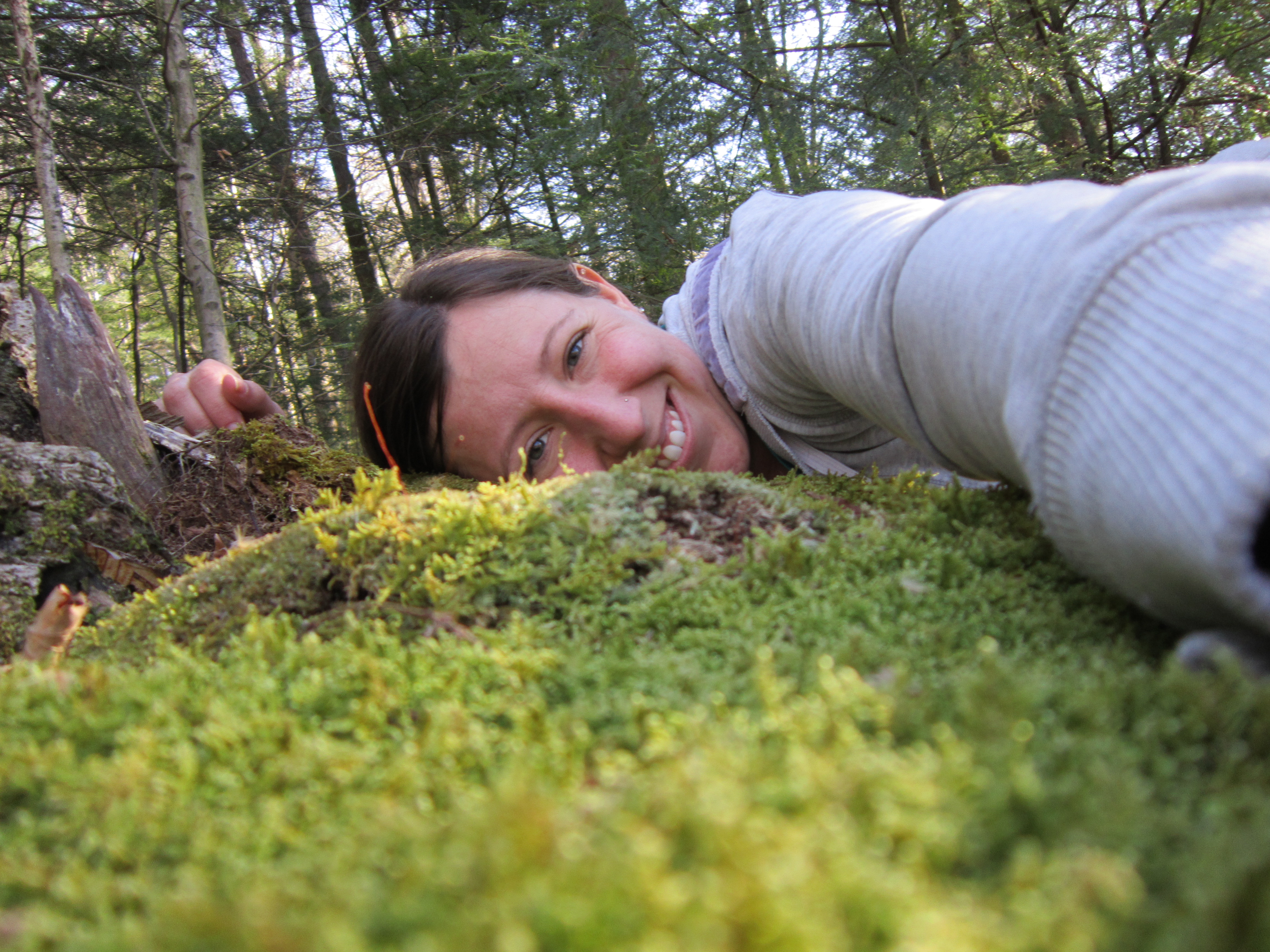
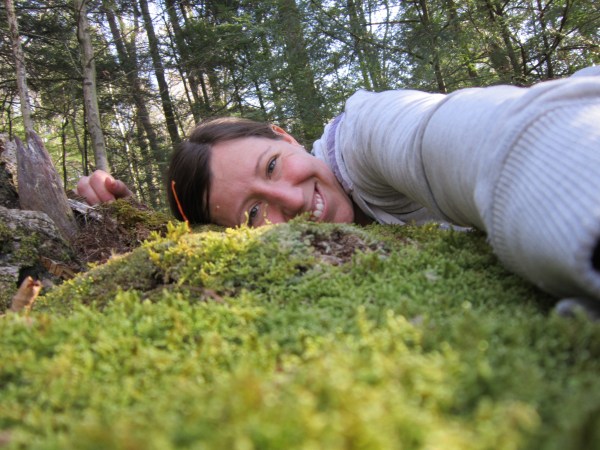
And you also might come across extremely cozy patches of moss at the edge of a ravine.  This is my version of ultimate renewal and peace. I once read that some Native Americans believe that excess energy accumulates in places like this (i.e., cliffs, edges). I think they are right – it feels so wonderful! Why don’t I do this every day?

I’m happy to provide more information to anyone who’s interested!

Go be in nature! Give in to your animal instincts and go foraging!

Enhanced by Zemanta

Remember to Take Your Pine Needles for Good Health!

Did you know that pine needles can provide you with more vitamin C than orange juice? And that they can help to heal your body from respiratory ailments, colds, and the flu?

Some say that the Native Americans taught the early settlers about drinking pine needle tea to help prevent death from scurvy!

Pine needle tea is easy to make, but what are some other things that can be done with pine needles?

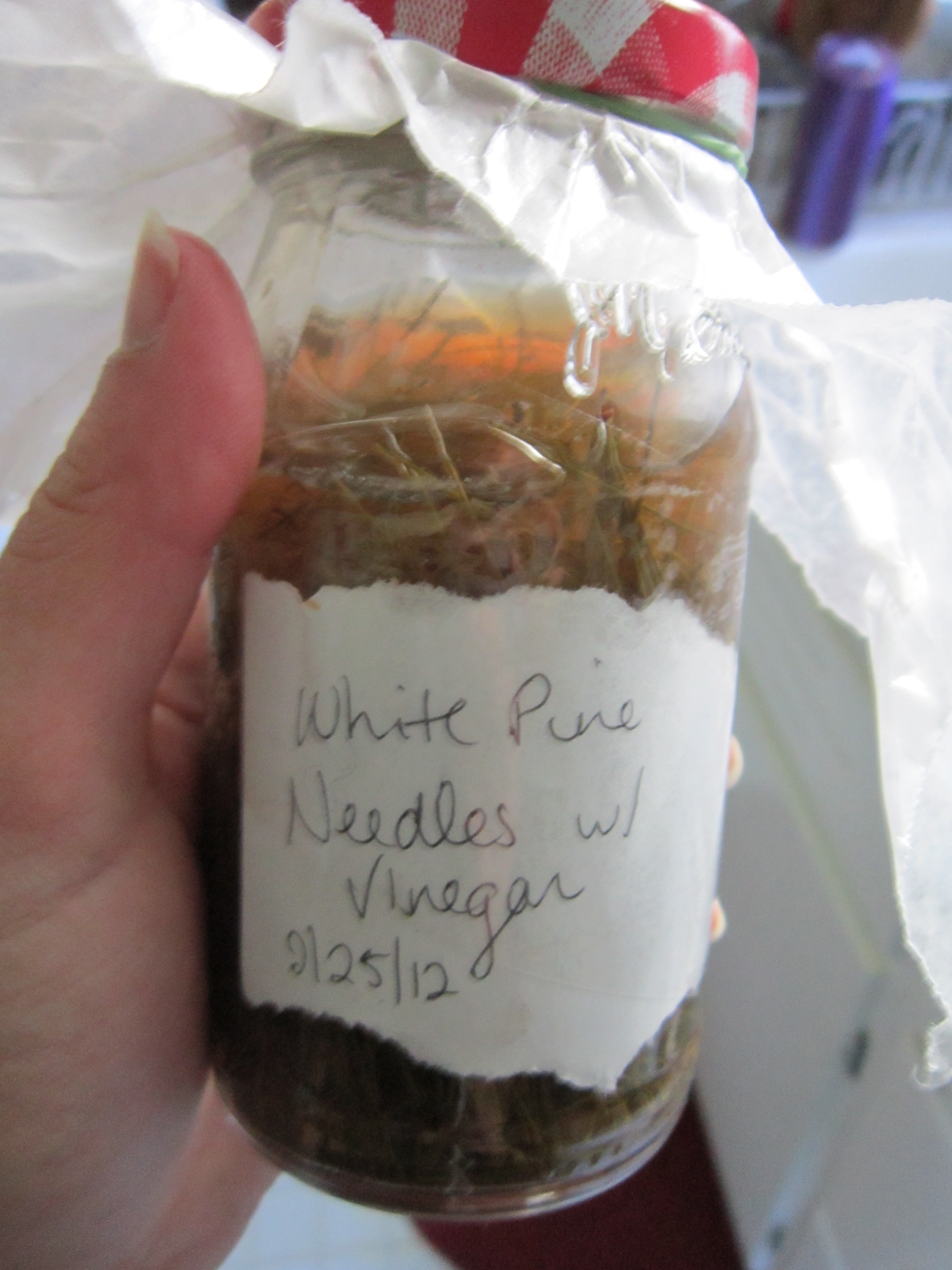
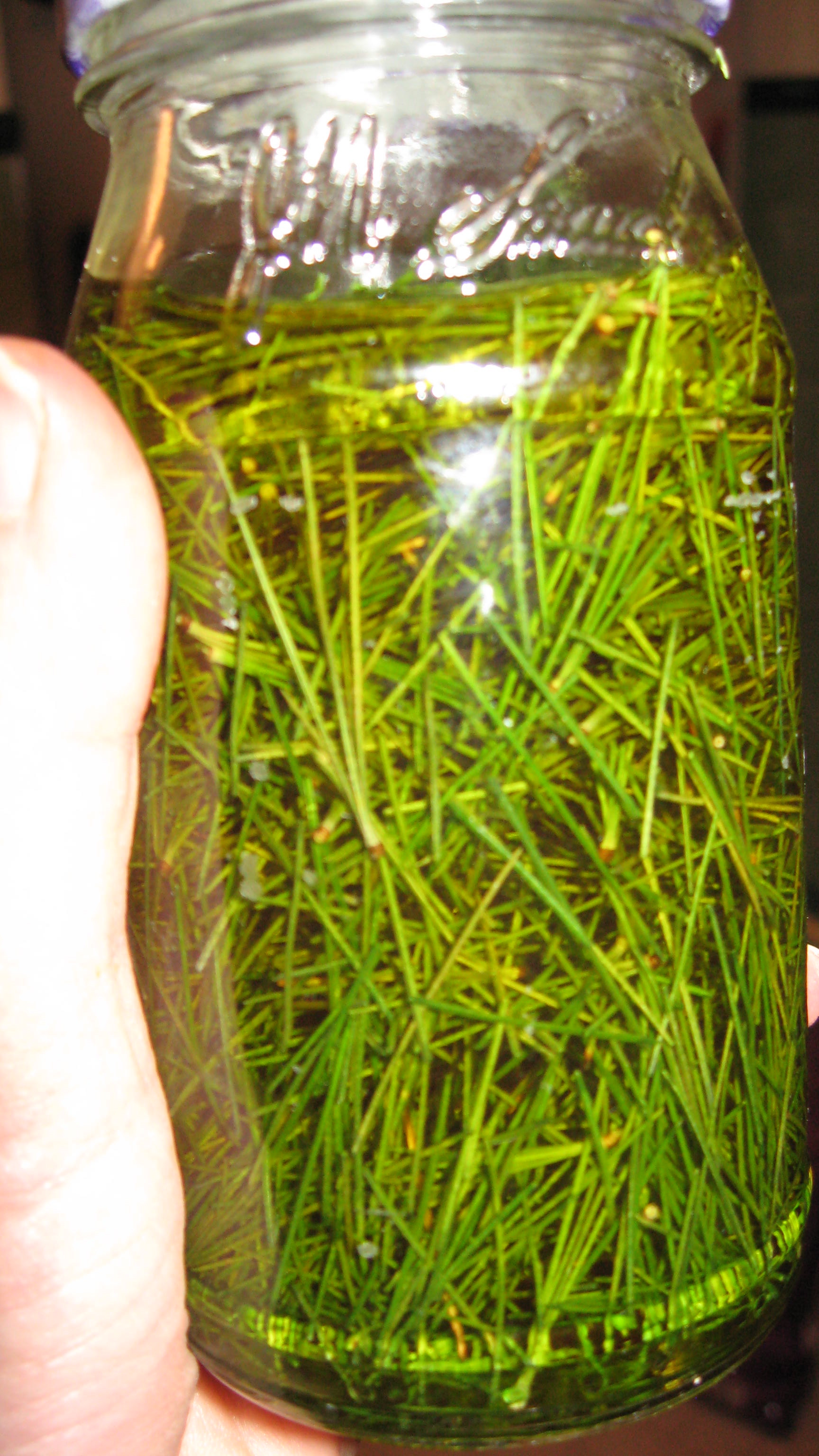
They can be infused into a variety of menstrums (liquids used to extract the nutritional or medicinal properties of plants) other than water.  For example, tonight I got a nice dose of vitamin C by using vinegar infused with pine needles in my salad dressing.  White pine needle vinegar (the type I made) tastes similar to balsamic vinegar.

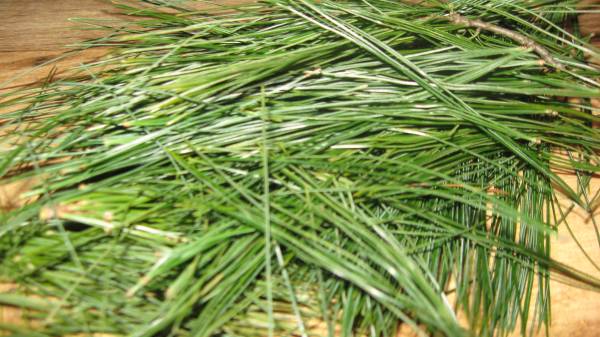
First, you’ll need to gather some needles. I collected a bunch from a white pine.

White pine needles

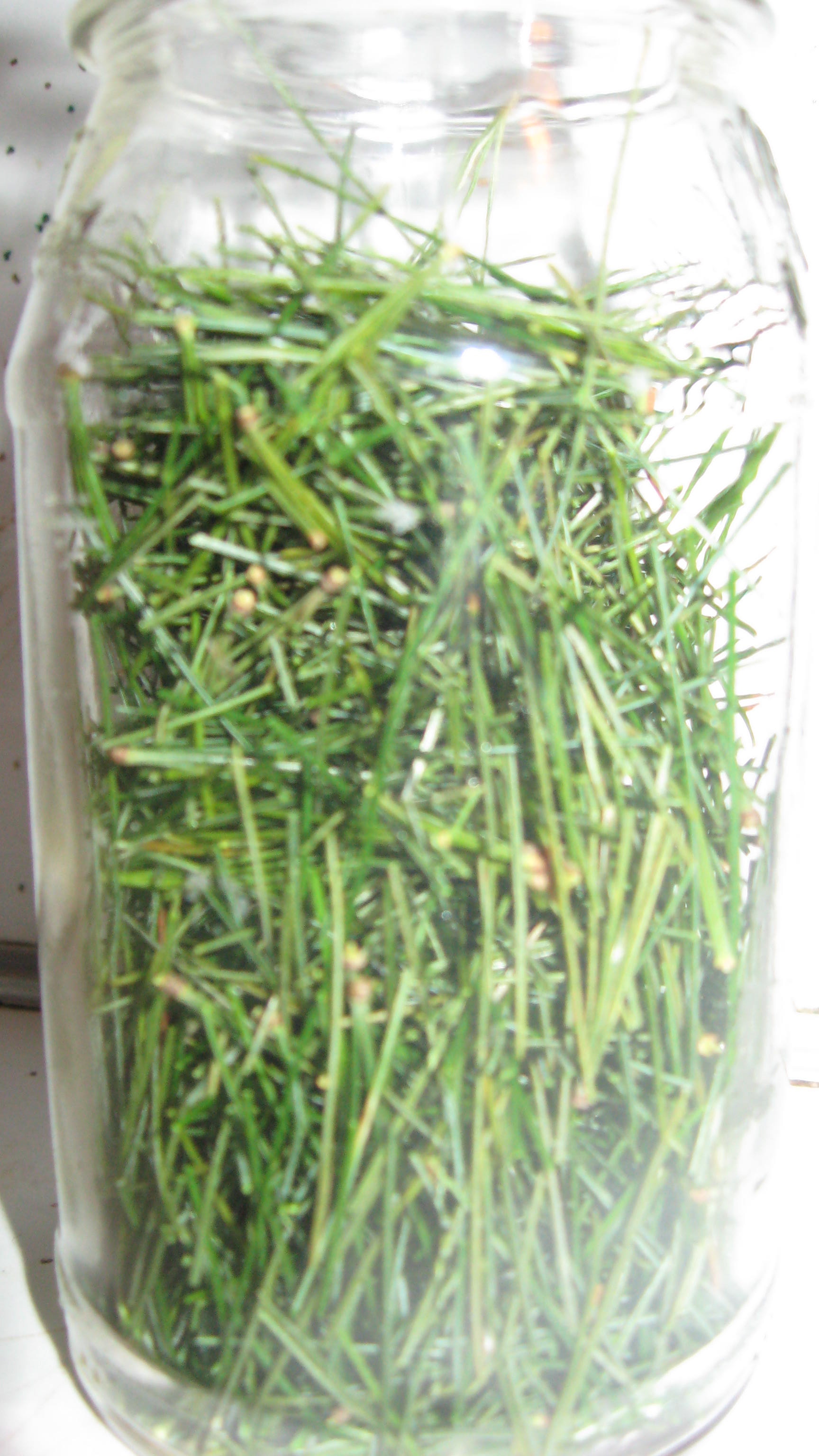
Pick through them to ensure the best ones are being added to glass jars. I also tore these up as I was adding them.

Fill the jar!

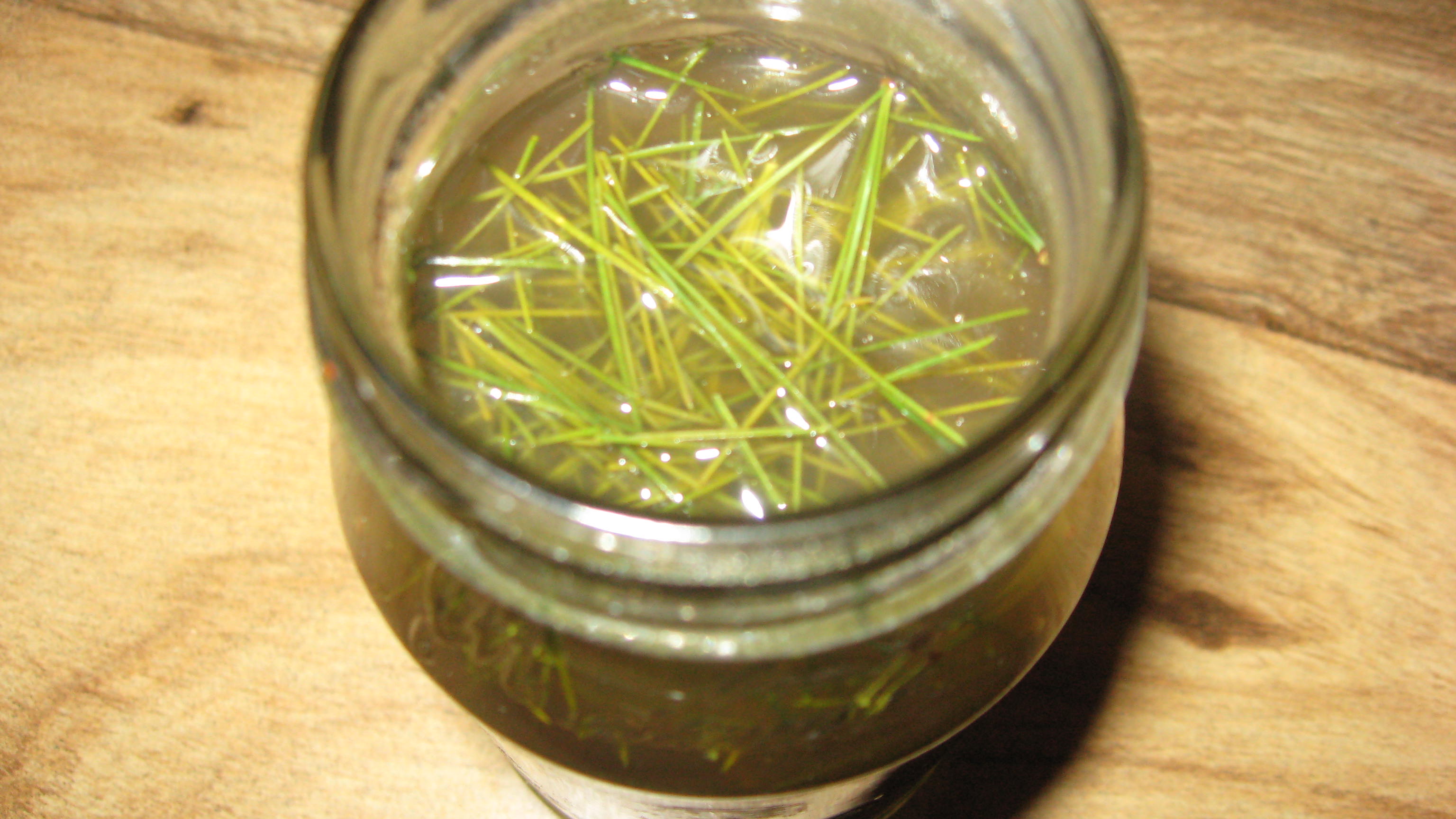
And then cover with the menstrum. In this case, it’s apple cider vinegar.  I get large jugs of the raw kind so I boiled some first to ‘pasteurize’ it before making this vinegar (and I was able to boil enough extra for future use). Make sure to completely cover the needles — poke them down so that they’re an inch below the liquid line.

Let the finished product sit for 4-6 weeks before using.  Also, use a plastic lid or put a piece of wax paper on top because vinegar will eat away at the lid.

White Pine Vinegar ready to be strained!

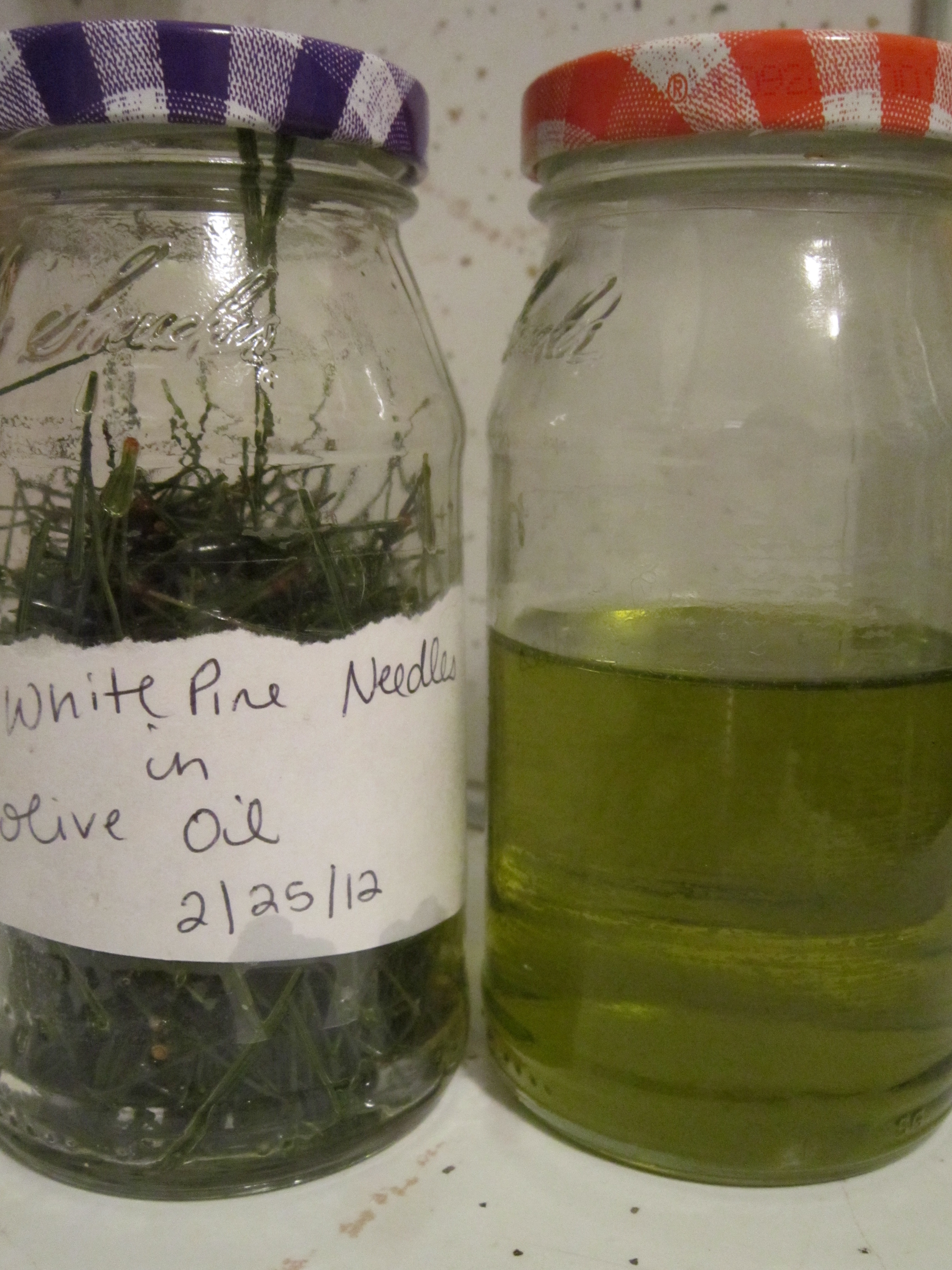
What’s another use for the pine needles?  Infuse them in olive oil!  The oil can then be used as a relaxing massage oil or as a chest rub to help with respiratory issues.

Cover a jar full of pine needles with the oil and let sit for 4-6 weeks.

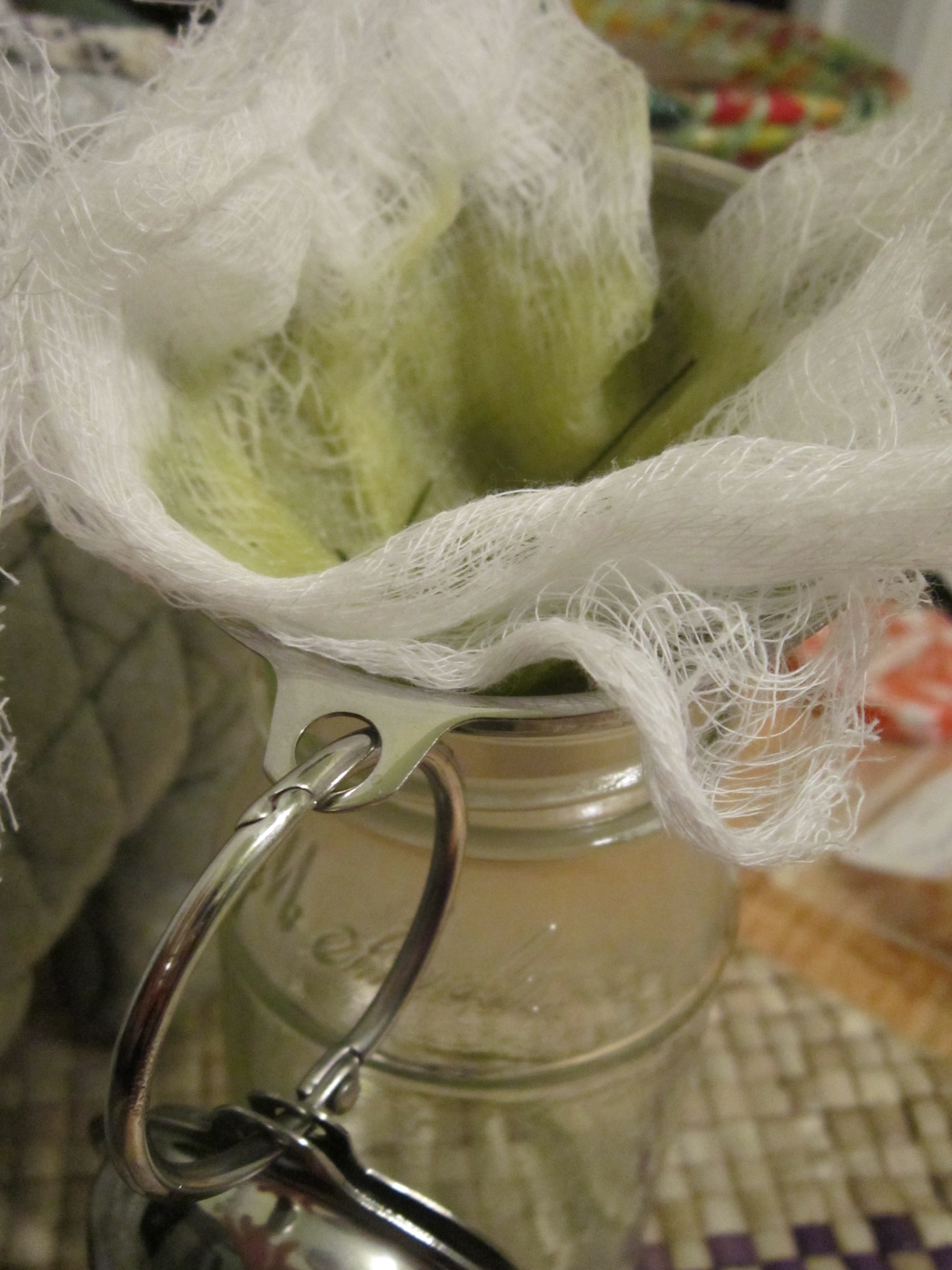
When you’re ready to use the oil, strain the needles out.

And you’re left with pine needle infused olive oil!

The oil can also be turned into a salve that can help to remove splinters (although it seems that the actual sap of a pine tree might be best at this!), or it can be put on small wounds to help them heal.  I’ve also been having a fun time using it as a lip balm!

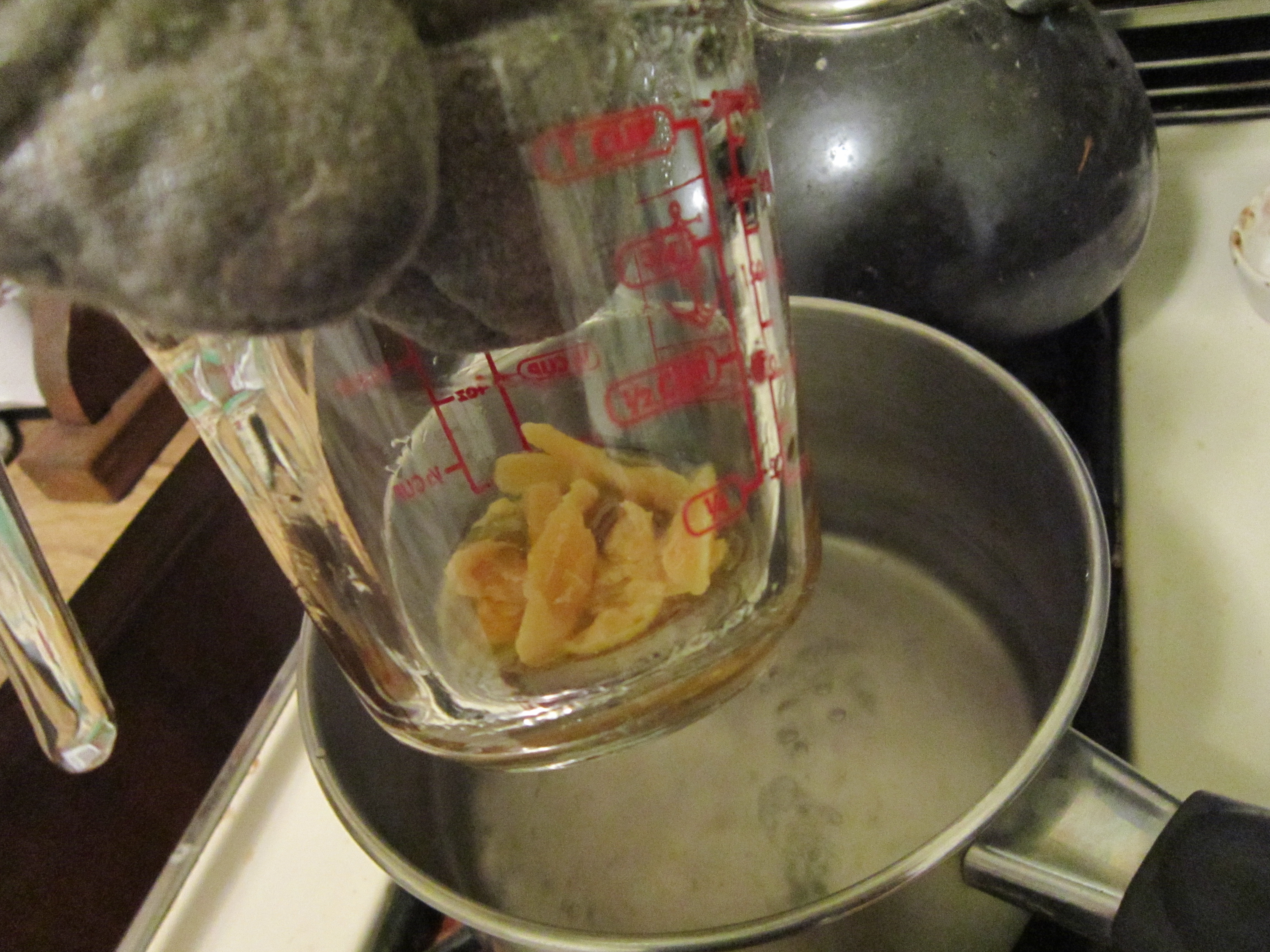
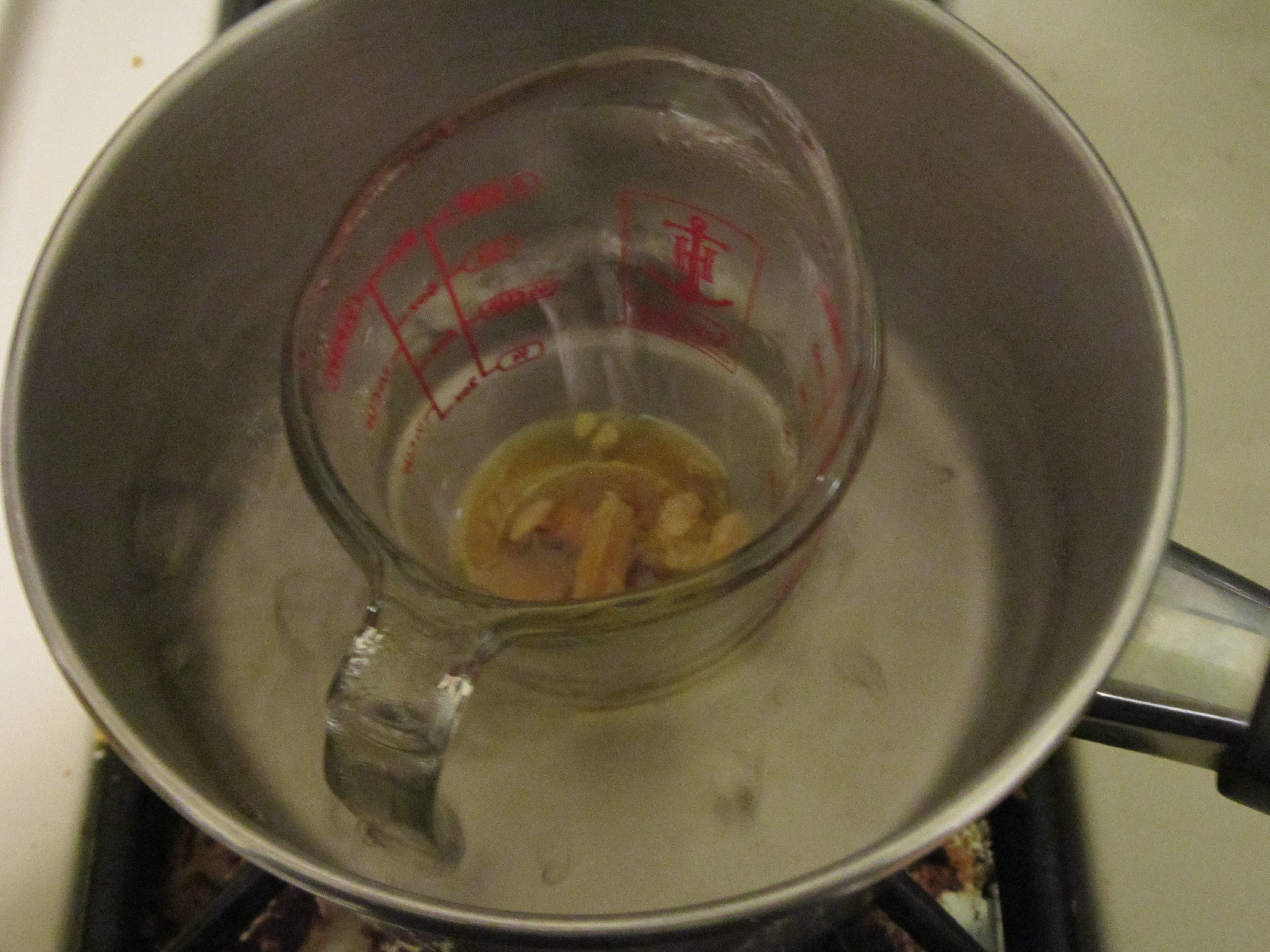
To make a salve, create an easy double boiler by putting a measuring cup into a pot of boiling water.

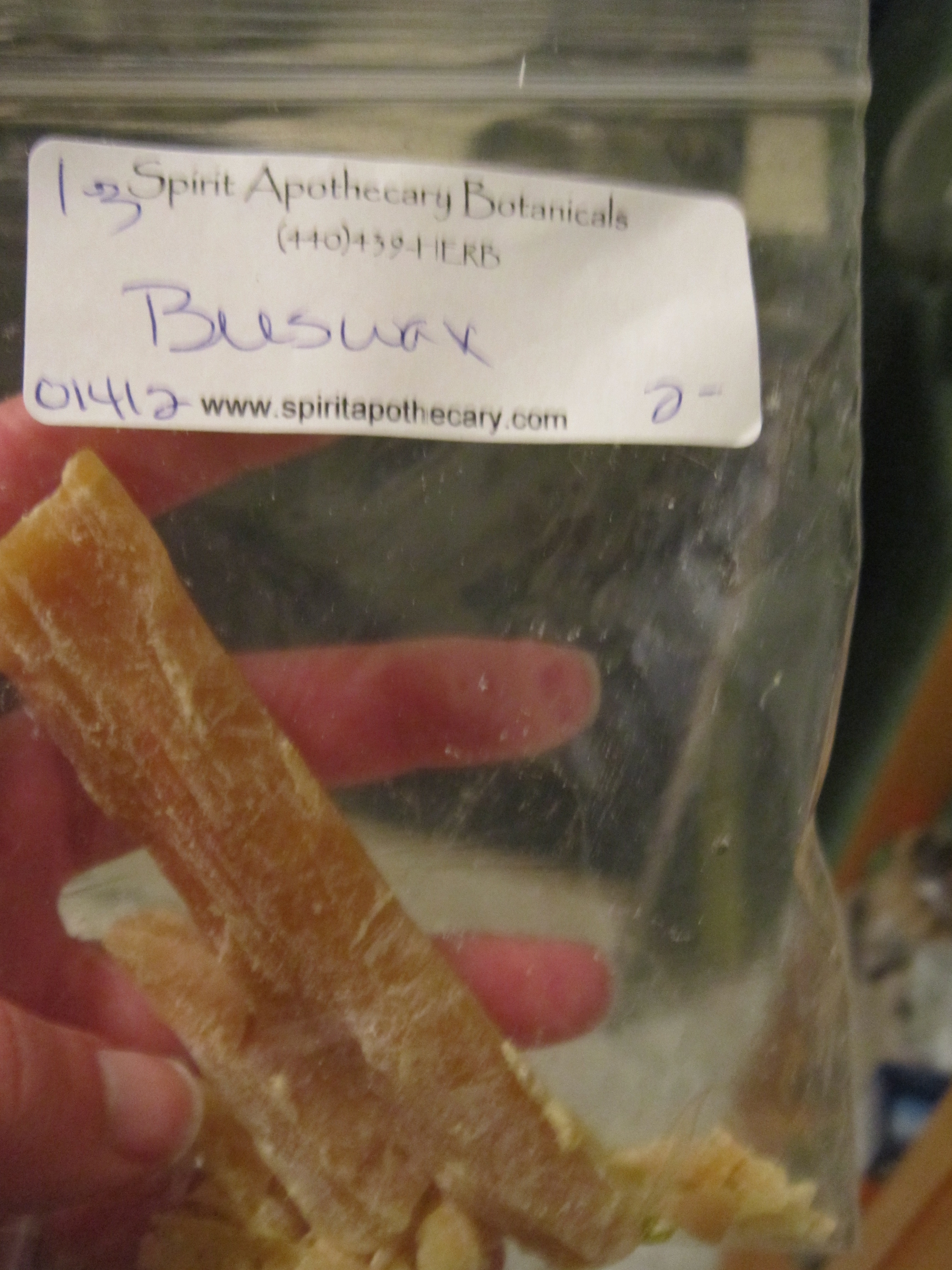
Add 2 Tablespoons of beeswax (I just guessed at the amount when I made this…) to the measuring cup and let melt.

After it has melted, add 2 ounces (1/4 cup) of the oil infused with pine.  Stir with a chopstick until you reach an even consistency.  Test to see if you’re done by putting a drop on your counter. It will allow you to quickly see if the salve is firm enough or too runny.  Too runny? Add more beeswax. Too firm? Add more oil.

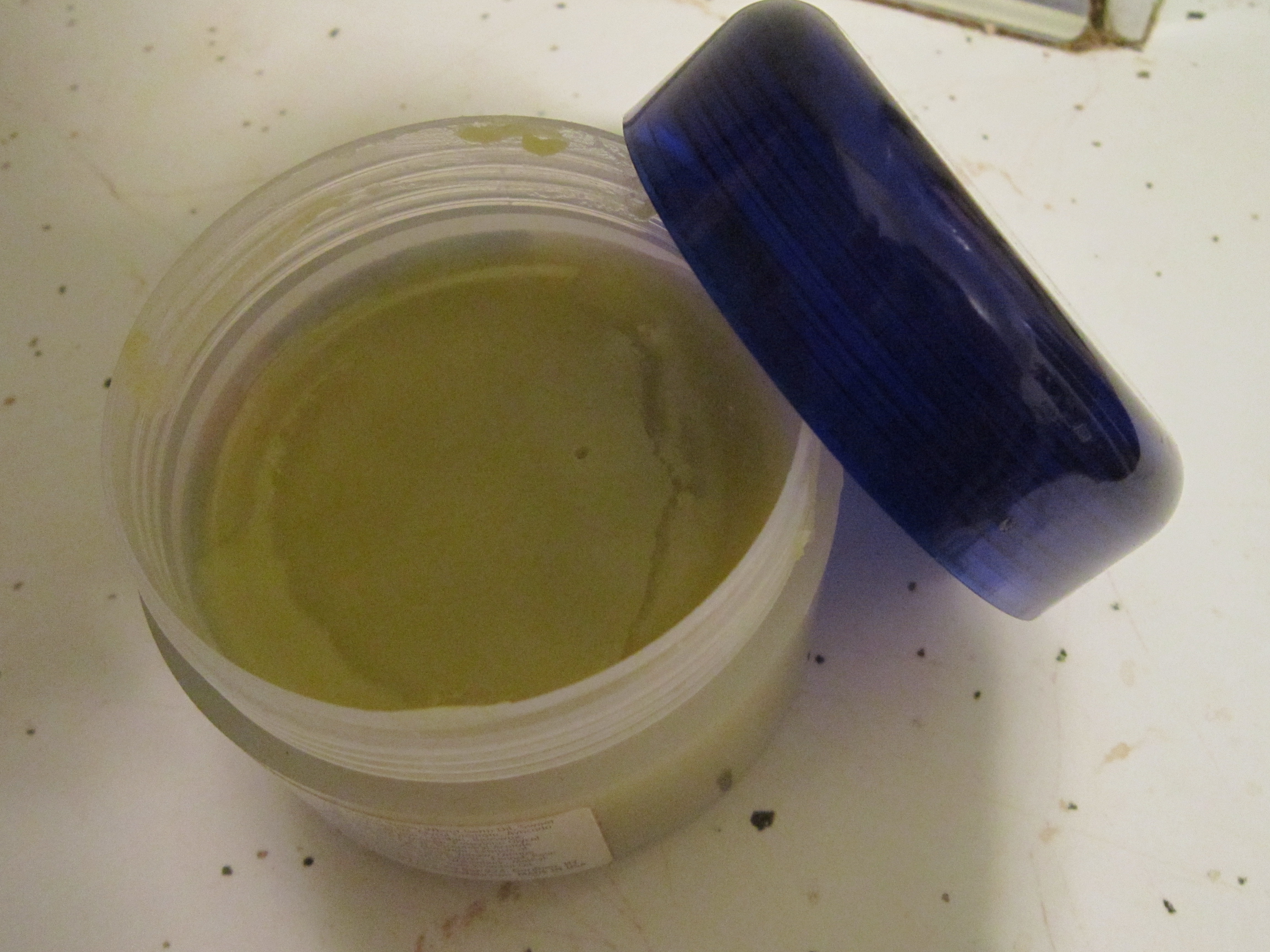
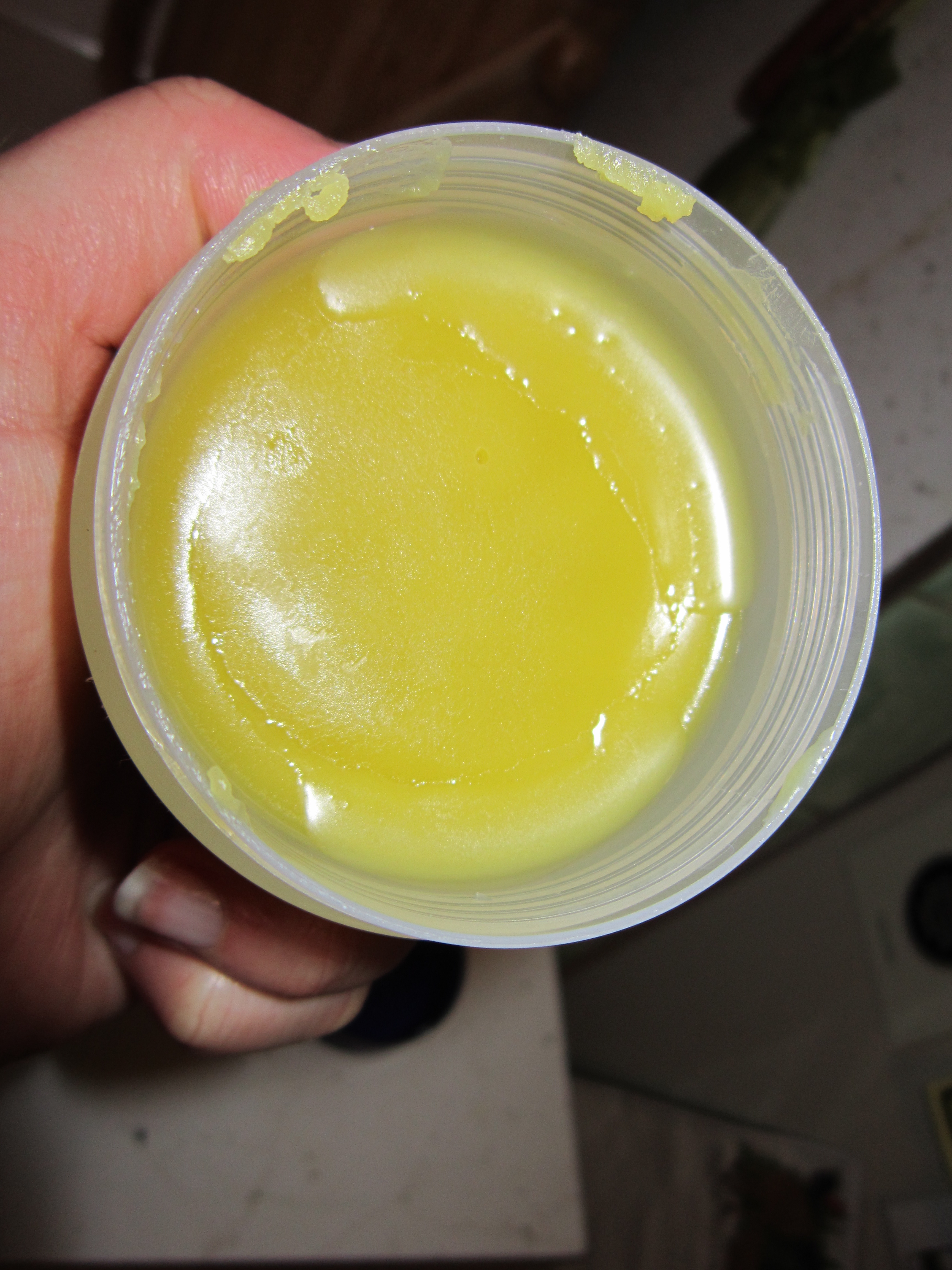
When the mixture is consistent, pour it into a reused container and let sit to become a salve!  Use and enjoy knowing exactly what went into your product!


Enhanced by Zemanta

Wandering on the Last Day of March: Impermanence & Wild Ramps

Yesterday, a hike through one of my favorite places to be in nature revealed several gifts.

First, was a reminder of impermanence. Everything is always changing and it is best not to become attached to any objects, people, or situations.  Strive to find happiness in each moment.

Everything will return to the Earth in time.

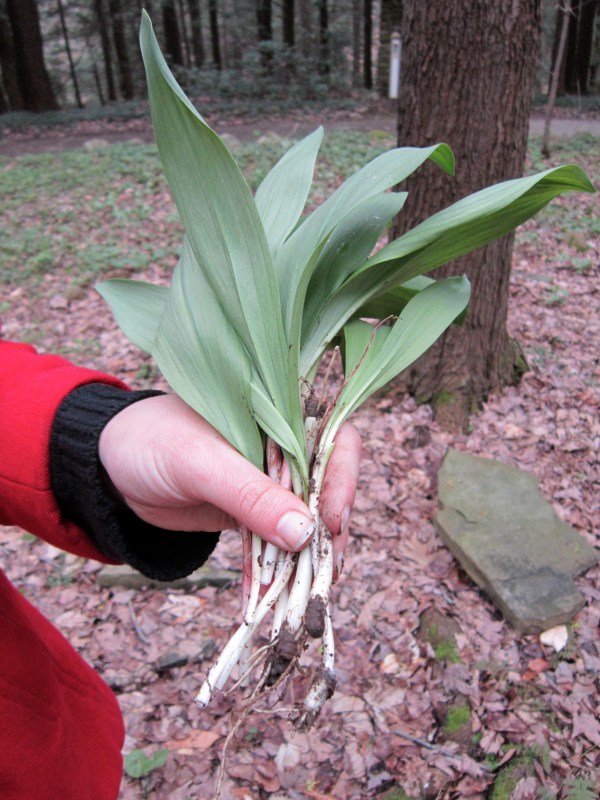
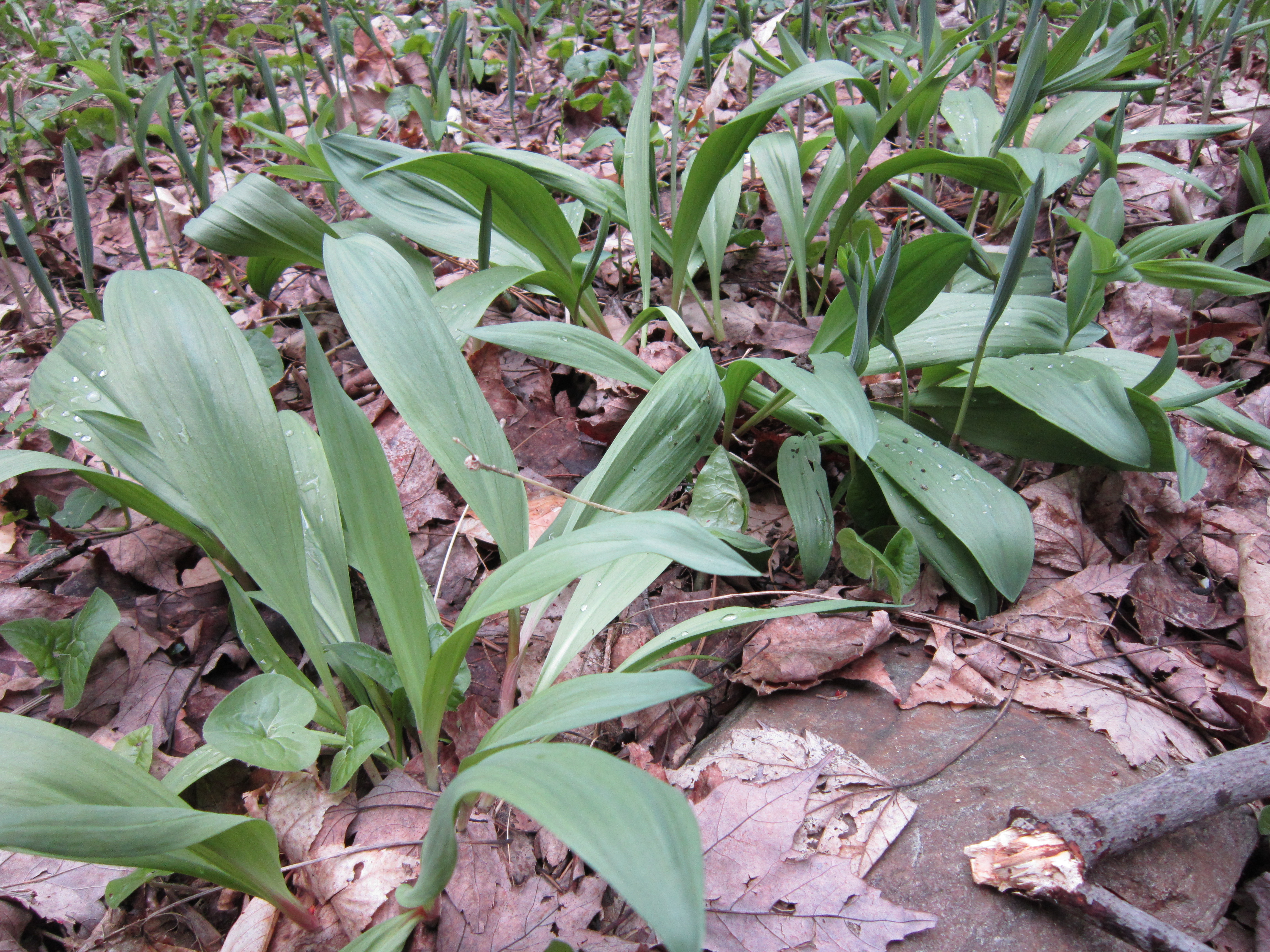
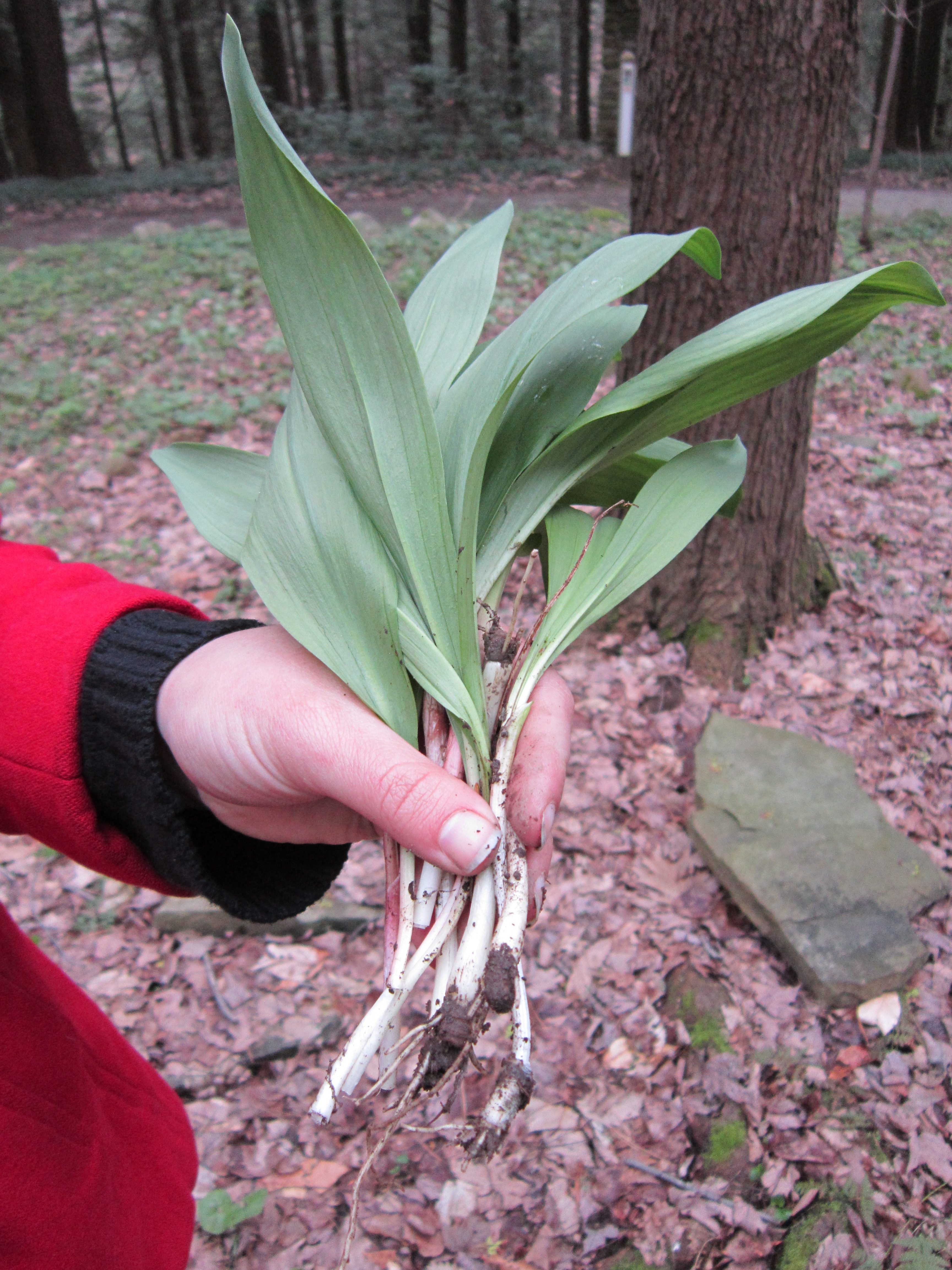
Second was a gift of free nourishment!  We found wild ramps (Allium tricoccum), a perennial wild onion.

Patch of ramps

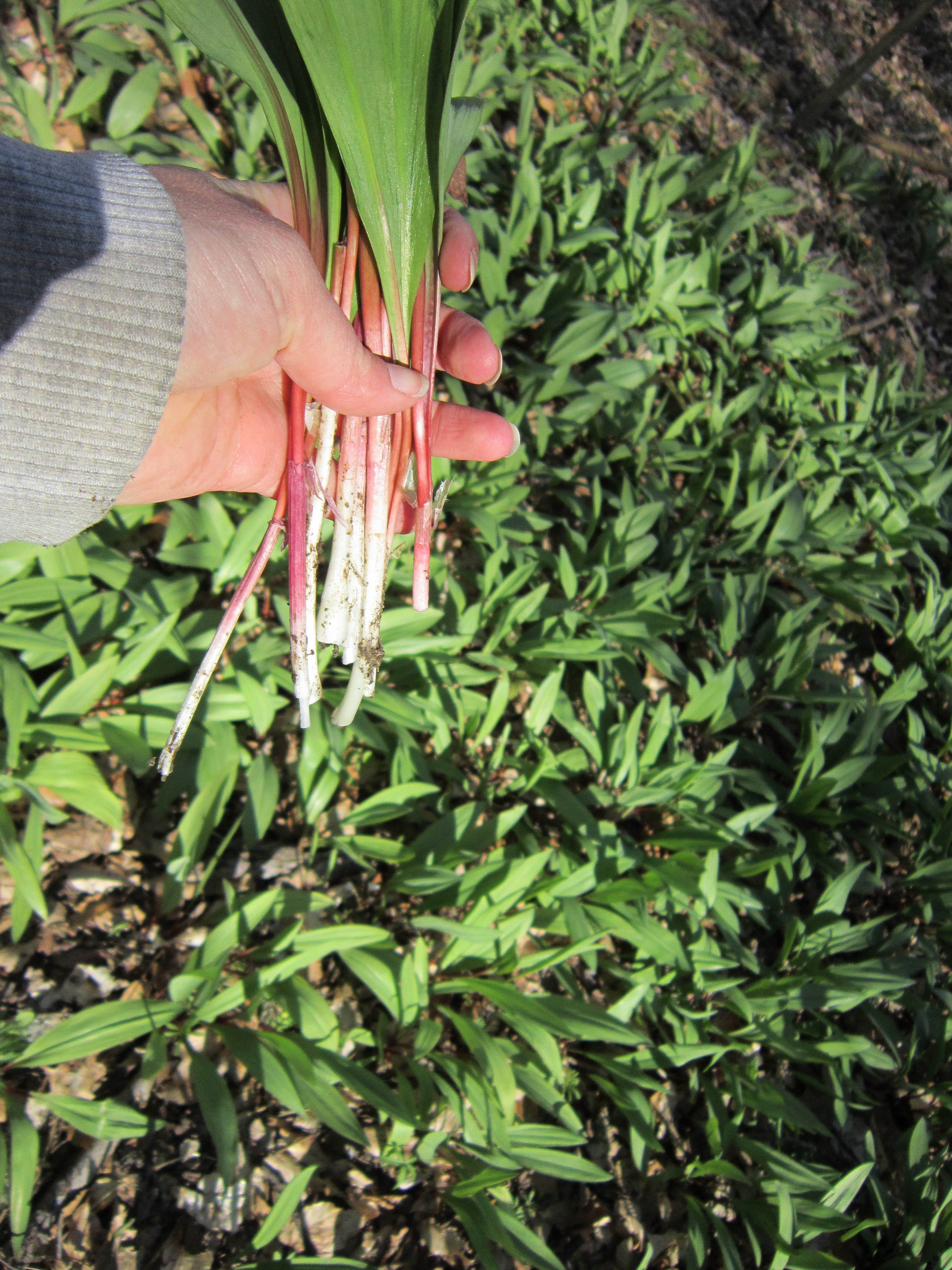
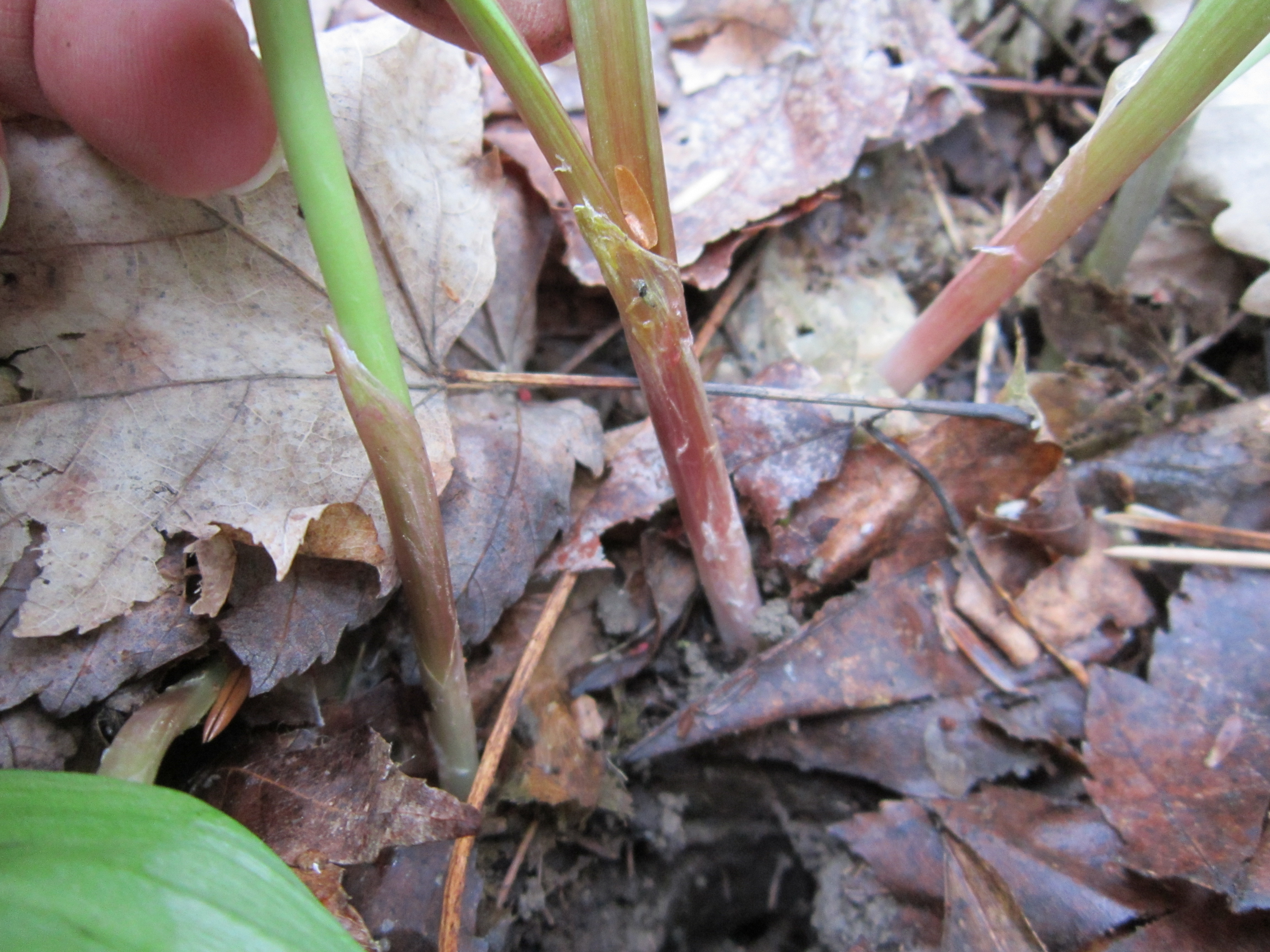
When you get closer, you can tell they’re ramps by the slight reddish-purple color where they meet the ground. And when you pull them, you’ll know they’re ramps by their characteristically onion smell.

Reddish-purple: yup, ramps!

I harvested several.  It’s important that we’re not greedy when wild harvesting things so that we (and other creatures who depend on them) will have these foods in the future. Always leave many more plants than were harvested (some suggest harvesting every 4th ramp).  Another idea is to just pull the ramp up from where it meets the ground — you’ll still get some of the onion, but the bulb will be left to grow again.  Or even consider being regenerative with the onions and if you take some bulbs, use a few to start a new patch elsewhere.

Ramps for me; ramps for free

Ramps have sulfur compounds that are detoxifying for your body — try some today!

Also, did anyone else participate in this year’s Earth Hour?

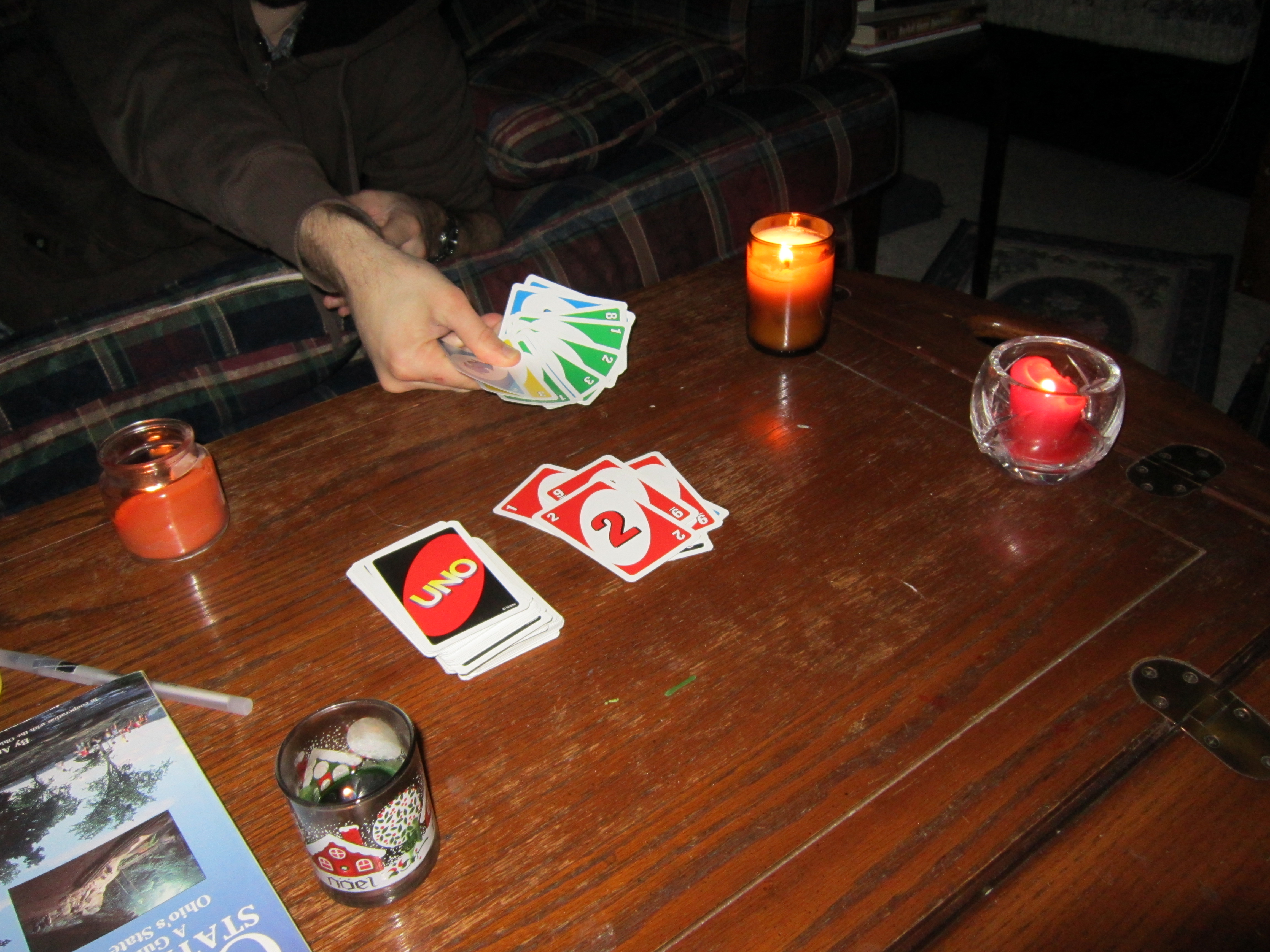
It’s a fun way to show support for the Earth, be reminded of how much we depend on electricity, and to unplug for awhile! The camera-flash makes it look bright, but we had fun with candles as our only light for over an hour.  I’d like to do this more often!

Candlelight night!

Enhanced by Zemanta

Why Step Lightly? It’s the right thing to do.

We must always ask the question, “Is this contributing to the repair of the world or its destruction?” (see full quote below)
The Earth flag is not an official flag, since ...

(Photo credit: Wikipedia)

I want this to be a positive space. I like having a place to share my adventures in attempting to live more sustainably and I want others to know the joy that can come from moving in this direction.

Ultimately, I like doing things that bring me closer to nature because it makes me happy — I know that it improves my psychological and physical health and I know it helps others in these ways, too.  However, it’s important to also consider more profound reasons for making these lifestyle changes. Because regardless of the benefits, it can be easy to put off these choices due to feelings of being too busy or too tired.  It’s also easy to stay distracted and to ignore the larger picture of what is happening in the world and how we are all contributing to global problems. It’s much easier to think of the troubles or desires we know in our day-to-day lives.

But we can’t ignore the large issues and our role in them any longer.  Whether you understand it from a spiritual, scientific, or some sort of hybrid standpoint, we are all connected and everything we do has an impact. We all have a responsibility to consider how our actions will impact other people and our home. If we do not address these issues, they will become a part of our day-to-day troubles in the future.

So, why step lightly? Here’s part of it, and I hope to be drafting additional “why step lightly” posts in the future.

Today I came across a 60 page report sponsored by the National Wildlife Federation that explains why the current mental health system is not prepared to address the effects of climate change (see also: Global Warming Will Mean Mental Shock and Adversity for 200 Million Americans).  Largely, the report calls on the mental health profession to address the lack of adequate training and the number of individuals that will be needed to address the psychological impacts of increased weather disruptions (think tornadoes, floods, droughts, heat waves) that will inevitably lead to destruction.   People will be displaced or die, food systems will be ruined, and a lot of us are going to have a hard time coping with the coming changes.

There are also psychological issues of guilt.  How do we feel and cope with knowing that our industrialized lifestyles are likely to be the cause of this madness and that we are forever changing the lives of people and cultures who do not contribute nearly as much to climate change? Will some of us begin to feel badly that we couldn’t slow down our consumption or use our cars less often?

There’s also fear, anxiety (where do we go so that we’re safe? how to we adapt?), and sadness over the suffering and the loss (200 species are estimated to be going extinct every day, albeit from a combination of Earth-destroying factors and not just climate change). How will people cope?  How do we inspire action instead of apathy?

Stop for a moment and think about this. How does this information make you feel? It’s very easy to push off the implications if global changes haven’t yet caused you any personal suffering.  It is easy to say that others will solve the problem, that our individual lifestyles are not contributing that much, that the issues are out of our hands… but are they really?  We’re participating in this destructive culture and we can start shifting our behavior so that we aren’t any longer.

To me, this report reminded me that I have lived in ways that have contributed to the destruction of the planet, human suffering, and species extinction and that this is not okay. I am determined to change the way that I do things. It is not up to policy makers or other people to change first. It is up to me. Hopefully, more and more of us will do the same and the policy makers will follow.

I have my fair share of anxiety about climate change and how we will manage to adapt.  Sometimes I wish that I didn’t even think about environmental issues because it can be so overwhelming, sad, and everyone seems too busy to be bothered with the news that we have to deal with these problems now.  However, I know that some of this suffering and some of the destruction can be lessened if we live more lightly now, and we will also be better prepared to adapt to the coming changes. I want to live in this way and I want to inspire others to do the same. Despite my forays into sadness, I feel very excited about the possibilities for  sustainable lifestyles to spread on a larger scale; I think that this will eventually lead to greater satisfaction and joy in our personal lives.

Even if I’m wrong and we are not responsible for our own behavior, or things aren’t as urgent as they seem, I love this passage I found that highlights the myriad reasons for changing our behavior and suggests that even if all of these reasons are wrong, it is still a way of living that brings joy. It might just be a new manifesto for me. I hope you’ll take a moment to enjoy it, too.

The real and most essential moral questions of our lives are the questions we rarely ask of the things we do every day: “Should I eat this?” “Where should I live and how?” “What should I wear?” “How should I keep warm/cool?” We think of these questions as foregone conclusions: I should keep warm X way because that’s the type of furnace I have, or I should eat this way because that’s what’s in the grocery store.  The Theory of Anyway turns this around, and points out that what we do, the way we live, must pass ethical muster first.  We must always ask the question, “Is this contributing to the repair of the world, or its destruction?”

So if you announced, tomorrow, that the peak oil issue had been resolved, we would still keep gardening, hanging our laundry to dry in the sun instead of using a dryer, cutting back and trying to find a new way to make do with less.  Because even if we found enough oil to power our society for 1000 years, there would still be climate change, and it would still be wrong of us to choose our own convenience over the security and safety of our children and other people’s children.

And if you said tomorrow that climate change had been fixed, that we could power our lives forever with renewables, we would still keep gardening and living frugally.  Because our agriculture is premised on depleted soil and depleted aquifers and we are facing a future in which many people will not have enough food and water if we keep eating this way.  To allow that to happen would be a betrayal of what we believe is right.

And if you declared that we had fixed that problem too, that we were no longer depleting our aquifers and expanding the dead zone in the Gulf of Mexico, we would still keep gardening and telling others to do the same, because our reliance on food from other nations, and our economy impoverishes and starves millions of poor people and creates massive economic inequities that do tremendous harm.

And if you told us that globalization was over, and that we were going to create a just economic system, and we had fixed all the other problems, and that we didn’t have to worry anymore, would one then stop gardening?

No. Because the nurture of a piece of land would still be the right thing to do.  Doing things with no more waste than is absolutely necessary would still be the right thing to do.  The creation of a fertile, sustainable, lasting place of beauty would still be right work in the world.  We would still be obligated to live in a way that prevented wildlife from being run to extinction and poisons contaminating the soil and the air and the oceans.  We would still be obligated to make the most of what we have and reduce our needs so they represent a fair share of what the Earth has to offer.  We would still be obligated to treat poor people as our siblings, and you do not live comfortably when your siblings suffer or have less.  We are obligated to live rightly, in part because of what living rightly gives us: integrity, honor, joy, a better relationship with our deity of choice — and peace.

–Sharon Astyk and Pat Meadows in the book Green Spirit edited by Marian Van Eyk McCain

I live this way because it fulfills me. I live this way because I think it’s necessary. I live this way because I love it.

I only hope to do it better.  I want to feel connection. I want to feel alive. I want to feel like I am contributing to life and not causing undue suffering.

I invite you to live this way, too.

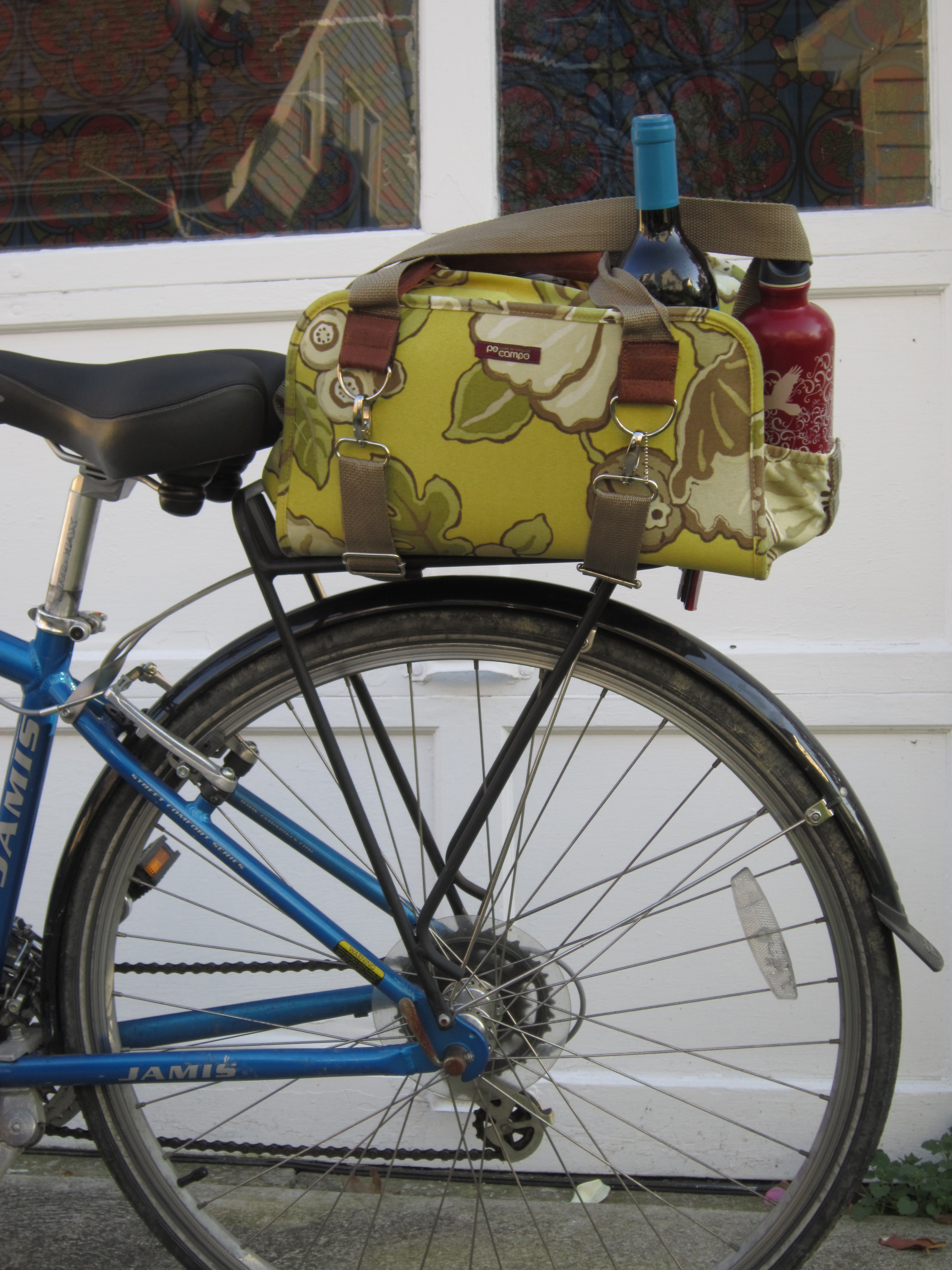
Thank you, bike…

…for allowing me to feel the joy of a Spring day detour to purchase wine for the evening on the way home from work.

See? Living sustainably can be fun, too!

Now if only there was a local urban winery to complete this lovely feeling I have…

There’s an idea!

(And thanks Po Campo for the hip bag!)

Happy Ostara! Celebrate Spring!

Regardless of what you like to call it, today is the Spring Equinox in the Northern hemisphere and we have again returned to a time where day and night are equal.  This time, daylight will win and we will continue to experience more light until the summer solstice returns.

Following the wheel of the year and the turn of the seasons is one of the best ways to connect with nature and to feel a greater sense of being a part of the all that is.  I find it especially whimsical and meaningful to think of my ancestors and other nature-based cultures of the past who would have felt this day on an extremely intimate level.  This balance between night and day means that winter is officially over and that soon food will be plentiful again — this is literally a time to be thankful that life can continue on. I think we still feel a part of this as we open our windows, spend more time outdoors noticing flowers, and feel a sense of renewed energy in our lives. The return of the Spring season still represents a time of renewal, rebirth, and fertility.

Luckily, even the idea of taking time to celebrate a day like Ostara isn’t all that foreign to most of us — the concept of rebirth and fertility as symbolized by eggs and rabbits appears in other holidays around this time of year (hello, Easter!).

Whether you celebrate it now, or in a few weeks at Easter, take a few moments to think of how and why these holidays began and how intimately humans have always depended on the Earth for our survival.

Usually, Ostara is a time where I’m just starting to feel like Spring might come again. This year has been a little different and Spring is in full force.  Here are some Spring-things that I’ve noticed over the past few days…

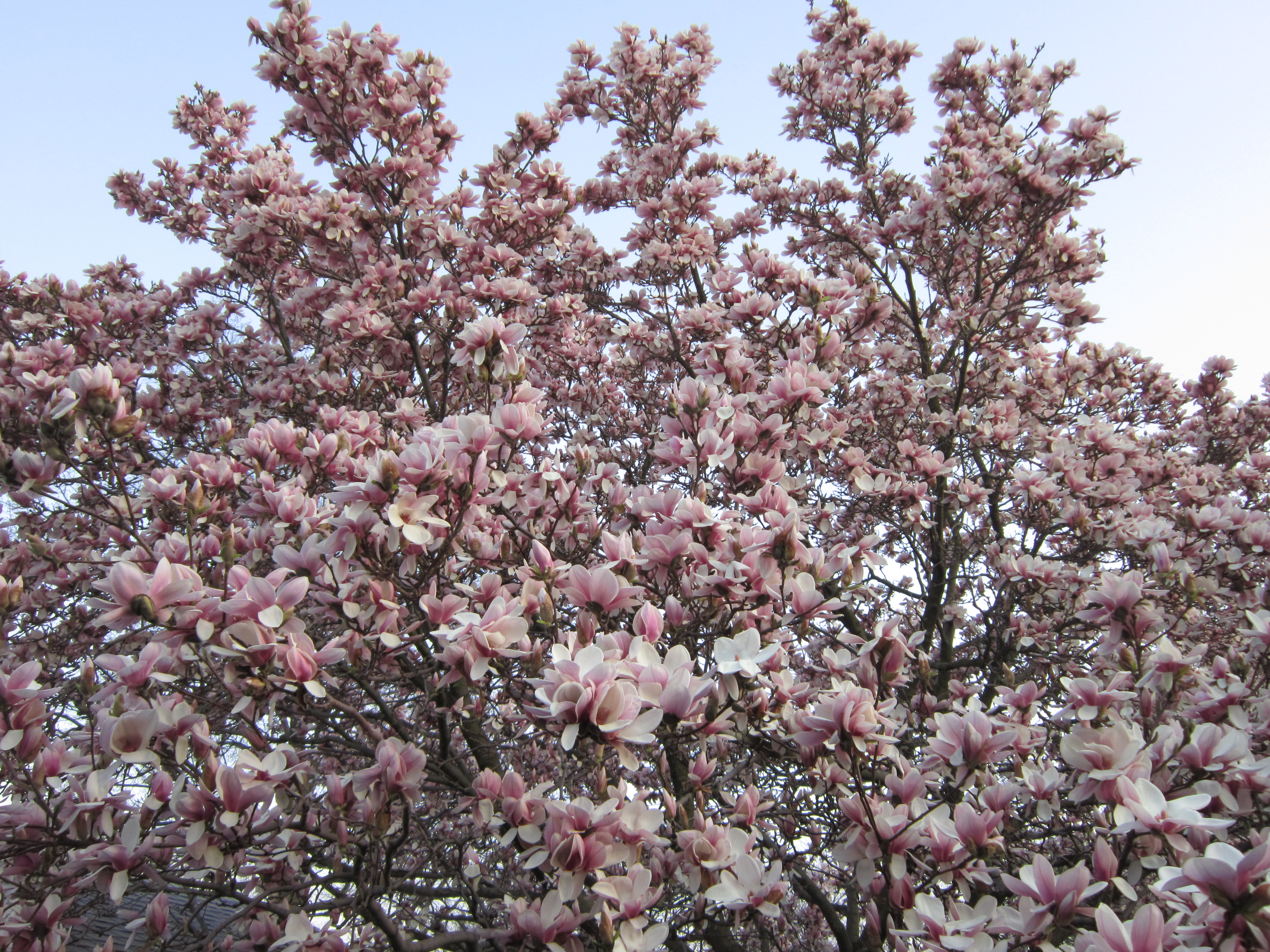
The magnolia tree is back! I feel like I should just spend all of my time underneath this tree appreciating it while it’s in bloom. It comes and goes so quickly!
Magnolia tree 2012

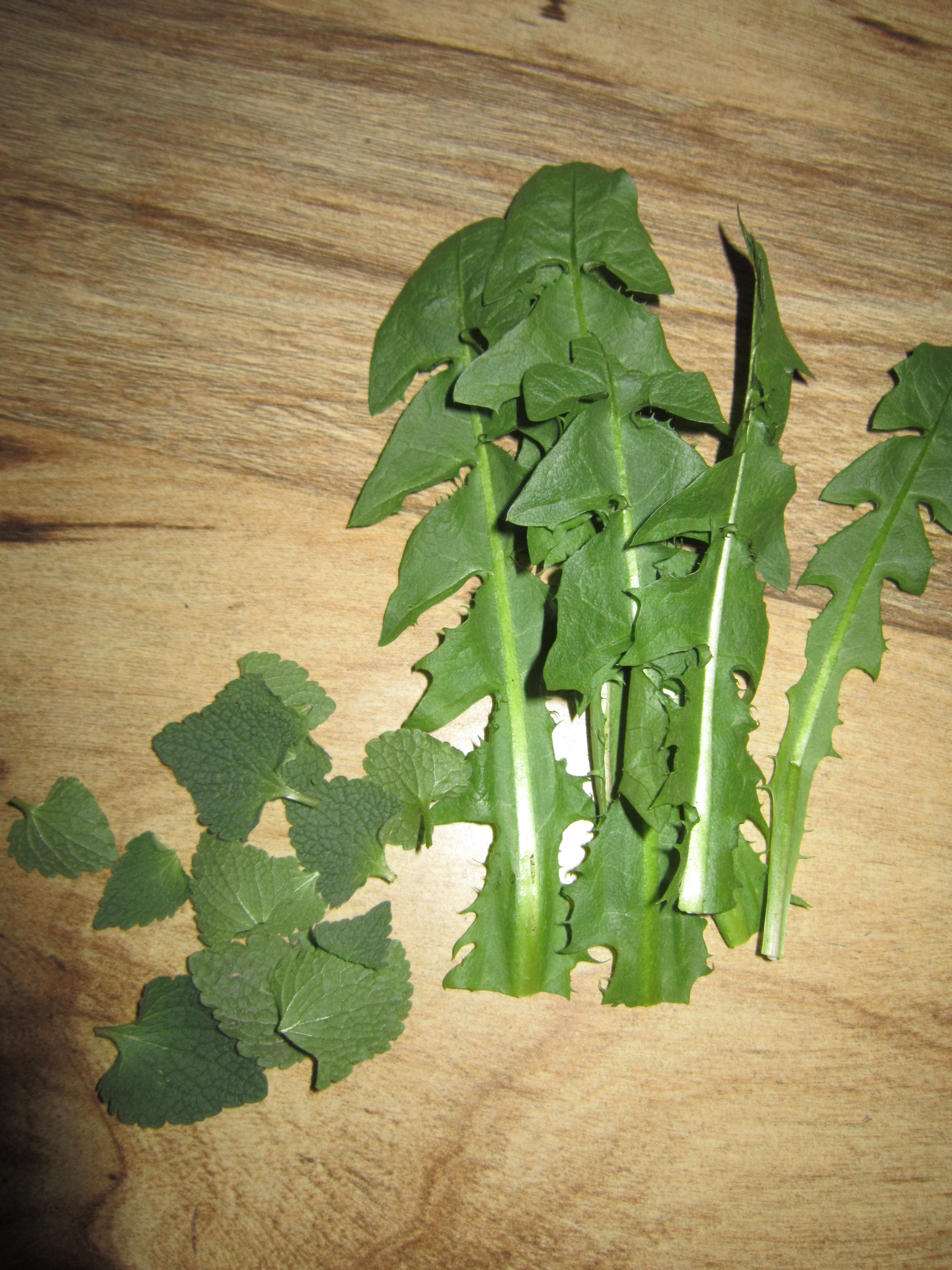
Adding Spring “weeds” to my salads!
Purple dead nettle and dandelion

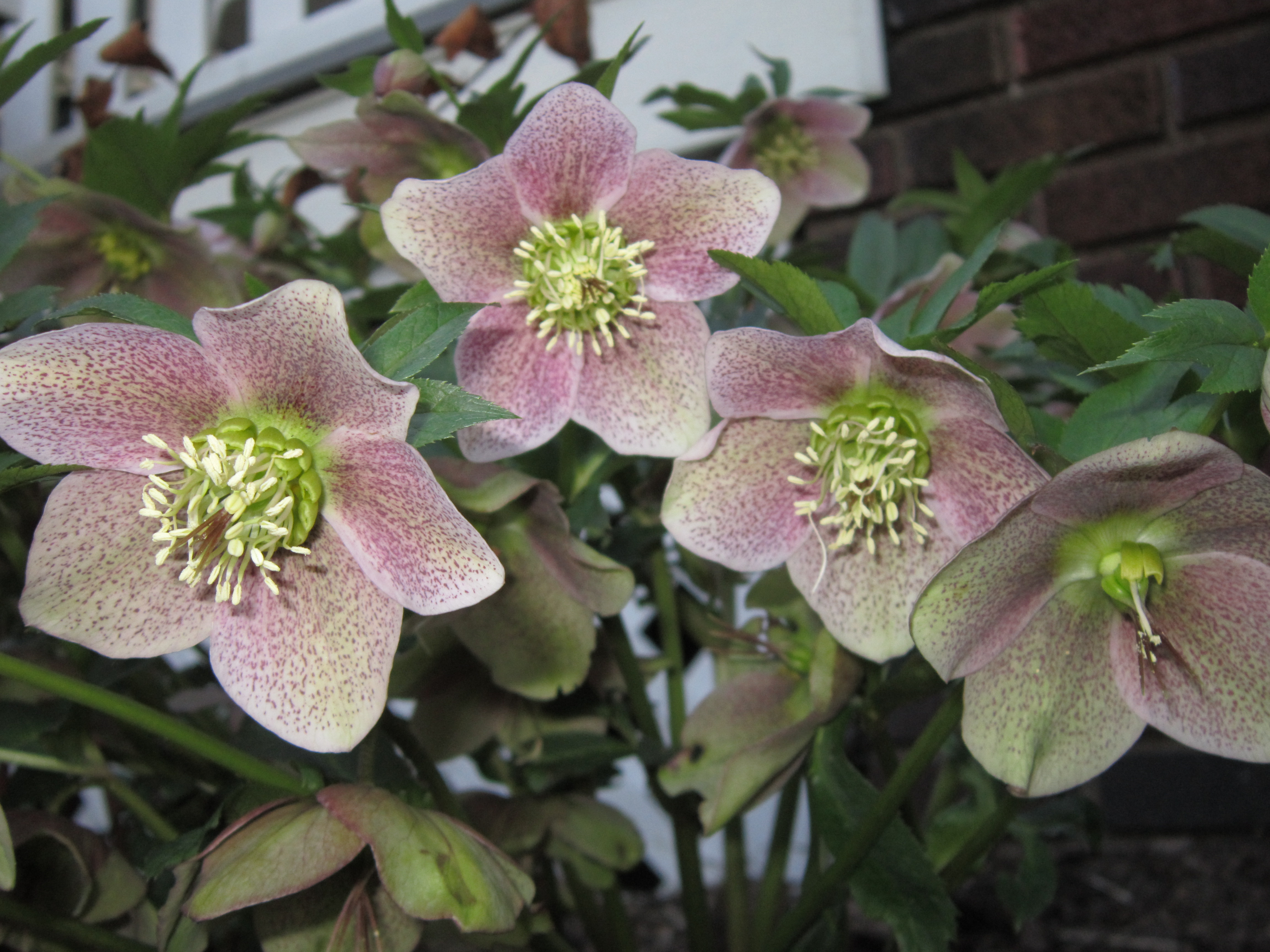
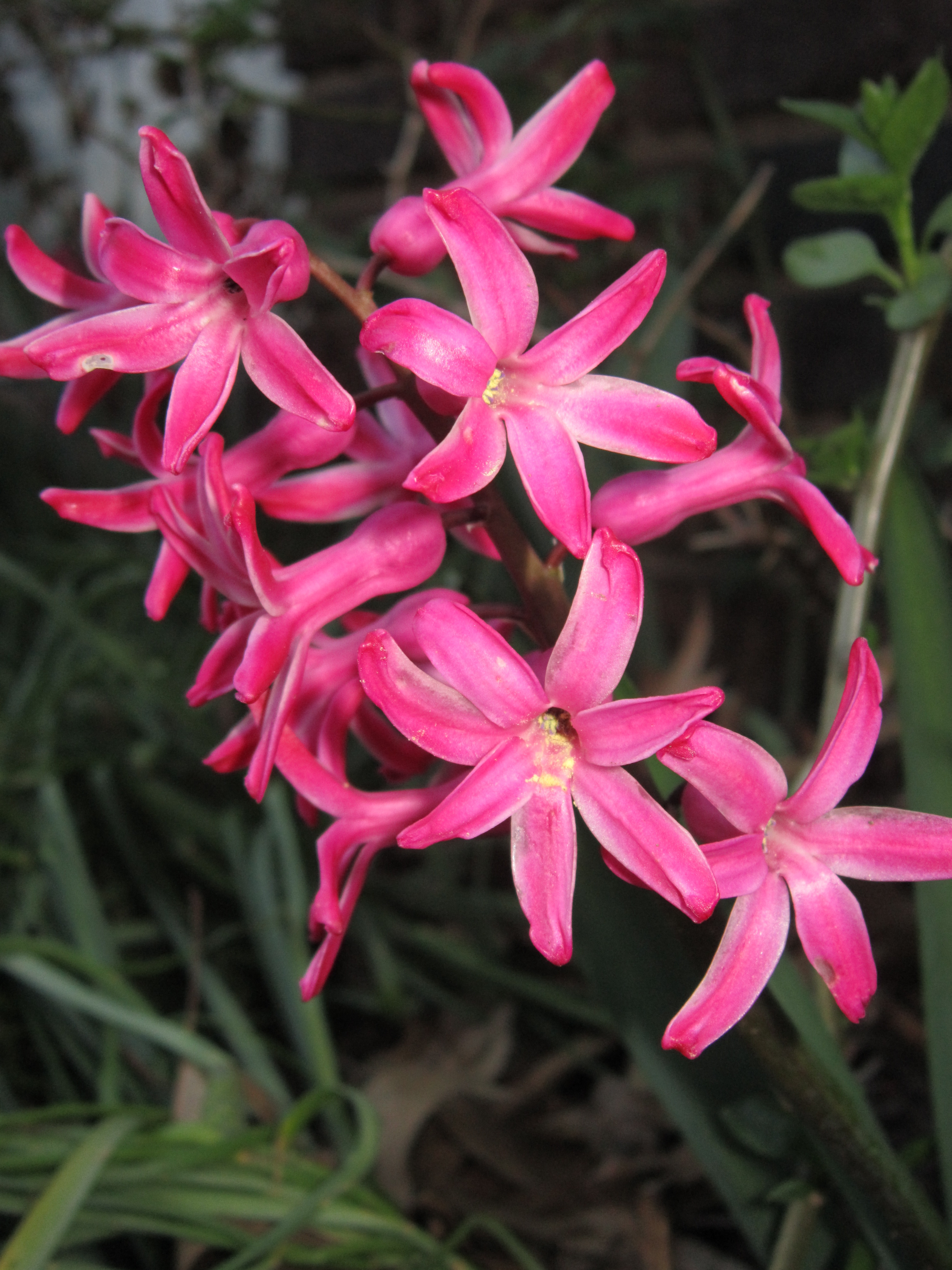
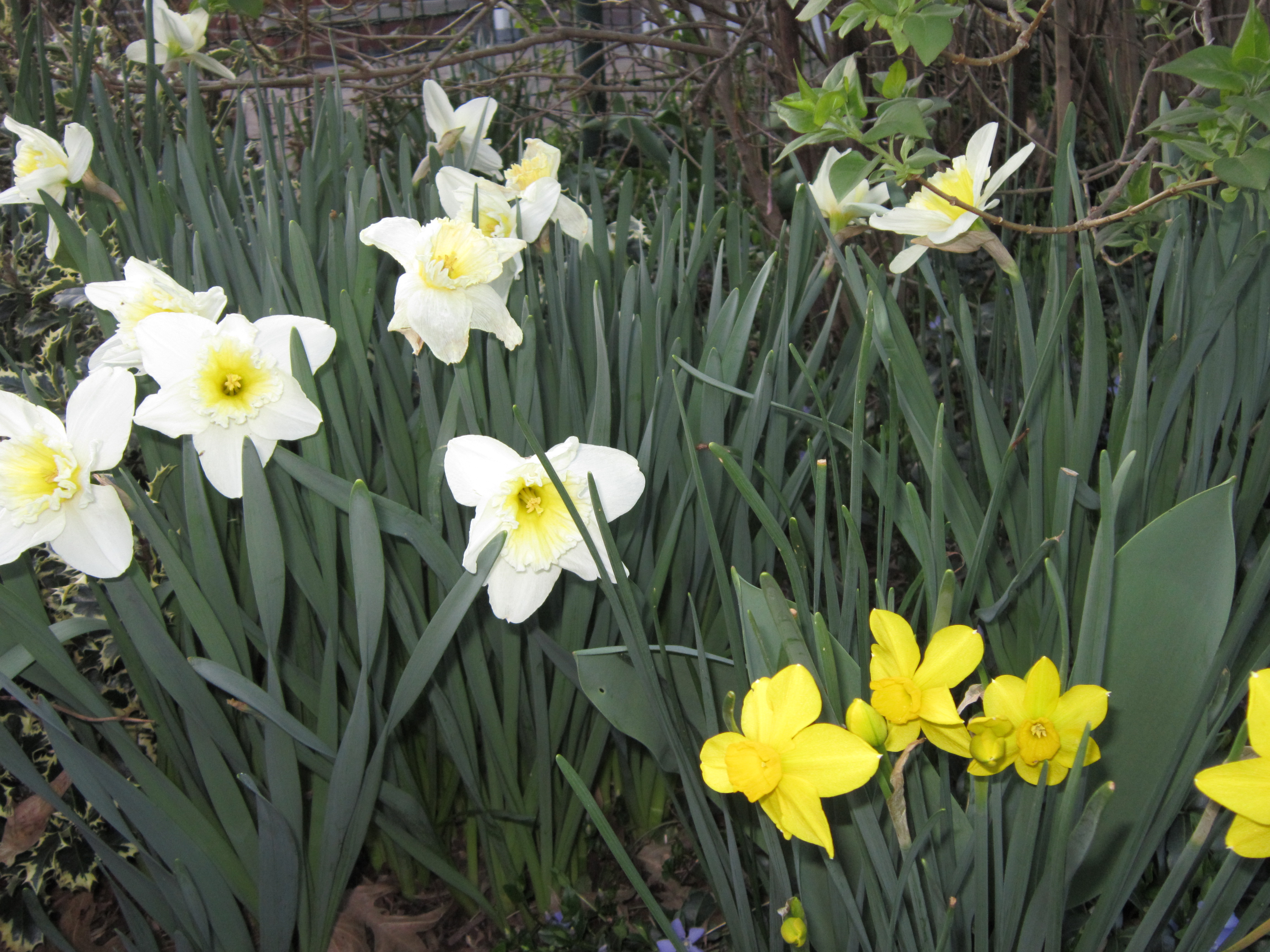
Blooming flowers in the yard…

Windows open and Spring cleaning!

How are you celebrating Spring?

Enhanced by ZemantaShared on: