Easy Solar Dehydration

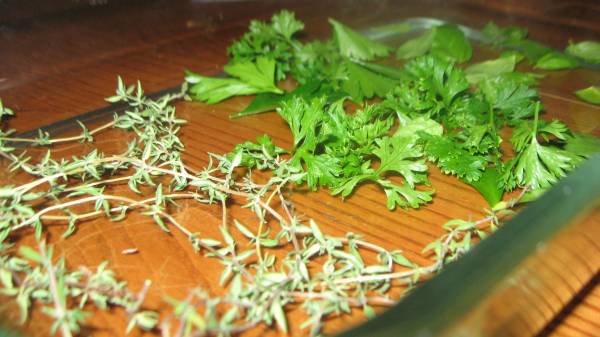
At this point in the season there are a lot of fresh herbs and flowers to process.  Hanging them upside down in an area out of direct sunlight is one of the easiest methods to use, but it can take about a week (or more) to dry plants this way and there are some plants with a high water content that can be difficult to dry without molding.

Continue reading

Get Your Red Clover Before the Season’s Over

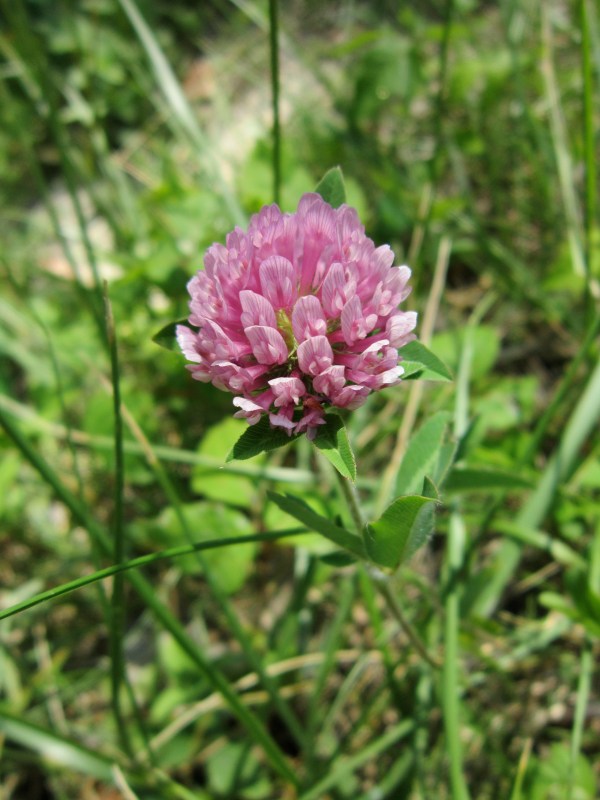
Ah, red clover. A versatile plant that helps with so many things — amusing young children in an attempt to find 4 leaves; food for grazing animals; medicine; and fixing nitrogen into the soil, to name a few.

Continue reading

June Brings…(Sourdough success, garden beauty, and permaculture plans)

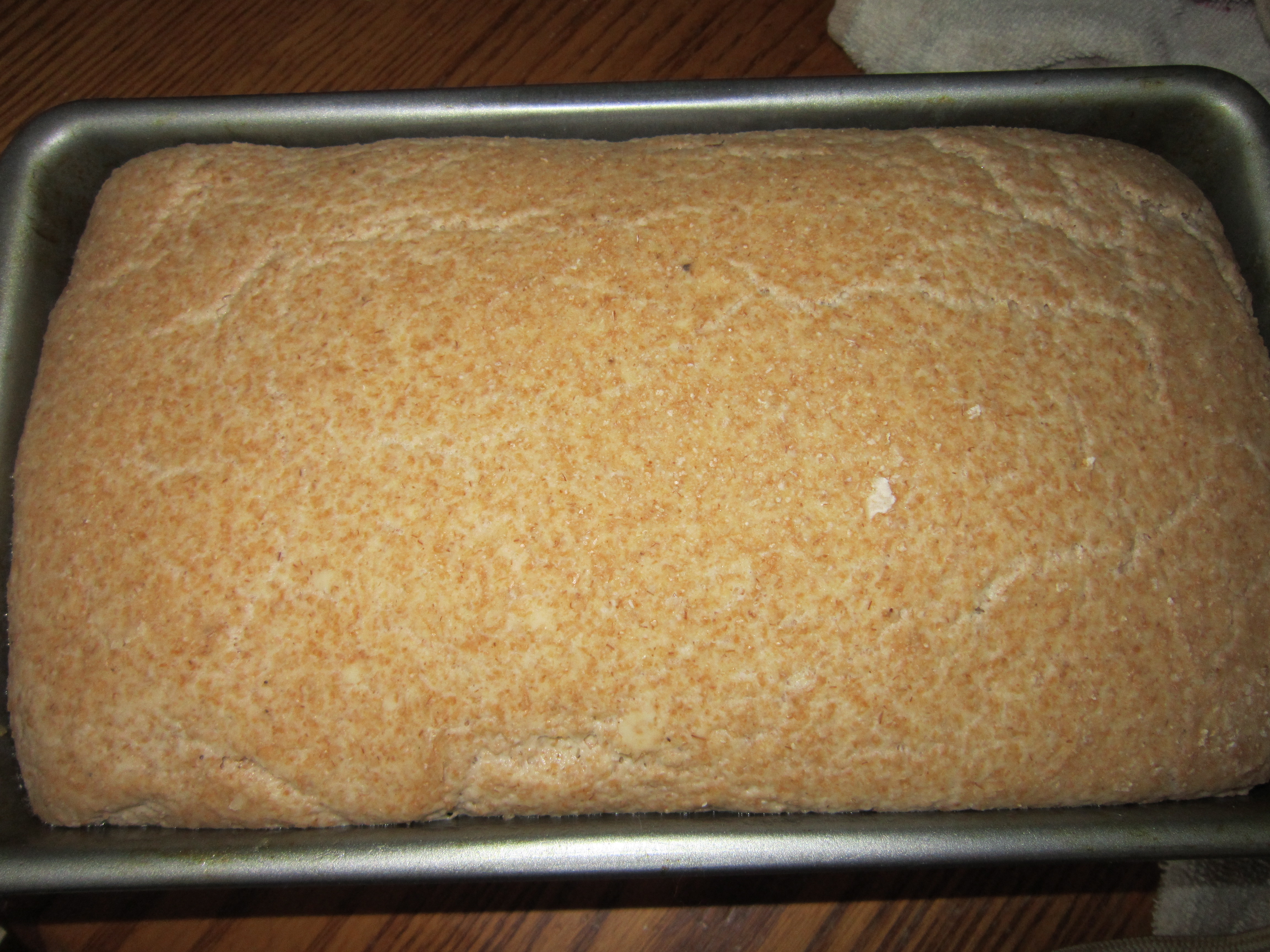
It took me a month of working with my sourdough starter, but it finally resulted in a delicious loaf. It still needs work, but I think it was a darn good first try.

Fresh sourdough bread!

Continue reading

It’s Food Revolution Day!

Happy Food Revolution Day!

This weekend, take some time to make a home-cooked meal, plan how you’ll get to the farmers’ market, start your kitchen garden, or go foraging for some wild goodies!

I’ve celebrated the day by going to the farmers’ market this morning, helping a young neighbor pick her first strawberries, enjoying some homemade bread, and scheming about this week’s meal plan (more asparagus delights!).

Oh, and we also spent 2.5 hours riding bikes at this event — not exactly food-related, but still revolutionary! Over 550 people came out for this — it’s really great to see your community overrun with bikes (and yes, I won a prize!)!  It was a little glimpse of the future…

As an additional offering for this revolutionary day, I’d like to share a documentary called “A Farm for the Future” produced by the BBC.  It might be the first mainstream documentary about permaculture, and it’s a great overview of why our current food system cannot/will not go on indefinitely. It also provides a positive vision about how permaculture could help provide the new direction we move in to feed ourselves (and to better care for the Earth in general!).  Enjoy!


And remember to vote with your fork!

Restorative Humans & A Native Prairie Planting

What did the land you live on look like before humans arrived? Was it forest? Prairie? Desert? Wetland?

How did the Native people treat that land? And then what happened when the new culture arrived?  Did it become a monoculture farm? A suburb? A place to extract a natural resource?

Is there any way that humans are ‘supposed’ to live on the land?

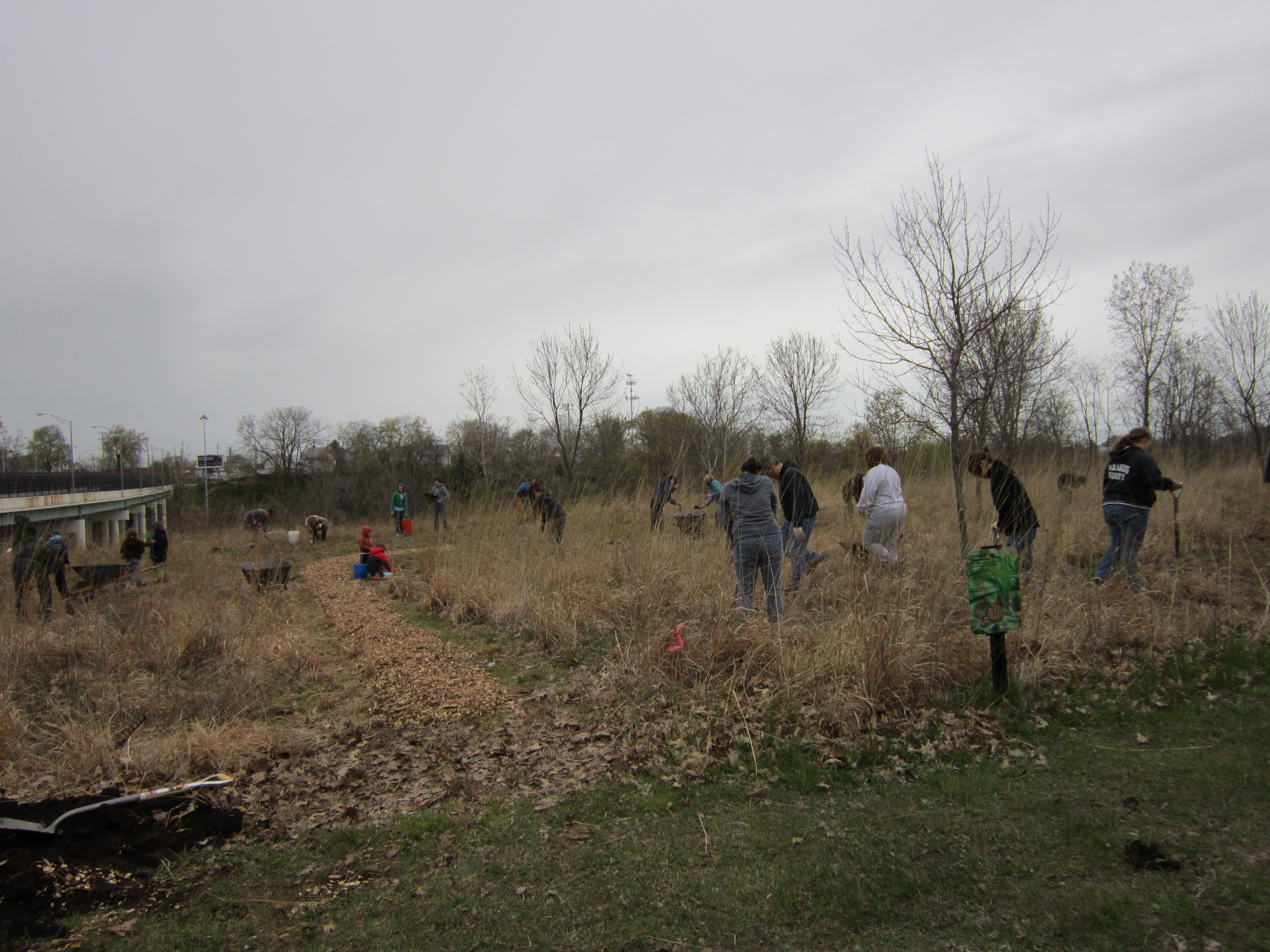
I reflected on this question as I participated in a native prairie planting over the weekend.

Native prairie-to-be

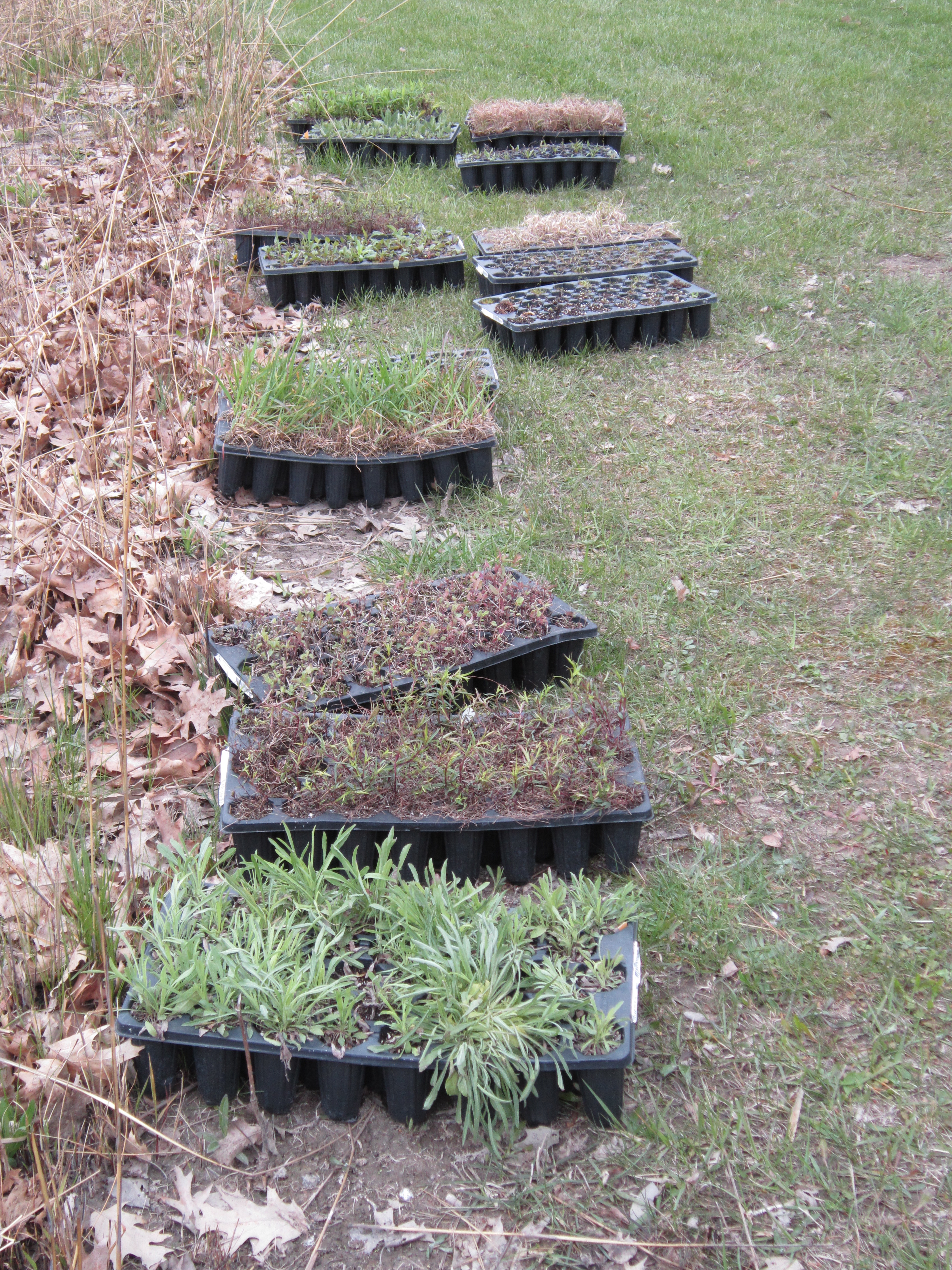
Native prairie plants

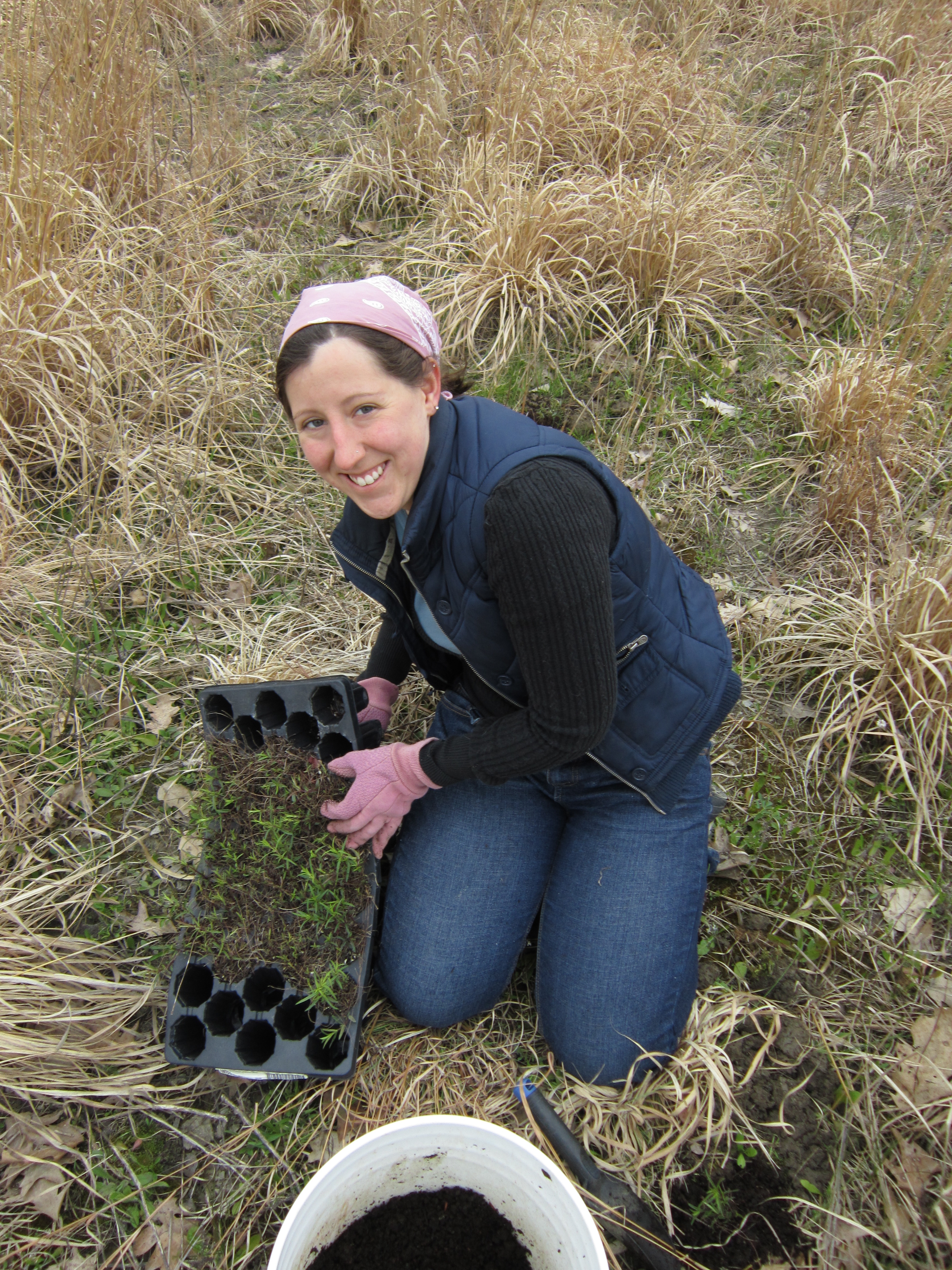
My partner and I focused on flats of two species in particular — the New England Aster
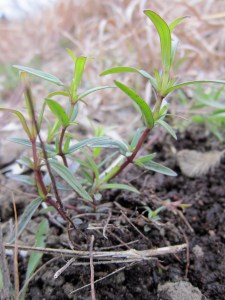
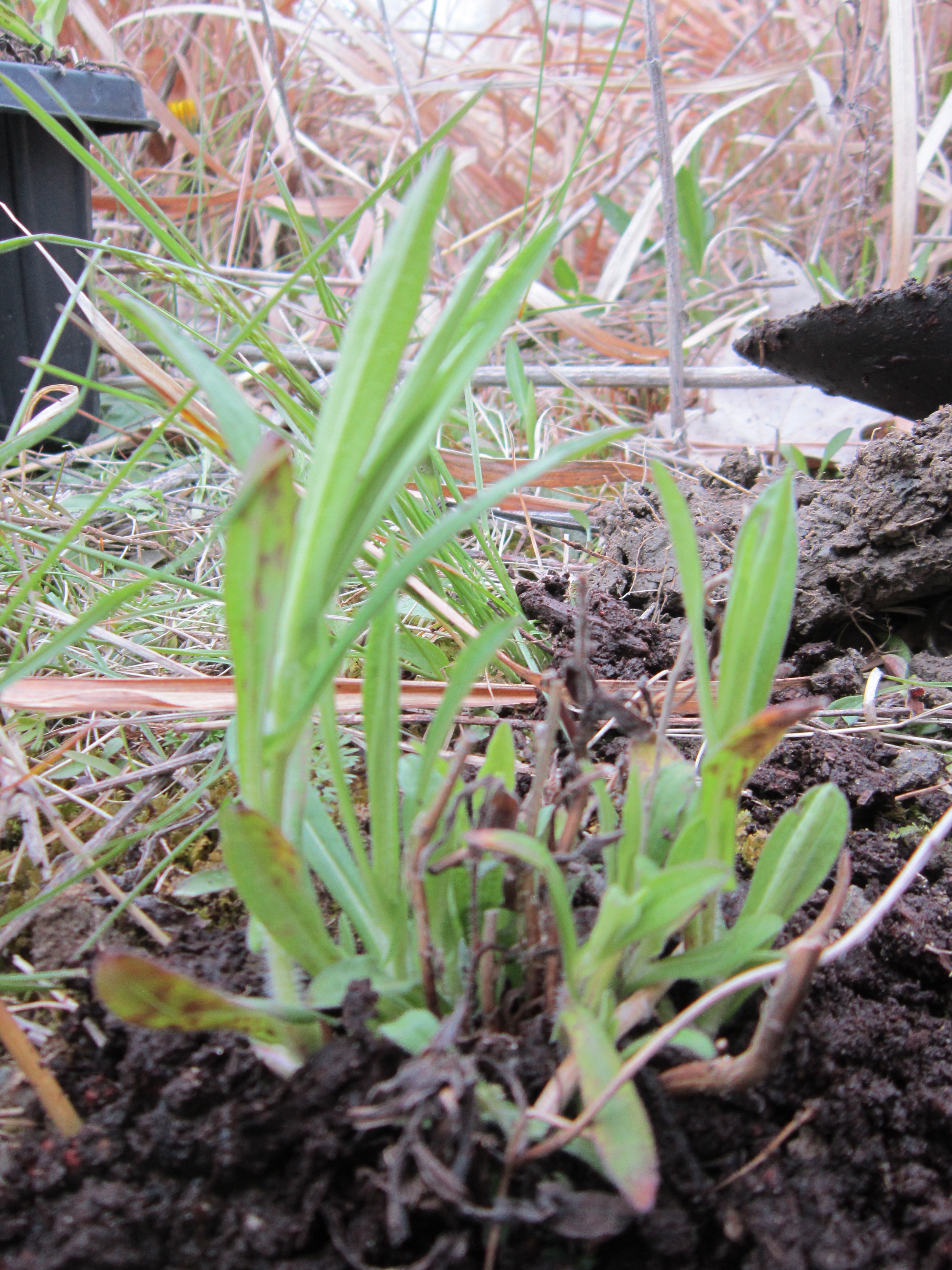
Baby New England Aster

and Narrowleaf Mountain Mint.

Baby Narrowleaf Mountain Mint
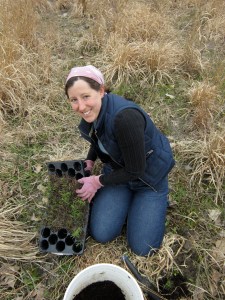
The experience got me thinking about the fact that all animals have roles to play in keeping their environments balanced, thriving, and diverse.  For example, birds help to move seeds around, insects assist with pollination, and predators keep populations of small mammals in check.  When one species overexploits its environment, there are consequences, often with a die-off of part of the population until balance is achieved once again.

Recently, humans have taken a very exploitative approach to our environment and our population numbers are booming.  This continued growth and the fact that so many of us can lead such extravagant lifestyles has been made possible by the availability of cheap carbon resources (oil, coal, natural gas) that allow for massive food production and a complex medical system that is able to keep so many people alive.

There are some problems with this, however. The resources that made this growth possible are nonrenewable (and we may have passed the peak of production), and we know that this approach to maintaining human livelihood is leading to the pollution of our air, water, and land, the destruction of natural environments, and countless species extinctions.  We also know that previous cultures that did not respect the limits of their natural resources are no longer in existence.

Is there a different way to approach our relationship to the Earth?

If all animals have roles in keeping nature balanced, it may help to reflect on potential ways that humans have evolved as part of ecosystems.

Perhaps instead of being dominators of natural cycles, we are intended to work with nature to create more healthy and vibrant ecosystems for ourselves and other organisms.  These big, long-term planning brains must be good for something beyond our own survival, and I don’t think it’s necessarily the ability to analyze stock market trends.   Perhaps the human role in the ecosystem is to function as a sort of ecosystem engineer that could bring greater diversity and balance to areas in which we live.

After all, we can foresee long-term trends and we understand complex cause-and-effect relationships.  As far as I can tell, we are the only species that seems to know that if we take a seed, plant it and add water, that it will grow.  We can use these planning abilities to take care of the planet in a much better way than we have recently.  We should also get better at using this ability to understand the dire consequences of continuing on with our current behavior, and to learn from the mistakes of cultures in the past.

I believe it is possible for humans to live as constructive co-creators with nature.

Prairie planting

We can take a field of grass, envision a thriving habitat, and find ways to create it.

Go and be restorative!

Enhanced by Zemanta

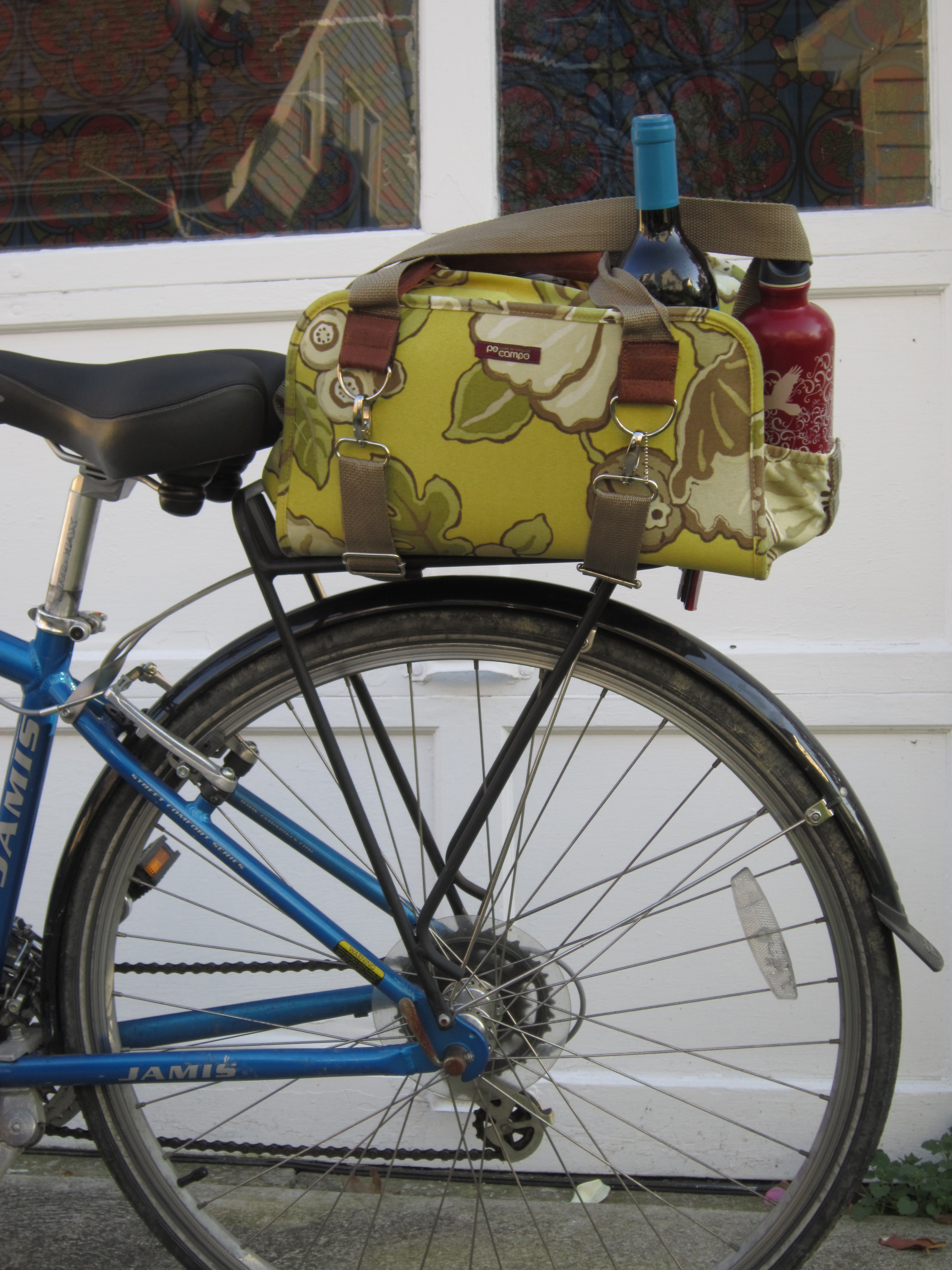
Thank you, bike…

…for allowing me to feel the joy of a Spring day detour to purchase wine for the evening on the way home from work.

See? Living sustainably can be fun, too!

Now if only there was a local urban winery to complete this lovely feeling I have…

There’s an idea!

(And thanks Po Campo for the hip bag!)

Happy St. Patrick’s Day! Plant some peas. Start a community garden.

Today is full of the color green in more ways than one. I’ve seen a lot of people sporting green shirts and I’m more than happy that I’ve spent the better part of the day engaged in some “green” activities — pea planting and helping with the foundation for a new urban permaculture garden.

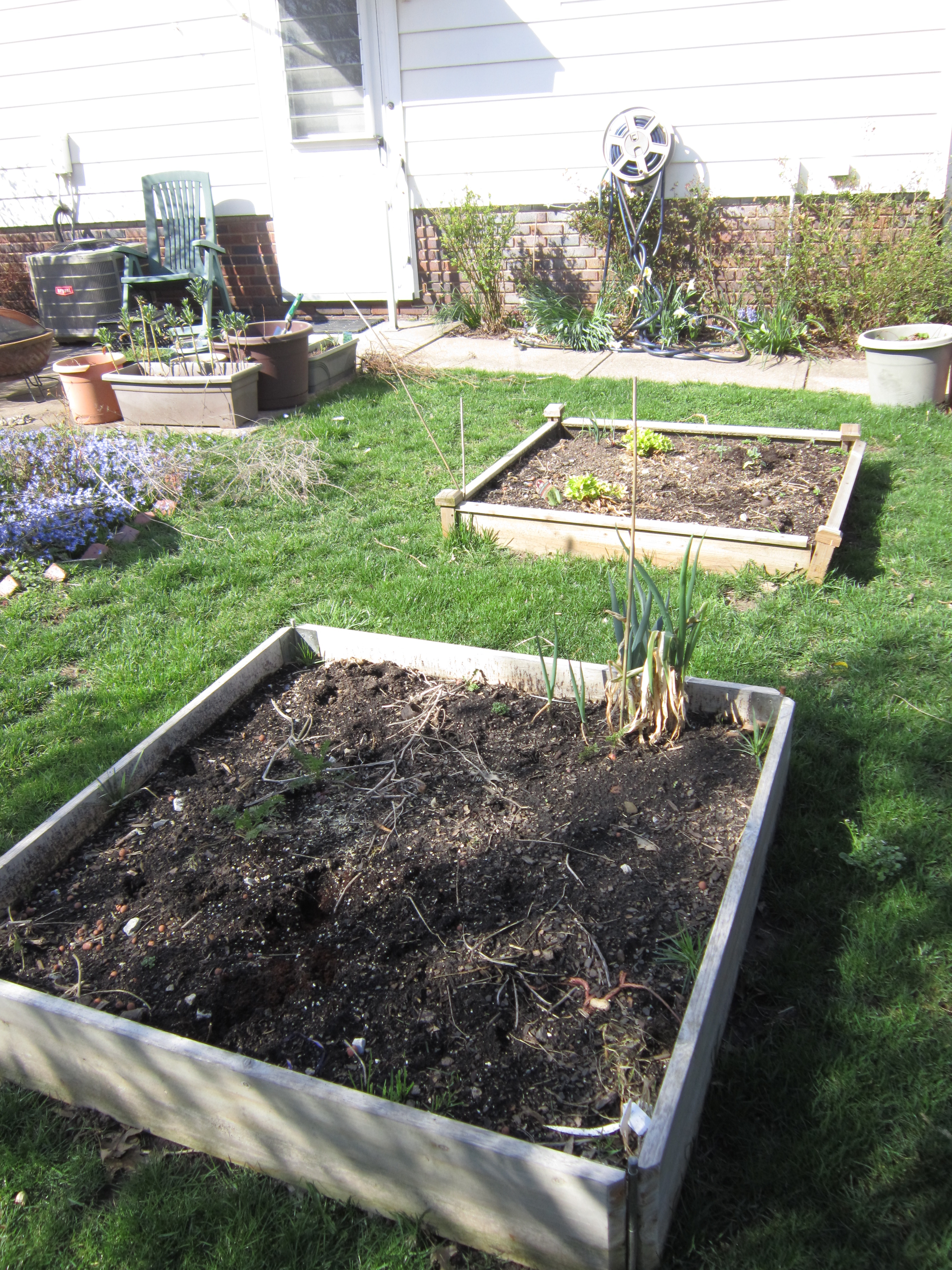
I’ve been doing some garden clean-up activities this week, but today was the first day I really have dirt under my fingernails and that feels totally refreshing. There are so many possibilities for this year’s garden….it’s still very bare (with a few exceptions — some winter survivors, garlic, and weeds)!

The before picture…

Grandma has always said that peas should be planted near St. Patrick’s Day. As one of 12 kids on a farm, I’d say she must be well aware of the best time to plant peas.  So, what better day than the actual St. Patrick’s Day?

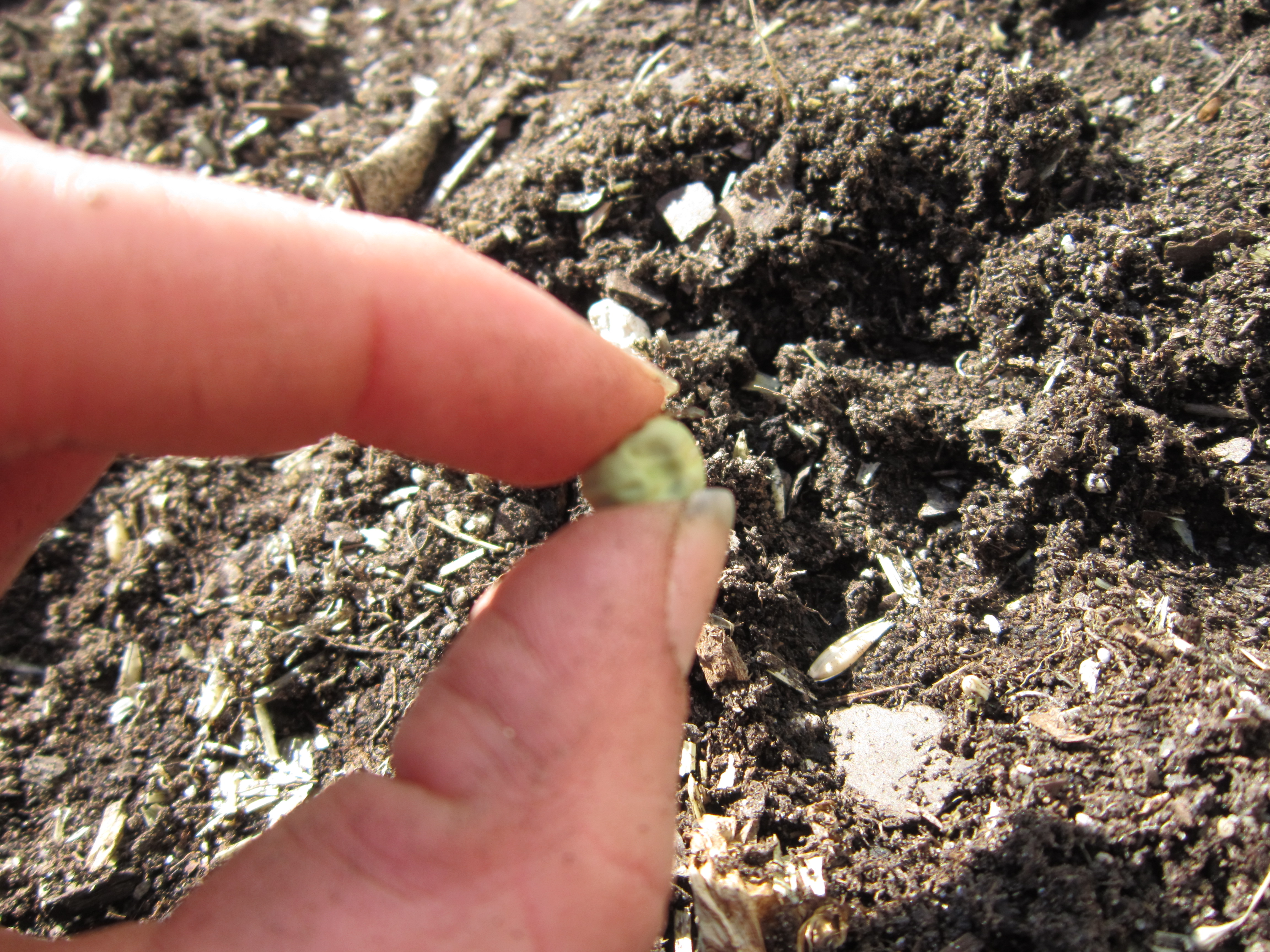
Let’s plant peas!

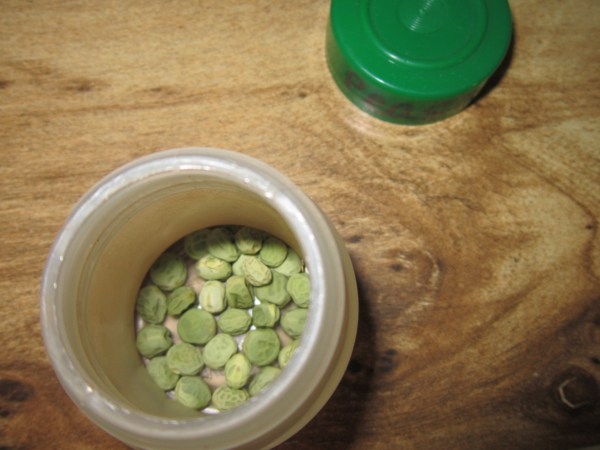
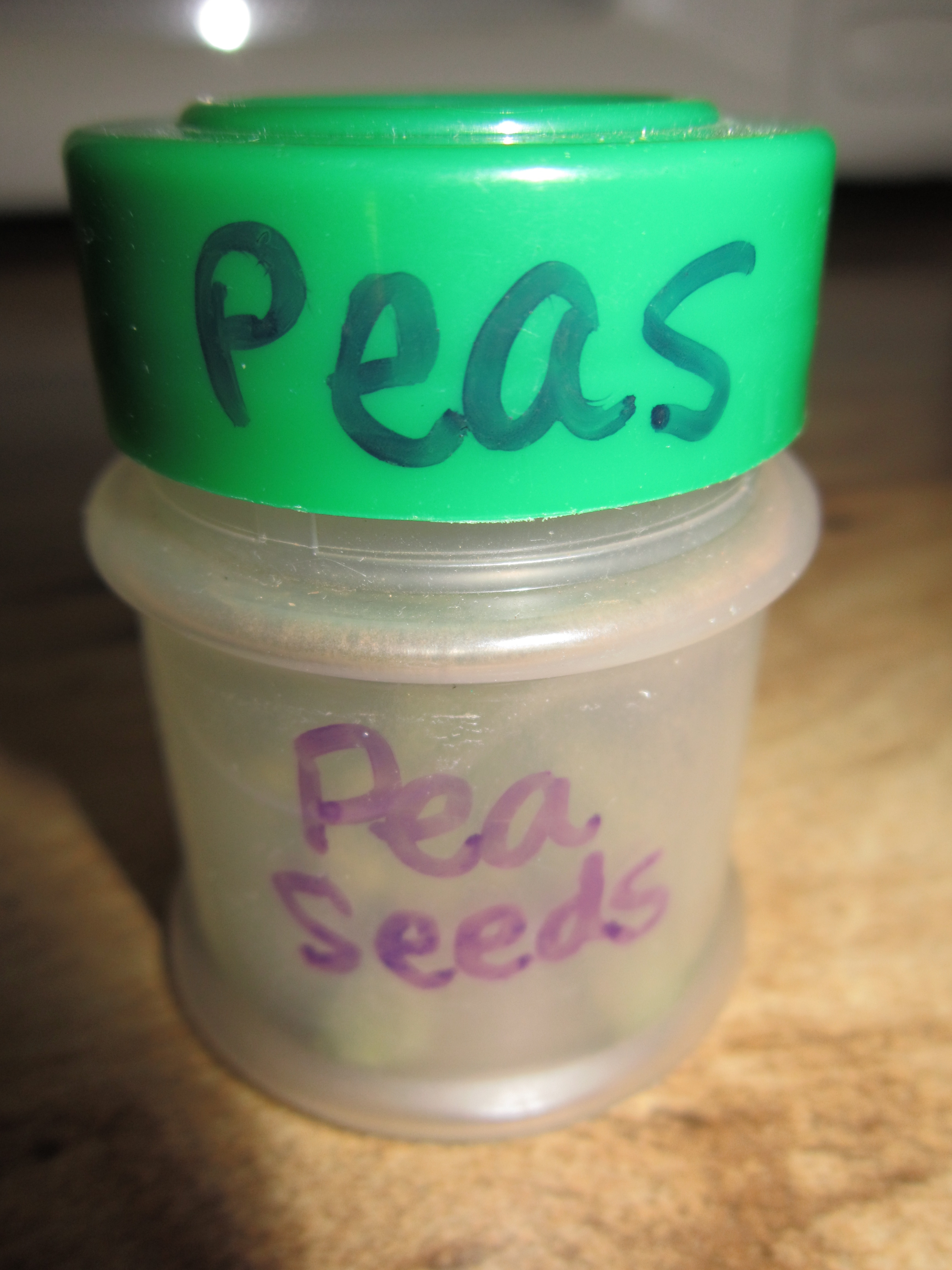
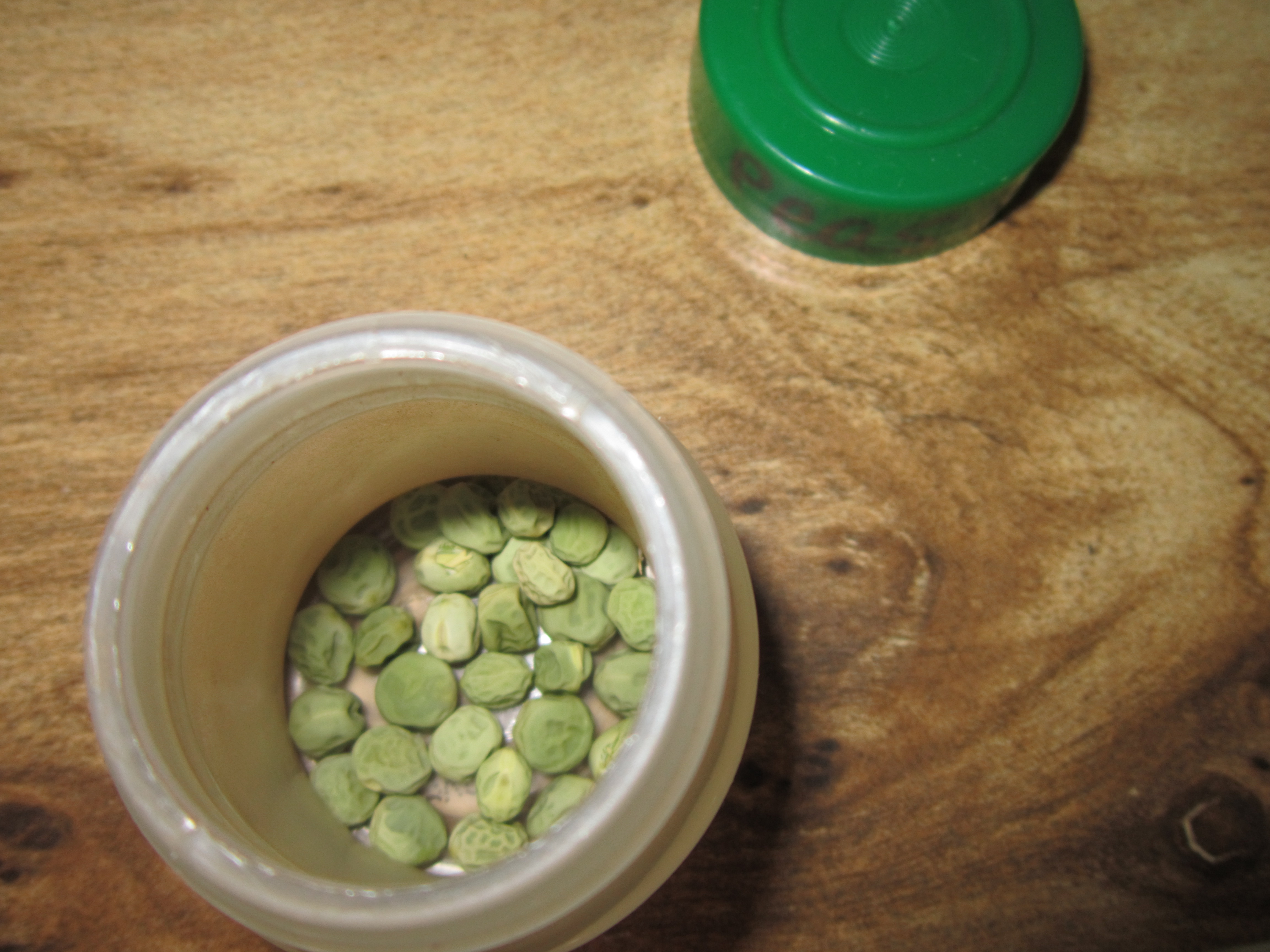
Lucky for me, I didn’t even have to buy peas as I saved some from last year.  This was one of my first tries at seed saving so I’ll keep my fingers crossed that this will work.

Not many but these will do!

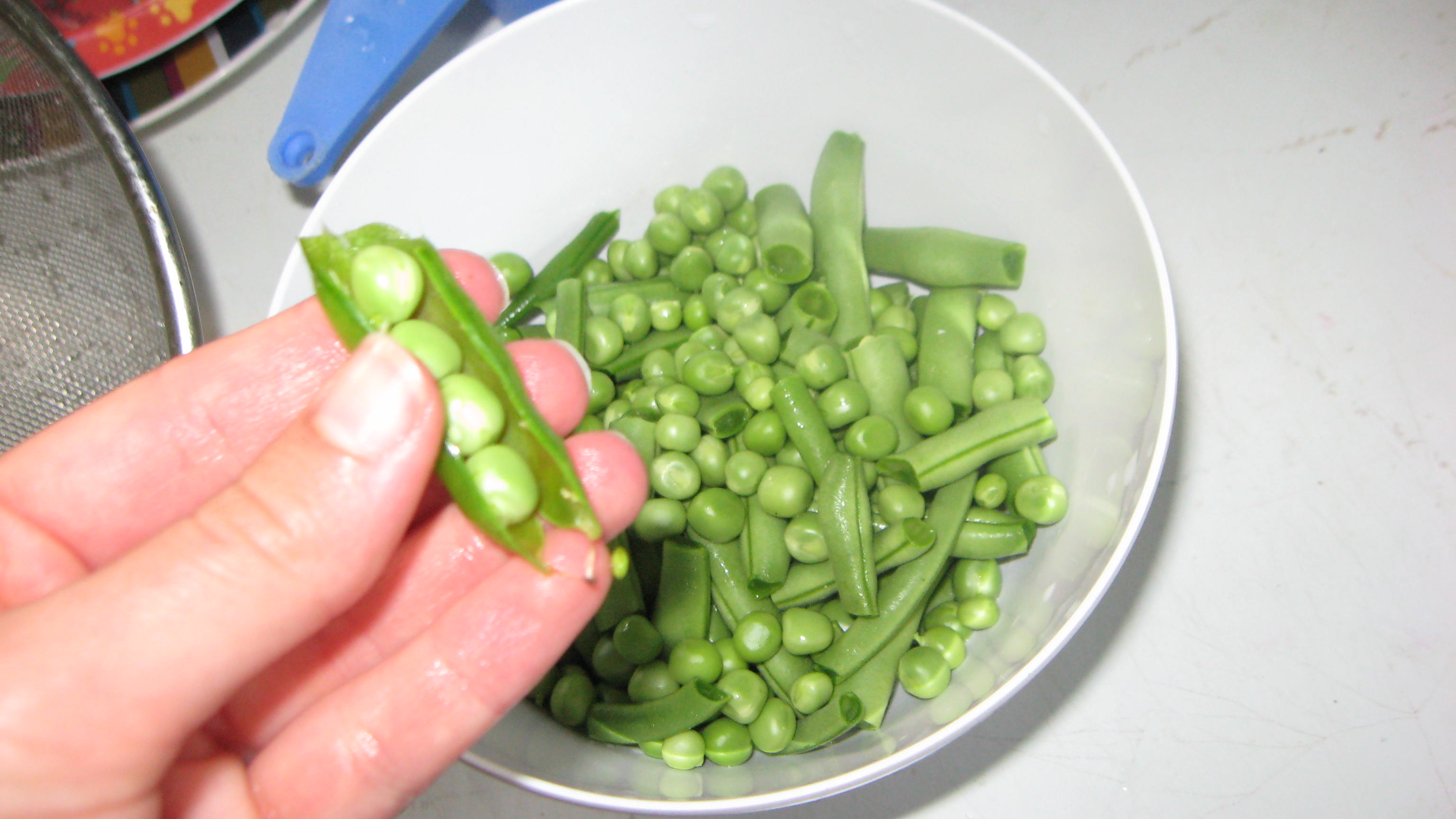
I planted about 10 today — 2″ deep and I’m experimenting with them in a circle rather than a row to see if I can trellis them better this way.  I will plant another batch in a week or two. Hopefully that will allow for a bit larger/longer of a harvest than last year.  Last year’s peas were yum-tastic, but they only lasted a couple of meals (and I’m referring to seed peas — the snap peas seem to be around a lot longer).

Last year’s peas. THEY ARE SO CUTE! (and some green beans..)

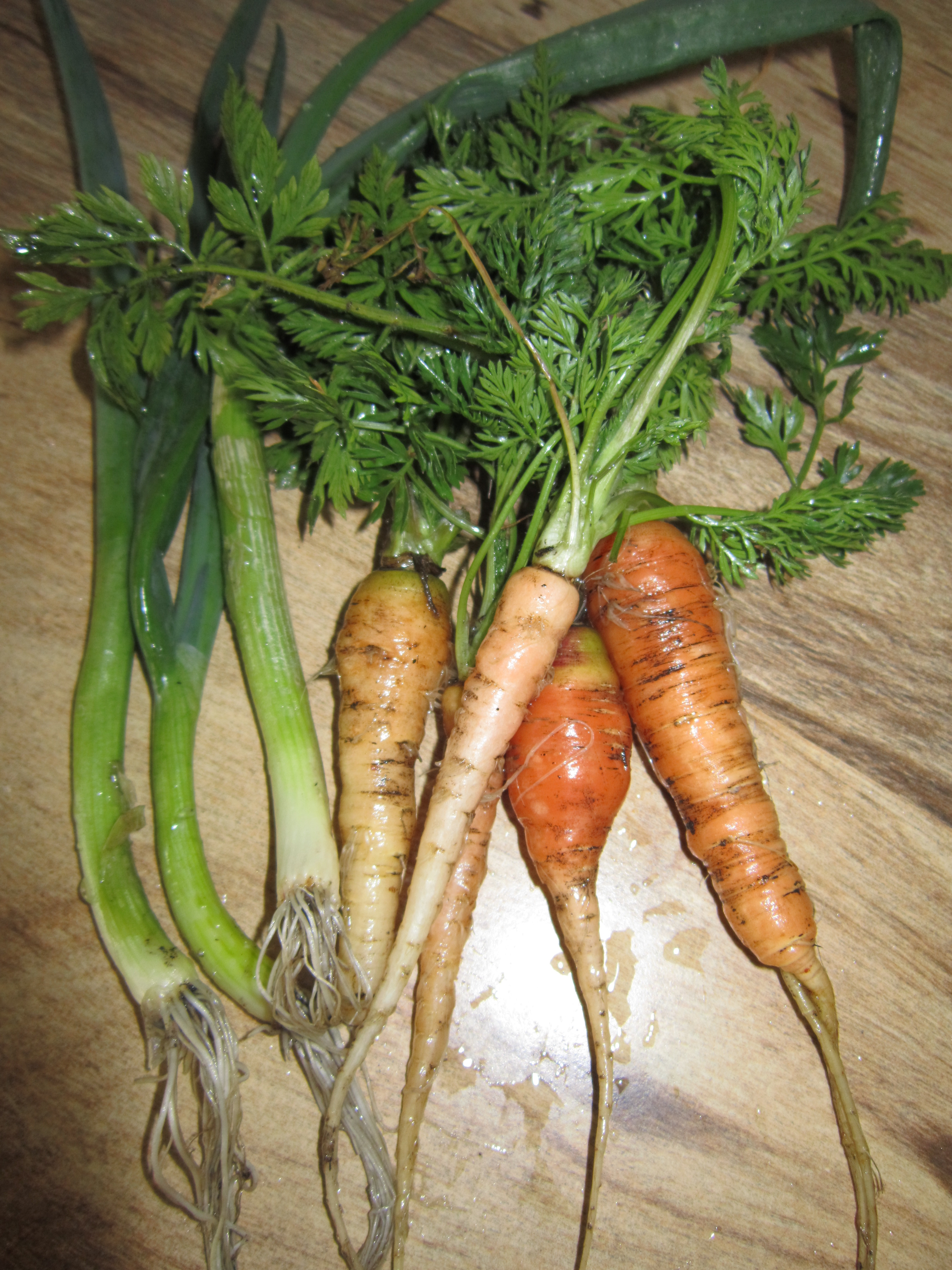
I also found some stragglers that survived the winter to harvest today. That’s fun!

Carrot and green onion winter survivors.

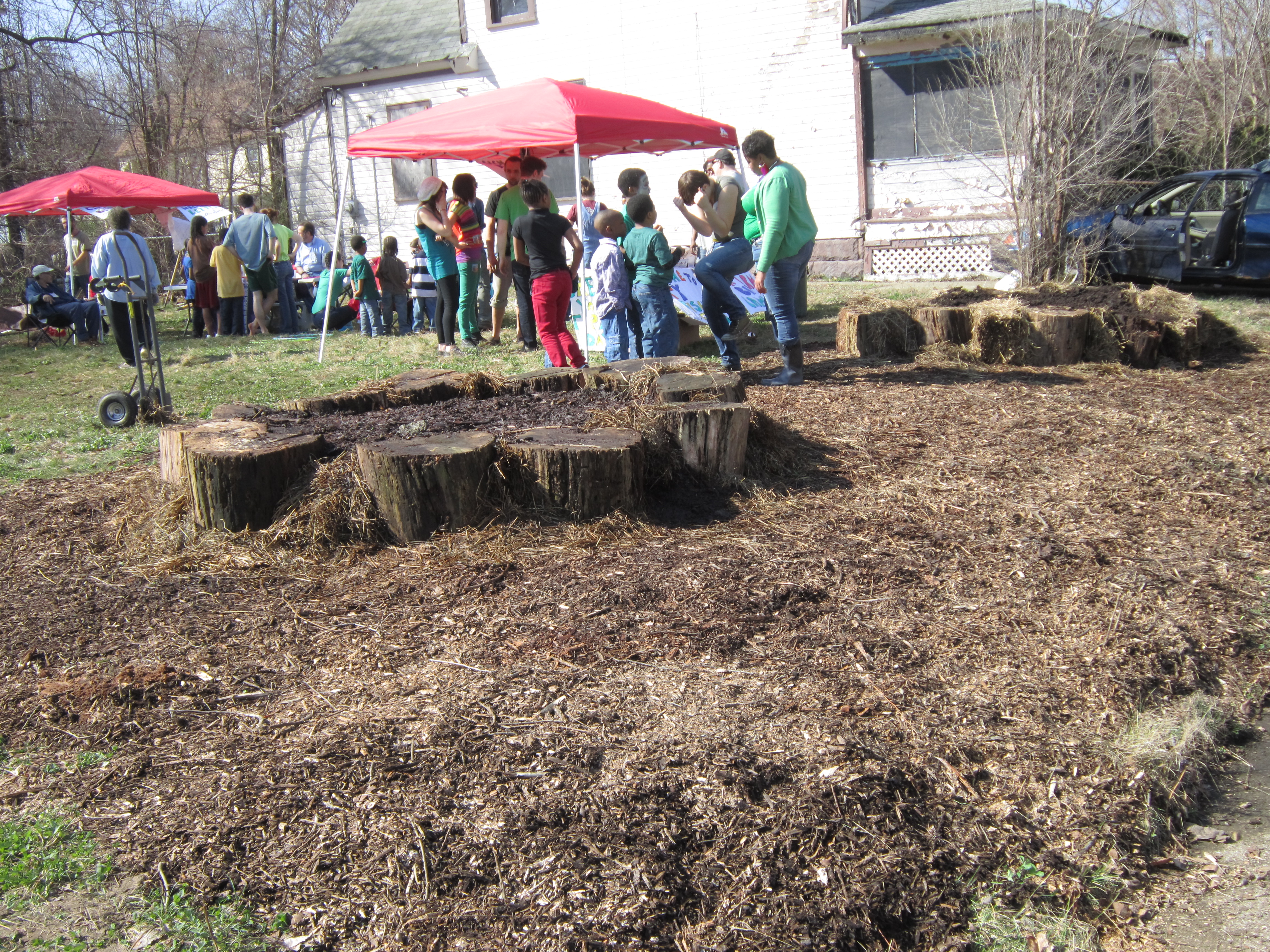
Earlier in the day, I went to a neighborhood on the East side to help expand City Rising Farm into a new vacant lot across the street from the garden that they’ve established previously.

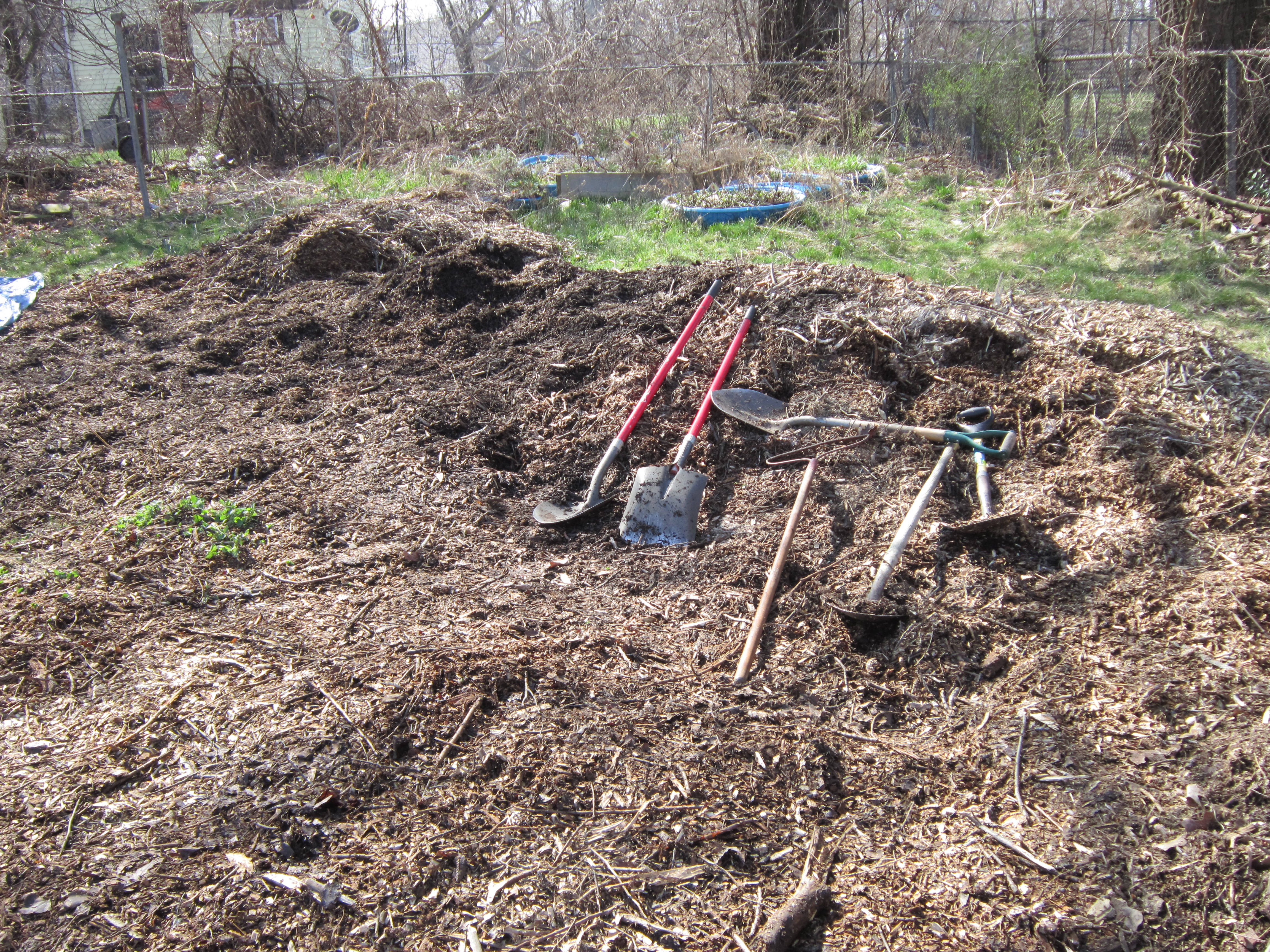
Mostly the day involved moving wood chips to the front of the lot to start sheet mulching. Many wheelbarrows and tarps full of woodchips were transported from the back of the lot to the front.

Depleted piles of wood chips

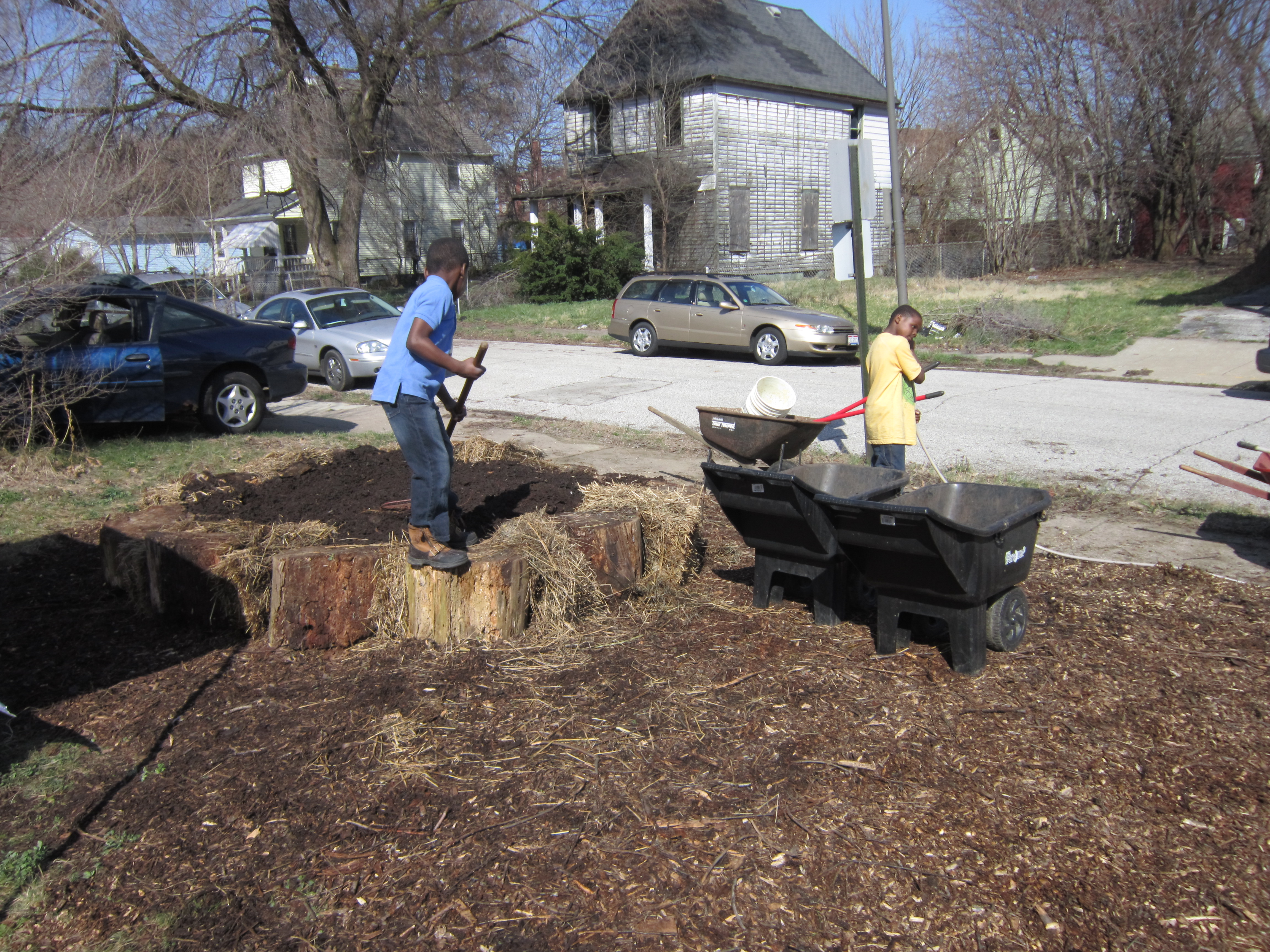
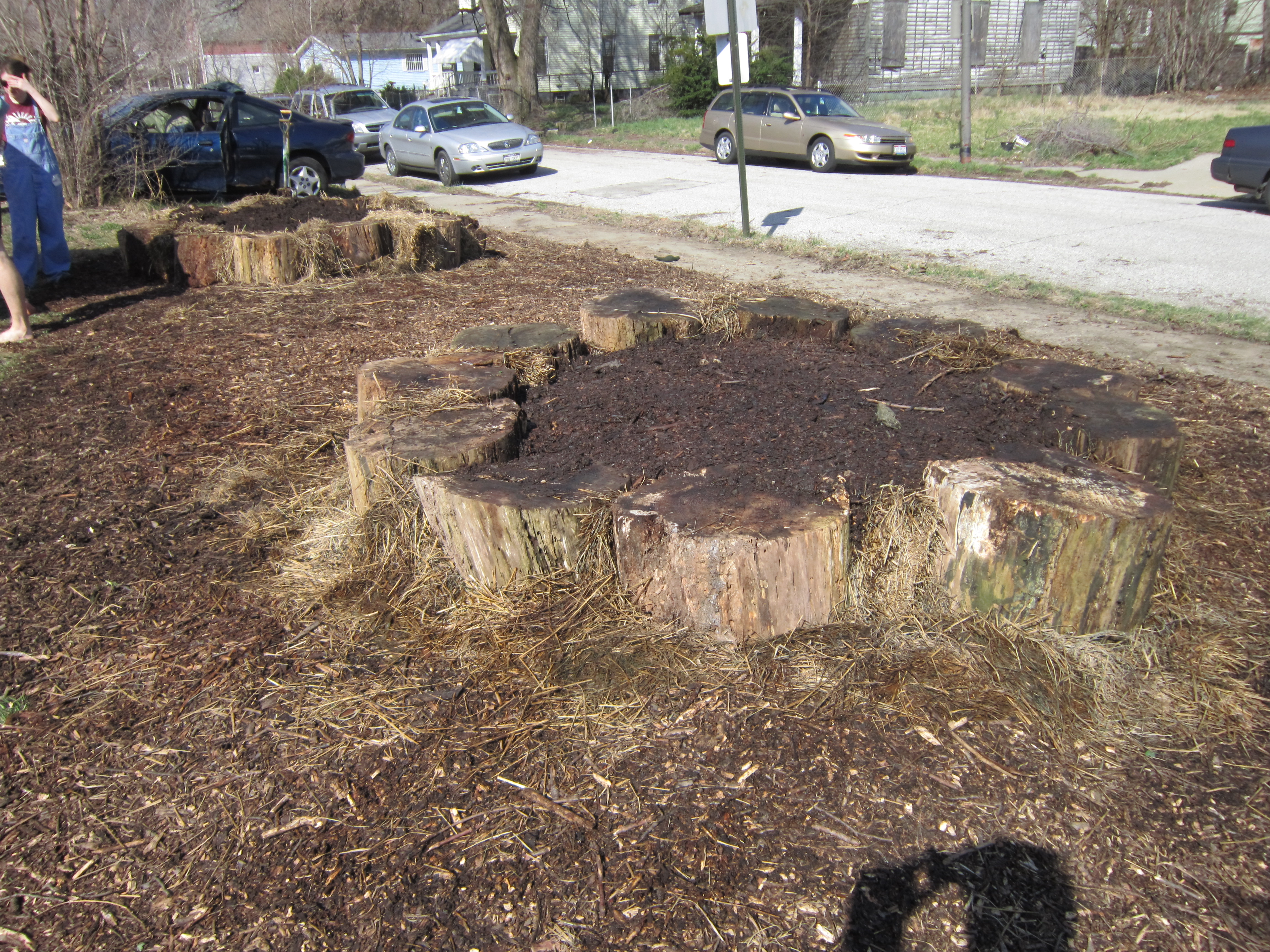
After getting a thick layer of woodchips down, two raised-beds were made from rings of old tree stumps.

Young urban farmers

Raised beds bordered with tree stumps

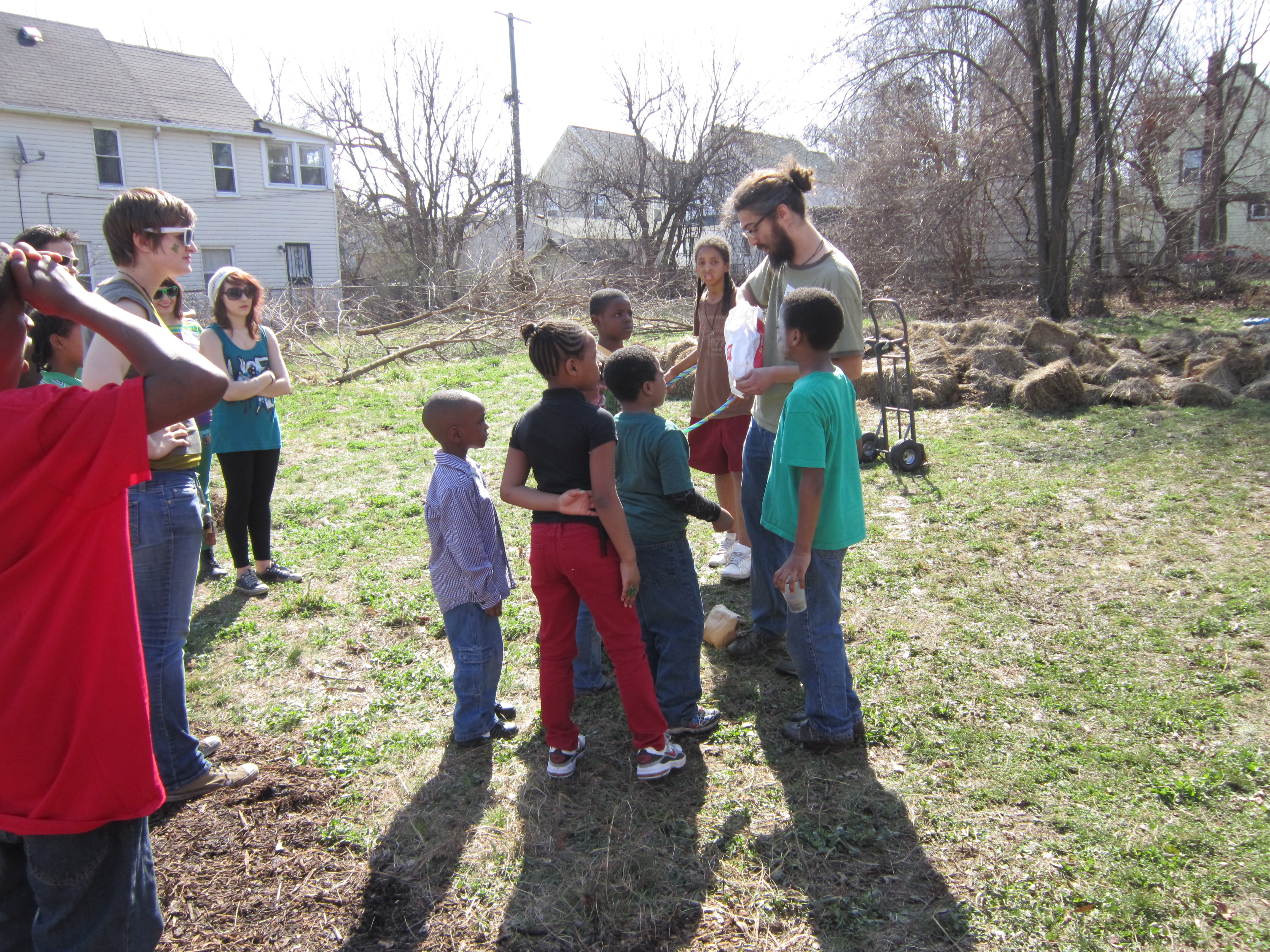
There was also a lesson on beneficial insects that can keep pests down — in this case, there were praying mantis eggs.

Praying mantis lesson

Overall, it was a really inspiring day — it’s great to see people of all ages working together on a project to improve a neighborhood and that will also bring fresh food into an area that wouldn’t necessarily have easy access to it.

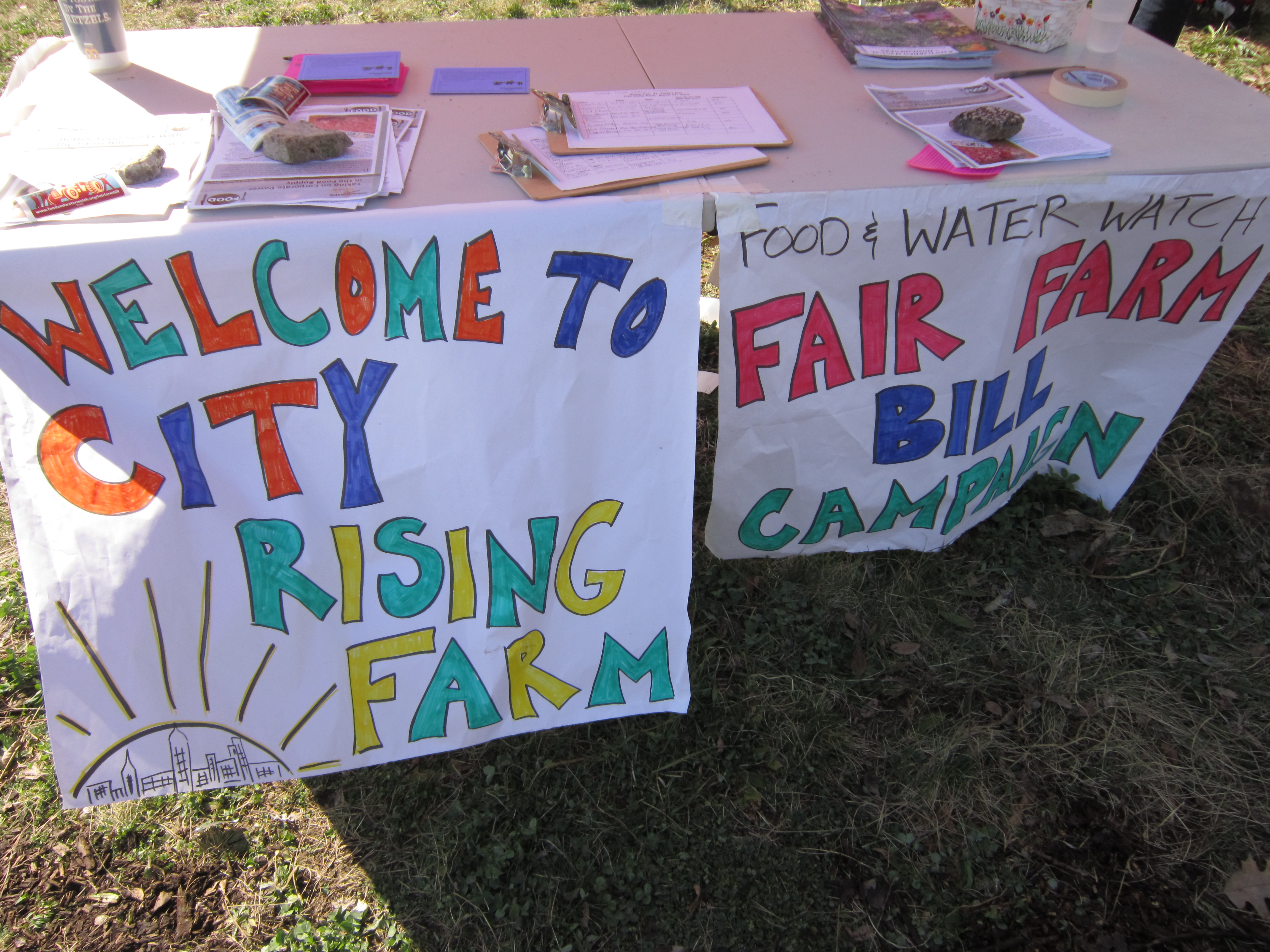
There was also a booth set up to write letters to Senator Brown to ensure that he continues his support for small farms on the 2012 Farm Bill.  We can’t let big agribusinesses control our food supply! It’s not sustainable for communities, the environment, or our health!  Take action at the Food and Water Watch website, and also, take action by supporting your local farmers. Find them near you!
Happy St. Patrick’s Day!
Would reducing work hours help to create a better world? It just might!

I was happy to find this video on the multitude of benefits that could come from a reduced hour work week…

A change toward a reduced hour work week is likely to be necessary as we move into a future that understands our relationship with the planet and into a time of dwindling carbon resources.  Not only would this change be beneficial so that we could improve our lives by having more time for friends, family, personal development, exercise, and creativity (in addition to other reasons mentioned in the video…), but this change may also be necessary as oil becomes less readily available and as we make more sustainable lifestyle choices that lesson our contribution to issues like global warming, pollution, or human exploitation (who really makes all of your products and what is their quality of life?).

Being less dependent on oil and living with the good of all beings in mind means that we can’t outsource all of our needs to other people and ship our products/food hundreds of miles around the world — we will need to depend on our own ingenuity and local communities to provide most of what we consume.  I feel that many of us will need more time to do this (more than than is available after a 40+ hour work week, anyway).  This is especially true if we’re talking about a future where we’re not just sustainable from a resource perspective, but where we’re also sustainably healthy — both physically and psychologically. We need to spend time doing things that give us meaning, and we need to feel some sense of balance (however elusive that may be!).

It is exciting to think there could be a future ahead where people have more time to pursue things that increase their well-being and to step more lightly upon the Earth.

For some other ideas related to this, check out the Center for a New American Dream. Their mission:

We seek to cultivate a new American dream—one that emphasizes community, ecological sustainability, and a celebration of non-material values.

Sounds good to me!

Beginner’s Worm Composting – Welcome to Wormville Towers

This winter, I ran into a problem that I’ve experienced before  — my outdoor compost pile is filled to the top, but I still have more scraps!

It’s not the right season to start a new pile (nor do I have the room to start a new pile at the urban house that I rent), and it’s not time to start hauling out the compost that is accumulating on the bottom for use in my garden.  What’s a person to do?

Compost from my outdoor pile ready to be put in the garden!

Start to vermicompost, of course!

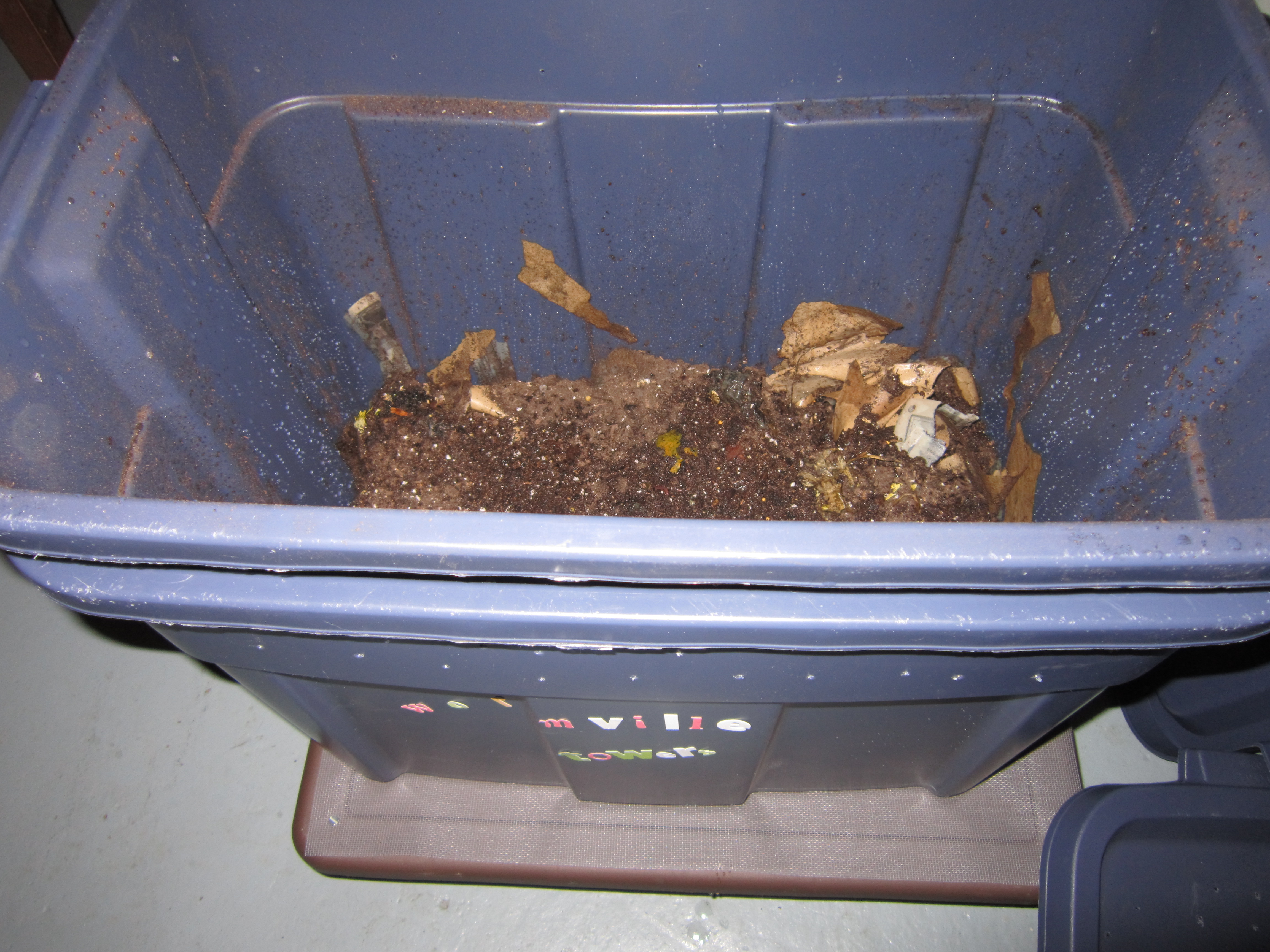
I don’t have much experience with worm bins, but I’ve seen a fair number of the commercially available ones and have also explored some that are set up as singular bins.  I decided to try a mix.  I call this worm home, Wormville Towers, because it is much more fun to live with worms that have a named community.

Here’s how the community moved in with me:

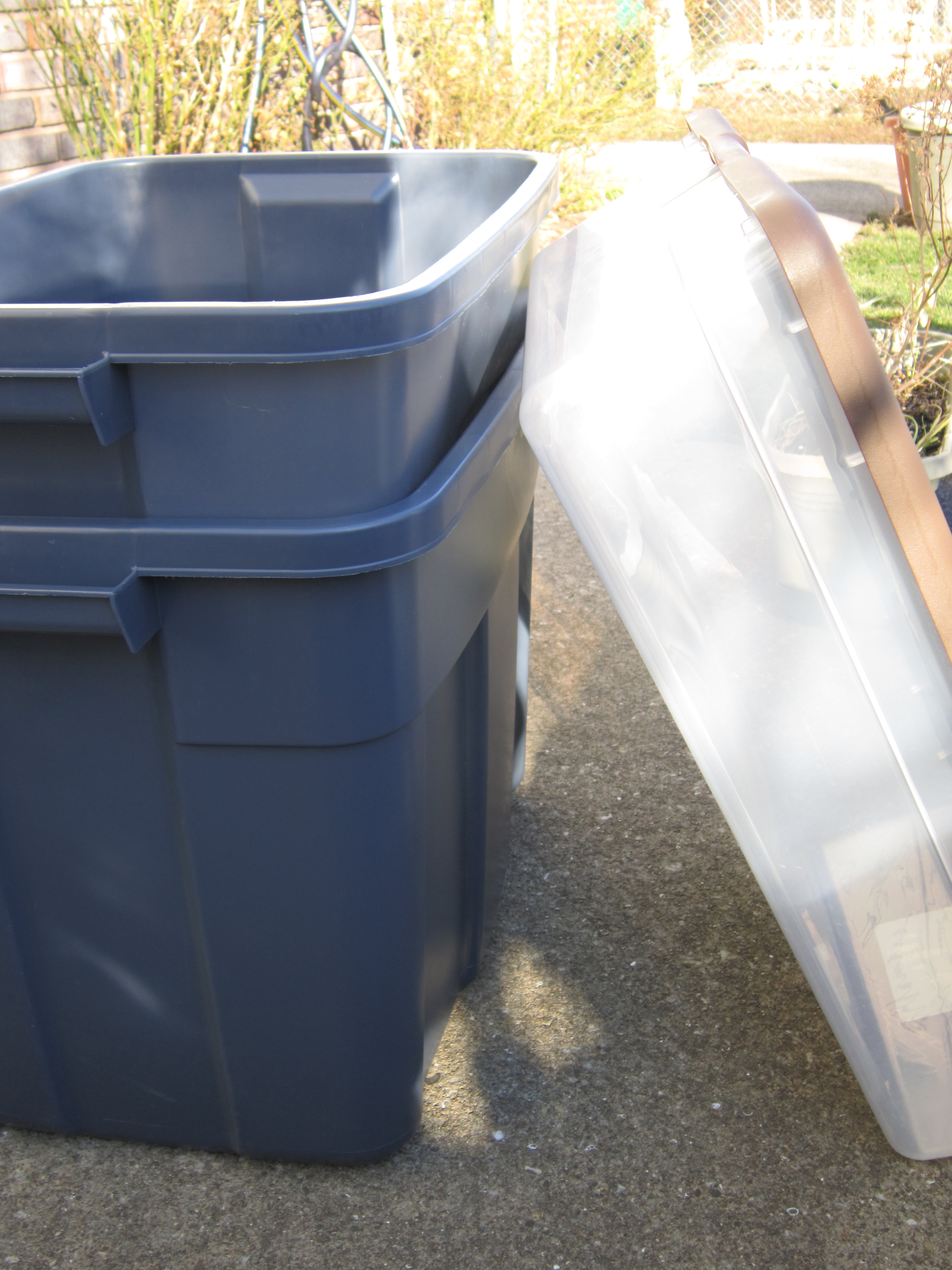
  1. I acquired three bins — two large 10 gallon bins that fit inside one another (and a lid) and a smaller see-through bin (with a lid). The general idea is that the two large bins are going to be stacked and rotated with the worms and composting material while the see-through bin always remains on the bottom and is just to catch any “worm tea” that drains out during the composting process.

    The three bins

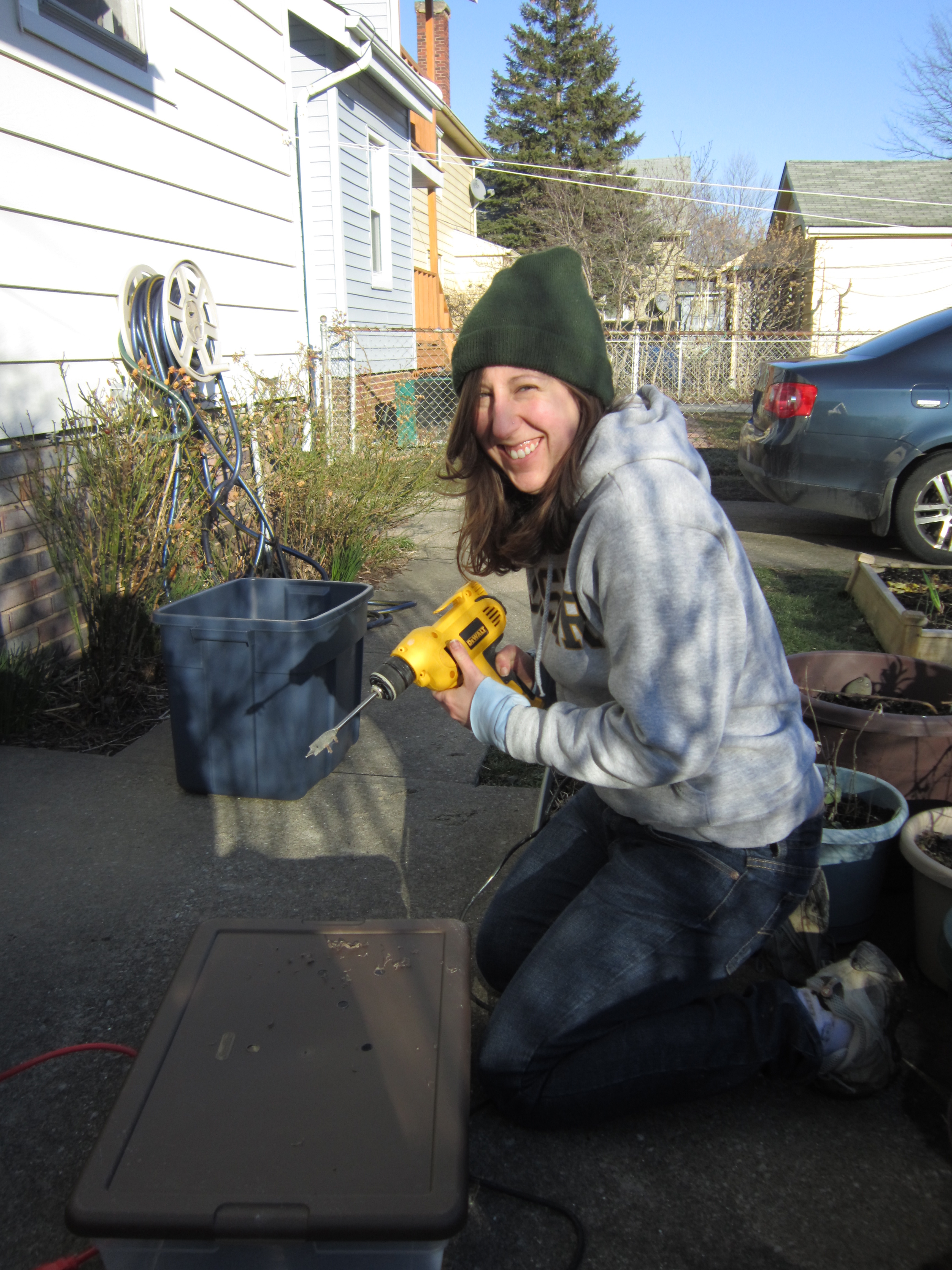
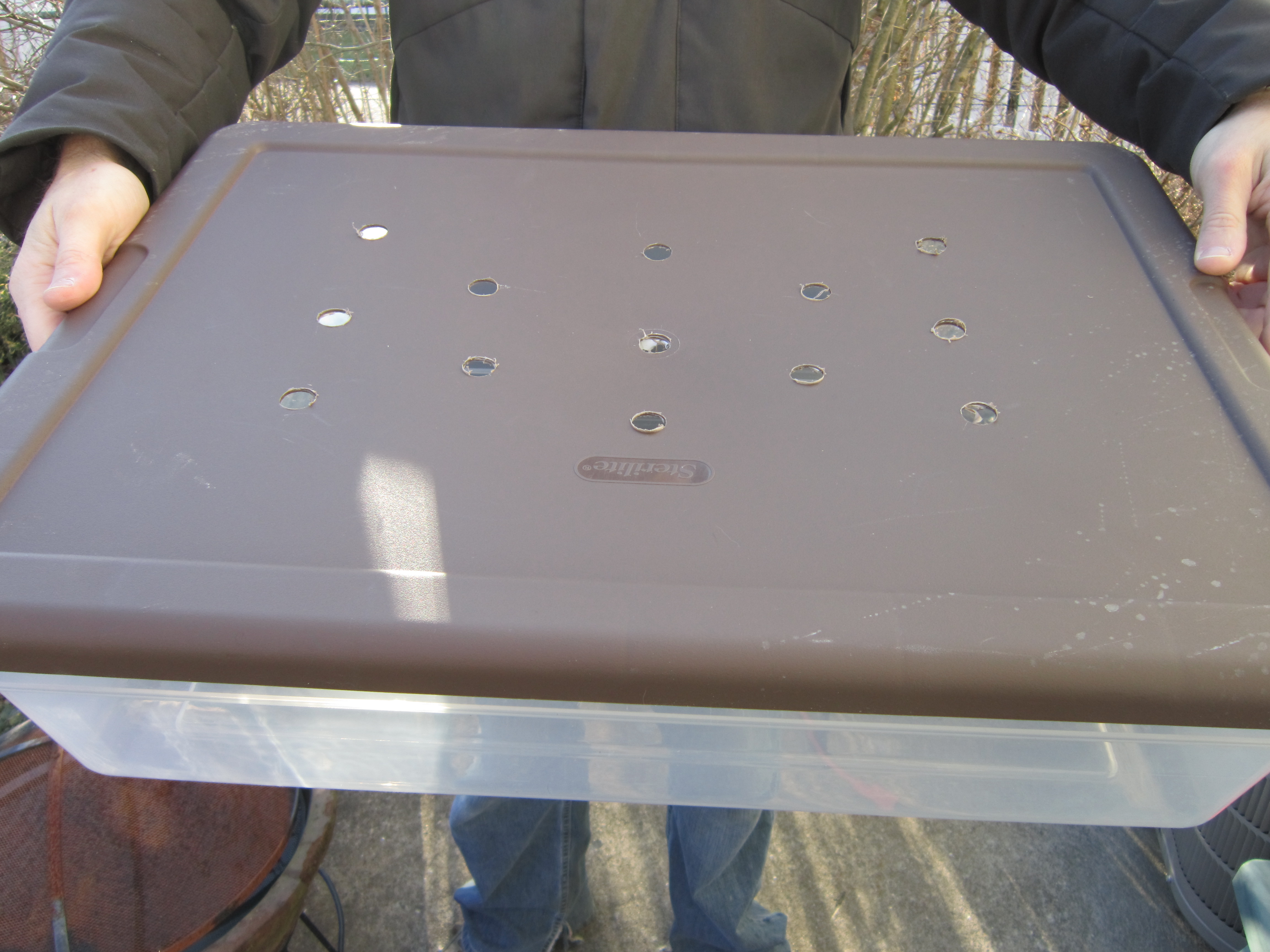
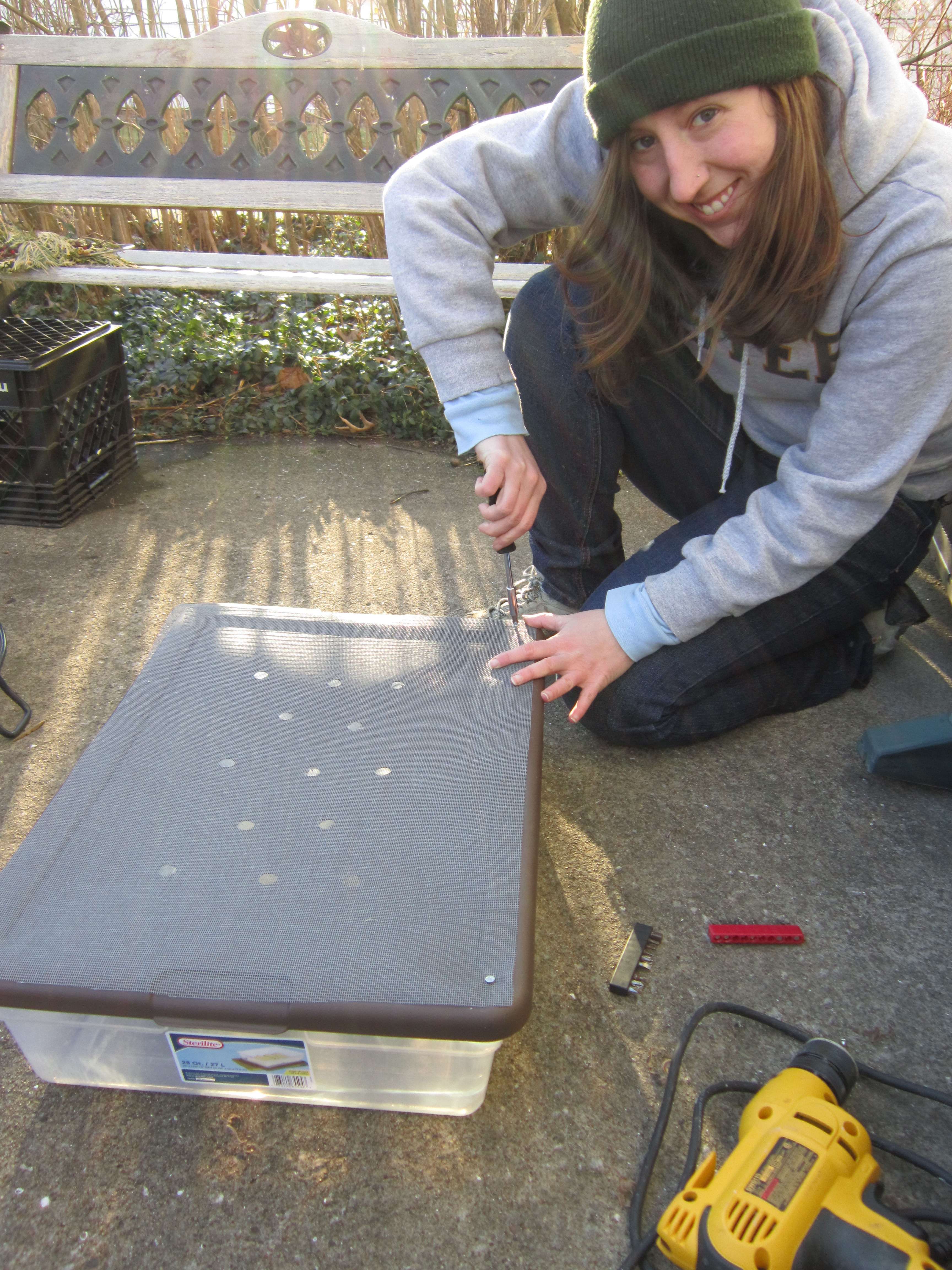
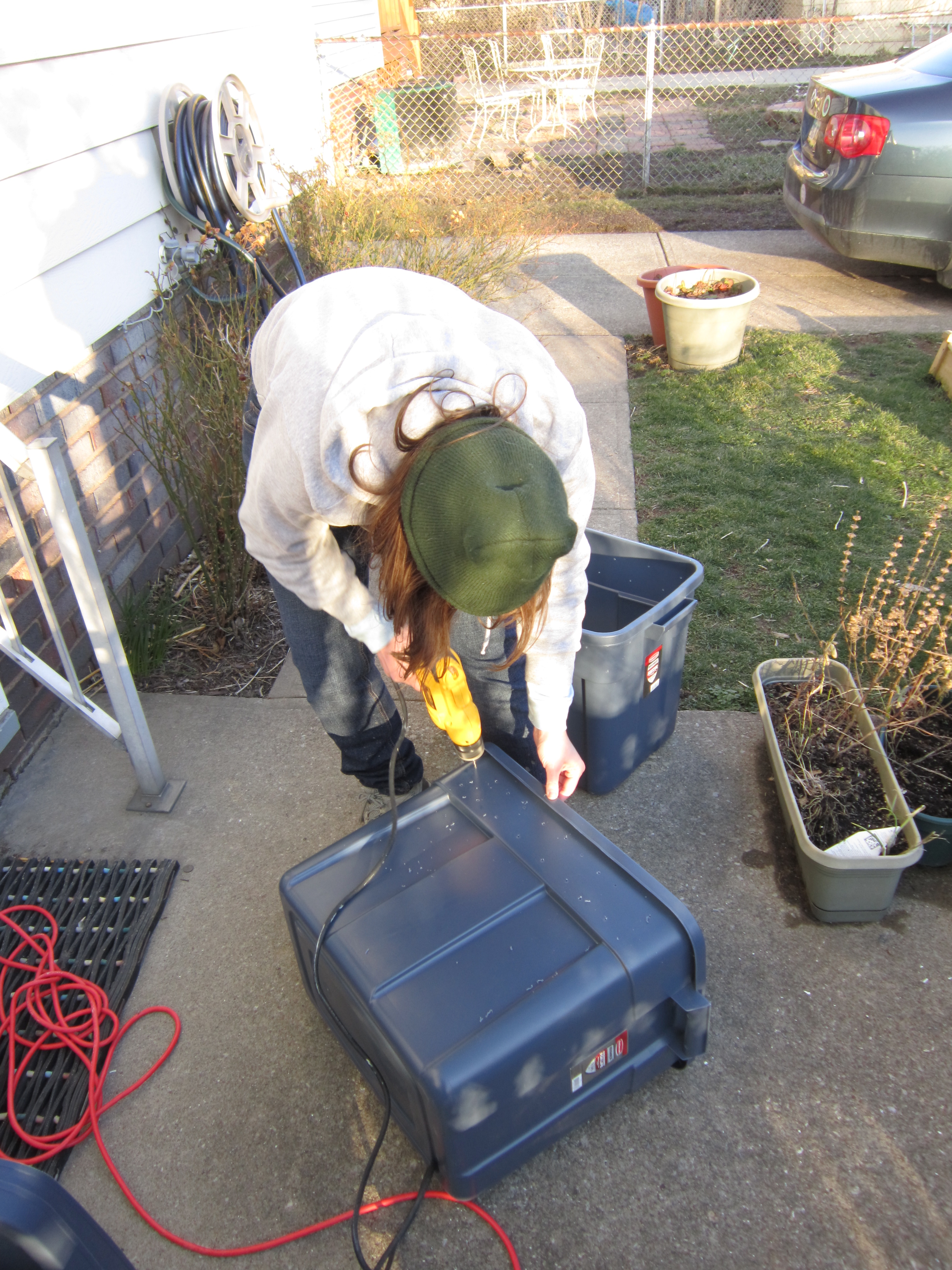
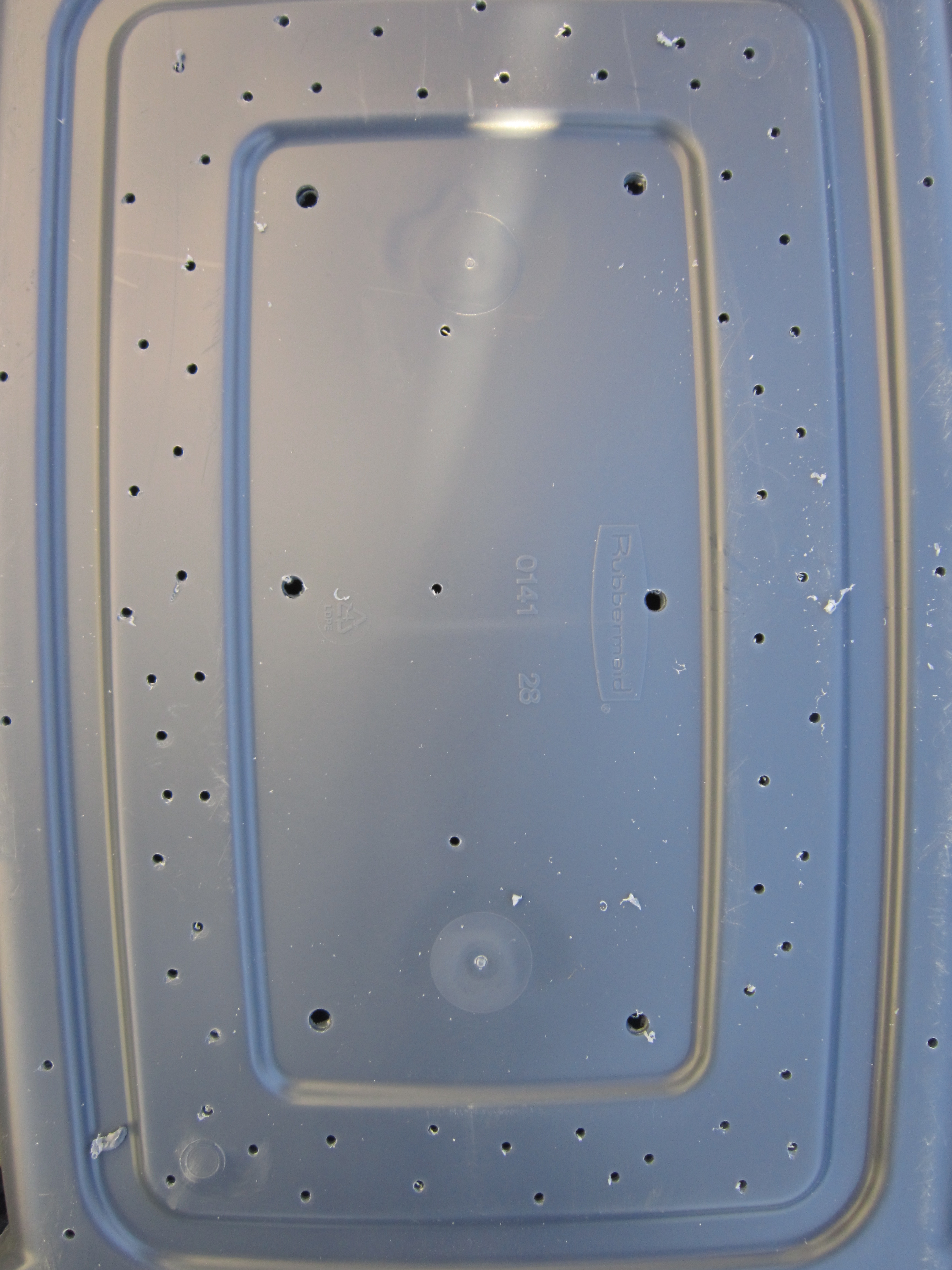
  2. We started by drilling 1/4″ holes into the lid of the bottom bin to allow worm tea to drain in.  We liked the idea of getting a clear bottom bin so that we can see if/when this bin needs to be changed.  We also measured out some screen to screw onto this lid so that no worms could fall into this bin.

    Drilling holes into the lid.

Holes on the lid.

3. Then we started working on the larger bins.  We drilled air holes around the perimeter of the top and drainage holes along the bottom.  We also drilled some larger holes in the bottom so that the worms have an easier time of migrating upward when the bins are rotated.  The idea with the double bins is that we will start one bin, and when that bin is full, it is moved to the bottom, and a new bin is started on top.  As the worms continue to compost the remaining matter on the bottom, they will gradually move up to the top bin when there is more to eat.  After about 3 weeks, the bottom bin should be fully composted and ready to be used.  It is my understanding that the worms will not be tempted to move down and out of the bin as long as there is a yummy environment for them.  However, they should move on up when living conditions become better there. Sounds like we could create a TV show.

Drainage and migration holes

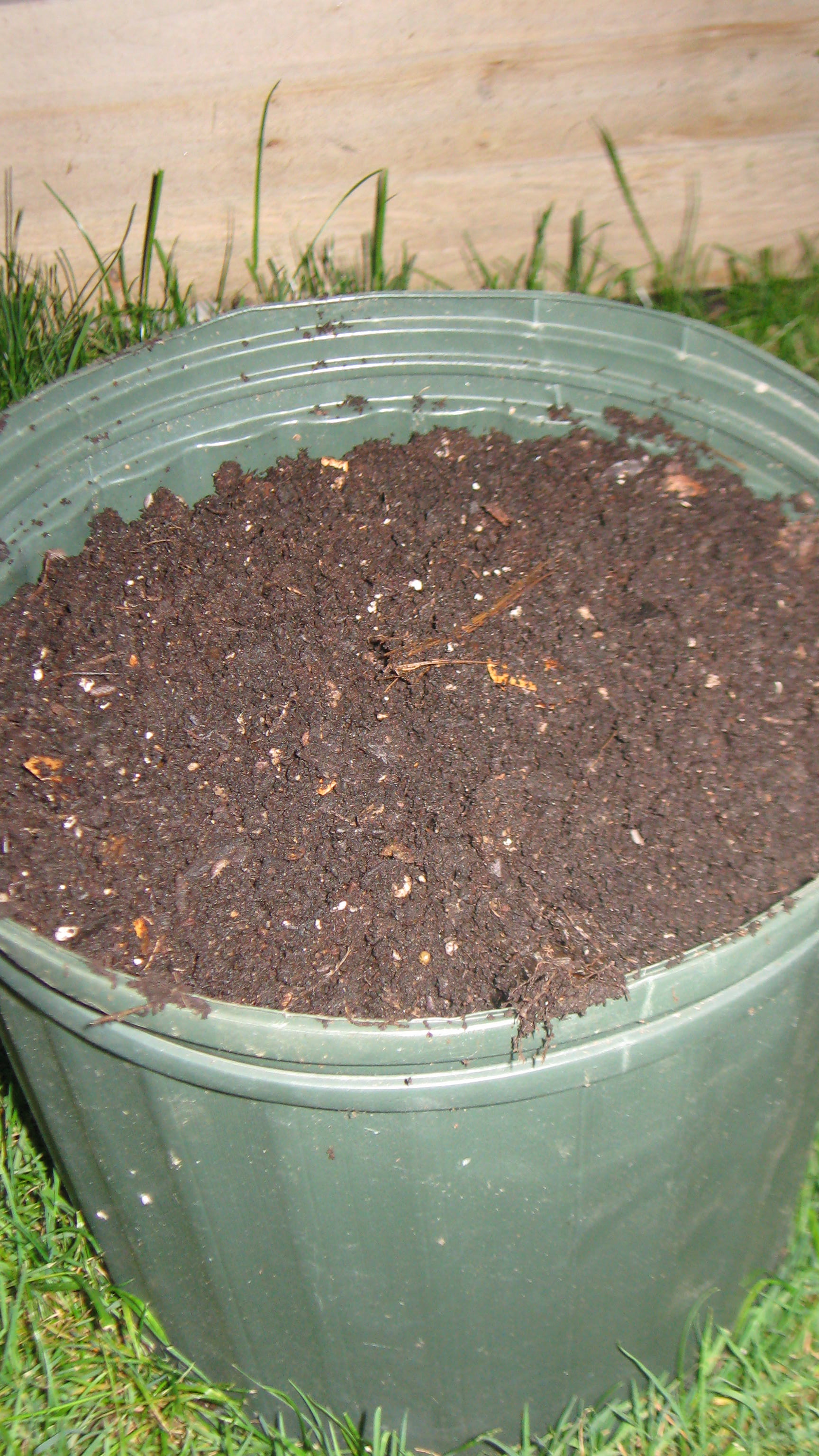
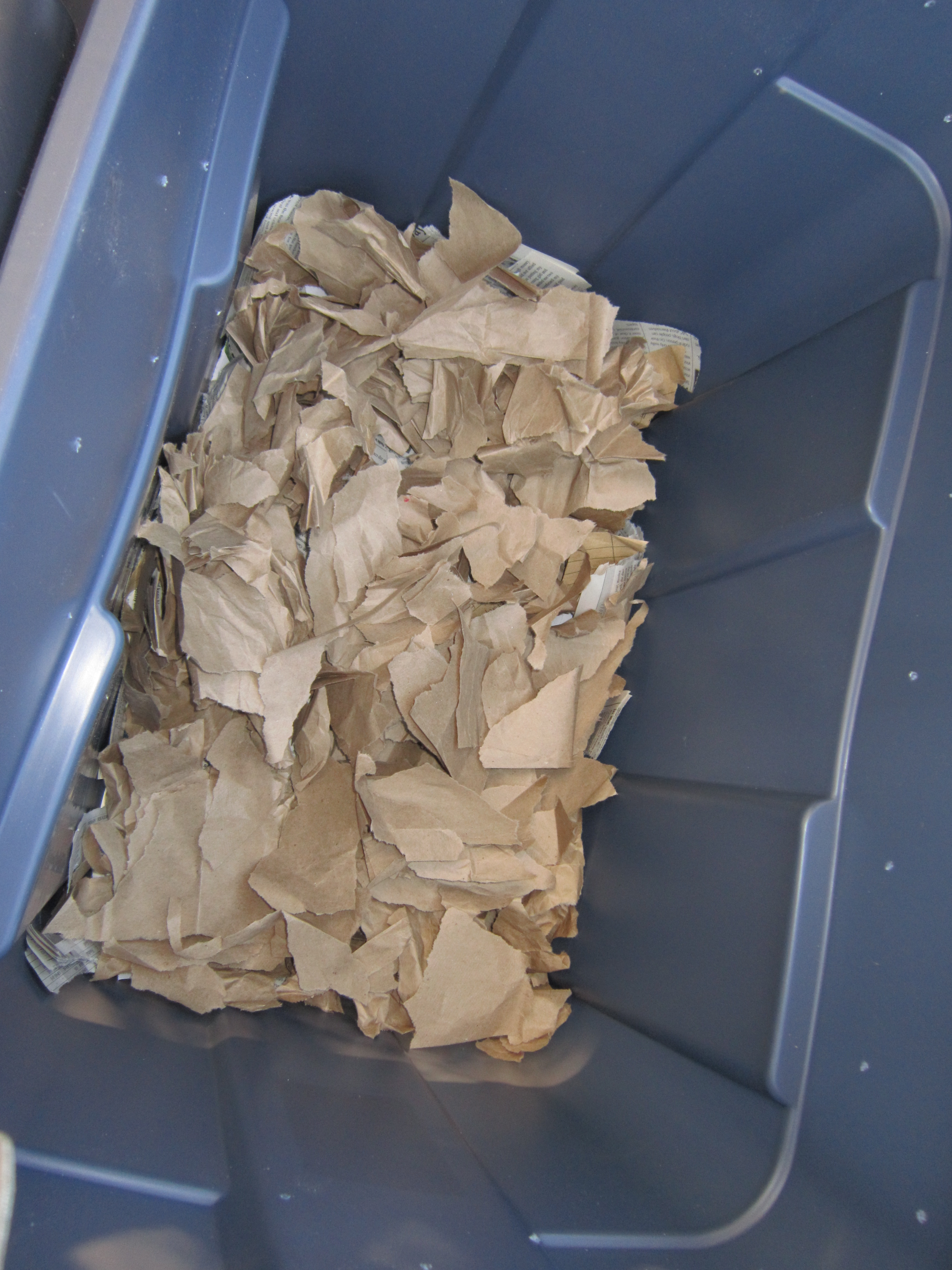
4. Next, we improved the living conditions — we added some interior decorating, if you will.  Many people use paper shredded by a paper shredded or other forms of fibrous material (coconut fiber), but my worms are a little thriftier and like paper ripped by hand. This serves as the worms’ bedding.  We put a little soil on top of this and moistened everything.  Worms should not dry out, but they can drown and do not like to be soaking wet so make sure to go easy on the water.  They might try to escape if they feel like they’re living in a lake.

What a lovely bedroom!

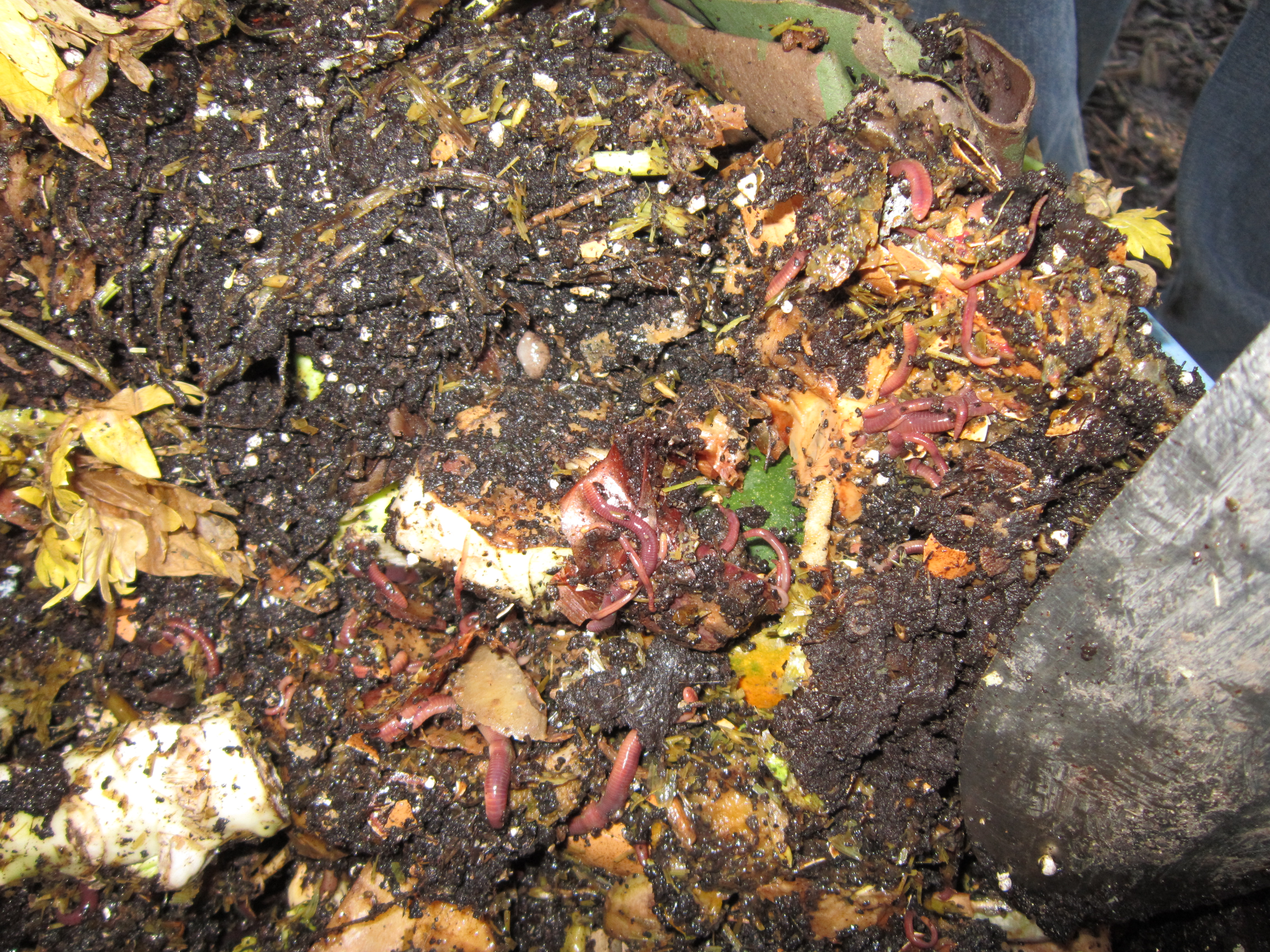
5. Time for the residents!  We raided my outdoor compost pile that has attracted a great many wigglers.  It’s pretty easy to find worms outside, but if you just Google “buy red wigglers” it’s easy to find them for sale. Remember to thank them and tell them that they are going to a place where there is always good food.

Look at all those wigglers in my outdoor pile!

6.  We added more soil, a few kitchen scraps, and covered everything up with more paper.  We assembled the stack and welcomed the worms to their new hang-out in the basement.  In a few days, I’ll start adding more kitchen scraps.

Stacked towers

Once this bin seems full, I’ll switch the bins so that the one shown here (now on top) is on the bottom.  I’ll have new bedding and some soil ready for the worms in the (new) upper bin, take a couple of them from the bottom bin up there to get things established, and start adding new scraps.  The worms should migrate and reproduce so that the top bin is the “working” bin again while the bottom bin is “ripening”.

So far the worms have been in the basement for a few days and everything seems to be going well!  This will be a great way to continue my composting and be a better participant in the cycle of life!

Shared on:

Small Footprint Friday