How does eating local help orangutans?

The list of reasons why I aim to eat as locally as possible keeps growing all the time, but some of my favorites include: it makes me feel more connected to nature and the seasons; it means that I eat more whole, non-processed food that is therefore healthier; and it is a great way to build and support our communities.

In addition to the psychological and health benefits that come from eating a local diet, it is also much more environmentally friendly in some very important ways. There are many, but I’ll focus on two here.

It reduces our carbon footprint.

The traditional Western diet is a fossil fuel hog.  We use synthetic, petroleum-based fertilizers to feed our crops, we sow and harvest those plants with huge, energy-intensive machines, and to top it all off, the food is then shipped all around the world (using fossil fuels in planes, trains, and automobiles) for processing, packaging, and finally traveling to your location. Additionally, the very process of tilling the soil releases huge amounts of carbon into the air.  In fact, the food system uses more fossil fuel than any other part of our economy — somewhere between 19 and 37% of carbon emissions depending on what study you look at.  What’s sick, and a true indication of how unsustainable this system is, is that it now takes 10 calories of carbon-based fossil fuel energy to make ONE calorie of food that you’ll find in a traditional supermarket.  As Michael Pollan put it in his letter to the president published in The New York Times (2008), “When we eat from the industrial-food system, we are eating oil and spewing greenhouse gases”.

Eating local changes a lot of this.  Many local farmers are smaller-scale (less energy intensive) and use methods that reduce their dependence on excessive fossil fuel inputs and inappropriate tilling methods (farmers love to talk about their farms — ask about their methods if you’re concerned).  Also, local food cuts out the midway travel-thon that most food goes through — food is either going directly from farmer to consumer, or processed at a local facility before being sold.  There are not vegetables grown in California that are shipped to China for processing and packaging that are then shipped back to the Eastern United States for consumption (yes, this happens).

Anything that we can do to limit our carbon footprint is ultimately good for ourselves and other animals, including orangutans, because we’re taking steps to lessen the deleterious effects that climate change will have on disrupting ecosystems.

LOCAL FOOD DOES NOT CONTAIN PALM OIL 

This is the big one for orangutans, and also relates back to the previous point drawing links between industrial agriculture, carbon emissions, and global warming.  Huge swaths of rainforest land are cleared to support the industrial agricultural system, primarily for food like soybeans, palm oil, and cattle.  Rainforests are storehouses of carbon that is then released into the atmosphere when they are destroyed (and then the food grown there is shipped around the world for processing and traveling to markets further exacerbating the issues at hand).

Forest in Merawang Subdistrict, Bangka County,...

Forest in Merawang Subdistrict, Bangka County, Bangka Island being cut for palm oil plantation.  (Photo credit: Wikipedia)

As serious and life-threatening as global warming is to us and all other animals, there are more obvious casualties happening daily because of the conversion of rainforest to plantation.  The battle between palm oil plantations and orangutans is a particularly brutal one.

Orangutans need large areas of land to find enough food to support their large body size.  They also are extremely intelligent and form mental maps of where their preferred feeding sites are located.  They roam between these sites, knowing at what time of year they must be in certain locations to find the most energy-rich foods.

When someone comes and cuts down the forest where orangutans live it is not easy for them to just pack-up and relocate to a new area of forest — it might be occupied by other orangutans who have already capitalized on all that food, and they haven’t learned where all the feeding locations are outside of their home range.  It would be like losing all of your current ways of procuring food — what would you do? How would you find food?

And so, many orangutans continue to hang out in the palm oil plantations where they are then considered nuisance animals by the palm oil companies that then trap, shoot, burn, or leave orangutans to reach any number of horrible ends.
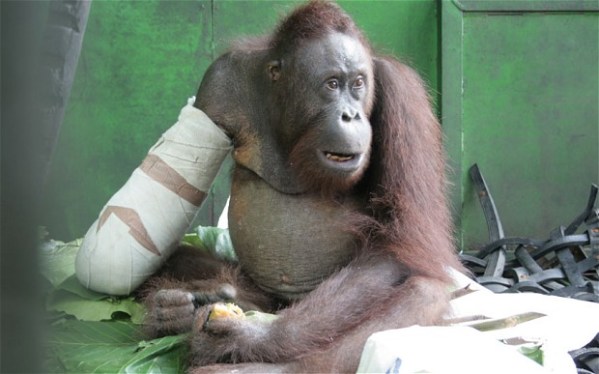
This orangutan chewed off its own arm to escape a trap set in a palm oil plantation. Luckily, it was found and saved before dying. It will likely be re-released into the wild. Photo: Caters. Click on photo to link to article.

What to do?

Some palm oil activists have advocated boycotting palm oil products, but focusing on a boycott of industrialized products can be maddening.  Almost half of the processed products you find have some derivative of palm oil.

A few of the thousands of products with palm oil.

Other palm oil activists suggest supporting companies that have signed on to the Roundtable on Sustainable Palm Oil (RSPO), which aims to “promot[e] the growth and use of sustainable oil palm products through credible global standards and engagement of stakeholders.”

The problem with the RSPO is that it is greenwashing.  Crops grown in monoculture systems such as palm oil are inherently unsustainable, and it will never be sustainable for people in the United States and Europe to depend on a crop that was grown in Southeast Asia. It has to fly all over the world for processing, packaging, and delivery before it reaches us, creating unnecessary carbon emissions and waste.

palm oil plantation

Monoculture palm oil plantation. (Photo credit: angela7dreams)

Additionally, the companies that have signed on to the RSPO, while they might be interested in having good PR this way, are still huge corporations with questionable practices happening at every other level of production. And the food is probably not healthy for you.

Instead, let’s embrace diets and lifestyles that are beneficial on all levels — for orangutans, for our local environments (and therefore those abroad), our communities, our health, and to help stop global warming.

The best decision: eat locally from small, sustainably run farms. And grow your own food, too!

Let’s look at the food in my Midwestern United States diet in mid-May.
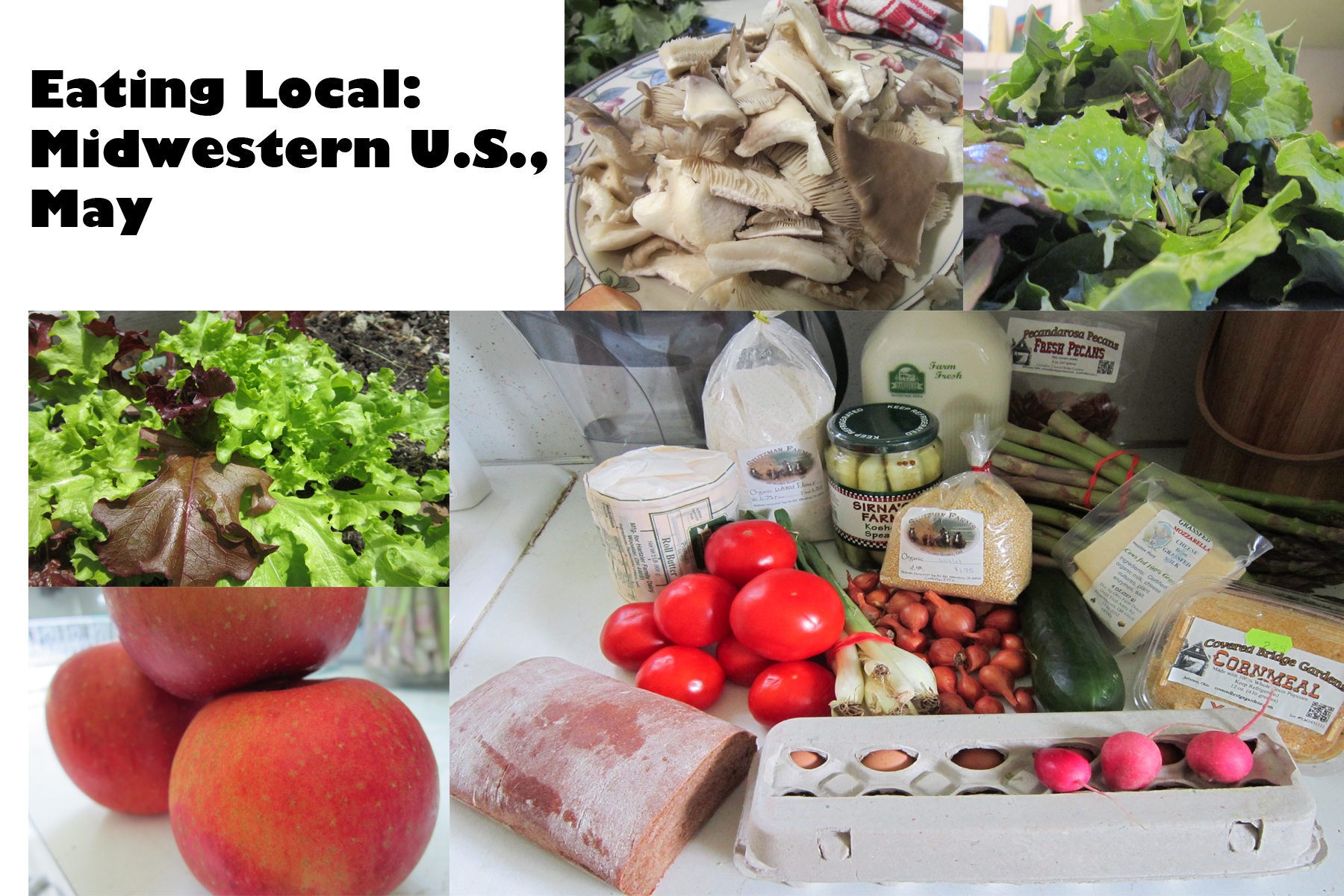
What is here? Foods grown and processed in Northeastern Ohio including:

  • mushrooms
  • kale & lettuce from my backyard
  • apples
  • milk to make cheese and yogurt
  • whole wheat to make bread (shown in front left), crackers, pasta
  • butter (that will last for months)
  • tomatoes
  • green onions, scallions, cucumber, shallots, radishes
  • lots of asparagus
  • grassfed cow cheese and truly free-ranging, grassfed chicken eggs
  • millet, cornmeal
  • pickles
  • pecans

And I also depend on things like sauces, berries, other vegetables that I’ve frozen, canned, or dehydrated in other seasons, and wild foraged foods.

What is not here?

  • Anything with PALM OIL
  • Industrially produced foods
  • Monsanto-based products
  • Name brand, corporate-owned food
  • Heavily processed “food”
  • Exotic fruits and vegetables that had to come from other countries

I admit, this is more of a lifestyle change than just a diet change, and it takes time.  Especially at this point in time, it requires skills that many of us have lost, planning that we’re not used to doing, and time for processing and preparing our food that has to be reclaimed.

I’m certainly not perfect with this as I still depend on some products that I can’t find locally or don’t know how to replace, and I am still learning skills and how to create a life that affords me the time and space to work with food in a way that I find meaningful.  However, we have to start somewhere.

The joys that come from moving to a more local diet make it well worth the effort (REAL, fresh strawberries are back? Hallelujah!), and it provides a sense of power when so many sad, maddening things are happening to our world’s ecosystems and animals.  You can know that you are truly taking steps toward making the world a better place, and other people will learn by your example.

If you still want to do more, check out Orangutan Outreach, Slow Food, Millions against Monsanto, watch documentaries like Food, Inc., and sign petitions to stop destructive agricultural practices when you see them pop up.

Click for More Resources

Also, be sure to find local farms and farmers’ markets in your area: Local Harvest

Linked up at:

Nature’s Nurture Blog


NaturalMothersNetwork.com

I selected this post to be featured on my blog’s page at Environmental Blogs.

Fears, Risks, & Following Our Dreams

It had been brewing for some time. It would bubble up and haunt me, but I would talk it away – “you’re just asking for too much” I would tell myself.

“You just need to find more balance”, I would rationalize.

And yet there came a time when looking at my dissertation proposal thinking, “This is not what I want,” could not be ignored any longer. (I may have been a lump sobbing on the ground.)

The process of following one’s dreams, intuitions, and inner guidance, however, is not as easy as we would like. It requires facing fears that we have long ignored, taking risks we have felt too scared to take, and learning more about ourselves than we ever have before.

Is it even worth it?

YES.

As I write this now, I feel confident in my decision and so much more excited about my life, my place in the world, and delving into my true passions.

Was it easy to get here?

No.

First, the Fears

They’re those dehabilitating, gut wrenching, sleepless-night causing, distracting thoughts that surface all too easily and frequently when we are faced with a huge decision that marks the difference between following our dreams and continuing with the life-sucking business as usual.

Some common ones that surfaced for me were:

  • I will have wasted so much time. I had already put 4 years into my PhD program, how could I possibly turn away from that? How could I ever recover from having spent so much time on this pursuit only to leave it behind?
  •  What will I do instead? Although I had a vague idea of the direction I wanted to move in, it was not solidified (and it’s still a work in progress). All I knew for sure was that my current direction felt wrong, and that I was about to commit myself to at least 3 more years of the same.
  •  What about money? If I was to leave my position as a Graduate Research Associate, where would I get paid? How would I have rent money? Insurance?
  • What will people think of me? How would I explain the decision to leave? Would people think I’m crazy to give up this role?
  • Who will I be? I’d labeled myself as a PhD candidate for so long and became so used to the way that people responded to that. How would I define myself now? Who am I anyway?
  • What if I make the wrong choice? How would I truly know if it was the right decision to change my path? Would I regret it later?

Then, the Risks

Despite all of the fears, something deep inside kept nagging me that I was on the wrong path, that I would get stuck in a life that wasn’t what I desired, and that I would remain dissatisfied. In the face of overwhelming fear, I decided to take some risks and trust that:

  • I hadn’t wasted time. The lessons that I learned while working and studying at the zoo were invaluable. They helped to shape my understanding of what sustainability really means (and that I couldn’t reach my ideal for a sustainable life working in a zoo), allowed me to practice and further develop my critical thinking and writing skills, and left me with a lot of fun memories and experiences that many people will never have. And I still got a Master’s degree in Biology out of it.
  • My true life direction would become available to me. As soon as I made the decision to leave the zoo, doors began opening for me. To be honest, at first I was not excited by this because I felt so guilty and worried that I made the wrong decision, but now these doors are my constant reinforcement that I am following the right path.
  • My friends and family wouldn’t let me be without food, water, and shelter. People have helped support me in ways that I could not have imagined were possible before I started thinking about taking a new direction in my life. And things have worked out so that I haven’t had to depend on anyone else for my basic needs (at least not too much – maybe someone who only lives with me ½ of the time now helps me with part of my rent – thank you!), and I’ve certainly depended on others for moral support (and it would have been ok to ask for more if I needed it)!
  • My own goals, desires, and dreams are more important than what other people think. And it also turns out that people really respect you for following your dreams. It’s a rare enough thing that it impresses others when people are actually willing to do this.
  • I am a dream-follower, authentic human who doesn’t need to be attached to labels to help give myself meaning or prove that I’m intelligent. So what if I don’t have a PhD? Maybe I’ll get one sometime in the future, or maybe I won’t. They don’t automatically equal intelligence and the life of your dreams.
  • There are no wrong choices, only moments for learning. That’s just the way it is.

And Then You Realize How Much You’ve Learned

Through all of the sleeplessness, the false alarm emergency room visits for heart attacks (this was a hard decision!), the tears, the fears, the worries, and then the risks, I have learned a lot. Not only about myself, my strength, and my capacities, but also about the life I want to create and how to do it.

Facing such a major decision made me want more than just intuition-based feelings that I was making the right decisions, so I also came up with long lists of real-world reasons that my decision would make the best sense for my desire to live a more healthy, sustainable, and freedom-based life. They fed right into and supported my intuitions in ways that provided me with strength to do the right thing.

I could make another bullet-point list of things that I’ve learned, but that’s what this blog is about, so look around and stay tuned for more insights!

What about You?

Are you a risk taker and dream maker? Are you living your authentic life?

Sadly, I don’t think many of us are. But you can! It might take some hard work, inner searching, determination, and de-conditioning from cultural expectations, but it’s worth it.

I believe the world would be a much more inviting, exciting, likable place if we were all following our passions and dreams rather than living in a belief system based on fear and what-ifs.

So name your fears. Acknowledge how scary and terrifying they are, and then defy them!

___________________________________

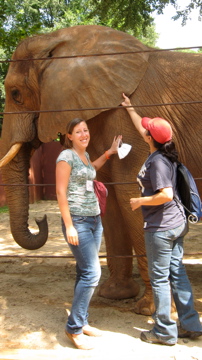
P.S. Although I enjoyed the elephant encounter shown above, I would prefer that we not keep elephants in zoos.

Restorative Humans & A Native Prairie Planting

What did the land you live on look like before humans arrived? Was it forest? Prairie? Desert? Wetland?

How did the Native people treat that land? And then what happened when the new culture arrived?  Did it become a monoculture farm? A suburb? A place to extract a natural resource?

Is there any way that humans are ‘supposed’ to live on the land?

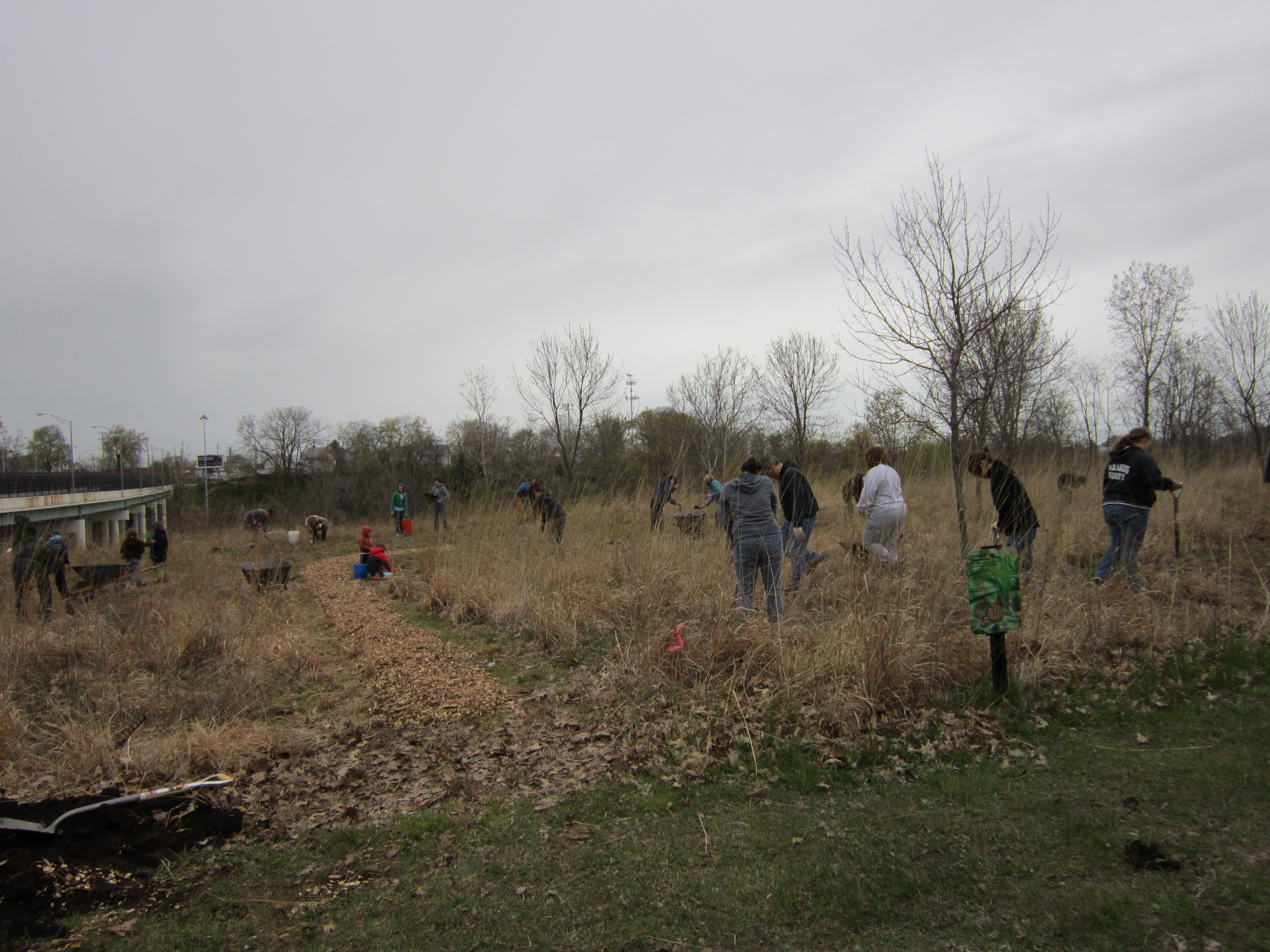
I reflected on this question as I participated in a native prairie planting over the weekend.

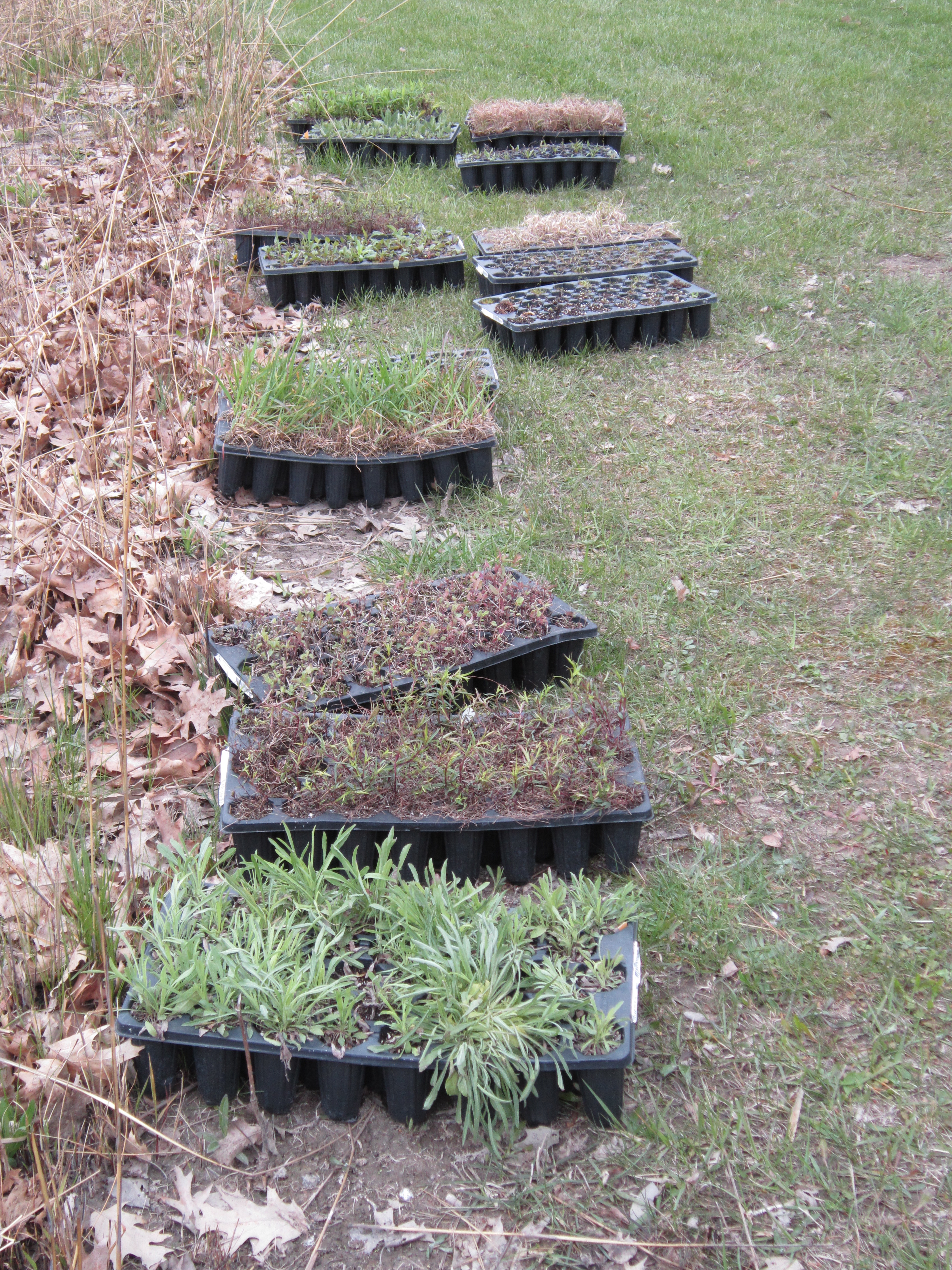
Native prairie-to-be

Native prairie plants

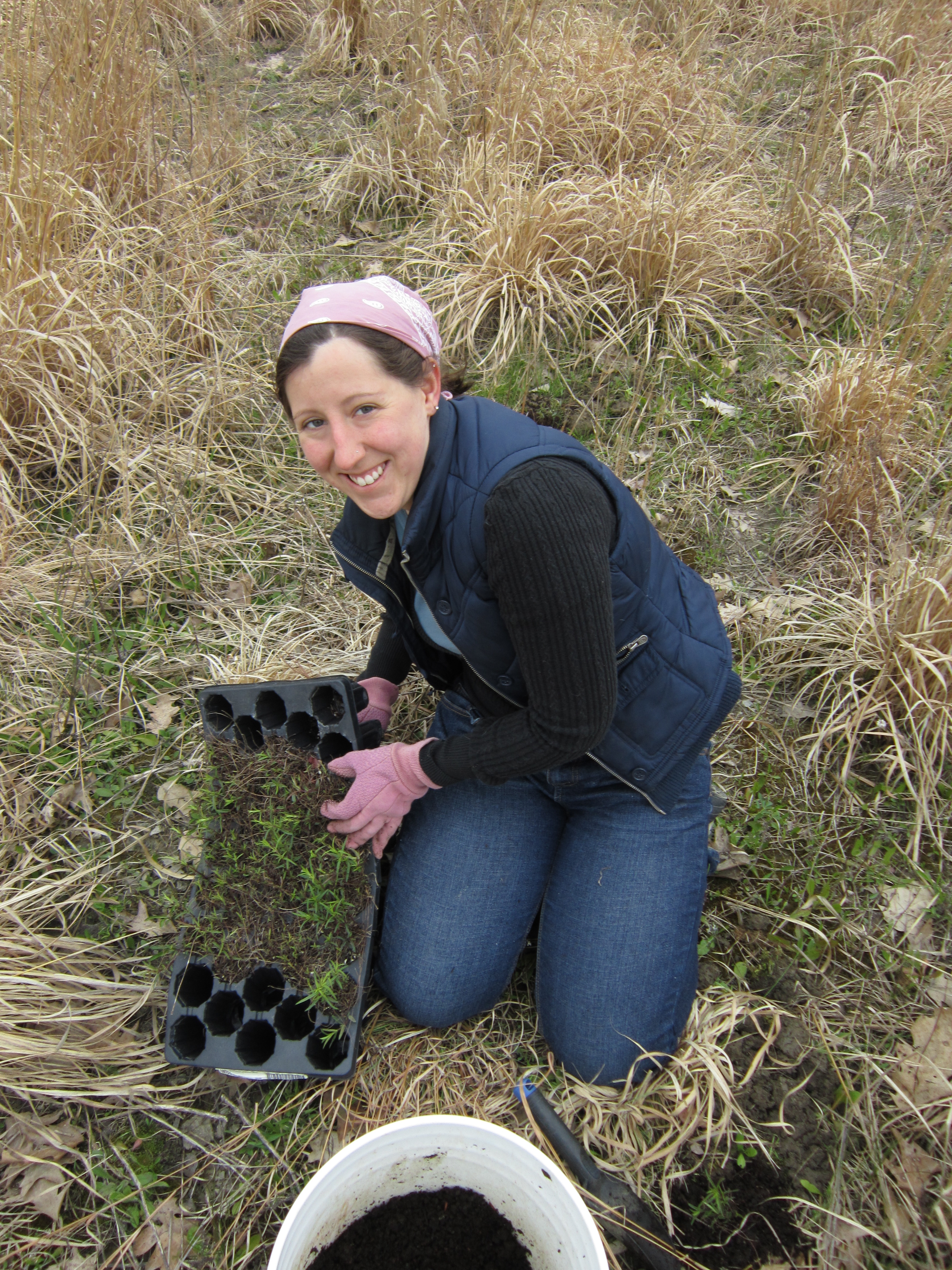
My partner and I focused on flats of two species in particular — the New England Aster

Baby New England Aster

and Narrowleaf Mountain Mint.

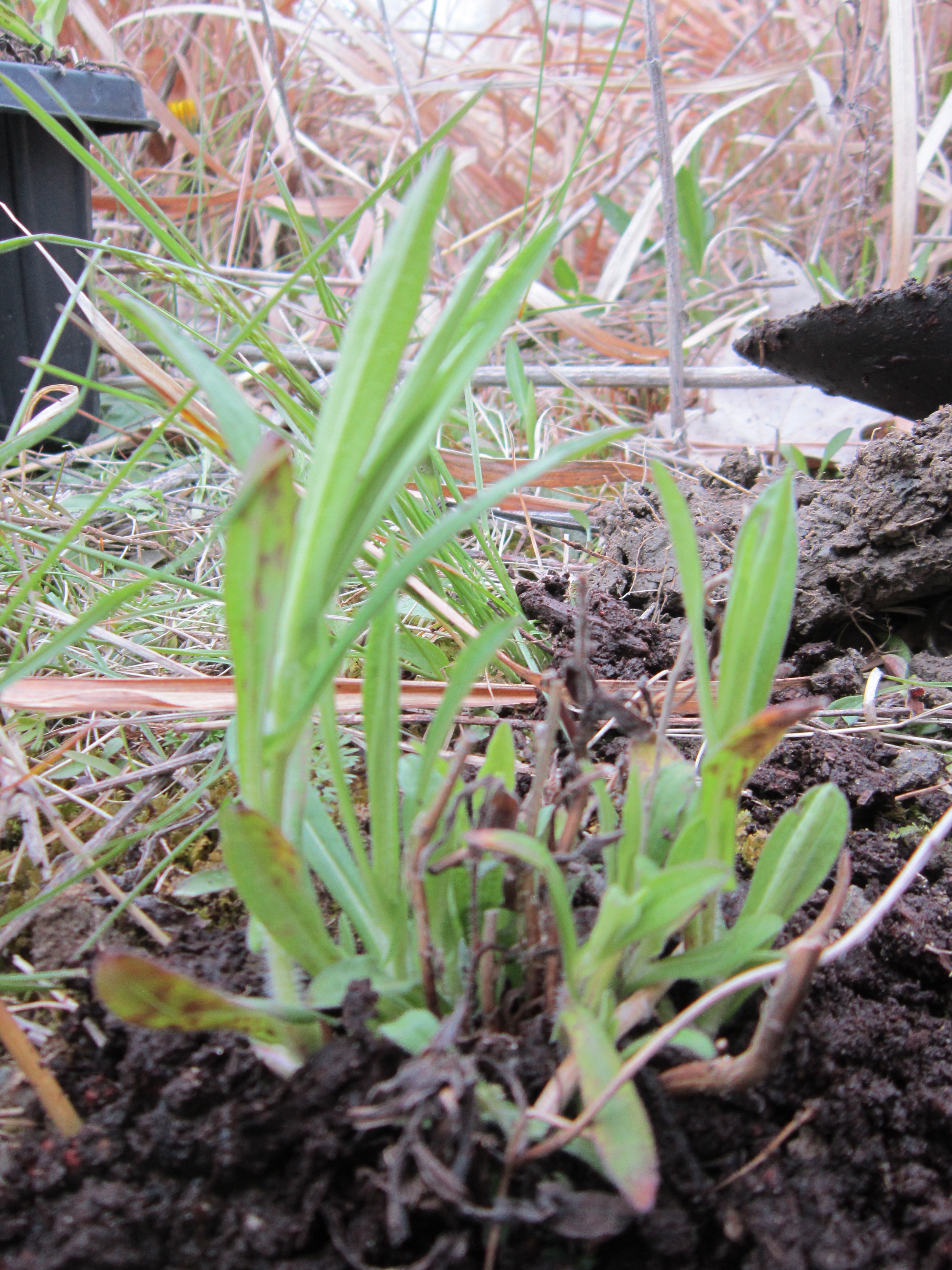
Baby Narrowleaf Mountain Mint

The experience got me thinking about the fact that all animals have roles to play in keeping their environments balanced, thriving, and diverse.  For example, birds help to move seeds around, insects assist with pollination, and predators keep populations of small mammals in check.  When one species overexploits its environment, there are consequences, often with a die-off of part of the population until balance is achieved once again.

Recently, humans have taken a very exploitative approach to our environment and our population numbers are booming.  This continued growth and the fact that so many of us can lead such extravagant lifestyles has been made possible by the availability of cheap carbon resources (oil, coal, natural gas) that allow for massive food production and a complex medical system that is able to keep so many people alive.

There are some problems with this, however. The resources that made this growth possible are nonrenewable (and we may have passed the peak of production), and we know that this approach to maintaining human livelihood is leading to the pollution of our air, water, and land, the destruction of natural environments, and countless species extinctions.  We also know that previous cultures that did not respect the limits of their natural resources are no longer in existence.

Is there a different way to approach our relationship to the Earth?

If all animals have roles in keeping nature balanced, it may help to reflect on potential ways that humans have evolved as part of ecosystems.

Perhaps instead of being dominators of natural cycles, we are intended to work with nature to create more healthy and vibrant ecosystems for ourselves and other organisms.  These big, long-term planning brains must be good for something beyond our own survival, and I don’t think it’s necessarily the ability to analyze stock market trends.   Perhaps the human role in the ecosystem is to function as a sort of ecosystem engineer that could bring greater diversity and balance to areas in which we live.

After all, we can foresee long-term trends and we understand complex cause-and-effect relationships.  As far as I can tell, we are the only species that seems to know that if we take a seed, plant it and add water, that it will grow.  We can use these planning abilities to take care of the planet in a much better way than we have recently.  We should also get better at using this ability to understand the dire consequences of continuing on with our current behavior, and to learn from the mistakes of cultures in the past.

I believe it is possible for humans to live as constructive co-creators with nature.

Prairie planting

We can take a field of grass, envision a thriving habitat, and find ways to create it.

Go and be restorative!

Enhanced by Zemanta

Happy Ostara! Celebrate Spring!

Regardless of what you like to call it, today is the Spring Equinox in the Northern hemisphere and we have again returned to a time where day and night are equal.  This time, daylight will win and we will continue to experience more light until the summer solstice returns.

Following the wheel of the year and the turn of the seasons is one of the best ways to connect with nature and to feel a greater sense of being a part of the all that is.  I find it especially whimsical and meaningful to think of my ancestors and other nature-based cultures of the past who would have felt this day on an extremely intimate level.  This balance between night and day means that winter is officially over and that soon food will be plentiful again — this is literally a time to be thankful that life can continue on. I think we still feel a part of this as we open our windows, spend more time outdoors noticing flowers, and feel a sense of renewed energy in our lives. The return of the Spring season still represents a time of renewal, rebirth, and fertility.
Luckily, even the idea of taking time to celebrate a day like Ostara isn’t all that foreign to most of us — the concept of rebirth and fertility as symbolized by eggs and rabbits appears in other holidays around this time of year (hello, Easter!).

Whether you celebrate it now, or in a few weeks at Easter, take a few moments to think of how and why these holidays began and how intimately humans have always depended on the Earth for our survival.

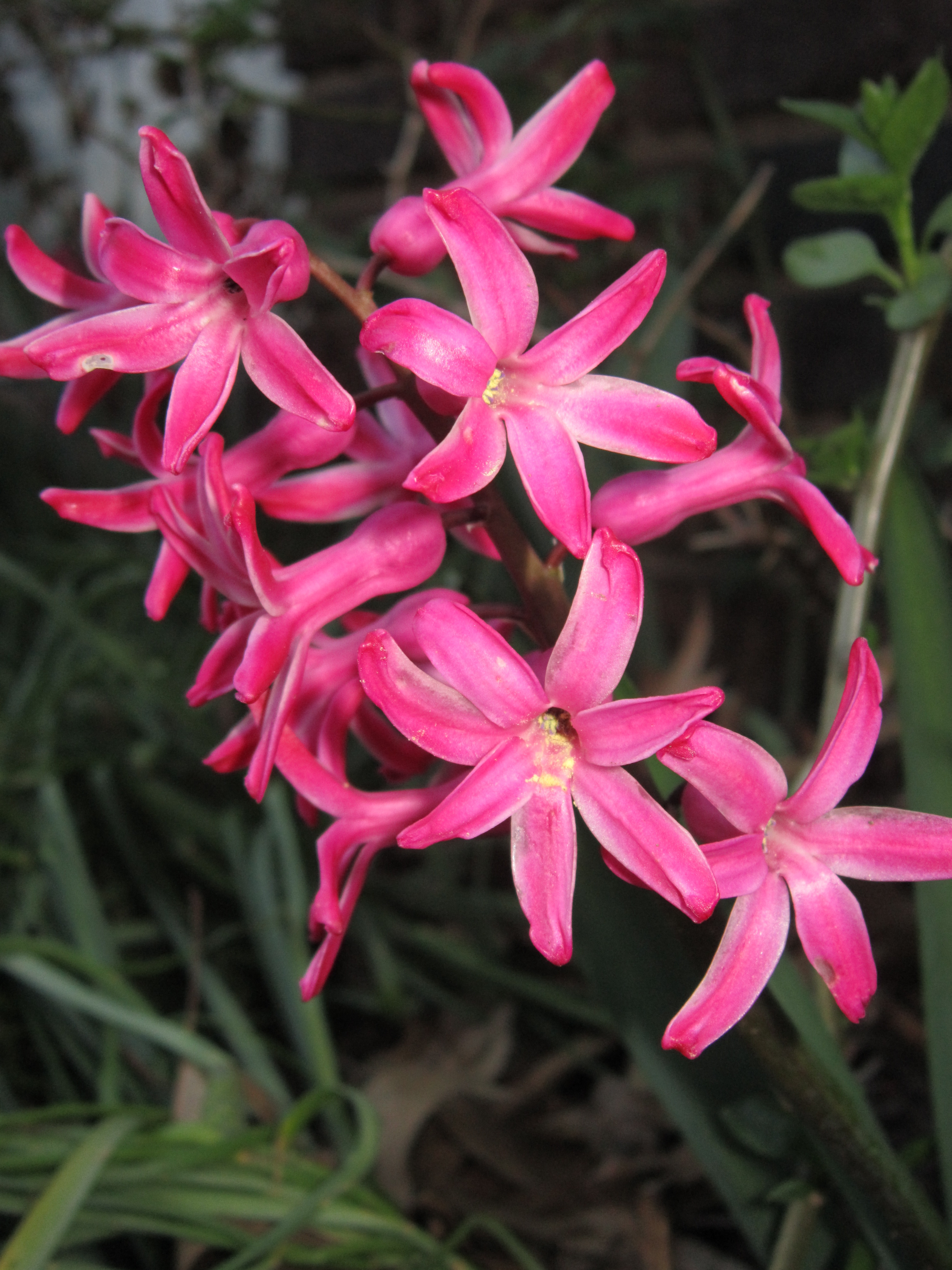
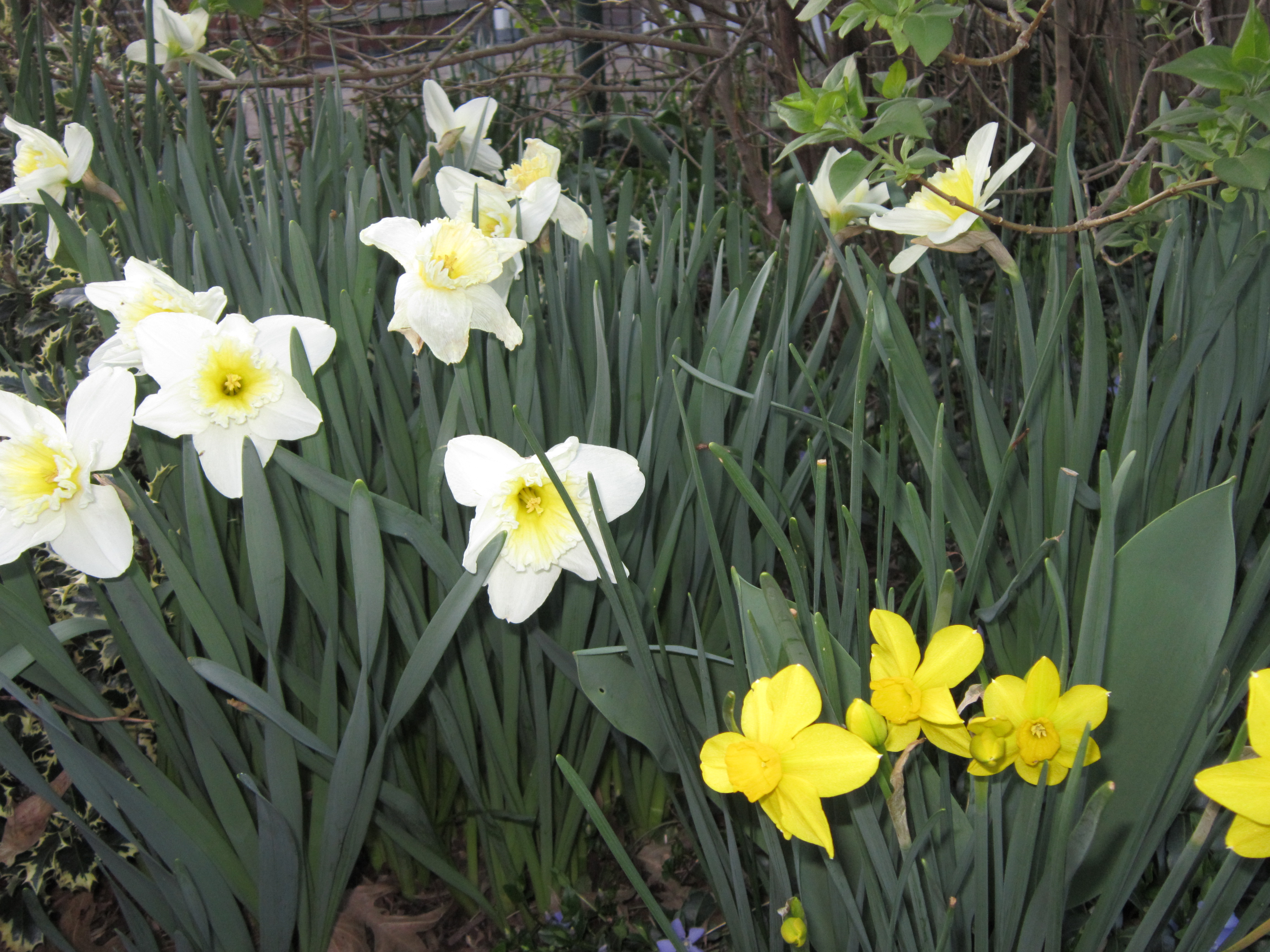
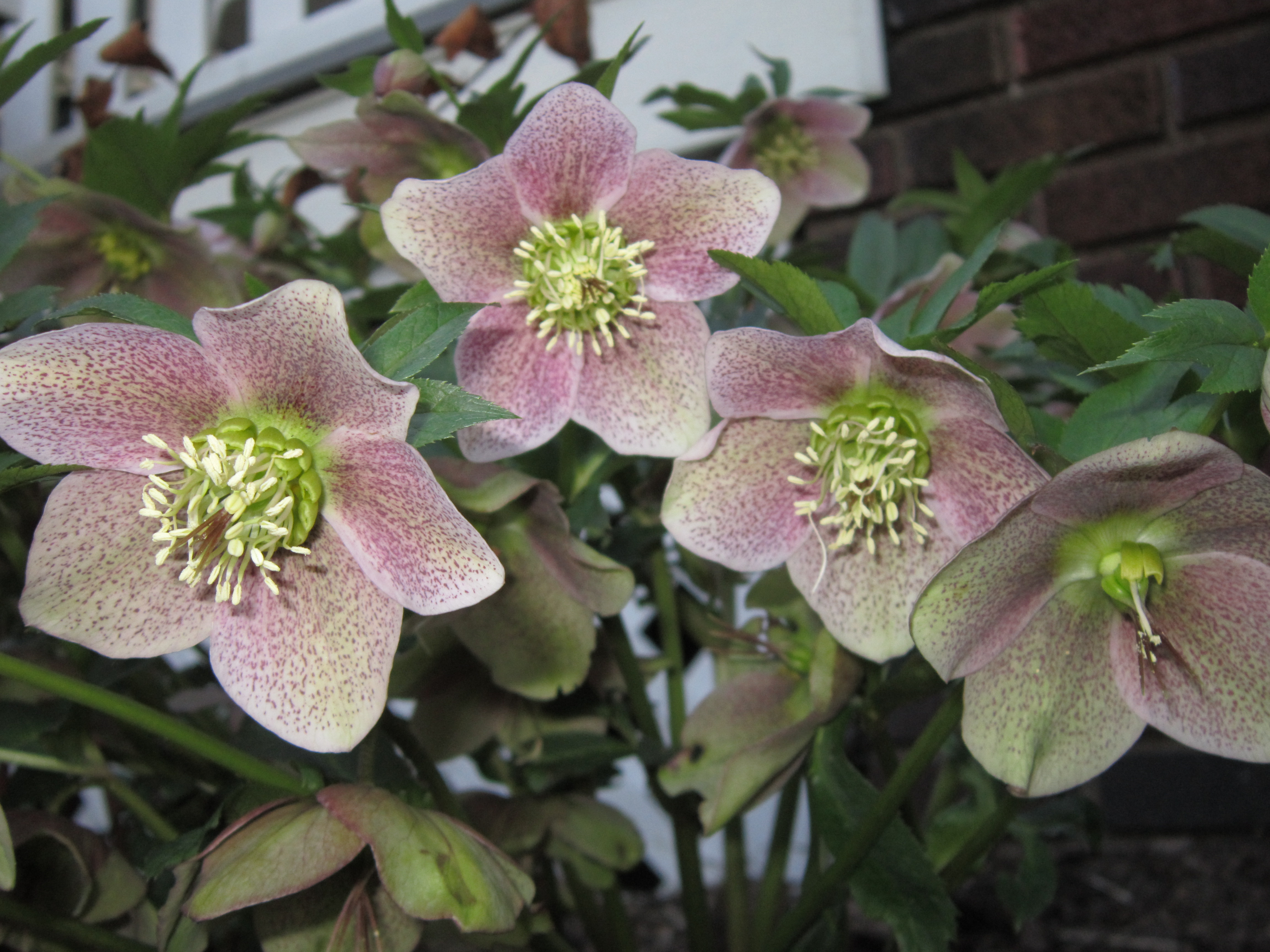
Usually, Ostara is a time where I’m just starting to feel like Spring might come again. This year has been a little different and Spring is in full force.  Here are some Spring-things that I’ve noticed over the past few days…

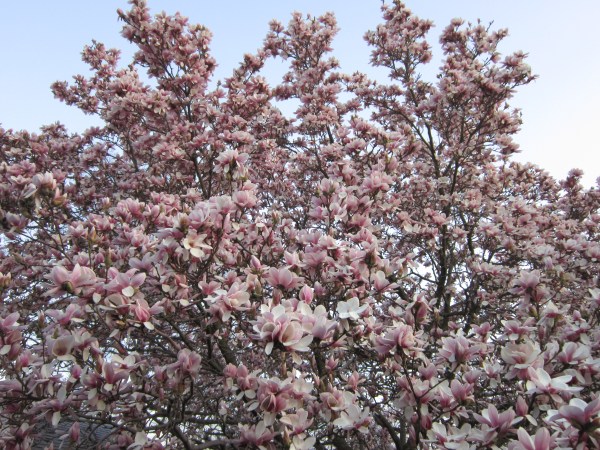
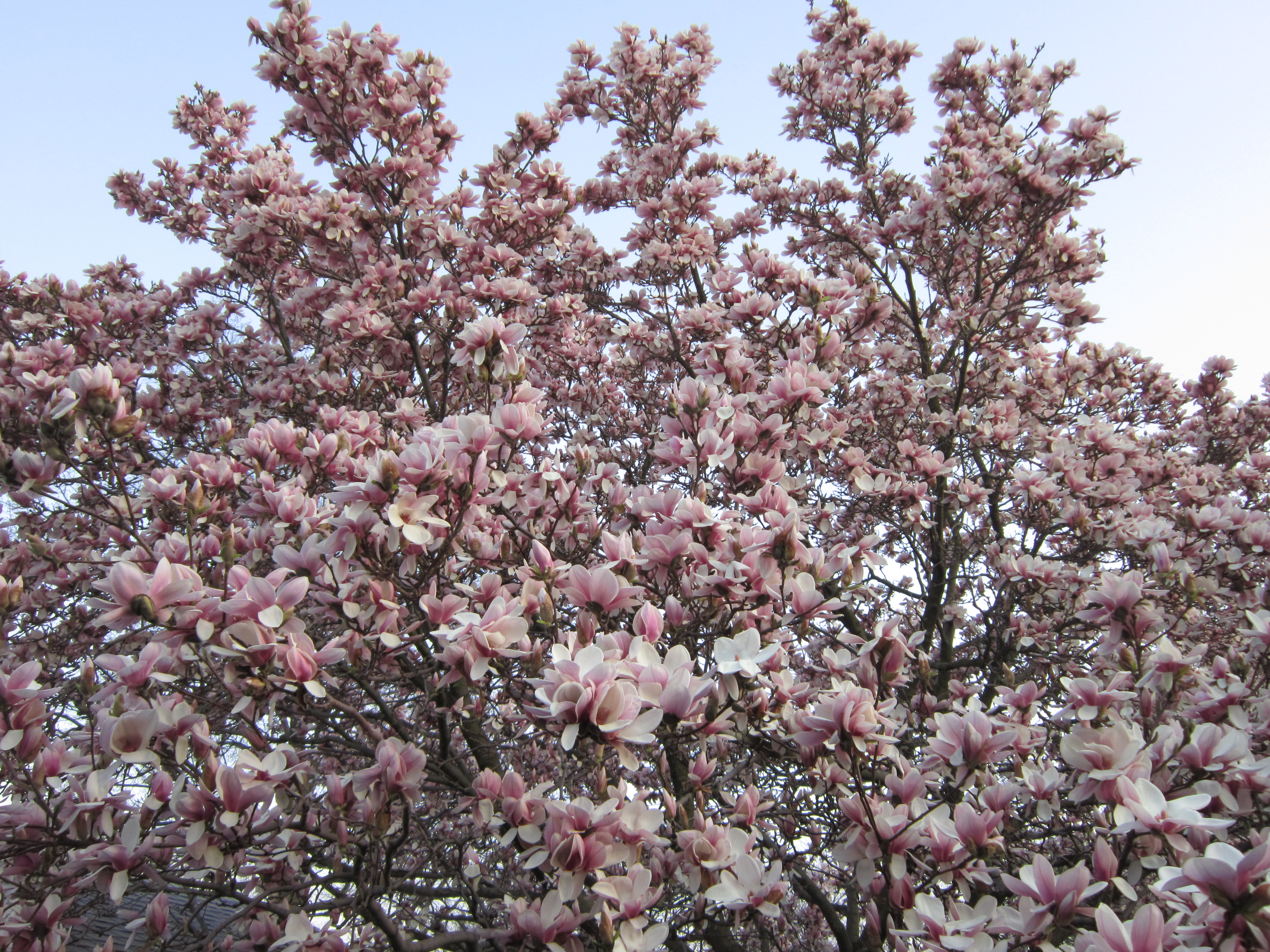
The magnolia tree is back! I feel like I should just spend all of my time underneath this tree appreciating it while it’s in bloom. It comes and goes so quickly!

Magnolia tree 2012

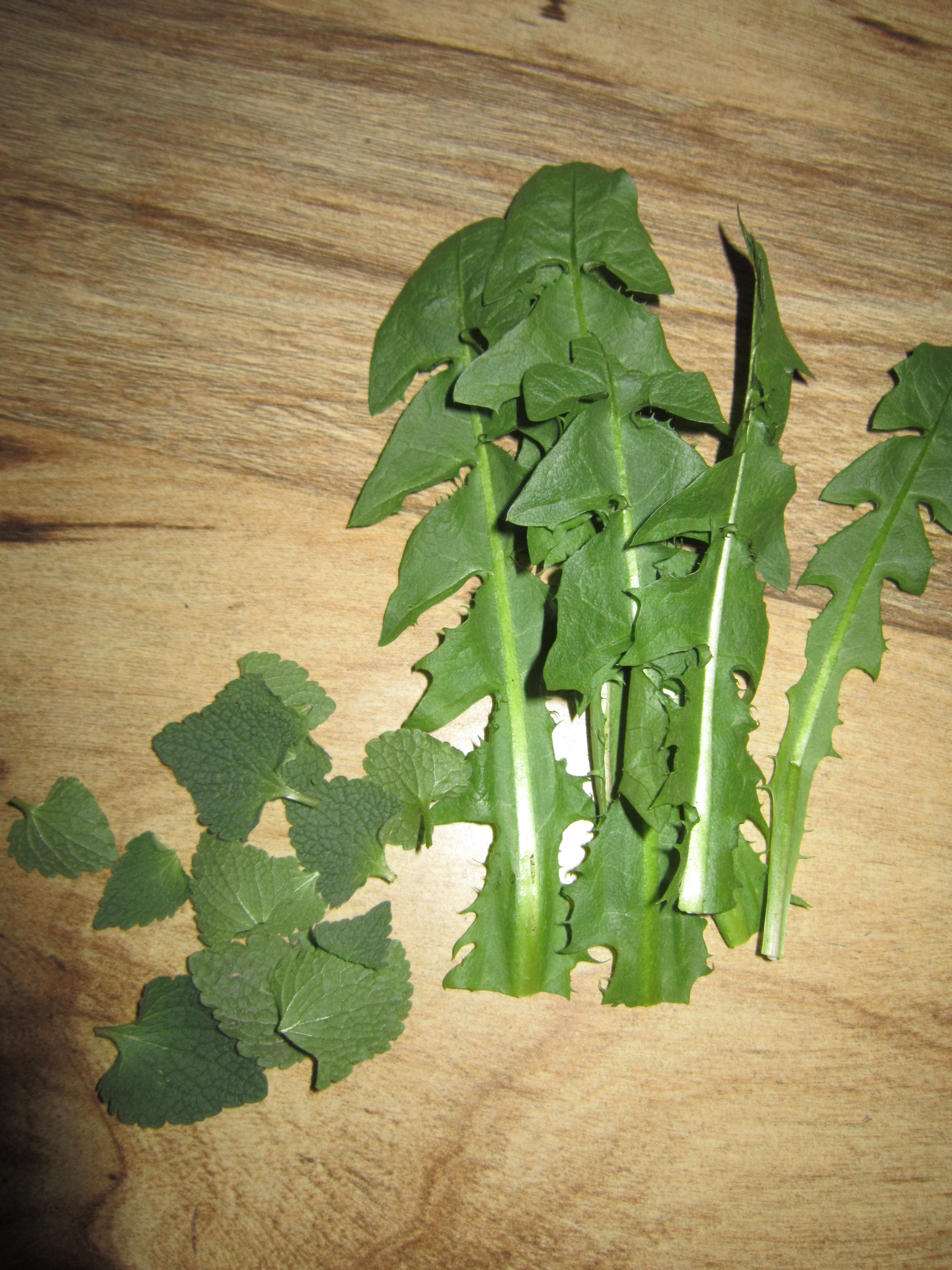
Adding Spring “weeds” to my salads!

Purple dead nettle and dandelion

Blooming flowers in the yard…

Windows open and Spring cleaning!

How are you celebrating Spring?

Enhanced by ZemantaShared on:

Observing humans is often more interesting than watching other primates

There are a lot of loud noises in the primate building at the zoo, few of which actually emanate from the animals.  I often hear the loud thumps of people banging on glass, infants screaming or crying, and people yelling “Look here!” or “Ew!” to one another.

Today I heard the loud thud of banging on glass, but it was followed by startled humans.  One of the gorillas was the source of this noise and caused a group of people to jump and erupt into a flurry of alarm calls.  They then proceeded to retell the story of what had happened among themselves, and I could hear them explain that the gorilla had first made a chest beating display before pounding on the glass.

After their initial shock, the people changed to laughing.  Still staring at the perturbed gorilla, they were safely behind glass and could mock, laugh, and completely ignore his communication.  To me, this became a poignant example of what humans are often internalizing when at the zoo — a message that humans can do what they wish to other animals (/nature) with no repercussions.  We can dominate nature because we are above nature. And then we can stand back and laugh.

What kind of message about gorillas did this group of people receive?  Certainly they would have a much different impression of gorillas if they had witnessed this type of display in the wild.  In fact, they probably would be quite thankful for their lives (or for being at a safe distance quietly observing the display) instead of laughing.  But also, they did not really learn all that much about gorillas and their behavior through this experience – especially not about their fascinating social lives and how gentle they can be with one another.

Maybe they’ll go and learn more about gorillas later because of this experience, but probably not.  I think it’s more likely that they’ll go tell their friends about the “crazy gorilla” at the zoo and perpetuate the myth that gorillas are vicious and always aggressive.  I’m pretty confident that they won’t spend much time thinking about the ways in which they bothered him, or what it would be like to be confined to a space where loud people are continually filtering past all day trying to get your attention.

The broader concern of this small incident, though, is that the zoo is perpetuating an even more deeply ingrained myth than the one that gorillas are always aggressive.  It is a myth that may cause us our demise.  The myth is that we are superior to all of nature, that we can control and dominate it, and that we can stand back and laugh when it tries to warn us of our inappropriate behavior (global warming? ha!).

We would be wise to start communicating better with nature.  There will not always be a thick sheet of glass there to protect us from our stupidity.

We might start by going outside to develop a real connection with animals and nature. Yes, much of the free space for us to do that is gone and many people argue that we must go to zoos to see wild creatures, but somehow animals are still all around us. Pay attention to them, respect them, and work toward a future where we can all coexist.  Nature has been speaking to us. Will we start to listen in time?